- English
- Chinese
- French
- German
- Portuguese
- Spanish
- Russian
- Japanese
- Korean
- Arabic
- Irish
- Greek
- Turkish
- Italian
- Danish
- Romanian
- Indonesian
- Czech
- Afrikaans
- Swedish
- Polish
- Catalan
- Esperanto
- Hindi
- Lao
- Albanian
- Amharic
- Armenian
- Azerbaijani
- Belarusian
- Bengali
- Bosnian
- Bulgarian
- Cebuano
- Chichewa
- Corsican
- Croatian
- Dutch
- Estonian
- Filipino
- Finnish
- Frisian
- Galician
- Georgian
- Gujarati
- Haitian
- Hausa
- Hawaiian
- Hebrew
- Hmong
- Hungarian
- Icelandic
- Igbo
- Javanese
- Kannada
- Kazakh
- Khmer
- Kurdish
- Kyrgyz
- Latin
- Latvian
- Lithuanian
- Luxembou..
- Macedonian
- Malagasy
- Malay
- Malayalam
- Maltese
- Maori
- Marathi
- Mongolian
- Burmese
- Nepali
- Norwegian
- Pashto
- Persian
- Punjabi
- Serbian
- Sesotho
- Sinhala
- Slovak
- Slovenian
- Somali
- Samoan
- Scots Gaelic
- Shona
- Sindhi
- Sundanese
- Swahili
- Tajik
- Tamil
- Telugu
- Thai
- Ukrainian
- Urdu
- Uzbek
- Vietnamese
- Welsh
- Xhosa
- Yiddish
- Yoruba
- Zulu
- Kinyarwanda
- Tatar
- Oriya
- Turkmen
- Uyghur

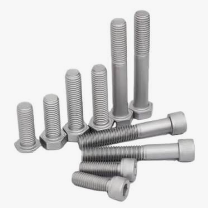
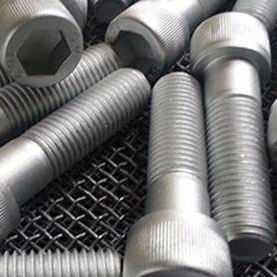
Dacromet-Coated Hexagon Socket Countersunk Head Bolts
2026-11-02
| The Dacromet-coated hexagon socket countersunk head bolt combines a flush-fitting countersunk screw head with a zinc-aluminum flake coating that delivers 720–1,000 hours of salt-spray resistance — several times longer than conventional electro-plated zinc bolts. This article explains the bolt geometry, the Dacromet coating process, its anti-corrosion mechanism, and how it compares with other rust-proofing treatments for screws and bolts. |
1. Introduction: Why Corrosion Protection Matters for Bolts and Screws
Fasteners — bolts, screws, nuts, and washers — are the most corrosion-vulnerable components in any bolted joint. A rusted bolt loses preload, seizes in its threaded hole, and eventually compromises the structural integrity of the entire assembly. In marine environments, highway bridges, solar mounting structures, and outdoor machinery, ordinary zinc-plated screws can show white rust within weeks and red rust within months.
2. Product Geometry: The Hexagon Socket Countersunk Head Bolt
| Thread Size | Head Diameter (dk) | Head Height (k) | Hex Socket (s) | Tensile Strength Class | Common Lengths |
| M5 × 0.8 | 10.0 mm | 2.8 mm | 4 mm | 8.8 / 10.9 | 10–60 mm |
| M6 × 1.0 | 11.4 mm | 3.3 mm | 5 mm | 8.8 / 10.9 | 12–80 mm |
| M8 × 1.25 | 15.0 mm | 4.4 mm | 6 mm | 8.8 / 10.9 | 16–100 mm |
| M10 × 1.5 | 18.5 mm | 5.4 mm | 8 mm | 8.8 / 10.9 | 20–120 mm |
| M12 × 1.75 | 21.5 mm | 6.5 mm | 10 mm | 8.8 / 10.9 | 25–150 mm |
Key geometry advantages of this screw type:
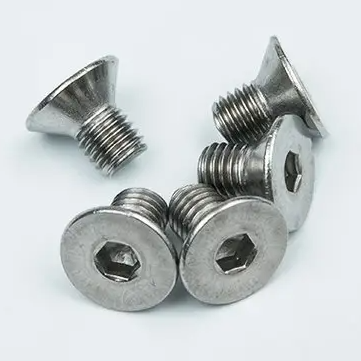
- Flush surface— the countersunk head does not protrude, eliminating snag points and allowing mating parts to sit flat on the surface.
- High torque capacity— the hexagon socket engages six contact faces, transmitting 30–50% more torque than a slotted or Phillips drive before stripping.
- Thread engagement— full-form machine threads (or self-tapping threads for sheet-metal applications) provide strong axial clamping of the bolted joint.
3. The Dacromet Coating: How It Works
Dacromet is a trademarked name that has become the generic industry term for zinc-aluminum flake coatings applied by dip-spin or spray and cured at approximately 300 °C. Unlike electroplating, the process is non-electrolytic, so the coating introduces no hydrogen embrittlement — a critical safety factor for high-strength bolts of grade 10.9 and above.
The coating is a silver-gray matrix of overlapping zinc and aluminum flakes (typically 0.1–0.5 µm thick, 15–20 µm total) bonded by an inorganic chromium compound binder. Its anti-corrosion mechanism is threefold:
4. Anti-Corrosion Performance: Salt Spray Data
The benchmark test for fastener rust resistance is the neutral salt spray (NSS) test per ISO 9227 / ASTM B117. Table 3 compares Dacromet-coated screws with the most common alternative surface treatments.
Table 3 — Corrosion resistance comparison (NSS test, hours to first red rust)
| Surface Treatment | Typical Thickness | White Rust | Red Rust | Hydrogen Embrittlement Risk | Cost Index |
| Clear zinc plating (Zn) | 5–8 µm | 24–96 h | 150–300 h | Medium | 1.0 |
| Yellow zinc plating (Zn-Cr) | 5–8 µm | 96–200 h | 300–500 h | Medium | 1.2 |
| Hot-dip galvanizing (HDG) | 50–100 µm | — | 1,000–2,000 h | Low | 1.5 |
| Dacromet (1 coat) | 5–8 µm | 480–720 h | 720–1,000 h | None | 1.8 |
| Dacromet (2–3 coats) | 10–24 µm | 1,000+ h | 1,500–2,500 h | None | 2.2 |
| Dacromet + top-seal | 10–24 µm | 1,200+ h | 2,000–3,000 h | None | 2.5 |
5. Conclusion
The Dacromet-coated hexagon socket countersunk head bolt solves the two oldest problems in threaded fastening — rust and protrusion — in one component. The countersunk geometry gives a flush, clean, snag-free joint with a high-torque hexagon drive, while the zinc-aluminum flake coating provides sacrificial and barrier anti-corrosion protection lasting 1,000 hours or more in salt-spray testing, without hydrogen embrittlement. For engineers and buyers specifying screws and bolts for outdoor, marine, or transportation environments, this fastener class offers one of the best corrosion-protection-to-cost ratios available in modern bolting technology.