- Chinese
- French
- German
- Portuguese
- Spanish
- Russian
- Japanese
- Korean
- Arabic
- Irish
- Greek
- Turkish
- Italian
- Danish
- Romanian
- Indonesian
- Czech
- Afrikaans
- Swedish
- Polish
- Basque
- Catalan
- Esperanto
- Hindi
- Lao
- Albanian
- Amharic
- Armenian
- Azerbaijani
- Belarusian
- Bengali
- Bosnian
- Bulgarian
- Cebuano
- Chichewa
- Corsican
- Croatian
- Dutch
- Estonian
- Filipino
- Finnish
- Frisian
- Galician
- Georgian
- Gujarati
- Haitian
- Hausa
- Hawaiian
- Hebrew
- Hmong
- Hungarian
- Icelandic
- Igbo
- Javanese
- Kannada
- Kazakh
- Khmer
- Kurdish
- Kyrgyz
- Latin
- Latvian
- Lithuanian
- Luxembou..
- Macedonian
- Malagasy
- Malay
- Malayalam
- Maltese
- Maori
- Marathi
- Mongolian
- Burmese
- Nepali
- Norwegian
- Pashto
- Persian
- Punjabi
- Serbian
- Sesotho
- Sinhala
- Slovak
- Slovenian
- Somali
- Samoan
- Scots Gaelic
- Shona
- Sindhi
- Sundanese
- Swahili
- Tajik
- Tamil
- Telugu
- Thai
- Ukrainian
- Urdu
- Uzbek
- Vietnamese
- Welsh
- Xhosa
- Yiddish
- Yoruba
- Zulu
- Kinyarwanda
- Tatar
- Oriya
- Turkmen
- Uyghur

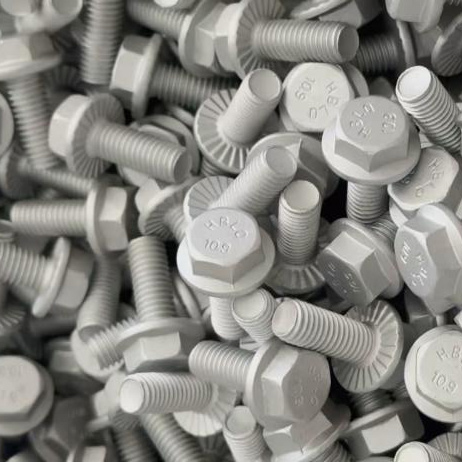
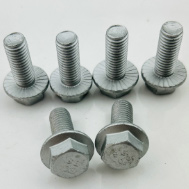
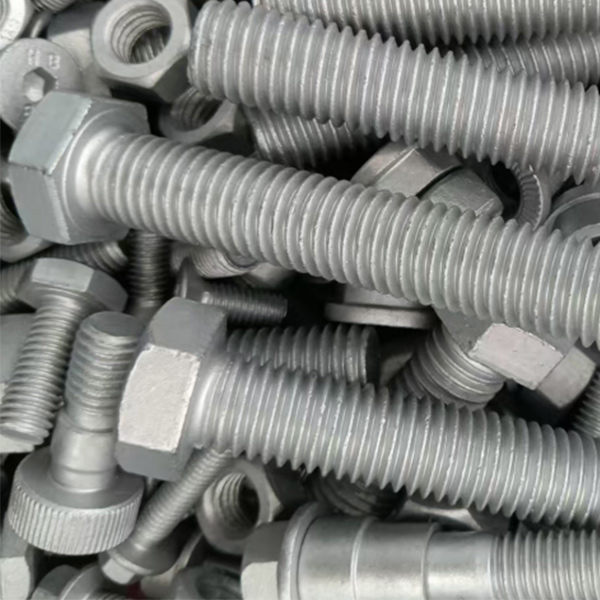
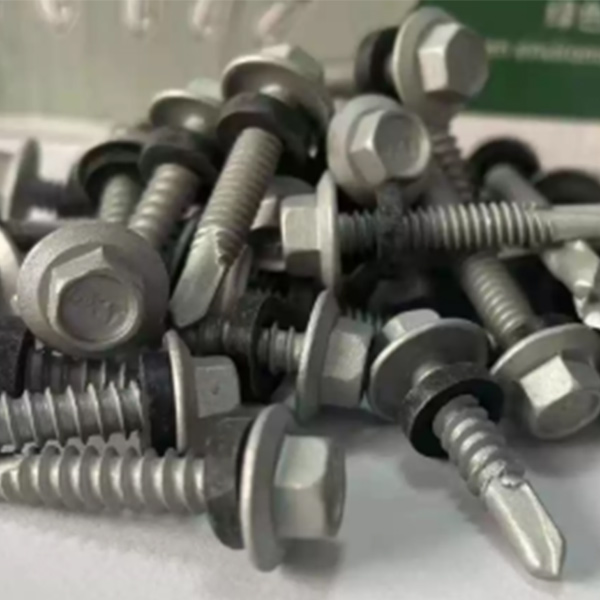
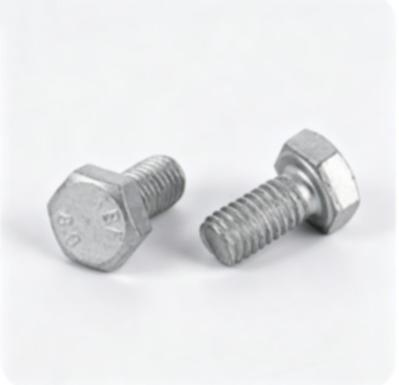
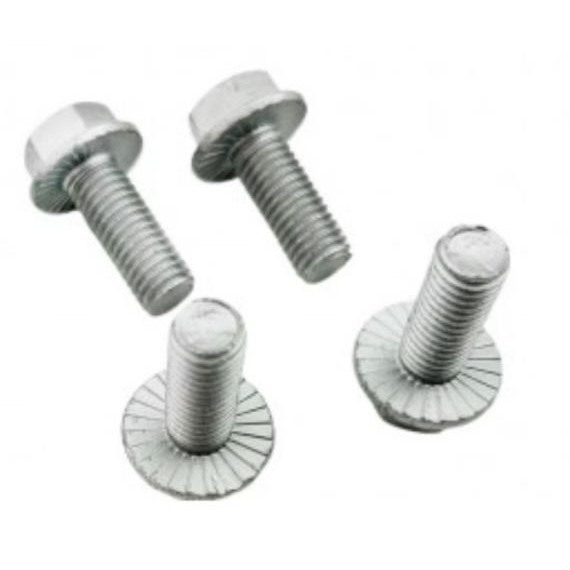
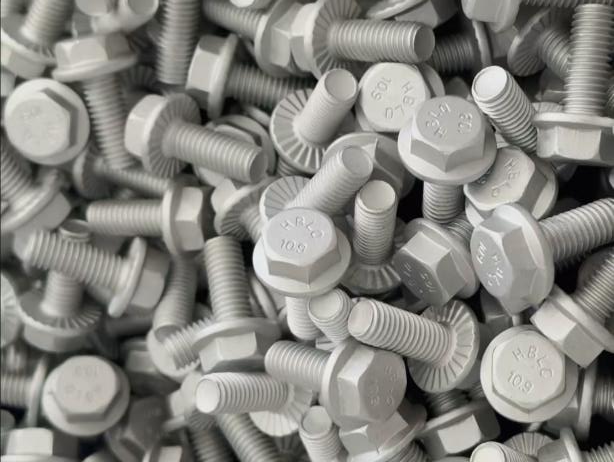
Dacromet Coated Flange Bolts
2026-09-23
1. Introduction
In modern industrial applications, flange bolts serve as critical fastening components that join piping systems, pressure vessels, structural frames, and heavy machinery. These bolts are constantly exposed to harsh environments where moisture, salt, chemicals, and temperature fluctuations accelerate corrosion and rust formation. Traditional surface treatments such as electroplated zinc often fail to deliver long-term anti-rust protection and, more critically, introduce the risk of hydrogen embrittlement in high-strength steel bolts. The emergence of Dacromet coating technology has revolutionized the protection of flange bolts by providing an exceptional combination of corrosion resistance, anti-rust performance, and complete freedom from hydrogen embrittlement.
Dacromet coated flange bolts have become the preferred choice for engineers and procurement specialists who demand reliable, long-lasting fastening solutions. This advanced zinc-aluminum flake coating forms a dense, uniform barrier that actively resists corrosion while remaining thin enough to preserve critical thread dimensions and torque accuracy.
2. Understanding Dacromet Coating Technology
Dacromet is a water-based, non-electrolytic zinc-aluminum flake coating system specifically engineered for fasteners, including high-strength flange bolts. Unlike traditional electroplating processes that deposit metal ions through an electric current, the Dacromet process applies a carefully formulated slurry containing zinc flakes, aluminum flakes, and inorganic binders onto the bolt surface. After application via dip-spin or spray methods, the coated bolts undergo high-temperature curing (typically around 300°C), which sinters the flakes into a tightly bonded, multi-layered protective film.
The resulting Dacromet coating is extremely thin—usually between 6 and 12 micrometers—yet delivers outstanding corrosion resistance. The overlapping zinc and aluminum flakes create a labyrinthine barrier that significantly slows the penetration of moisture, oxygen, and corrosive ions. Simultaneously, the zinc provides sacrificial (cathodic) protection to the underlying steel substrate of the bolt, while the aluminum and chromate components enhance passivation and overall anti-rust durability. This multi-mechanism protection system is one of the key reasons Dacromet outperforms conventional zinc plating and even hot-dip galvanizing in many accelerated corrosion tests.
Importantly, because the Dacromet process involves no acid pickling and no electrolytic deposition, it introduces no hydrogen into the steel lattice of the bolt. This fundamental process characteristic makes Dacromet coating completely hydrogen embrittlement free—a decisive advantage when coating high-tensile flange bolts of grade 10.9, 12.9, or ASTM A490 specification.
3. Key Advantages of Dacromet Flange Bolts
3.1 Exceptional Corrosion Resistance and Anti-Rust Performance
Dacromet coated flange bolts consistently achieve more than 1,000 hours of neutral salt spray resistance (ASTM B117 / ISO 9227) without the appearance of red rust. In many commercial grades, white rust is also delayed beyond 240 hours. This level of anti-rust performance far exceeds that of standard electroplated zinc coatings, which typically show red rust within 72 to 200 hours under identical test conditions. The superior corrosion resistance of Dacromet stems from its unique flake structure and the synergistic action of barrier protection, sacrificial zinc protection, and chemical passivation.
In real-world environments—coastal atmospheres, industrial chemical plants, automotive underbodies, and offshore platforms—Dacromet flange bolts maintain their integrity far longer than conventionally coated fasteners. The coating effectively prevents both uniform corrosion and localized pitting, ensuring that the bolt continues to provide reliable clamping force throughout its service life. This outstanding anti-rust capability translates directly into reduced maintenance costs, fewer unplanned shutdowns, and enhanced structural safety.
3.2 Completely Hydrogen Embrittlement Free
One of the most critical advantages of Dacromet coating for flange bolts is that it is inherently hydrogen embrittlement free. High-strength steel bolts are particularly susceptible to hydrogen embrittlement, a phenomenon in which atomic hydrogen diffuses into the steel microstructure, reduces ductility, and can cause sudden, delayed fracture under tensile stress. Traditional electroplating processes generate hydrogen at the cathode during metal deposition, and even thorough baking after plating cannot always guarantee complete hydrogen removal.
Because Dacromet is a non-electrolytic coating applied without acid pretreatment, no hydrogen is introduced into the bolt during the finishing process. Subsequent high-temperature curing further ensures that any residual moisture is driven off. Extensive qualification testing—including studies supporting the acceptance of Dacromet for ASTM A490 structural bolts—has confirmed that Dacromet coated high-strength bolts retain their full fracture strength even after prolonged exposure to corrosive environments. This hydrogen embrittlement free characteristic makes Dacromet the coating of choice for critical flange connections in wind turbines, bridges, pressure equipment, and automotive chassis applications.
3.3 Thin, Uniform Coating with Excellent Coverage
Unlike hot-dip galvanizing, which deposits a relatively thick and sometimes uneven zinc layer, Dacromet produces a thin, highly uniform coating that follows the precise geometry of the bolt threads, under-head radius, and flange face. This uniformity preserves the designed thread engagement and allows accurate torque-tension relationships during assembly. The dip-spin application method ensures that even complex geometries, recessed areas, and internal surfaces of flange bolts receive complete anti-rust protection, eliminating the weak spots commonly associated with electroplated coatings.
3.4 High-Temperature Stability and Mechanical Durability
Dacromet coating remains stable at continuous service temperatures up to 300°C, far exceeding the practical limit of conventional zinc plating (which begins to degrade around 100–120°C). This heat resistance is particularly valuable for flange bolts used in engine compartments, exhaust systems, industrial furnaces, and power-generation equipment. In addition, the cured Dacromet film exhibits good resistance to mechanical damage during handling and installation, further preserving the long-term corrosion and anti-rust performance of the bolt.
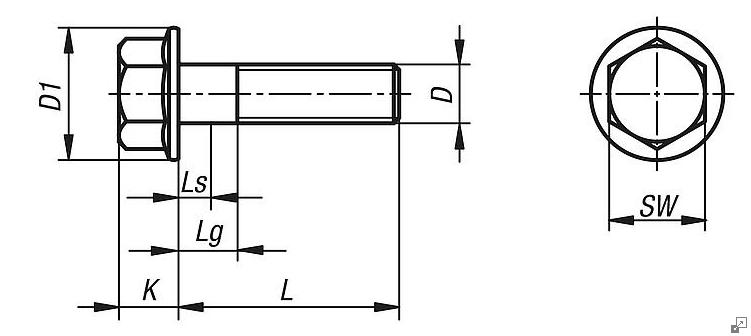
4. Typical Applications of Dacromet Flange Bolts
Because of their outstanding corrosion resistance, anti-rust durability, and hydrogen embrittlement free nature, Dacromet flange bolts are widely specified across multiple industries:
Automotive and transportation: Chassis bolts, suspension components, engine compartment fasteners, and exhaust-system flange bolts that must resist road salt and high temperatures.
Wind energy and renewable power: Tower flange bolts and nacelle fasteners that face continuous outdoor exposure and require hydrogen embrittlement free high-strength performance.
Oil, gas, and chemical processing: Flange bolts for pipelines, pressure vessels, and process equipment operating in corrosive chemical atmospheres.
Infrastructure and construction: Bridge connections, structural steel joints, and coastal installations where long-term anti-rust protection is essential.
Heavy machinery and industrial equipment: High-strength flange bolts subjected to vibration, thermal cycling, and aggressive environmental conditions.
5. Conclusion
Dacromet coated flange bolts represent a mature, high-performance solution that successfully addresses the dual challenges of corrosion protection and hydrogen embrittlement risk. The unique zinc-aluminum flake coating delivers exceptional anti-rust performance, often exceeding 1,000 hours of salt-spray resistance, while remaining thin enough to maintain precise thread geometry and reliable assembly torque. Because the Dacromet process is entirely non-electrolytic and free from acid pretreatment, the finished bolts are hydrogen embrittlement free—making them safe for use in the most demanding high-strength applications.