- English
- Chinese
- French
- German
- Portuguese
- Spanish
- Russian
- Japanese
- Korean
- Arabic
- Irish
- Greek
- Turkish
- Italian
- Danish
- Romanian
- Indonesian
- Czech
- Afrikaans
- Swedish
- Polish
- Catalan
- Esperanto
- Hindi
- Lao
- Albanian
- Amharic
- Armenian
- Azerbaijani
- Belarusian
- Bengali
- Bosnian
- Bulgarian
- Cebuano
- Chichewa
- Corsican
- Croatian
- Dutch
- Estonian
- Filipino
- Finnish
- Frisian
- Galician
- Georgian
- Gujarati
- Haitian
- Hausa
- Hawaiian
- Hebrew
- Hmong
- Hungarian
- Icelandic
- Igbo
- Javanese
- Kannada
- Kazakh
- Khmer
- Kurdish
- Kyrgyz
- Latin
- Latvian
- Lithuanian
- Luxembou..
- Macedonian
- Malagasy
- Malay
- Malayalam
- Maltese
- Maori
- Marathi
- Mongolian
- Burmese
- Nepali
- Norwegian
- Pashto
- Persian
- Punjabi
- Serbian
- Sesotho
- Sinhala
- Slovak
- Slovenian
- Somali
- Samoan
- Scots Gaelic
- Shona
- Sindhi
- Sundanese
- Swahili
- Tajik
- Tamil
- Telugu
- Thai
- Ukrainian
- Urdu
- Uzbek
- Vietnamese
- Welsh
- Xhosa
- Yiddish
- Yoruba
- Zulu
- Kinyarwanda
- Tatar
- Oriya
- Turkmen
- Uyghur

DACROMET BOLTS
2026-11-07
1. Introduction
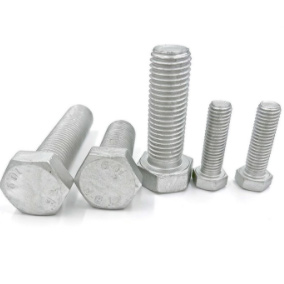
In modern engineering, bolted joints must resist both mechanical loads and environmental corrosion. Traditional electro-galvanizing and hot-dip galvanizing provide anti-rust protection but suffer from hydrogen embrittlement in high-strength bolts and dimensional interference on precision threads. Dacromet coating, a zinc-aluminum flake system developed in the 1970s, overcomes these limitations. It delivers outstanding corrosion resistance, eliminates hydrogen embrittlement risk, preserves thread dimensions, and offers high-temperature stability up to 300 °C. Dacromet bolts are now widely specified in automotive, construction, wind energy, railway, and marine industries.
2. What is Dacromet Coating?
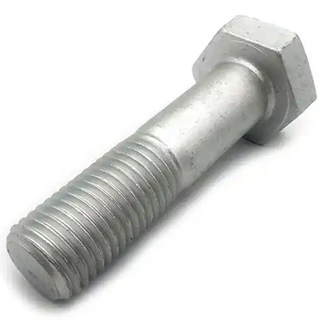
Dacromet is a non-electrolytic, water-based zinc-flake coating consisting of micron-scale zinc and aluminum flakes in an inorganic binder. After application and curing, the overlapping flakes form a dense multi-layer barrier that provides both barrier protection and sacrificial cathodic protection to the steel substrate.
Key characteristics:
- Film thickness: typically 5–12 μm (much thinner than hot-dip galvanizing)
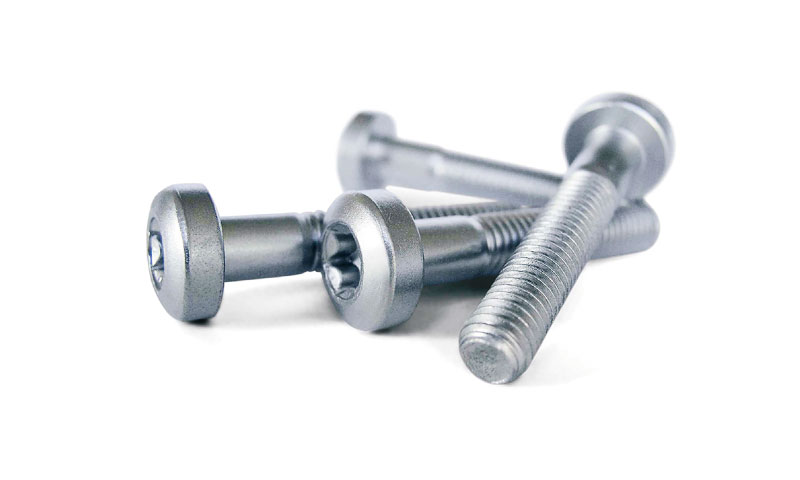
- Appearance: uniform silver-gray metallic finish
- No hydrogen embrittlement risk (no acid pickling or electrolysis)
- Corrosion resistance: often >1,000 hours salt spray to red rust (ASTM B117)
- High-temperature resistance up to 300 °C continuous service
The coating is applied by dip-spin (common for bulk fasteners), spray, or dip-drain, then thermally cured at ~300 °C. Optional topcoats further enhance corrosion resistance and control the coefficient of friction for consistent torque-tension performance.
3. Coating Process Overview
The typical process for bolts consists of four main stages:
1.Surface Preparation: Alkaline degreasing followed by mechanical cleaning if needed. Acid pickling is avoided to prevent hydrogen absorption.
2.Coating Application: Parts are dipped in the aqueous zinc-aluminum flake slurry (dip-spin for small bolts) or sprayed; excess is removed by centrifugation for uniform thickness.
3.Curing: Baking at approximately 300–320 °C converts the binder and consolidates the metallic flakes into a tightly bonded inorganic coating.
4.Optional Topcoat / Sealer: A thin sealer improves lubricity, chemical resistance, and further extends salt-spray performance.
Because the process is non-electrolytic and free of acid pickling, high-strength bolts (Grade 8.8, 10.9, 12.9 and ASTM A490) can be coated without internal hydrogen embrittlement risk—a critical safety advantage over traditional electroplating.
4. Key Advantages of Dacromet Bolts
4.1 Superior Corrosion & Anti-Rust Performance
A thin Dacromet film (6–10 μm) routinely withstands 1,000–2,000 hours of neutral salt spray testing before red rust appears—7–10 times better than conventional electro-galvanizing. The multi-layer flake structure provides barrier protection while zinc flakes deliver sacrificial cathodic protection. Chromate passivation further slows corrosion and offers limited self-healing at minor scratches.
4.2 No Hydrogen Embrittlement
High-strength bolts are highly susceptible to hydrogen embrittlement from acid pickling and electroplating, which can cause delayed brittle fracture. Dacromet eliminates this risk entirely. It is therefore preferred for critical high-tensile fasteners in automotive engines, chassis, structural steel, and safety-related assemblies.
4.3 Dimensional Accuracy & Thread Fit
With a coating thickness of only 5–12 μm, Dacromet does not significantly alter thread geometry. Standard nuts can be used without over-tapping. In contrast, hot-dip galvanizing (40–80 μm) often requires special nuts. This thin conformal coating is ideal for precision bolts and fine-pitch fasteners.
4.4 High-Temperature Resistance & Controlled Friction
Dacromet remains stable up to 300 °C continuous service, far above the limits of electroplating (~120 °C) or hot-dip galvanizing (~200 °C). With appropriate topcoats the coefficient of friction can be controlled (typically μ = 0.10–0.18), ensuring consistent clamp load and reliable multi-tightening behavior.
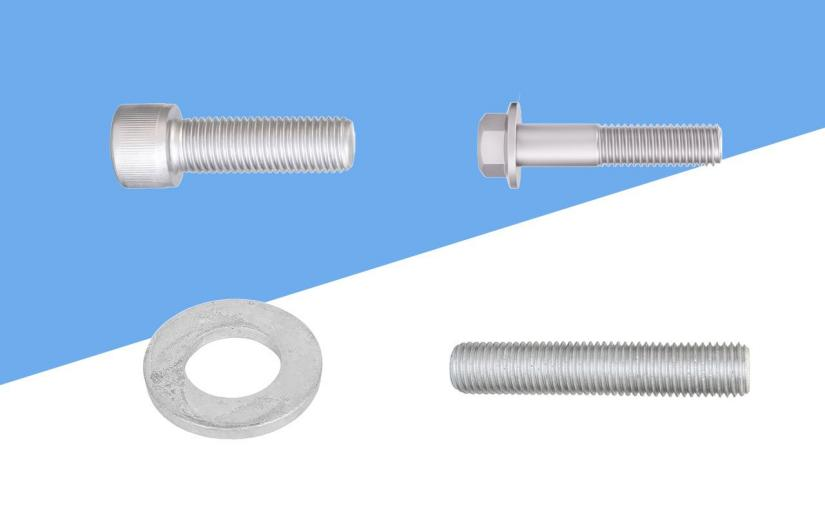
5. Performance Comparison
The table below summarizes key differences between Dacromet and common traditional surface treatments for bolts:
| Performance Metric | Dacromet | Electro-Galvanizing | Hot-Dip Galvanizing |
| Typical Thickness | 5–12 μm | 5–15 μm | 40–80+ μm |
| Salt Spray (to red rust) | 1,000–2,000+ h | 100–300 h | 500–1,000 h |
| H₂ Embrittlement Risk | None | High (needs baking) | Medium |
| Max Continuous Temp. | ≈ 300 °C | ≈ 100–120 °C | ≈ 200 °C |
| Thread Interference | Minimal / None | Low | Significant |
| High-Strength Bolts | Excellent (8.8–12.9) | Limited / Risky | Limited |
| Appearance | Uniform silver-gray | Bright or blue zinc | Rough, dull gray |
Table 1: Comparative performance of common bolt surface treatments
Dacromet offers an outstanding combination of thin film, extreme corrosion resistance, zero hydrogen embrittlement risk, and high-temperature capability—making it preferred for many demanding fastener applications.
6. Typical Applications
Dacromet-coated bolts are extensively used where corrosion protection, safety, and dimensional precision are critical:
- Automotive & Transportation: Engine, chassis, suspension and body fasteners (especially Grade 10.9/12.9).
- Wind Energy & Power: Tower, nacelle and foundation bolts in coastal or industrial atmospheres.
- Railway & Infrastructure: Track fasteners, bridges and structural connections requiring long service life.
- Construction & Steel Structures: High-strength structural bolts where galvanizing is undesirable.
- Marine & Offshore: Components exposed to salt spray and high humidity (often with enhanced topcoats).
- Agricultural & Heavy Equipment: Machinery operating in corrosive soil or outdoor environments.
7. Relevant Standards & Selection Guidelines
Dacromet and similar zinc-flake coatings are covered by international standards including ISO 10683 (Fasteners – non-electrolytically applied zinc flake coatings), EN 13858, ASTM F1136/F1136M, and salt-spray methods ASTM B117 / ISO 9227. Many automotive OEMs also maintain specific cyclic corrosion test requirements.
When specifying Dacromet bolts, engineers should consider:
- Strength Grade: Ideal for 8.8 and higher; often mandatory for 10.9/12.9 safety-critical parts.
- Corrosion Class: Select coating weight, number of coats and topcoat according to required salt-spray or cyclic test performance.
- Friction Coefficient: Specify a controlled-lubricity topcoat if consistent clamp load is critical.
- Environment: Excellent for industrial, automotive and many outdoor environments; evaluate thicker systems for extreme marine exposure.
- Cost vs. Life-Cycle: Higher unit cost than basic zinc plating is often offset by longer service life and lower maintenance.
8. Conclusion
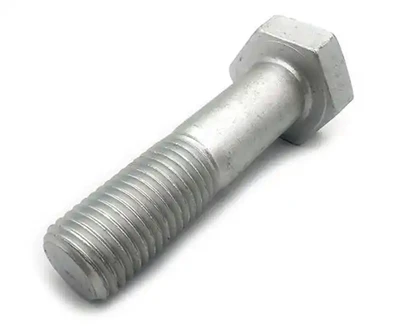
Dacromet bolts represent a mature, high-performance solution for corrosion protection of fasteners. The thin zinc-aluminum flake coating delivers salt-spray resistance far superior to conventional electro-galvanizing, eliminates the hydrogen embrittlement hazard that threatens high-strength bolts, preserves precise thread dimensions, and withstands elevated temperatures up to 300 °C.
For engineers and buyers seeking reliable anti-rust and anti-corrosion performance in automotive, structural, energy and industrial applications, Dacromet-coated bolts offer a proven balance of durability, safety and dimensional integrity. When specified correctly—matching coating grade, topcoat and friction properties to the service environment—they contribute to longer component life, reduced maintenance and improved overall system reliability. As demands for higher-strength, longer-lasting fasteners continue to grow, zinc-flake coatings such as Dacromet remain a cornerstone of modern fastener surface engineering.