- English
- Chinese
- French
- German
- Portuguese
- Spanish
- Russian
- Japanese
- Korean
- Arabic
- Irish
- Greek
- Turkish
- Italian
- Danish
- Romanian
- Indonesian
- Czech
- Afrikaans
- Swedish
- Polish
- Catalan
- Esperanto
- Hindi
- Lao
- Albanian
- Amharic
- Armenian
- Azerbaijani
- Belarusian
- Bengali
- Bosnian
- Bulgarian
- Cebuano
- Chichewa
- Corsican
- Croatian
- Dutch
- Estonian
- Filipino
- Finnish
- Frisian
- Galician
- Georgian
- Gujarati
- Haitian
- Hausa
- Hawaiian
- Hebrew
- Hmong
- Hungarian
- Icelandic
- Igbo
- Javanese
- Kannada
- Kazakh
- Khmer
- Kurdish
- Kyrgyz
- Latin
- Latvian
- Lithuanian
- Luxembou..
- Macedonian
- Malagasy
- Malay
- Malayalam
- Maltese
- Maori
- Marathi
- Mongolian
- Burmese
- Nepali
- Norwegian
- Pashto
- Persian
- Punjabi
- Serbian
- Sesotho
- Sinhala
- Slovak
- Slovenian
- Somali
- Samoan
- Scots Gaelic
- Shona
- Sindhi
- Sundanese
- Swahili
- Tajik
- Tamil
- Telugu
- Thai
- Ukrainian
- Urdu
- Uzbek
- Vietnamese
- Welsh
- Xhosa
- Yiddish
- Yoruba
- Zulu
- Kinyarwanda
- Tatar
- Oriya
- Turkmen
- Uyghur

Dacromet Flange Bolts
2026-11-09
1. Introduction
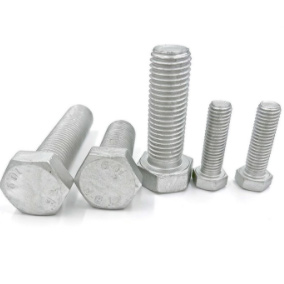
In modern industrial applications, the long-term integrity of bolted joints depends heavily on effective corrosion protection and anti-rust performance. Traditional zinc plating and hot-dip galvanizing often fall short in highly aggressive environments such as coastal infrastructure, offshore platforms, chemical plants, and automotive underbodies exposed to road salts. Dacromet flange bolts combine the structural advantages of flange-head design with the outstanding rust-preventive and anti-corrosion properties of zinc-aluminum flake coatings.
Dacromet (also known as zinc flake coating) is a non-electrolytic, water-based surface treatment. It deposits a thin yet highly effective layer of zinc and aluminum flakes bonded by a chromate matrix, delivering exceptional barrier protection, sacrificial cathodic protection, and self-healing passivation. Applied to flange bolts, this coating provides reliable long-term rust resistance without compromising thread fit, torque accuracy, or introducing hydrogen embrittlement risk.
2. Flange Bolts and Dacromet Coating Technology
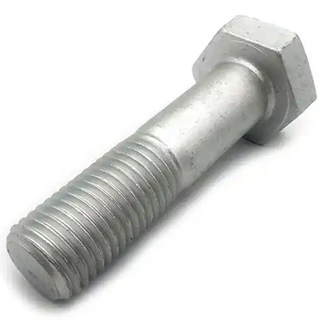
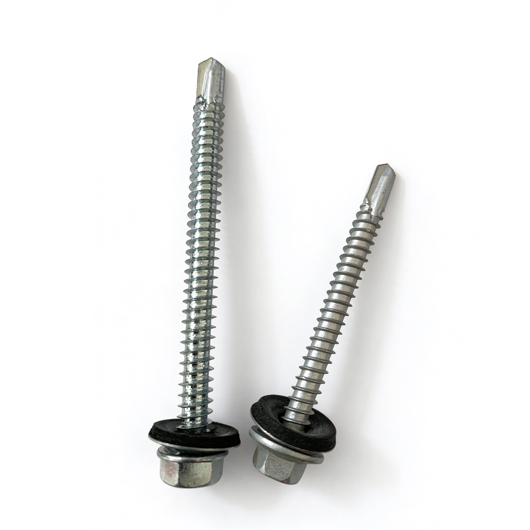
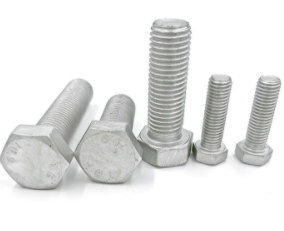
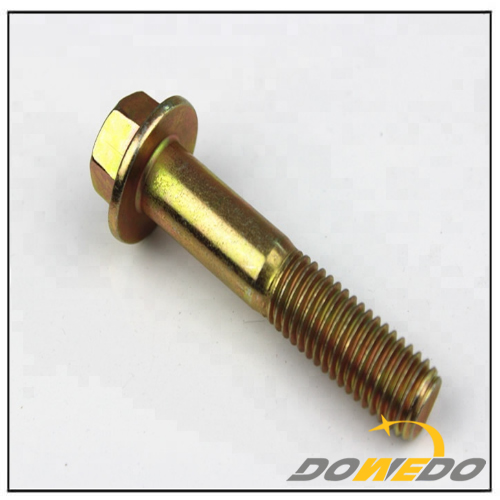
A flange bolt features an integral circular flange under the hexagonal head that functions as a built-in washer. This design distributes clamping force over a larger bearing surface, reducing surface damage and improving resistance to vibration-induced loosening. When these bolts receive a Dacromet coating, the combination yields a fastener that offers both mechanical reliability and superior anti-rust and corrosion-resistant performance. The thin coating (typically 5–12 μm) maintains precise thread geometry.
2.1 Coating Composition and Process
Dacromet is an aqueous dispersion of zinc flakes, aluminum flakes, and chromium oxides. The non-electrolytic process typically involves: (1) surface cleaning without aggressive acid pickling; (2) application by dip-spin, dip-drain or spray; and (3) curing at approximately 300°C to fuse the flakes into overlapping layers. The resulting metallic silver-gray film provides multi-layer oxidation resistance and a reliable moisture barrier.
2.2 Mechanisms of Corrosion Protection
Dacromet achieves exceptional anti-corrosion performance through three synergistic mechanisms:
- Barrier Protection: Overlapping zinc and aluminum flakes create a labyrinthine physical barrier that impedes water, oxygen, and corrosive ions such as chlorides.
- Sacrificial (Cathodic) Protection: Zinc flakes preferentially corrode, acting as a sacrificial anode that protects the steel substrate from rust formation.
- Passivation and Self-Healing: Chromate compounds form a passive film and can migrate to minor scratches, providing continuous rust preventionand self-repair capability.
3. Key Advantages of Dacromet Flange Bolts
Compared with conventional surface treatments, Dacromet flange bolts offer a unique combination of performance benefits:
- Superior Salt Spray Resistance: Typically exceeds 1,000–1,200 hours of neutral salt spray testing (ISO 9227) without red rust—often 7–10 times better than electro-galvanized coatings.
- Zero Hydrogen Embrittlement Risk: The non-electrolytic process eliminates hydrogen generation, making Dacromet ideal for high-strength Grade 8.8, 10.9, and 12.9 bolts.
- Thin, Dimensionally Stable Coating: At only 5–12 μm, the coating preserves thread accuracy and allows standard nuts to be used without re-tapping.
- Excellent Heat Resistance: Maintains protective integrity up to 300°C, far superior to conventional zinc coatings that degrade above 100–200°C.
- Outstanding Weatherability and Chemical Resistance: Resists industrial atmospheres, road salts, mild acids and alkalis while providing long-term anti-rustperformance outdoors.
- Good Friction Control: With optional lubricated topcoats, the coefficient of friction can be tightly controlled for reliable clamp load.
4. Performance Comparison with Traditional Coatings
The table below summarizes key differences in corrosion protection and coating characteristics.
| Property | Dacromet | Electro-Galvanizing | Hot-Dip Galvanizing |
| Coating Thickness | 5–12 μm | 5–15 μm | 40–80 μm |
| Salt Spray (no red rust) | ≥1,000–1,200 h | 100–300 h | 500–800 h |
| Hydrogen Embrittlement | None | High risk | Medium risk |
| Heat Resistance | Up to 300°C | ≤100°C | ≤200°C |
| Thread Fit Impact | Minimal / excellent | Slight | Often requires re-tapping |
Table 1. Comparative performance of Dacromet versus conventional zinc coatings for fasteners.
5. Typical Applications
Dacromet flange bolts are specified wherever high corrosion resistance must be combined with mechanical reliability:
- Automotive: Chassis, suspension, brake systems and underbody components exposed to road salt.
- Wind energy & offshore: Tower flanges, nacelle assemblies and structural connections in saline atmospheres.
- Construction & infrastructure: Bridges, coastal buildings, guardrails requiring long-term rust prevention.
- Heavy machinery & rail: Equipment in humid or chemically aggressive environments where anti-corrosionperformance is critical.
6. Common Specifications
Dacromet flange bolts are manufactured to major international standards and strength grades:
| Parameter | Typical Range / Values |
| Standards | DIN 6921, ISO 4162, GB/T 5787 / 5789, ASME B18.2.1 |
| Strength Grades | 8.8, 10.9, 12.9 (metric); SAE Grade 5 / 8 (inch) |
| Thread Diameter | M5–M24 (metric); 1/4"–5/8" (imperial) |
| Length Range | 10 mm – 200 mm (custom lengths available) |
| Coating Thickness | Typically 5–12 μm (Grade A / B variants) |
| Appearance | Metallic silver-gray (matte) |
7. Installation Best Practices & Conclusion
To maximize the anti-corrosion service life of Dacromet flange bolts: use matching Dacromet-coated nuts and washers where possible; follow recommended torque values (controlled friction supports accurate clamp load); avoid excessive mechanical damage during handling; and store fasteners in dry conditions prior to use.
In summary, Dacromet flange bolts represent a mature, high-performance fastening solution that successfully addresses the dual requirements of mechanical reliability and long-term corrosion protection. By combining the load-distributing advantages of the integral flange design with a thin, highly effective zinc-aluminum flake coating, these fasteners deliver outstanding anti-rust performance, eliminate hydrogen embrittlement risks, and maintain precise dimensional control.
In environments where conventional electro-galvanized or hot-dip galvanized fasteners would suffer premature rust and degradation—coastal, marine, automotive, and industrial settings—Dacromet flange bolts provide a proven, durable alternative. Their excellent weatherability, oxidation resistance, and sacrificial protection mechanisms ensure extended service life and reduced maintenance costs, making them an increasingly preferred choice for engineers and designers worldwide.