- English
- Chinese
- French
- German
- Portuguese
- Spanish
- Russian
- Japanese
- Korean
- Arabic
- Irish
- Greek
- Turkish
- Italian
- Danish
- Romanian
- Indonesian
- Czech
- Afrikaans
- Swedish
- Polish
- Catalan
- Esperanto
- Hindi
- Lao
- Albanian
- Amharic
- Armenian
- Azerbaijani
- Belarusian
- Bengali
- Bosnian
- Bulgarian
- Cebuano
- Chichewa
- Corsican
- Croatian
- Dutch
- Estonian
- Filipino
- Finnish
- Frisian
- Galician
- Georgian
- Gujarati
- Haitian
- Hausa
- Hawaiian
- Hebrew
- Hmong
- Hungarian
- Icelandic
- Igbo
- Javanese
- Kannada
- Kazakh
- Khmer
- Kurdish
- Kyrgyz
- Latin
- Latvian
- Lithuanian
- Luxembou..
- Macedonian
- Malagasy
- Malay
- Malayalam
- Maltese
- Maori
- Marathi
- Mongolian
- Burmese
- Nepali
- Norwegian
- Pashto
- Persian
- Punjabi
- Serbian
- Sesotho
- Sinhala
- Slovak
- Slovenian
- Somali
- Samoan
- Scots Gaelic
- Shona
- Sindhi
- Sundanese
- Swahili
- Tajik
- Tamil
- Telugu
- Thai
- Ukrainian
- Urdu
- Uzbek
- Vietnamese
- Welsh
- Xhosa
- Yiddish
- Yoruba
- Zulu
- Kinyarwanda
- Tatar
- Oriya
- Turkmen
- Uyghur

DACROMET HEXAGON BOLTS-Superior Corrosion-Resistant Fastening Solutions
2026-11-05
1. Introduction to Dacromet Hex Bolts
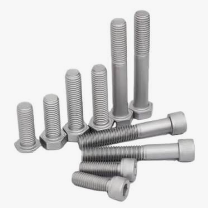
Dacromet hexagon bolts represent a high-performance class of fasteners engineered for exceptional corrosion resistance and long-term rust prevention. These bolts combine the mechanical reliability of standard hexagonal-head bolts with an advanced zinc-aluminum flake coating known as Dacromet (also referred to as Dacro or zinc-flake coating). The result is a bolt that delivers outstanding anti-corrosion performance in harsh environments while preserving precise thread geometry and high tensile strength.
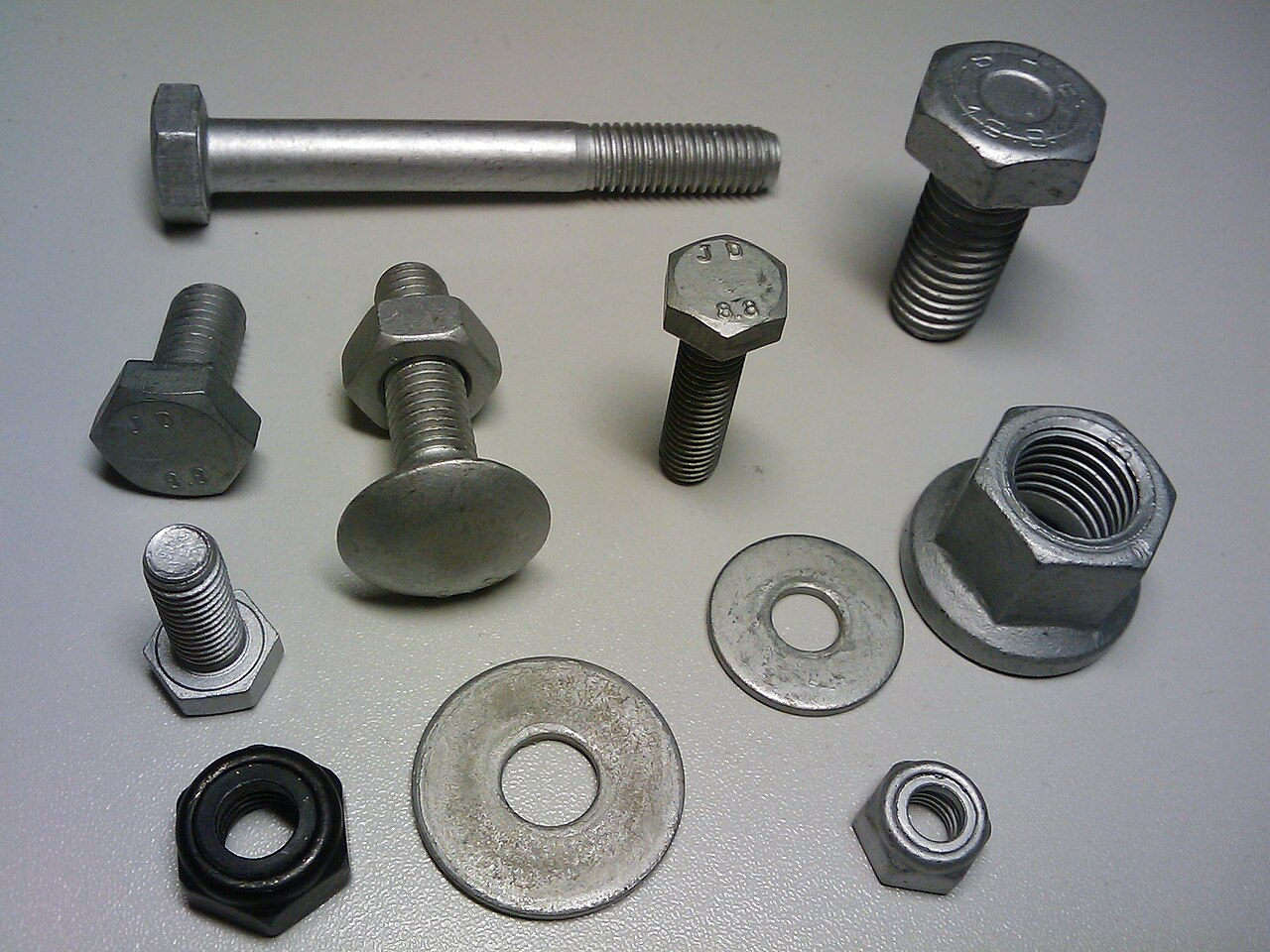
Unlike conventional electro-galvanized or hot-dip galvanized bolts, Dacromet hexagon bolts utilize a non-electrolytic coating process. This eliminates the risk of hydrogen embrittlement—a critical advantage for high-strength bolts of grades 8.8, 10.9, and 12.9. The thin, uniform Dacromet film (typically 4–12 μm) provides superior salt-spray resistance, heat resistance, and overall anti-rust durability, making these bolts the preferred choice in automotive, construction, wind energy, marine, and industrial equipment applications.
2. What Is Dacromet Coating?
Dacromet is an inorganic, water-based metal surface treatment technology consisting primarily of ultra-fine zinc flakes, aluminum flakes, and chromium-based binders. When applied to a hexagon bolt and cured at elevated temperature (approximately 300 °C), the flakes align into multiple overlapping layers, forming a dense, metallic silver-gray barrier. This multi-layer structure creates both a physical barrier against moisture and electrolytes and a sacrificial anodic protection mechanism that actively resists rust formation.
The coating on a Dacromet hexagon bolt offers dual protection: the zinc flakes act as a sacrificial anode, corroding preferentially to protect the steel substrate, while the aluminum flakes and inorganic matrix enhance barrier properties and improve overall corrosion resistance. Because the process is non-electrolytic, no hydrogen is introduced into the steel lattice, preserving the full mechanical integrity of high-strength bolts.
3. Dacromet Coating Process for Hexagon Bolts
The production of a reliable Dacromet hexagon bolt follows a carefully controlled sequence designed to maximize adhesion, uniformity, and anti-corrosion performance:
1.Surface Preparation: The bolt undergoes thorough cleaning and mechanical or alkaline derusting. Acid pickling is deliberately avoided to prevent hydrogen absorption that could lead to embrittlement of high-strength bolts.
2.Coating Application: The cleaned hexagon bolts are immersed in, sprayed with, or dip-spun in a water-based Dacromet slurry containing zinc and aluminum flakes. Dip-spin is the most common industrial method for bulk processing of bolts.
3.Curing / Sintering: The coated bolts are baked at approximately 300 °C. During curing the binder reacts and the metallic flakes sinter into a continuous, tightly adherent inorganic film.
4.Quality Inspection: Finished Dacromet hexagon bolts are checked for coating thickness, adhesion, appearance, and salt-spray performance to guarantee consistent anti-rust protection.
4. Performance Comparison of Anti-Corrosion Coatings
The following table summarizes the key differences between Dacromet hexagon bolts and bolts finished with traditional anti-rust methods:
| Property | Dacromet | Electro-Galvanizing | Hot-Dip Galvanizing |
| Coating Thickness | 4–12 μm | 5–15 μm | 40–85 μm |
| Salt Spray (no red rust) | 600–1,200+ h | 100–300 h | 500–800 h |
| Hydrogen Embrittlement Risk | None | High (needs baking) | Low–Medium |
| Heat Resistance | Up to 300 °C | ≤ 100–120 °C | ≤ 200 °C |
| Thread Fit Impact | Minimal / Standard nuts OK | Minimal | Significant (may need oversize) |
| Environmental Profile | Water-based, low pollution | Wastewater treatment needed | Zinc slag / wastewater |
5. Typical Applications of Dacromet Hexagon Bolts
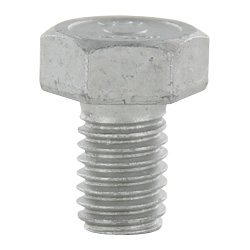
Thanks to their outstanding corrosion resistance, hydrogen-embrittlement-free nature, and dimensional accuracy, Dacromet hexagon bolts are widely specified in demanding sectors:
- Automotive and commercial vehicles: Engine components, chassis, suspension, and under-body fasteners that must resist road salt and humidity.
- Wind energy and renewable power: Tower, nacelle, and foundation bolts exposed to coastal or offshore climates.
- Construction and infrastructure: Structural connections, bridges, and outdoor steelwork requiring long-term anti-rust performance.
- Marine and offshore: Equipment and structural bolts subjected to continuous salt-laden atmospheres.
- Industrial machinery and heavy equipment: High-strength bolted joints in environments where both mechanical reliability and corrosion protection are essential.
6. Technical Specifications and Performance Data
Typical performance indicators for Dacromet-coated hexagon bolts are summarized below. Exact values depend on coating grade (e.g., Dacromet 320 or 500) and process parameters.
| Parameter | Typical Value / Performance |
| Coating System | Zinc + Aluminum flake (Dacromet 320 / 500) |
| Appearance | Metallic silver-gray, matte to satin |
| Typical Dry Film Thickness | 4–12 μm (Grade A / B depending on specification) |
| Salt Spray Resistance (ISO 9227) | ≥ 600 h (Grade A) to ≥ 1,000–1,200 h (Grade B) without red rust |
| Maximum Continuous Service Temperature | Approximately 300 °C |
| Hydrogen Embrittlement | None (non-electrolytic process) |
| Suitable Bolt Strength Grades | 4.8, 8.8, 10.9, 12.9 and higher |
| Thread Compatibility | Standard nuts; minimal impact on pitch diameter |
| Common Standards / References | ISO 10683 (related zinc-flake systems), OEM automotive specs |
7. Conclusion
Dacromet hexagon bolts offer a modern, high-performance solution for applications that demand both high mechanical strength and outstanding long-term corrosion resistance. By combining a thin, non-electrolytic zinc-aluminum flake coating with precise hexagonal geometry, these bolts eliminate hydrogen-embrittlement risks while delivering salt-spray resistance far superior to conventional electro-galvanizing. Their excellent heat resistance, thread compatibility, and environmental friendliness further enhance their value across automotive, energy, construction, and industrial sectors.
When specifying fasteners for corrosive service environments, engineers and buyers increasingly turn to Dacromet-coated hexagon bolts as the reliable, anti-rust choice that protects critical joints for decades. Proper process control and quality verification ensure that every bolt delivers the full corrosion-protection performance that the Dacromet technology is known for.
In summary, the Dacromet hexagon bolt stands as a proven, cost-effective, and technically superior anti-corrosion fastener for the most demanding applications.