- Chinese
- French
- German
- Portuguese
- Spanish
- Russian
- Japanese
- Korean
- Arabic
- Irish
- Greek
- Turkish
- Italian
- Danish
- Romanian
- Indonesian
- Czech
- Afrikaans
- Swedish
- Polish
- Basque
- Catalan
- Esperanto
- Hindi
- Lao
- Albanian
- Amharic
- Armenian
- Azerbaijani
- Belarusian
- Bengali
- Bosnian
- Bulgarian
- Cebuano
- Chichewa
- Corsican
- Croatian
- Dutch
- Estonian
- Filipino
- Finnish
- Frisian
- Galician
- Georgian
- Gujarati
- Haitian
- Hausa
- Hawaiian
- Hebrew
- Hmong
- Hungarian
- Icelandic
- Igbo
- Javanese
- Kannada
- Kazakh
- Khmer
- Kurdish
- Kyrgyz
- Latin
- Latvian
- Lithuanian
- Luxembou..
- Macedonian
- Malagasy
- Malay
- Malayalam
- Maltese
- Maori
- Marathi
- Mongolian
- Burmese
- Nepali
- Norwegian
- Pashto
- Persian
- Punjabi
- Serbian
- Sesotho
- Sinhala
- Slovak
- Slovenian
- Somali
- Samoan
- Scots Gaelic
- Shona
- Sindhi
- Sundanese
- Swahili
- Tajik
- Tamil
- Telugu
- Thai
- Ukrainian
- Urdu
- Uzbek
- Vietnamese
- Welsh
- Xhosa
- Yiddish
- Yoruba
- Zulu
- Kinyarwanda
- Tatar
- Oriya
- Turkmen
- Uyghur

Dacromet Flange Bolts: Superior Anti-Corrosion and Anti-Rust Performance for Demanding Applications
2026-10-20
1. Introduction
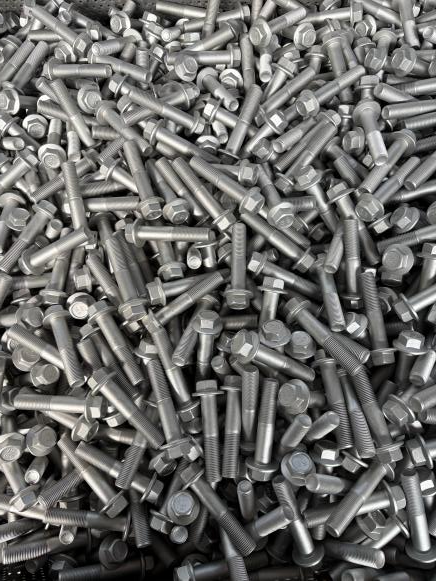
Traditional coatings such as electroplated zinc or hot-dip galvanizing often fall short in highly aggressive environments or when applied to high-strength fasteners. Dacromet flange bolts represent a significant advancement in anti-corrosion technology, combining the structural advantages of flange bolts with the exceptional rust-inhibiting properties of zinc-aluminum flake coatings.
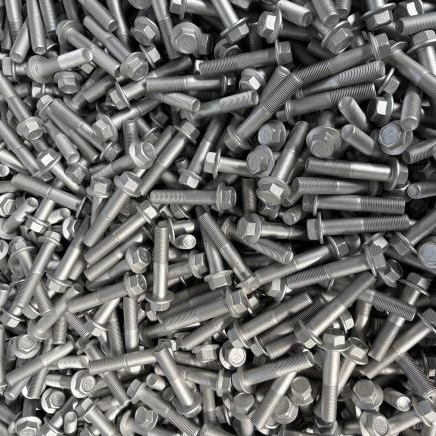
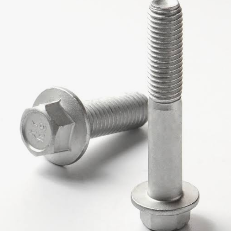
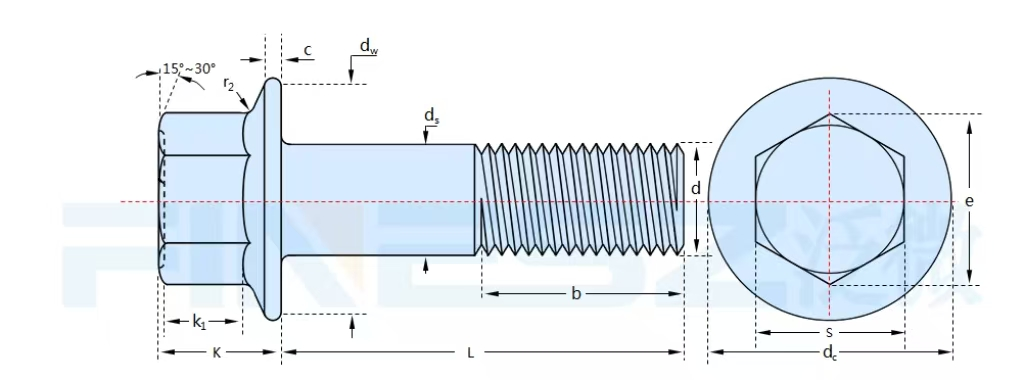
Flange bolts feature an integrated washer-like flange beneath the head, which distributes clamping force more evenly, reduces the risk of surface damage, and improves resistance to loosening under vibration. When these bolts are treated with Dacromet (also known as zinc-flake or DACROMET® coating), they deliver outstanding long-term protection against moisture, salt spray, chemical attack, and atmospheric corrosion—making them ideal for automotive, marine, infrastructure, energy, and heavy machinery applications.
2. Understanding Dacromet Coating Technology
Dacromet is a non-electrolytic, water-based inorganic coating system composed primarily of overlapping zinc and aluminum flakes dispersed in a chromium-containing or chromium-free inorganic binder. Applied by dip-spin, spray, or dip-drain methods and subsequently heat-cured, the coating forms a thin (typically 5–15 μm), uniform, silver-gray protective film that adheres tightly to the steel substrate.
The anti-corrosion mechanism of Dacromet operates through four complementary actions:
1.Barrier protection: Overlapping zinc and aluminum flakes create multiple layers that impede the penetration of moisture, oxygen, and corrosive ions.
2.Sacrificial (galvanic) protection: Zinc acts as a sacrificial anode, preferentially corroding to shield the underlying steel from rust.
3.Self-healing / self-repairing: Oxidation products of zinc and aluminum fill micro-damage in the coating, maintaining continuous anti-rust integrity.
4.Passivation: The inorganic binder and passivating compounds slow the sacrificial consumption of zinc, prolonging overall corrosion resistance.
Because the process involves no acid pickling or electrolysis, Dacromet coating completely eliminates the risk of hydrogen embrittlement—a critical advantage for high-strength bolts (Grades 10.9, 12.9, and ASTM A490 / F3125). This makes Dacromet flange bolts both mechanically reliable and highly resistant to rust and environmental degradation.
3. Key Advantages of Dacromet Flange Bolts
3.1 Exceptional Corrosion and Rust Resistance
Dacromet-coated flange bolts routinely achieve 1,000 hours or more of neutral salt spray testing (ASTM B117 / ISO 9227) without the appearance of red rust. In many specifications, white rust is delayed beyond 240–500 hours, and overall anti-corrosion performance is 7–10 times superior to conventional electrogalvanizing. This outstanding rust-inhibiting capability ensures long service life in coastal, marine, industrial, and de-icing-salt environments.
3.2 No Hydrogen Embrittlement Risk
Unlike electroplating processes that introduce hydrogen into high-tensile steel, the Dacromet dip-spin or spray process is entirely non-electrolytic. Consequently, high-strength flange bolts retain their full mechanical properties and are free from delayed brittle fracture caused by hydrogen embrittlement—providing both anti-rust protection and structural safety.
3.3 Thin, Uniform Coating with Excellent Dimensional Control
Typical coating thickness ranges from 5 to 15 μm. This thin film does not significantly alter thread dimensions, allowing standard nuts to be used without overtapping. The coating penetrates complex geometries, threads, and recesses uniformly, ensuring complete anti-corrosion coverage even on intricate flange bolt profiles.
3.4 High-Temperature Stability and Additional Benefits
Dacromet coatings remain effective at continuous temperatures up to approximately 250–300 °C, far exceeding the thermal limits of conventional zinc plating. Additional advantages include good paintability, controlled friction coefficients (especially with lubricated topcoats), bimetallic compatibility with aluminum, and compliance with many automotive and environmental standards.
4. Performance Comparison with Alternative Coatings
The following comparison highlights why Dacromet flange bolts are frequently selected when long-term anti-rust performance, dimensional accuracy, and high-strength integrity are required simultaneously.
Table 1. Comparative Corrosion Resistance and Key Properties
| Property | Dacromet (Zinc Flake) | Electroplated Zinc | Hot-Dip Galvanizing | Black Oxide |
| Typical Thickness | 5–15 μm | 5–15 μm | 40–100+ μm | < 1–2 μm |
| Salt Spray (to red rust) | 1,000+ hours | 96–240 hours | 500–1,500 hours | < 24–48 hours |
| Hydrogen Embrittlement Risk | None | High (requires baking) | Possible (acid pickling) | Low |
| Temperature Resistance | Up to ~300 °C | ~70–120 °C | ~200 °C | Limited |
| Thread Fit / Dimensional Impact | Excellent (thin film) | Good | Requires overtapping | Excellent |
| Anti-Rust Longevity (outdoor) | 15–25+ years* | 2–5 years | 15–30+ years | Indoor only |
*Service life depends on environment severity, coating grade, and topcoat. Values are indicative based on industry data.
Table 2. Typical Dacromet Coating Grades and Salt Spray Performance
| Grade / Coating Weight | Coating Weight (g/m²) | Hours without White Rust | Hours without Red Rust |
| Grade A (Standard) | ≈ 24 | ≈ 240 | ≈ 600 |
| Grade B (Enhanced) | ≈ 36 | ≈ 240 | ≈ 1,000 |
| High Thickness / Premium | ≈ 80+ | Higher | 1,000–2,000+ |
Note: Actual results vary with substrate, geometry, application process, and use of sealers/topcoats (e.g., PLUS® or DACROLUB®). Data referenced from typical DACROMET® 320/500 performance.
5. Typical Applications of Dacromet Flange Bolts
Owing to their dual benefits of integrated flange load distribution and superior anti-corrosion / anti-rust performance, Dacromet flange bolts are widely specified in the following sectors:
Automotive & Transportation: Chassis, suspension, engine mounts, exhaust systems, and structural assemblies exposed to road salt and moisture.
Marine & Offshore: Ship fittings, offshore platforms, wind turbine foundations, and coastal infrastructure requiring long-term salt-spray resistance.
Construction & Infrastructure: Bridges, steel structures, transmission towers, and outdoor frameworks in corrosive atmospheres.
Heavy Machinery & Agriculture: Equipment exposed to fertilizers, soil abrasion, humidity, and vibration.
Energy & Industrial: Power generation, chemical plants, and high-temperature or chemically aggressive environments where rust prevention is critical.
6. Conclusion
Dacromet flange bolts offer an outstanding balance of mechanical performance and advanced anti-corrosion technology. Their thin yet highly effective zinc-aluminum flake coating delivers exceptional resistance to rust, salt spray, moisture, and chemical attack, while the non-electrolytic process completely avoids hydrogen embrittlement risks associated with high-strength fasteners. Combined with the load-distributing advantages of the flange head design, these bolts provide durable, low-maintenance fastening solutions for some of the most demanding environments in automotive, marine, construction, energy, and industrial sectors.
When long-term anti-rust performance, dimensional precision, thermal stability, and structural integrity are all required, Dacromet-coated flange bolts stand out as a proven and reliable choice. Specifying the appropriate coating grade, verifying salt-spray performance, and ensuring compatible mating components will maximize service life and minimize corrosion-related failures.
Key Takeaways
| • Superior anti-corrosion: typically 1,000+ hours salt spray without red rust.
• Zero hydrogen embrittlement risk — ideal for high-strength (10.9 / 12.9) flange bolts. • Thin uniform coating preserves thread fit and dimensional accuracy. • Excellent heat resistance (up to ~300 °C) and self-healing anti-rust behavior. • Preferred solution for harsh environments where long-term rust prevention is critical. |