- Chinese
- French
- German
- Portuguese
- Spanish
- Russian
- Japanese
- Korean
- Arabic
- Irish
- Greek
- Turkish
- Italian
- Danish
- Romanian
- Indonesian
- Czech
- Afrikaans
- Swedish
- Polish
- Basque
- Catalan
- Esperanto
- Hindi
- Lao
- Albanian
- Amharic
- Armenian
- Azerbaijani
- Belarusian
- Bengali
- Bosnian
- Bulgarian
- Cebuano
- Chichewa
- Corsican
- Croatian
- Dutch
- Estonian
- Filipino
- Finnish
- Frisian
- Galician
- Georgian
- Gujarati
- Haitian
- Hausa
- Hawaiian
- Hebrew
- Hmong
- Hungarian
- Icelandic
- Igbo
- Javanese
- Kannada
- Kazakh
- Khmer
- Kurdish
- Kyrgyz
- Latin
- Latvian
- Lithuanian
- Luxembou..
- Macedonian
- Malagasy
- Malay
- Malayalam
- Maltese
- Maori
- Marathi
- Mongolian
- Burmese
- Nepali
- Norwegian
- Pashto
- Persian
- Punjabi
- Serbian
- Sesotho
- Sinhala
- Slovak
- Slovenian
- Somali
- Samoan
- Scots Gaelic
- Shona
- Sindhi
- Sundanese
- Swahili
- Tajik
- Tamil
- Telugu
- Thai
- Ukrainian
- Urdu
- Uzbek
- Vietnamese
- Welsh
- Xhosa
- Yiddish
- Yoruba
- Zulu
- Kinyarwanda
- Tatar
- Oriya
- Turkmen
- Uyghur

Ruspert Self-Drilling Screws: Advanced Anti-Corrosion & Anti-Rust Fastening Technology
2026-10-19
1. Introduction: The Evolution of Corrosion-Resistant Fasteners
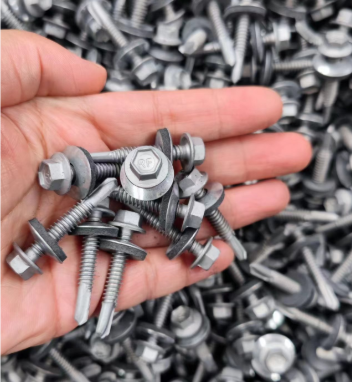
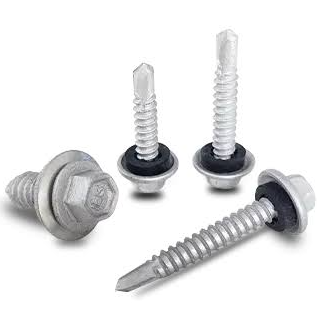
Self-drilling screws, also called drill-point screws or TEK screws, feature an integral drill tip that enables simultaneous drilling, tapping, and fastening in a single operation—eliminating the need for pre-drilling. When combined with the proprietary Ruspert multi-layer coating system, these fasteners deliver exceptional long-term corrosion resistance, superior rust-proof performance, and reliable mechanical strength even in highly aggressive environments such as coastal zones, industrial atmospheres, and treated timber applications.
Ruspert coating technology originated from advanced Japanese surface-treatment research and has become one of the most trusted high-grade anti-corrosion finishes worldwide. It offers salt-spray resistance typically ranging from 500 to 1,500 hours (and in premium grades up to 2,000 hours) according to ASTM B117 neutral salt spray testing—far surpassing conventional zinc plating (usually 72–240 hours) and many competing coatings.
2. The Multi-Layer Architecture of Ruspert Anti-Corrosion Coating
The outstanding rust-inhibiting and corrosion-preventive capability of Ruspert-coated self-drilling screws stems from a carefully engineered three-layer composite system. Unlike single-layer zinc plating, the Ruspert process creates a synergistic barrier that combines sacrificial galvanic protection with dense physical and chemical isolation against corrosive agents.
Layer Structure and Protective Mechanisms
| Layer | Composition | Primary Anti-Corrosion Function |
| 1st Layer | Metallic Zinc Layer (~5 μm) | Sacrificial anodic (galvanic) protection; protects the steel substrate even if the outer layers are locally damaged |
| 2nd Layer | High-Grade Chemical Conversion Film (~1 μm) | Passivates the zinc surface, enhances adhesion, and forms a tight chemical bond between zinc and ceramic topcoat |
| 3rd Layer | Baked Ceramic Surface Coating (~10–15 μm) | Dense physical barrier that intercepts moisture, oxygen, chlorides, and pollutants; provides abrasion resistance and chemical inertness |
These three layers are not merely stacked; they are chemically cross-linked during the baking process (typically below 200 °C). This low-temperature curing preserves the mechanical hardness and toughness of the heat-treated carbon-steel substrate—critical for maintaining the sharp drill-point geometry and high tensile strength required for self-drilling performance. The resulting composite film delivers outstanding resistance to red-rust formation, white-rust, under-film corrosion, and galvanic attack.
Key Anti-Rust and Anti-Corrosion Advantages
Superior Salt-Spray Resistance: Standard grades achieve 500–1,000 hours without red rust; premium R1000 and R1500 grades reach 1,000–1,500+ hours under ASTM B117 testing.
Excellent Contact Corrosion Resistance: The non-conductive ceramic top layer isolates the free zinc, preventing sacrificial consumption when in contact with other metals or coated surfaces.
Resistance to Acidic and Alkaline Environments: The ceramic barrier effectively shields against industrial pollutants, acid rain (Kesternich test), and alkaline conditions.
Treated-Timber Compatibility: High resistance to moisture and salts present in preservative-treated wood, outperforming ordinary zinc plating and many Dacromet-type coatings.
No Hydrogen Embrittlement: The process avoids acidic pretreatment and high-temperature baking that could induce hydrogen embrittlement, preserving the toughness of high-strength self-drilling screws.
Thin yet Durable Film: Typical total coating thickness of 15–25 μm maintains precise thread geometry and low driving torque while providing robust anti-rust protection.
3. Performance Comparison and Technical Specifications
To illustrate the anti-corrosion superiority of Ruspert self-drilling screws, the following comparison summarizes typical salt-spray performance and other key attributes relative to common alternative finishes.
| Coating Type | Typical Salt Spray (hrs to red rust) | Contact Corrosion Resistance | Hydrogen Embrittlement Risk | Suitability for Coastal/Outdoor Use |
| Electro-Zinc Plating | 72–240 | Low | Possible | Limited / Indoor |
| Hot-Dip Galvanizing | 300–600 | Moderate | Low | Moderate |
| Dacromet / Geomet | 500–1,000 | Moderate | Very Low | Good |
| Ruspert (R1000–R1500) | 1,000–1,500+ | Excellent | None | Excellent / Severe Marine |
Table 1. Comparative anti-corrosion performance of common fastener coatings.
Beyond pure salt-spray hours, Ruspert coating also demonstrates strong performance in cyclic corrosion tests, Kesternich (SO₂) acid-rain exposure, and real-world outdoor weathering. The ceramic topcoat contributes to UV stability and maintains coating integrity under thermal cycling, while the underlying zinc layer continues to provide sacrificial protection if the outer film is locally compromised by mechanical damage during installation. This multi-mechanism approach results in significantly delayed onset of red rust and a longer service life compared with single-layer metallic coatings.
3.1 Typical Mechanical and Geometric Specifications
Ruspert-coated self-drilling screws are predominantly manufactured from medium-carbon steel (commonly AISI 1022 / C1022) that undergoes controlled heat treatment to achieve the dual hardness profile essential for drilling performance:
- Surface hardness: typically HRC 52–58 (or HV ≥ 530–560) at the drill point and threads to ensure efficient cutting and wear resistance.
- Core hardness: HRC 28–40 range to retain toughness and resistance to shear or impact failure.
- Common diameters: #8 (4.2 mm), #10 (4.8 mm), #12 (5.5 mm), #14 (6.3 mm).
- Drill-point designations: #2, #3, #4, and #5 points, selected according to the combined thickness of materials to be penetrated (up to approximately 12–13 mm for larger points).
- Head styles: Hex washer head (most popular for roofing and cladding), hex flange, pan, flat, and truss heads; often supplied with bonded EPDM or neoprene sealing washers for waterproof, weather-tight joints.
4. Primary Applications and Selection Guidelines
Thanks to their combination of self-drilling efficiency and long-lasting anti-rust, anti-corrosion protection, Ruspert self-drilling screws are widely specified in the following sectors:
Metal Roofing and Wall Cladding Systems
Color-coated steel sheets, sandwich panels, and standing-seam roofs in industrial buildings, warehouses, and commercial facilities. The ceramic topcoat resists UV degradation and maintains appearance while preventing under-head corrosion that can lead to leakage.
Light-Gauge Steel Framing and Structural Connections
Joining of purlins, girts, studs, and tracks. The high corrosion resistance ensures long service life even when condensation or intermittent wetting occurs inside wall and roof cavities.
Coastal, Marine, and High-Humidity Environments
Projects located near the sea or in tropical climates benefit from the 1,000–1,500-hour salt-spray rating, which significantly delays the onset of red rust compared with standard zinc finishes.
Treated Timber and Outdoor Decking
Compatibility with copper-based and other preservative treatments makes Ruspert-coated screws preferable for exterior wood-to-metal or wood-to-wood connections where ordinary fasteners rapidly corrode.
4.1 Practical Selection Recommendations
1.Match drill-point size to total material thickness to avoid incomplete penetration or excessive driving torque.
2.Specify the required salt-spray grade (R500 / R1000 / R1500) according to environmental severity—R1500 or higher for severe marine exposure.
3.Select head style and washer type appropriate for sealing requirements and tool accessibility.
4.Verify that the coating color (silver, grey, blue, brown, etc.) meets architectural or identification needs without sacrificing anti-corrosion performance.
5.Prefer reputable manufacturers that provide batch traceability, salt-spray test reports, and consistent hardness control to guarantee both drilling reliability and long-term rust prevention.
5. Conclusion: Investing in Long-Term Structural Integrity
Ruspert self-drilling screws embody the successful integration of efficient mechanical fastening technology with advanced multi-layer anti-corrosion surface engineering. By combining a hard, sharp drill point, precisely formed threads, and a chemically bonded three-layer protective system, they deliver reliable one-step installation together with exceptional resistance to rust, red-rust formation, galvanic corrosion, and environmental degradation.
In an era when life-cycle cost, sustainability, and reduced maintenance are increasingly prioritized, the superior salt-spray performance, contact-corrosion resistance, and treated-timber compatibility of Ruspert-coated fasteners translate into fewer replacements, lower repair expenses, and more durable structures. Whether used in metal roofing, light-steel framing, coastal construction, or outdoor timber applications, these high-performance anti-rust, anti-corrosion self-drilling screws represent a proven solution for engineers, contractors, and fabricators seeking dependable, long-lasting connections.
Selecting genuine Ruspert-coated products from qualified producers ensures that the theoretical advantages of the coating technology are fully realized in the field—providing lasting protection against the relentless forces of corrosion and rust.