- English
- Chinese
- French
- German
- Portuguese
- Spanish
- Russian
- Japanese
- Korean
- Arabic
- Irish
- Greek
- Turkish
- Italian
- Danish
- Romanian
- Indonesian
- Czech
- Afrikaans
- Swedish
- Polish
- Catalan
- Esperanto
- Hindi
- Lao
- Albanian
- Amharic
- Armenian
- Azerbaijani
- Belarusian
- Bengali
- Bosnian
- Bulgarian
- Cebuano
- Chichewa
- Corsican
- Croatian
- Dutch
- Estonian
- Filipino
- Finnish
- Frisian
- Galician
- Georgian
- Gujarati
- Haitian
- Hausa
- Hawaiian
- Hebrew
- Hmong
- Hungarian
- Icelandic
- Igbo
- Javanese
- Kannada
- Kazakh
- Khmer
- Kurdish
- Kyrgyz
- Latin
- Latvian
- Lithuanian
- Luxembou..
- Macedonian
- Malagasy
- Malay
- Malayalam
- Maltese
- Maori
- Marathi
- Mongolian
- Burmese
- Nepali
- Norwegian
- Pashto
- Persian
- Punjabi
- Serbian
- Sesotho
- Sinhala
- Slovak
- Slovenian
- Somali
- Samoan
- Scots Gaelic
- Shona
- Sindhi
- Sundanese
- Swahili
- Tajik
- Tamil
- Telugu
- Thai
- Ukrainian
- Urdu
- Uzbek
- Vietnamese
- Welsh
- Xhosa
- Yiddish
- Yoruba
- Zulu
- Kinyarwanda
- Tatar
- Oriya
- Turkmen
- Uyghur

Dacromet Coated Flange Bolts-A Comprehensive Technical Guide to Design, Coating Technology, and Industrial Applications
2026-08-12
1. Introduction
Flange bolts represent a critical category of industrial fasteners, combining the functionality of a standard bolt with an integrated washer-like flange beneath the bolt head. When paired with Dacromet coating technology, these fasteners achieve an exceptional balance of mechanical strength and corrosion resistance, making them indispensable in demanding environments such as automotive manufacturing, construction, marine engineering, and heavy machinery.
This article provides a detailed examination of Dacromet coated flange bolts from two complementary perspectives: the structural design and mechanical properties of flange bolts, and the advanced surface treatment technology known as Dacromet. Together, these elements define a fastener solution that meets the stringent requirements of modern engineering applications.
2. Understanding Flange Bolts
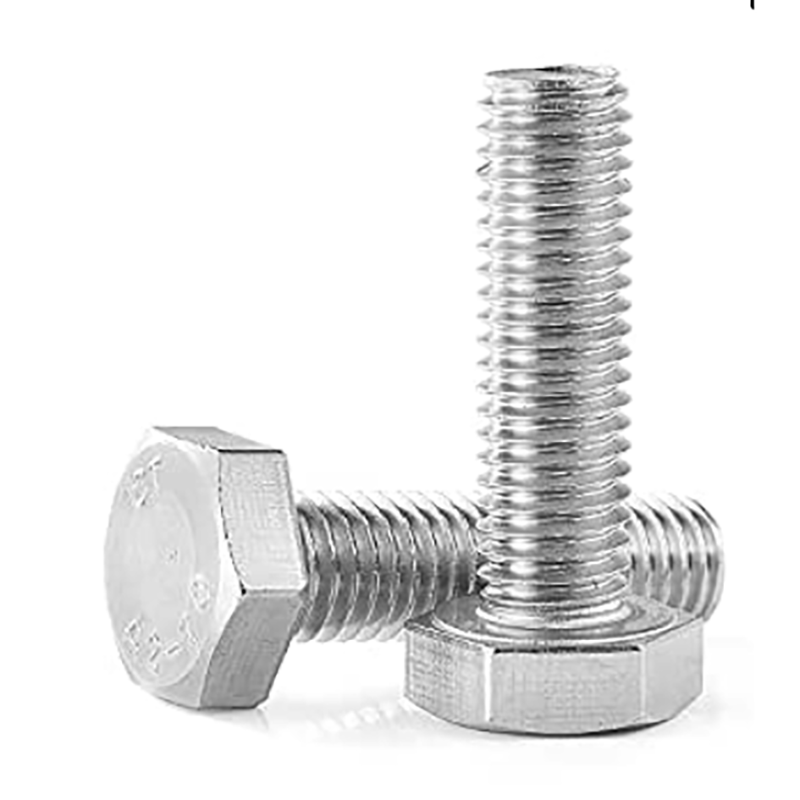
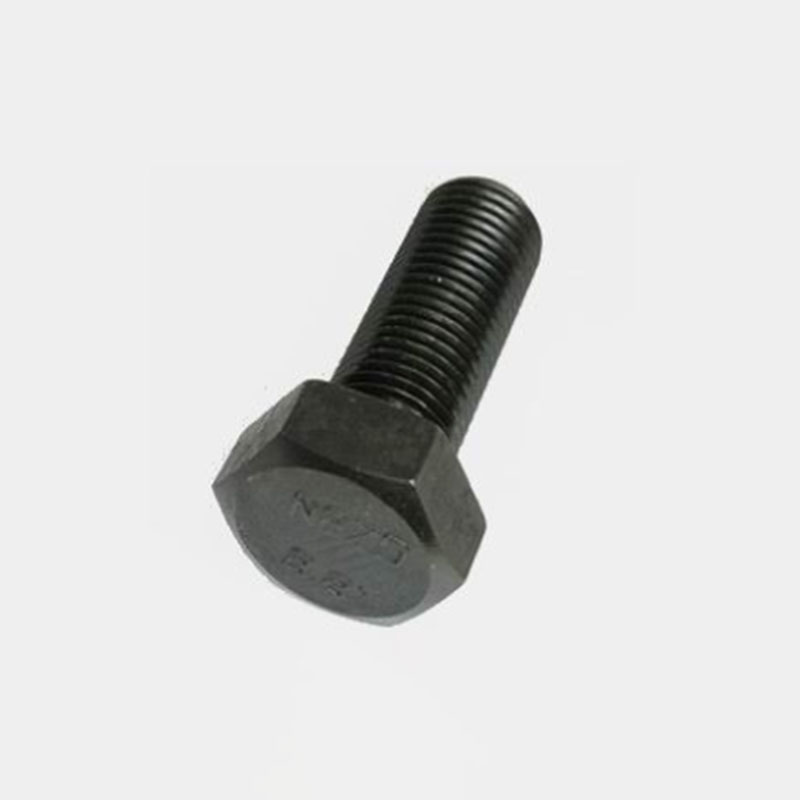
A flange bolt is a threaded fastener featuring a wide flange integrated directly beneath the hexagonal head. This flange distributes the clamping load over a larger surface area, eliminating the need for a separate washer and reducing assembly time. The integrated flange also provides enhanced resistance to loosening under vibration, a critical consideration in dynamic load environments.
Flange bolts are manufactured in both serrated and non-serrated variants. Serrated flange bolts feature teeth on the underside of the flange that grip the mating surface, providing superior anti-vibration performance. Non-serrated versions offer a smooth bearing surface, suitable for applications where surface damage must be minimized.
Table 1. Typical Specifications of Dacromet Flange Bolts
| Specification | Metric Range | Standard | Material |
| Thread Diameter | M6 - M24 | ISO 4162 / DIN 6921 | Carbon Steel (SCM435) |
| Property Class | 8.8 / 10.9 / 12.9 | ISO 898-1 | Alloy Steel |
| Flange Diameter | 13 - 42 mm | ISO 4162 | Carbon Steel |
| Surface Coating | Dacromet (Zn-Al) | ISO 10683 | Zinc-Aluminum Flake |
| Salt Spray Resistance | 1,000 - 3,000 hrs | ASTM B117 | No Red Rust |
| Operating Temp. | -40C to 300C | Industrial Std. | Heat Resistant |
3.Dacromet Coating Technology
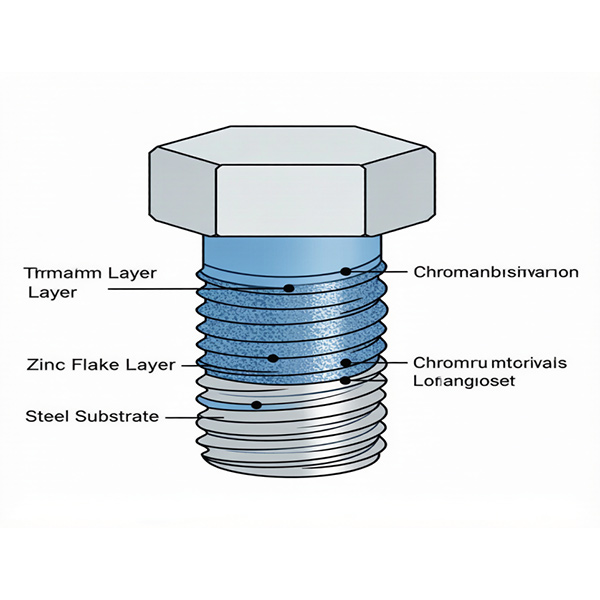
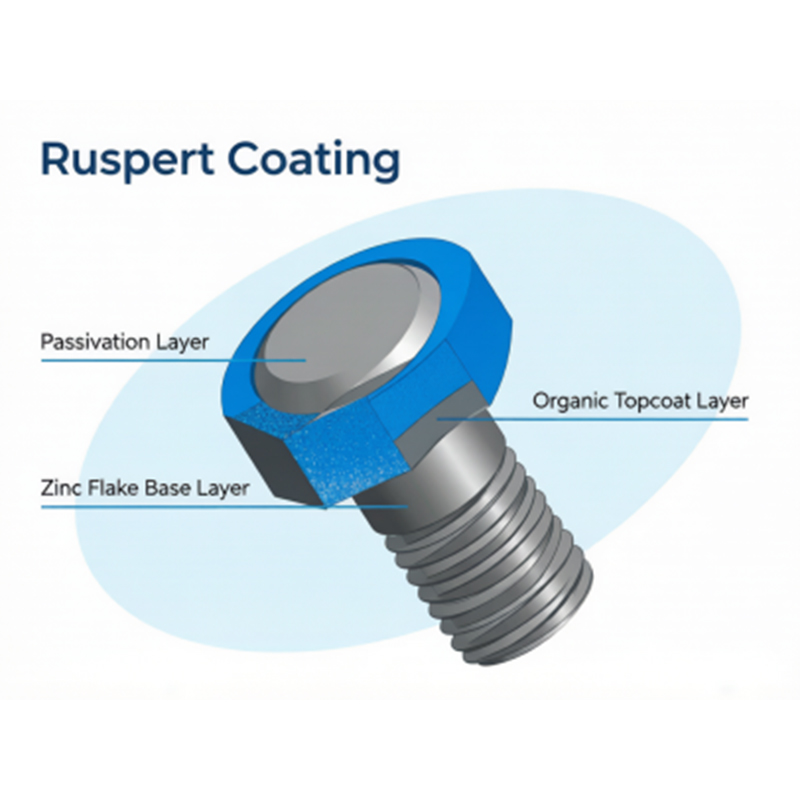
Dacromet is an advanced water-based, non-electrolytic surface coating technology originally developed to address the limitations of conventional galvanizing. The coating consists of zinc flakes, aluminum flakes, and chromate compounds dispersed in an aqueous binder system. When applied and cured, these flakes form a dense, layered barrier that provides exceptional corrosion protection without the risk of hydrogen embrittlement.
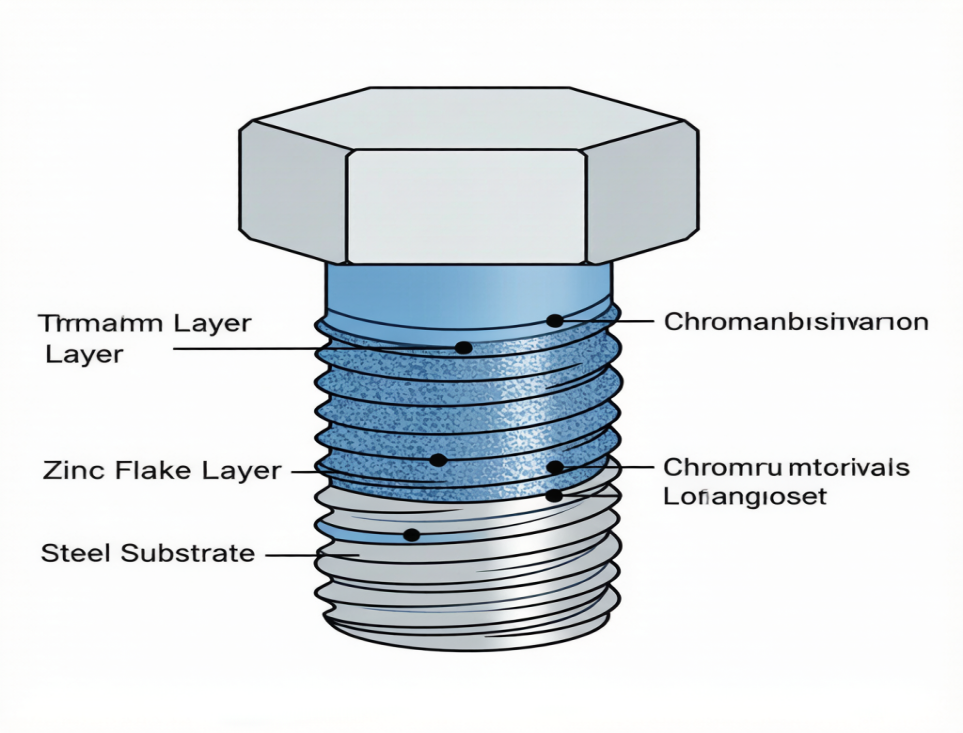
The Dacromet coating process differs fundamentally from electroplating. Rather than depositing metal through electrolysis, Dacromet uses a dip-spin or spray application followed by high-temperature curing. During curing at approximately 280-320 degrees Celsius, the zinc and aluminum flakes sinter together and bond to the steel substrate through a chromate-mediated cross-linking mechanism. The resulting coating is thin (typically 6-10 microns), uniform, and extremely adherent.
3.1 Coating Process Overview
The Dacromet application process involves several precisely controlled stages, each contributing to the final performance characteristics of the coating:
Table 2. Dacromet Coating Process Steps
| Step | Process | Description |
| 1 | Pre-treatment | Degreasing, shot blasting, and ultrasonic cleaning to remove oil, scale, and contaminants from the bolt surface. |
| 2 | Dipping / Spraying | Bolts are immersed in or sprayed with the Dacromet water-based coating solution containing zinc and aluminum flakes. |
| 3 | Spin Drying | Centrifugal spinning removes excess coating to ensure uniform thickness (6-10 microns). |
| 4 | Curing | Baked at 280-320C for 20-30 minutes, bonding flakes to the substrate through sintering. |
| 5 | Second Coat | A second dip-and-cure cycle is applied for enhanced corrosion protection (optional for heavier coatings). |
| 6 | Final Curing | Final bake at 300C ensures complete cross-linking and maximum adhesion of the coating. |
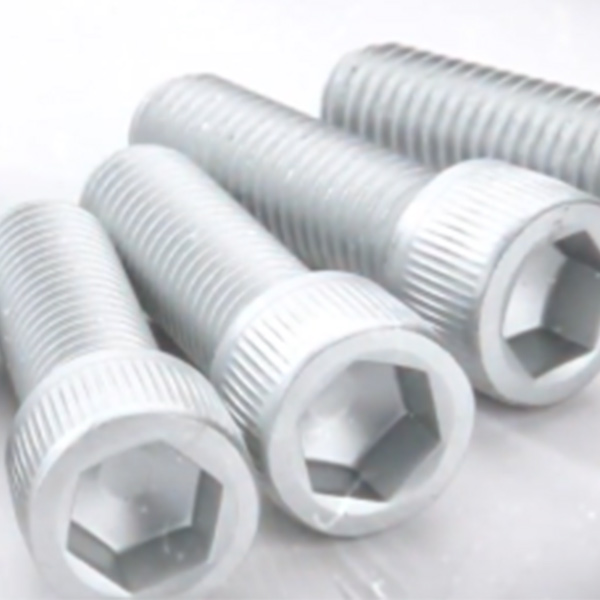
The entire process is typically completed in two coating cycles to achieve the desired coating thickness and corrosion resistance. Each cycle consists of application, spin-drying, and curing, with the final product exhibiting a characteristic silver-gray appearance.
4.Advantages of Dacromet Coating
Dacromet coating offers several distinct advantages over conventional surface treatments, making it the preferred choice for high-performance fastener applications:
Superior Corrosion Resistance: Dacromet-coated fasteners can withstand 1,000 to 3,000 hours of salt spray testing (ASTM B117) before the appearance of red rust, significantly outperforming traditional zinc electroplating (300-700 hours).
No Hydrogen Embrittlement: Unlike electroplating, the Dacromet process does not involve electrolysis, eliminating the risk of hydrogen embrittlement. This is particularly critical for high-strength bolts (Class 10.9 and 12.9) used in safety-critical applications.
Excellent Heat Resistance: The inorganic nature of the Dacromet coating allows it to maintain its protective properties at temperatures up to 300 degrees Celsius, far exceeding the thermal limits of organic coatings and conventional zinc plating.
Uniform Coating: The dip-spin application method ensures consistent coating thickness even on complex geometries, including threaded areas and recesses where electroplating may produce uneven deposits.
Environmental Compliance: Modern Dacromet formulations are free of hexavalent chromium (Cr6+), complying with RoHS, ELV, and REACH directives, making them suitable for automotive and electronics applications.
5. Industrial Applications
Dacromet coated flange bolts find extensive use across multiple industries where both structural integrity and long-term corrosion protection are paramount:
Automotive Industry: Used in chassis assemblies, engine mounts, brake systems, and suspension components where high-strength fastening combined with salt spray resistance is essential. Major OEMs specify Dacromet-coated fasteners for underbody applications exposed to road salt and moisture.
Construction and Infrastructure: Employed in steel structural connections, bridge components, and outdoor equipment where the self-distributing flange design reduces installation time and the Dacromet coating provides decades of maintenance-free service.
Marine and Offshore: The exceptional salt spray resistance of Dacromet coating (up to 3,000 hours) makes these bolts ideal for shipbuilding, offshore platforms, and dock hardware exposed to continuous saltwater environments.
Wind Energy: Used in turbine tower flanges and nacelle assemblies where high-strength bolting must withstand cyclic loading and environmental exposure over a 20+ year service life.
Railway and Heavy Machinery: Applied in track fastening systems, locomotive components, and mining equipment where vibration resistance and corrosion protection are simultaneously required.