- English
- Chinese
- French
- German
- Portuguese
- Spanish
- Russian
- Japanese
- Korean
- Arabic
- Irish
- Greek
- Turkish
- Italian
- Danish
- Romanian
- Indonesian
- Czech
- Afrikaans
- Swedish
- Polish
- Catalan
- Esperanto
- Hindi
- Lao
- Albanian
- Amharic
- Armenian
- Azerbaijani
- Belarusian
- Bengali
- Bosnian
- Bulgarian
- Cebuano
- Chichewa
- Corsican
- Croatian
- Dutch
- Estonian
- Filipino
- Finnish
- Frisian
- Galician
- Georgian
- Gujarati
- Haitian
- Hausa
- Hawaiian
- Hebrew
- Hmong
- Hungarian
- Icelandic
- Igbo
- Javanese
- Kannada
- Kazakh
- Khmer
- Kurdish
- Kyrgyz
- Latin
- Latvian
- Lithuanian
- Luxembou..
- Macedonian
- Malagasy
- Malay
- Malayalam
- Maltese
- Maori
- Marathi
- Mongolian
- Burmese
- Nepali
- Norwegian
- Pashto
- Persian
- Punjabi
- Serbian
- Sesotho
- Sinhala
- Slovak
- Slovenian
- Somali
- Samoan
- Scots Gaelic
- Shona
- Sindhi
- Sundanese
- Swahili
- Tajik
- Tamil
- Telugu
- Thai
- Ukrainian
- Urdu
- Uzbek
- Vietnamese
- Welsh
- Xhosa
- Yiddish
- Yoruba
- Zulu
- Kinyarwanda
- Tatar
- Oriya
- Turkmen
- Uyghur

Dacromet-Coated Hex Socket Bolts-A Comprehensive Technical Guide to Dacromet Surface Treatment and Cylindrical Head Hex Socket Design
2026-08-08
1. Introduction
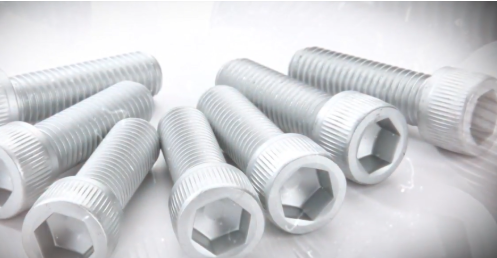
Dacromet-coated hex socket bolts represent a high-performance fastening solution that combines two essential technologies: the advanced Dacromet surface coating system and the precision-engineered cylindrical head hex socket (Allen) drive design. These bolts are widely used in automotive, construction, marine, and industrial applications where superior corrosion resistance and reliable torque transfer are critical requirements.
This technical guide provides an in-depth examination of both the Dacromet coating technology and the structural design of cylindrical head hex socket bolts, covering their material composition, manufacturing processes, performance characteristics, and practical applications.
2. Dacromet Coating Technology
2.1 What is Dacromet?
Dacromet is an advanced, environmentally friendly anti-corrosion coating technology developed as a modern alternative to traditional electroplating. It is a water-based, non-electrolytic coating system composed of ultrafine zinc and aluminum flakes bonded together through a chromate conversion process. The coating is applied via dip-spin or spray methods and cured at temperatures around 300°C, forming a dense, multi-layered protective film on the metal substrate.
2.2 Composition and Coating Structure
The Dacromet coating consists of several key components that work synergistically to provide exceptional corrosion protection:
Zinc flakes (20–30%): Provide sacrificial (cathodic) protection to the steel substrate
Aluminum flakes (10–15%): Enhance barrier protection and heat resistance
Chromate binder: Forms a passivating conversion layer that seals the coating
Organic solvent vehicle: Carries the solid components during application
2.3 Dacromet vs. Conventional Coatings
The following table compares Dacromet with common bolt coating technologies:
| Property | Dacromet | Zinc Plating | Hot-Dip Galvanizing |
| Salt Spray Resistance | 1,000–3,000 hrs | 96–240 hrs | 500–1,000 hrs |
| Hydrogen Embrittlement | None | Risk (High) | Low Risk |
| Coating Thickness | 5–20 µm | 5–15 µm | 50–120 µm |
| Heat Resistance | Up to 300°C | Up to 200°C | Up to 250°C |
| Environmental Impact | Low (Cr-free options) | Moderate (CN, Cr6+) | Moderate |
| Thread Fit | Excellent (thin coat) | Good | May require over-tapping |
Table 1. Comparative properties of Dacromet vs. zinc plating and hot-dip galvanizing
3. Cylindrical Head Hex Socket Bolt Design
3.1 Structural Features
The cylindrical head hex socket bolt, commonly referenced under DIN 912 (ISO 4762), features a cylindrical (button) head with a hexagonal socket (Allen) drive recess. This design offers several structural advantages over conventional hex head bolts:
Low-profile head design: The cylindrical head sits flush or slightly below the surface, making it ideal for compact assemblies with limited clearance.
Internal hex drive: The hex socket allows torque to be applied from within the head, reducing the risk of stripping and enabling higher clamping forces.
Smooth external surface: The absence of external hex flats prevents interference with adjacent components and improves aesthetic appearance.
Uniform stress distribution: The cylindrical head geometry distributes clamping load evenly across the contact area, reducing localized stress concentrations.
3.2 Standard Dimensions (DIN 912 / ISO 4762)
The table below lists key dimensional parameters for commonly used metric sizes:
| Thread Size | Head Dia. (dk) | Head Height (k) | Hex Socket (s) | Tensile Strength (12.9) |
| M3 | 5.50 mm | 3.00 mm | 2.50 mm | 1,220 MPa |
| M4 | 7.00 mm | 4.00 mm | 3.00 mm | 1,220 MPa |
| M5 | 8.50 mm | 5.00 mm | 4.00 mm | 1,220 MPa |
| M6 | 10.00 mm | 6.00 mm | 5.00 mm | 1,220 MPa |
| M8 | 13.00 mm | 8.00 mm | 6.00 mm | 1,220 MPa |
Table 2. Standard dimensions for cylindrical head hex socket bolts (DIN 912 / ISO 4762)
4. Applications and Industry Usage
Dacromet-coated hex socket bolts find extensive use across multiple industries due to their unique combination of corrosion resistance and mechanical reliability:
Automotive: Engine assemblies, chassis components, brake systems, and body panels where long-term corrosion protection is essential.
Construction and infrastructure: Steel frame connections, curtain wall systems, and outdoor structural assemblies exposed to harsh weather.
Marine and offshore: Equipment and structures subject to saltwater exposure, where conventional coatings fail rapidly.
Railway and wind energy: High-vibration environments requiring both secure fastening and durable surface protection.
Electrical and electronic enclosures: Outdoor cabinets and equipment housings requiring non-conductive, corrosion-resistant fasteners.
5. Key Advantages Summary
| Dacromet Coating Advantages | Hex Socket Design Advantages |
| • Superior salt spray resistance (1,000–3,000 hrs) | • Higher torque capacity than slotted or Phillips drives |
| • Zero hydrogen embrittlement risk | • Low-profile head for compact assemblies |
| • Thin, uniform coating preserves thread integrity | • Smooth head exterior prevents snagging and interference |
| • Excellent chemical and UV resistance | • Recessed drive protects socket from contamination |
| • Environmentally compliant (RoHS/REACH) | • Compatible with DIN 912 / ISO 4762 standards |
Table 3. Summary of key advantages by coating and design
6.Conclusion
Dacromet-coated hex socket bolts represent the convergence of advanced surface engineering and precision mechanical design. The Dacromet coating delivers exceptional corrosion protection without the hydrogen embrittlement risks associated with electroplating, while the cylindrical head hex socket configuration provides superior torque transfer, compact geometry, and reliable clamping performance. Together, these technologies make Dacromet hex socket bolts an ideal choice for demanding applications across automotive, construction, marine, and industrial sectors.
As industries continue to demand longer service life, reduced maintenance, and environmentally responsible manufacturing, the adoption of Dacromet-coated fasteners is expected to grow. Engineers and procurement professionals should consider specifying Dacromet hex socket bolts for any application where corrosion resistance, mechanical reliability, and compact assembly design are key performance criteria.