- English
- Chinese
- French
- German
- Portuguese
- Spanish
- Russian
- Japanese
- Korean
- Arabic
- Irish
- Greek
- Turkish
- Italian
- Danish
- Romanian
- Indonesian
- Czech
- Afrikaans
- Swedish
- Polish
- Basque
- Catalan
- Esperanto
- Hindi
- Lao
- Albanian
- Amharic
- Armenian
- Azerbaijani
- Belarusian
- Bengali
- Bosnian
- Bulgarian
- Cebuano
- Chichewa
- Corsican
- Croatian
- Dutch
- Estonian
- Filipino
- Finnish
- Frisian
- Galician
- Georgian
- Gujarati
- Haitian
- Hausa
- Hawaiian
- Hebrew
- Hmong
- Hungarian
- Icelandic
- Igbo
- Javanese
- Kannada
- Kazakh
- Khmer
- Kurdish
- Kyrgyz
- Latin
- Latvian
- Lithuanian
- Luxembou..
- Macedonian
- Malagasy
- Malay
- Malayalam
- Maltese
- Maori
- Marathi
- Mongolian
- Burmese
- Nepali
- Norwegian
- Pashto
- Persian
- Punjabi
- Serbian
- Sesotho
- Sinhala
- Slovak
- Slovenian
- Somali
- Scots Gaelic
- Shona
- Sindhi
- Sundanese
- Swahili
- Tajik
- Tamil
- Telugu
- Thai
- Ukrainian
- Urdu
- Uzbek
- Vietnamese
- Welsh
- Xhosa
- Yiddish
- Yoruba
- Zulu
- Kinyarwanda
- Tatar
- Oriya
- Turkmen
- Uyghur

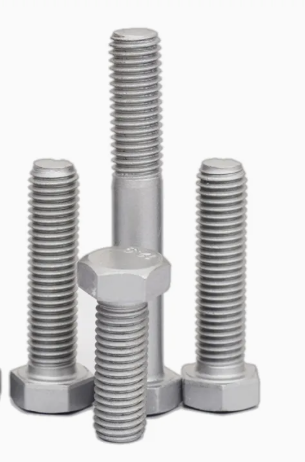
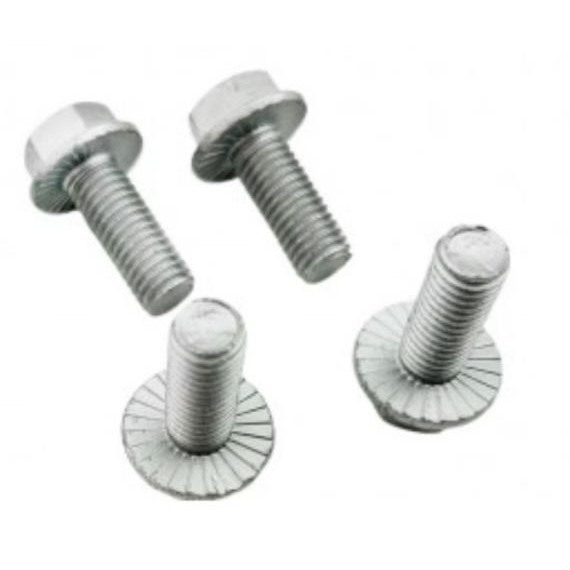
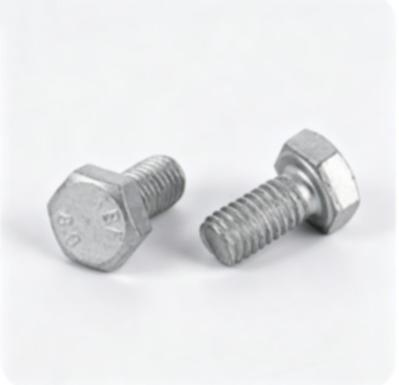
Dacromet Hexagonal Bolts-A Comprehensive Introduction to High-Performance Corrosion-Resistant Fasteners
2026-09-15
1. Introduction
In modern industrial applications, fasteners must combine high mechanical strength with exceptional corrosion resistance. Traditional treatments such as electro-galvanizing and hot-dip galvanizing have limitations including hydrogen embrittlement risk, limited heat resistance, and modest corrosion protection. Dacromet hexagonal bolts (also called hex bolts or hexagon head bolts) address these shortcomings with a thin yet highly effective protective coating.
Dacromet is a water-based, non-electrolytic zinc-aluminum flake coating developed in the 1970s. Applied to hexagonal bolts, it forms a dense multi-layered barrier that delivers outstanding performance in harsh environments while preserving precise dimensional tolerances essential for reliable assembly. This article covers the coating technology, key advantages, manufacturing process, applications, and comparison with conventional finishes.
2. What Is Dacromet Coating?
Dacromet is an inorganic coating system composed of ultra-fine zinc flakes, aluminum powder, and a chromium-based (or chromium-free) binder. Applied as a water-based dispersion and cured at approximately 300°C, it forms an amorphous binder that interlocks overlapping metal flakes into a compact protective film. Typical coating thickness is only 4–8 μm—far thinner than hot-dip galvanizing (50–80 μm)—yet it provides superior corrosion protection. The finished surface has a uniform silver-gray metallic appearance.
Core composition: zinc flakes (60–80%) for sacrificial protection, aluminum powder (5–15%) for enhanced barrier properties, an inorganic binder that passivates the surface, and deionized water as the carrier medium.
3. Key Advantages of Dacromet Hexagonal Bolts
3.1 Exceptional Corrosion Resistance
A 4–8 μm Dacromet coating typically withstands more than 1,000–1,200 hours of neutral salt spray testing (ASTM B117) without red rust—approximately 7 to 10 times the performance of electro-galvanizing (100–300 hours). High-performance grades can exceed 2,000 hours. The multi-layered flake structure acts as both a physical barrier and a sacrificial anode, providing long-term protection in coastal, industrial, and road-salt environments.
3.2 Freedom from Hydrogen Embrittlement
Traditional electroplating involves acid pickling and electrolysis, which can introduce hydrogen into high-strength steel and cause delayed brittle fracture—especially critical for Grade 10.9 and 12.9 bolts. The Dacromet process uses only mechanical cleaning and non-electrolytic application, completely eliminating hydrogen embrittlement risk. This makes it the preferred coating for safety-critical high-tensile hexagonal bolts.
3.3 Outstanding Heat Resistance
Dacromet coatings remain stable and protective at continuous temperatures up to 300°C. Conventional zinc coatings begin to degrade above 70–100°C and may peel at 200–300°C. This thermal stability makes Dacromet hexagonal bolts ideal for engine compartments, exhaust systems, and industrial high-temperature environments.
3.4 Dimensional Stability and Thread Compatibility
The ultra-thin, conformal coating does not significantly alter thread dimensions or pitch diameter. Nuts assemble smoothly without the oversize tapping often required after hot-dip galvanizing. The coating also penetrates deep holes, recesses, and internal surfaces that electroplating cannot reliably protect. In addition, the film bonds firmly to the substrate and accepts subsequent organic coatings or paints with excellent adhesion.
4. Manufacturing and Coating Process
Hexagonal bolts are typically produced from medium-carbon or alloy steel by cold heading or hot forging, followed by thread rolling and heat treatment to achieve the required property class (commonly 8.8, 10.9, or 12.9). After thorough cleaning, the Dacromet coating is applied as follows:
1.Surface preparation: Alkaline degreasing and mechanical abrasive cleaning (no acid pickling).
2.Coating application: Dip-spin immersion for bulk fasteners or spraying for larger parts; excess coating removed by centrifugation.
3.Curing: Baking at approximately 300–320°C for 15–30 minutes to form the protective flake structure.
4.Optional topcoat: A sealer or lubricant may be applied to enhance corrosion resistance and control the coefficient of friction.
5. Typical Applications
Dacromet hexagonal bolts are widely specified where long-term reliability under corrosive or high-temperature conditions is essential:
Automotive: Chassis, suspension, brake systems, engine compartment hardware, and underbody parts exposed to road salt.
Wind energy & power transmission: Tower bolts and structural fasteners on offshore and coastal wind turbines.
Marine & offshore: Deck hardware and platform structures exposed to continuous saltwater spray.
Construction & infrastructure: Steel frame connections, bridge components, and outdoor structural joints.
Railway, heavy machinery, aerospace & defense: High-strength fastening points subject to vibration, weather, and mechanical stress.
6. Comparison with Traditional Coatings
Key performance differences highlight why Dacromet is preferred for high-performance hexagonal bolts:
Coating thickness: Dacromet 4–8 μm | Electro-galvanizing 5–15 μm | Hot-dip galvanizing 50–80 μm
Salt spray resistance (no red rust): Dacromet ≥1,200 h | Electro-galvanizing 100–300 h | Hot-dip 500–800 h
Hydrogen embrittlement risk: Dacromet – None | Electro-galvanizing – High | Hot-dip – Medium
High-temperature resistance: Dacromet up to 300°C | Electro-galvanizing ≤100°C | Hot-dip ≤200°C
Thread fit: Dacromet maintains precise tolerances; hot-dip galvanizing often requires thread compensation.
7. Standards, Grades, and Specifications
Dacromet hexagonal bolts are manufactured to international standards including ISO 4014/4017, DIN 931/933, ANSI/ASME B18.2.1, and GB/T 5782/5783. Common property classes are 4.8, 8.8, 10.9, and 12.9 (metric) or Grade 5 and Grade 8 (inch). Materials include carbon steel and alloy steels such as 35CrMo, 40Cr, and 42CrMo. Typical size range is M5 to M36 (larger sizes available for special applications), in full-thread or partial-thread configurations. Many automotive OEMs list Dacromet or equivalent zinc-flake coatings as approved finishes for high-strength fasteners.
8. Environmental Considerations
Traditional Dacromet formulations contain hexavalent chromium in the binder. While the cured coating is stable and the process generates far less wastewater than electroplating, environmental regulations have driven the development of chromium-free alternatives such as Geomet® and other modern zinc-flake systems. These retain the core performance advantages of Dacromet while meeting stricter RoHS and REACH requirements.
Overall, the Dacromet process is considered more environmentally friendly than conventional electro-galvanizing because it eliminates acid baths, cyanide solutions, and extensive wastewater treatment. The water-based chemistry also results in low volatile organic compound (VOC) emissions.
9. Conclusion
Dacromet hexagonal bolts offer a high-performance solution for applications demanding both mechanical reliability and long-term corrosion protection. Their combination of an ultra-thin yet highly effective coating, complete freedom from hydrogen embrittlement, excellent heat resistance, and precise dimensional control makes them especially valuable for high-strength fasteners in automotive, energy, marine, and structural engineering sectors.
As environmental regulations evolve, chromium-free zinc-flake coatings derived from the original Dacromet technology continue to expand the range of compliant options. Whether specified as classic Dacromet or a modern equivalent, these coated hexagonal bolts deliver proven durability that significantly extends service life and reduces maintenance costs in corrosive and high-temperature environments. For critical joints where failure is not an option, Dacromet hexagonal bolts remain one of the most reliable and technically advanced fastener solutions available today.