- English
- Chinese
- French
- German
- Portuguese
- Spanish
- Russian
- Japanese
- Korean
- Arabic
- Irish
- Greek
- Turkish
- Italian
- Danish
- Romanian
- Indonesian
- Czech
- Afrikaans
- Swedish
- Polish
- Basque
- Catalan
- Esperanto
- Hindi
- Lao
- Albanian
- Amharic
- Armenian
- Azerbaijani
- Belarusian
- Bengali
- Bosnian
- Bulgarian
- Cebuano
- Chichewa
- Corsican
- Croatian
- Dutch
- Estonian
- Filipino
- Finnish
- Frisian
- Galician
- Georgian
- Gujarati
- Haitian
- Hausa
- Hawaiian
- Hebrew
- Hmong
- Hungarian
- Icelandic
- Igbo
- Javanese
- Kannada
- Kazakh
- Khmer
- Kurdish
- Kyrgyz
- Latin
- Latvian
- Lithuanian
- Luxembou..
- Macedonian
- Malagasy
- Malay
- Malayalam
- Maltese
- Maori
- Marathi
- Mongolian
- Burmese
- Nepali
- Norwegian
- Pashto
- Persian
- Punjabi
- Serbian
- Sesotho
- Sinhala
- Slovak
- Slovenian
- Somali
- Scots Gaelic
- Shona
- Sindhi
- Sundanese
- Swahili
- Tajik
- Tamil
- Telugu
- Thai
- Ukrainian
- Urdu
- Uzbek
- Vietnamese
- Welsh
- Xhosa
- Yiddish
- Yoruba
- Zulu
- Kinyarwanda
- Tatar
- Oriya
- Turkmen
- Uyghur

Dacromet Flange Bolts: A Comprehensive Introduction to High-Performance Anti-Corrosion Fasteners
2026-10-16
1. Introduction to Dacromet Flange Bolts
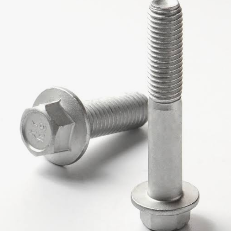
In modern industrial applications, the reliability of fastening systems is critical. Among the most advanced solutions available today are Dacromet flange bolts. These specialized bolts combine the mechanical advantages of a flange design with the exceptional anti-corrosion and anti-rust properties of Dacromet coating technology.
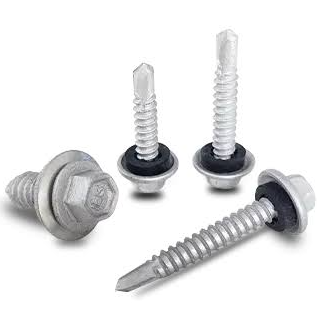
A flange bolt features an integrated washer-like flange under the head. This design distributes the clamping load over a larger surface area, reduces the risk of surface damage, and often eliminates the need for a separate washer. When this flange bolt is treated with Dacromet — a non-electrolytic zinc-aluminum flake coating — it becomes a high-performance fastener capable of withstanding harsh corrosive environments for extended periods.
Dacromet coating, also known as zinc flake coating, provides outstanding protection against rust and corrosion. It is widely specified for high-strength bolts (Grade 8.8, 10.9, and 12.9) used in automotive, construction, marine, wind energy, and industrial machinery applications where traditional zinc plating or hot-dip galvanizing may fall short.
2. What Is Dacromet Coating?
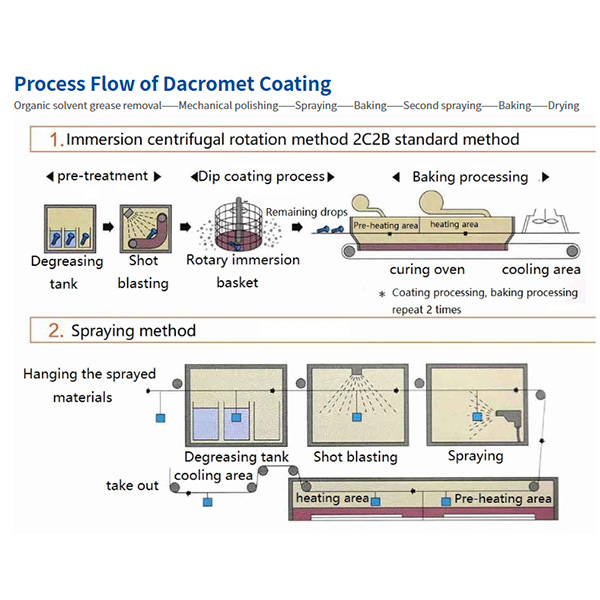
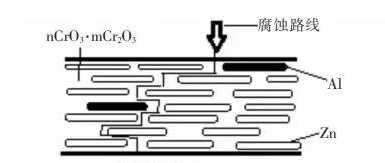
Dacromet is an inorganic, water-based coating system composed primarily of zinc and aluminum flakes suspended in a chromium-containing binder. The coating is applied by dip-spin, spray, or dip-drain methods and then cured at elevated temperatures (typically 300–320°C). This process forms a thin, dense, multi-layered barrier (usually 4–8 μm thick) that bonds chemically with the steel substrate of the bolt.
Unlike conventional electroplating, the Dacromet process does not involve acid pickling or electrolysis. Consequently, it introduces no hydrogen embrittlement risk — a decisive advantage for high-tensile bolts that must maintain structural integrity under high preload and cyclic loading.
Key Characteristics of Dacromet Coating on Bolts
- Superior corrosion resistance: Typically exceeds 1,000 hours of neutral salt spray testing (ASTM B117 / ISO 9227) without red rust.
- Thin and uniform film: Only 4–8 μm thick, preserving precise thread tolerances of the bolt.
- High temperature resistance: Maintains protective performance up to 300°C continuous service.
- Excellent chemical resistance: Resists road salts, automotive fluids, mild acids, and industrial atmospheres.
- Controlled friction: Consistent torque-tension relationship for reliable bolt tightening.
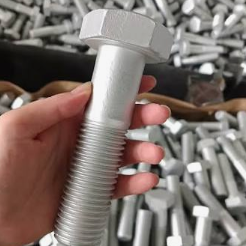
- Silver-gray metallic appearance: Uniform, matte finish that is also paintable.
3. Advantages of Dacromet Flange Bolts
Dacromet flange bolts offer a unique combination of mechanical and surface-protection benefits that make them preferred over conventional coated bolts in demanding environments.
Exceptional Anti-Corrosion and Anti-Rust Performance
The multi-layered zinc-aluminum flake structure of Dacromet creates both a barrier effect and a sacrificial anode effect. This dual mechanism provides 7 to 10 times the corrosion resistance of traditional electro-galvanized coatings. High-quality Dacromet flange bolts can achieve more than 1,200 hours of salt spray resistance without the appearance of red rust, ensuring long-term anti-rust protection even in coastal, marine, or heavily salted road environments.
No Hydrogen Embrittlement Risk
High-strength bolts (especially Grade 10.9 and 12.9) are highly susceptible to hydrogen embrittlement when processed by conventional electroplating. The Dacromet process eliminates acid pickling and electrolytic deposition, completely avoiding hydrogen introduction. This makes Dacromet the preferred coating for critical structural and safety-related flange bolts.
Thin Coating Preserves Thread Fit
With a typical thickness of only 4–8 μm, Dacromet coating does not significantly alter the pitch diameter of the bolt threads. This allows the use of standard nuts without the need for overtapping, which is often required for thicker hot-dip galvanized coatings. The result is better thread engagement, more consistent preload, and easier assembly of flange bolts.
4. Performance Comparison of Bolt Coatings
The following table compares Dacromet with common alternative coatings used on bolts:
| Property | Dacromet | Electro-Zinc Plating | Hot-Dip Galvanizing |
| Coating Thickness | 4–8 μm | 5–15 μm | 40–80 μm |
| Salt Spray Resistance (to red rust) | ≥ 1,000–1,200 h | 100–300 h | 500–800 h |
| Hydrogen Embrittlement Risk | None | High (requires baking) | Medium |
| High-Temperature Resistance | Up to 300°C | ≤ 120°C | ≤ 200°C |
| Thread Fit Compatibility | Excellent (standard nuts) | Good | Requires overtapping |
| Suitability for High-Strength Bolts | Ideal (10.9 / 12.9) | Limited | Moderate |
Table 1. Comparative performance of common bolt surface treatments.
5. Selection Guidelines for Dacromet Flange Bolts
When specifying Dacromet flange bolts for a project, consider the following factors to ensure optimal anti-corrosion performance and joint reliability:
1.Corrosivity of the environment: Coastal, marine, industrial, or road-salt exposure usually justifies Grade B or higher Dacromet coatings.
2.Bolt strength grade: For Grade 10.9 and 12.9 flange bolts, Dacromet is strongly recommended to eliminate hydrogen embrittlement risk.
3.Temperature exposure: Applications approaching 250–300°C benefit from Dacromet’s thermal stability.
4.Torque-tension requirements: Specify a lubricated topcoat (e.g., PLUS® or DACROLUB®) when precise preload control is critical.
5.Compatibility with mating parts: Dacromet shows good bimetallic compatibility with aluminum components, reducing galvanic corrosion risk.
6. Conclusion
Dacromet flange bolts represent a mature, high-performance fastening solution that simultaneously addresses mechanical joint integrity and long-term surface protection. By combining the load-distributing advantages of a flange head with the outstanding anti-corrosion and anti-rust properties of zinc-aluminum flake coating, these bolts deliver reliable service in the most aggressive environments.
Key takeaways for engineers and procurement specialists include:
- Dacromet provides 7–10 times the corrosion resistance of conventional electro-zinc plating while remaining thin enough to preserve standard thread fits.
- The non-electrolytic process completely eliminates hydrogen embrittlement, making it ideal for high-strength flange bolts.
- Excellent high-temperature stability (up to 300°C) and chemical resistance further expand application possibilities.
- The integrated flange design simplifies assembly and improves joint performance under vibration and cyclic loading.
Whether used in automotive chassis, offshore wind turbines, coastal infrastructure, or heavy industrial equipment, Dacromet flange bolts offer a proven route to longer service life, reduced maintenance, and enhanced safety. Specifying the correct Dacromet grade and ensuring proper quality control will maximize the anti-rust and anti-corrosion benefits that these advanced bolts are designed to deliver.