- English
- Chinese
- French
- German
- Portuguese
- Spanish
- Russian
- Japanese
- Korean
- Arabic
- Irish
- Greek
- Turkish
- Italian
- Danish
- Romanian
- Indonesian
- Czech
- Afrikaans
- Swedish
- Polish
- Basque
- Catalan
- Esperanto
- Hindi
- Lao
- Albanian
- Amharic
- Armenian
- Azerbaijani
- Belarusian
- Bengali
- Bosnian
- Bulgarian
- Cebuano
- Chichewa
- Corsican
- Croatian
- Dutch
- Estonian
- Filipino
- Finnish
- Frisian
- Galician
- Georgian
- Gujarati
- Haitian
- Hausa
- Hawaiian
- Hebrew
- Hmong
- Hungarian
- Icelandic
- Igbo
- Javanese
- Kannada
- Kazakh
- Khmer
- Kurdish
- Kyrgyz
- Latin
- Latvian
- Lithuanian
- Luxembou..
- Macedonian
- Malagasy
- Malay
- Malayalam
- Maltese
- Maori
- Marathi
- Mongolian
- Burmese
- Nepali
- Norwegian
- Pashto
- Persian
- Punjabi
- Serbian
- Sesotho
- Sinhala
- Slovak
- Slovenian
- Somali
- Scots Gaelic
- Shona
- Sindhi
- Sundanese
- Swahili
- Tajik
- Tamil
- Telugu
- Thai
- Ukrainian
- Urdu
- Uzbek
- Vietnamese
- Welsh
- Xhosa
- Yiddish
- Yoruba
- Zulu
- Kinyarwanda
- Tatar
- Oriya
- Turkmen
- Uyghur

Dacromet Hex Bolts Lead the Next Wave of Anti-Corrosion Fastening
2026-10-14
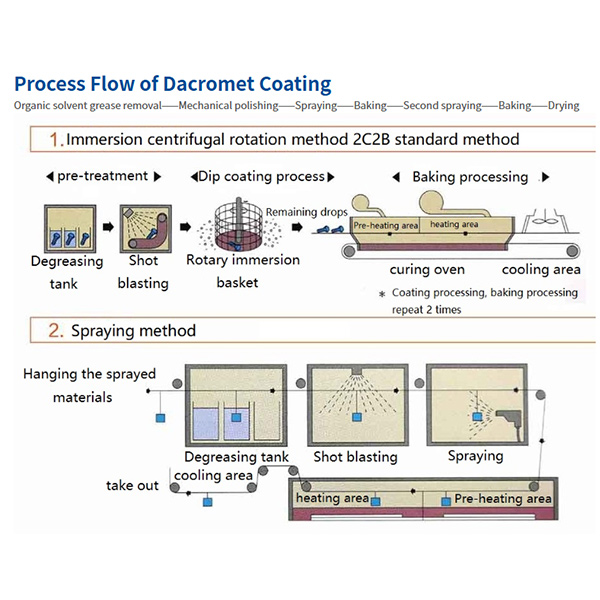
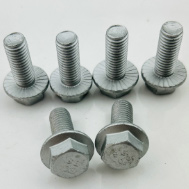
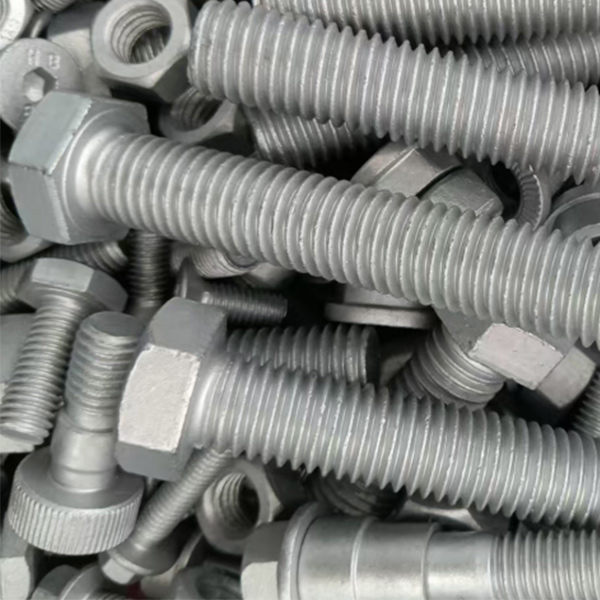
In an era of increasingly aggressive operating environments—from coastal bridges and offshore wind turbines to high-temperature automotive assemblies—engineers and procurement specialists are turning to Dacromet-coated hex bolts as the preferred solution for long-term anti-corrosion and rust-proof performance. This inorganic zinc-aluminum flake coating, applied through a non-electrolytic dip-spin or spray process, is redefining expectations for high-strength structural fasteners.
What Is Dacromet Coating?
Dacromet (also known generically as zinc-flake coating) is a water-based inorganic coating system composed of overlapping zinc and aluminum flakes suspended in a chromium-oxide binder. After application by dip-spin, spray, or dip-drain methods, the coating is cured at approximately 300°C, forming a thin, uniform film typically only 5–10 μm thick. Despite its minimal thickness, the multi-layer flake structure creates both a physical barrier and sacrificial galvanic protection, delivering exceptional anti-rust capability.
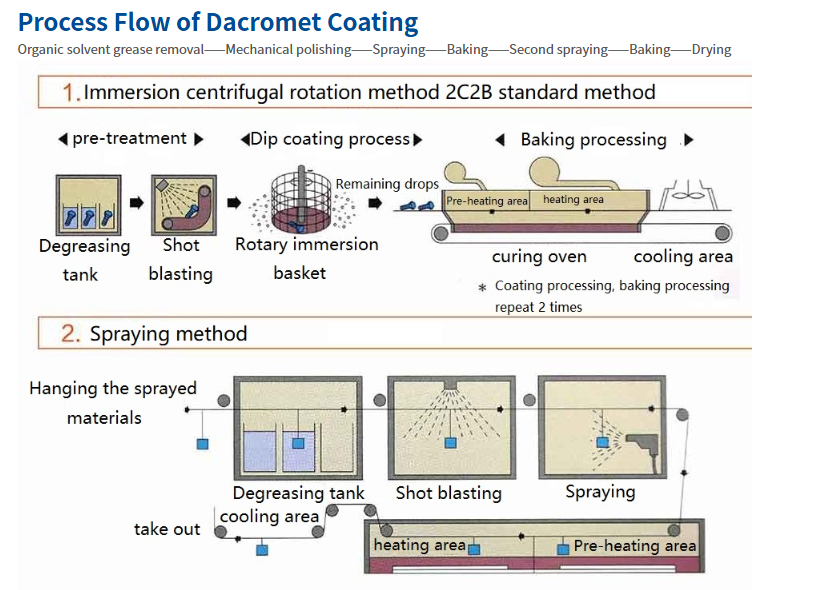
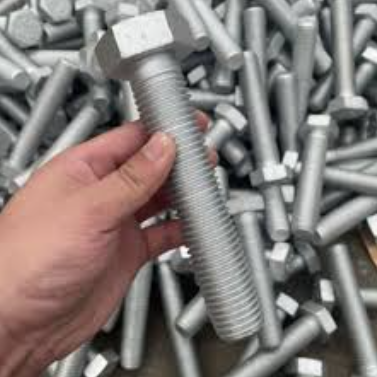
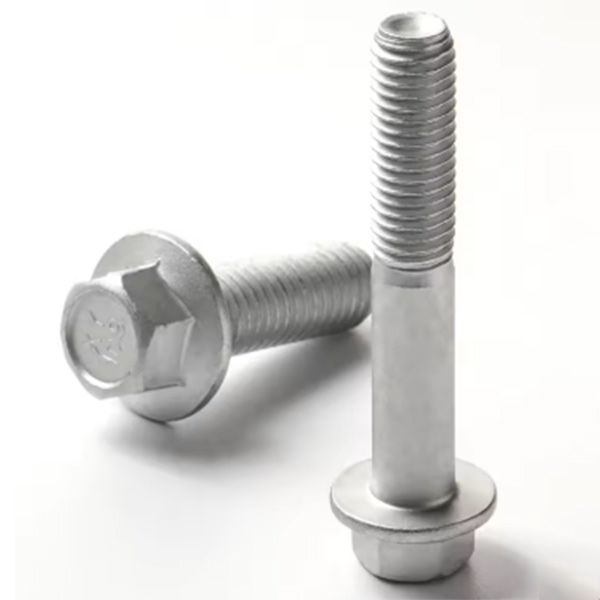
Unlike traditional electroplated zinc, the Dacromet process introduces no hydrogen into the substrate. This eliminates the risk of hydrogen embrittlement—a critical advantage when coating high-strength hex bolts of grades 8.8, 10.9, and 12.9. The result is a rust-proof hex bolt that retains full mechanical integrity while offering corrosion resistance far superior to conventional finishes.
Why Hex Bolts Benefit Most from Dacromet
Hex bolts—particularly heavy hex structural bolts—are widely specified in bridges, wind-energy towers, heavy machinery, and automotive chassis. These applications demand fasteners that combine precise torque-tension behavior with decades-long anti-corrosion life. Dacromet meets both requirements:
- Uniform coverageon complex thread geometry without the build-up associated with hot-dip galvanizing, preserving dimensional accuracy and thread fit.
- Controlled coefficient of friction(typically μ = 0.12–0.18 with topcoat), enabling consistent clamp load and multi-tightening performance.
- No hydrogen embrittlement risk, making Dacromet the preferred anti-rustfinish for high-tensile hex bolts used in safety-critical joints.
- Temperature resistance up to 300°C, far exceeding the practical limits of electroplated zinc.
Corrosion Performance: Dacromet vs. Traditional Coatings
Independent laboratory testing consistently demonstrates that Dacromet-coated hex bolts outperform both electroplated zinc and hot-dip galvanized fasteners in neutral salt-spray (ASTM B117 / ISO 9227) and cyclic corrosion tests. The following comparison summarizes typical results for equivalent coating systems:
| Performance Metric | Dacromet (Zinc Flake) | Electroplated Zinc | Hot-Dip Galvanizing |
| Salt Spray to Red Rust | 1,000 – 2,000+ hrs | 200 – 300 hrs | 500 – 1,000 hrs |
| Typical Coating Thickness | 5 – 10 μm | 8 – 15 μm | 50 – 80 μm |
| Hydrogen Embrittlement Risk | None | High (requires baking) | Medium |
| Max Continuous Temperature | Up to 300°C | ≤ 120°C | ≤ 200°C |
| Thread Fit / Dimensional Impact | Minimal – excellent | Good | Significant build-up |
| Suitable for High-Strength Bolts | Yes (10.9 / 12.9) | Limited / risky | Caution required |
Table 1. Comparative performance of major anti-corrosion coatings for hex bolts (typical laboratory values).
In one widely cited qualification study for ASTM A490 high-strength structural bolts, Dacromet-coated parts showed zero red rust after 1,000 hours of continuous salt-spray exposure, while mechanically galvanized bolts exhibited more than 85% red rust on significant surfaces. Even after 5,000 hours, Dacromet specimens displayed only about 6% red rust—dramatically outperforming hot-dip galvanized counterparts that reached near-total surface corrosion.
The Science Behind Superior Anti-Rust Protection
The exceptional anti-corrosion performance of Dacromet arises from three complementary mechanisms:
- Barrier protection– Overlapping zinc and aluminum flakes form a dense, multi-layer shield that impedes moisture and chloride ion penetration.
- Sacrificial (cathodic) protection– Zinc flakes preferentially corrode, protecting the underlying steel even if the coating is locally damaged.
- Passivation / self-healing– Chromium-oxide compounds within the binder create a stable passive film that further slows corrosion progression.
Market Outlook and Industry Implications
As global infrastructure investment accelerates and automotive platforms migrate toward higher-strength steels, demand for reliable anti-corrosion and rust-proof fastener solutions continues to rise. Industry observers note several reinforcing trends:
- Specification growth– More engineering standards (including updates related to ASTM F3125 structural bolts) now explicitly recognize zinc-flake systems such as Dacromet as acceptable alternatives to traditional galvanizing for high-strength applications.
- Sustainability considerations– Water-based Dacromet processes generate less hazardous waste than many electroplating lines, aligning with tightening environmental regulations.
- Total cost of ownership– Although unit cost may be higher than basic zinc plating, the extended service life and reduced maintenance of Dacromet hex bolts frequently deliver lower lifetime cost in corrosive environments.
Practical Guidance for Specifiers
When selecting Dacromet-coated hex bolts, engineers should verify coating grade (e.g., Grade A or B according to coating weight), confirm compatibility of any topcoat lubricant with the intended torque-tension relationship, and ensure that both bolts and matching nuts/washers receive compatible finishes. Proper storage and handling remain important: while the coating is highly anti-rust, mechanical damage prior to installation can locally reduce protection.
Conclusion
Dacromet technology has matured from a specialized automotive finish into a mainstream anti-corrosion solution for high-performance hex bolts. Its unique combination of thin-film uniformity, absence of hydrogen embrittlement, elevated temperature capability, and proven multi-thousand-hour salt-spray resistance positions it as a leading choice wherever long-term rust-proof reliability is non-negotiable.
As infrastructure owners, wind-farm developers, and automotive OEMs continue to prioritize durability and reduced maintenance, Dacromet hex bolts are expected to capture an expanding share of the premium fastener market—delivering the anti-rust performance that modern engineering demands.