- English
- Chinese
- French
- German
- Portuguese
- Spanish
- Russian
- Japanese
- Korean
- Arabic
- Irish
- Greek
- Turkish
- Italian
- Danish
- Romanian
- Indonesian
- Czech
- Afrikaans
- Swedish
- Polish
- Catalan
- Esperanto
- Hindi
- Lao
- Albanian
- Amharic
- Armenian
- Azerbaijani
- Belarusian
- Bengali
- Bosnian
- Bulgarian
- Cebuano
- Chichewa
- Corsican
- Croatian
- Dutch
- Estonian
- Filipino
- Finnish
- Frisian
- Galician
- Georgian
- Gujarati
- Haitian
- Hausa
- Hawaiian
- Hebrew
- Hmong
- Hungarian
- Icelandic
- Igbo
- Javanese
- Kannada
- Kazakh
- Khmer
- Kurdish
- Kyrgyz
- Latin
- Latvian
- Lithuanian
- Luxembou..
- Macedonian
- Malagasy
- Malay
- Malayalam
- Maltese
- Maori
- Marathi
- Mongolian
- Burmese
- Nepali
- Norwegian
- Pashto
- Persian
- Punjabi
- Serbian
- Sesotho
- Sinhala
- Slovak
- Slovenian
- Somali
- Samoan
- Scots Gaelic
- Shona
- Sindhi
- Sundanese
- Swahili
- Tajik
- Tamil
- Telugu
- Thai
- Ukrainian
- Urdu
- Uzbek
- Vietnamese
- Welsh
- Xhosa
- Yiddish
- Yoruba
- Zulu
- Kinyarwanda
- Tatar
- Oriya
- Turkmen
- Uyghur

Hot-Dip Galvanizing vs. Dacromet Coating: Which Corrosion Protection Is Right for Your Fasteners?
2026-06-09
When selecting corrosion-resistant fasteners — whether bolts, screws, nuts, washers, or studs — the coating method matters as much as the base material. Two of the most widely used surface treatments in the fastener industry are hot-dip galvanizing (HDG) and Dacromet coating. Each delivers reliable rust protection, but they differ significantly in performance, application range, and environmental profile. This guide breaks down both processes to help engineers, procurement managers, and contractors choose the right solution.

1.What Is Hot-Dip Galvanizing?
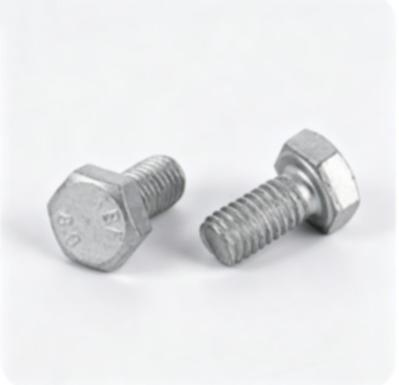
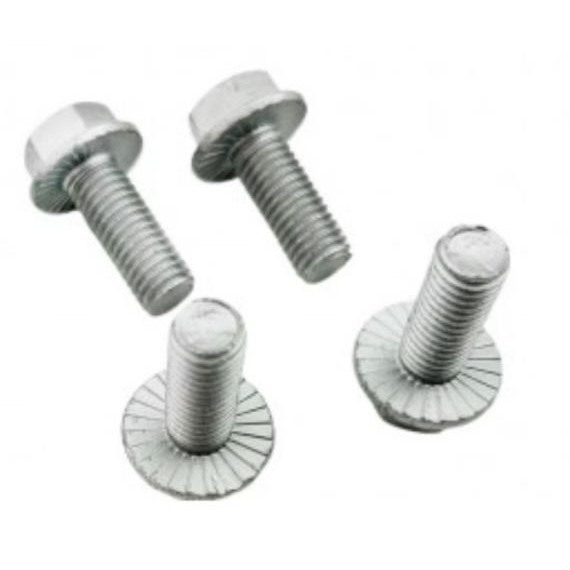
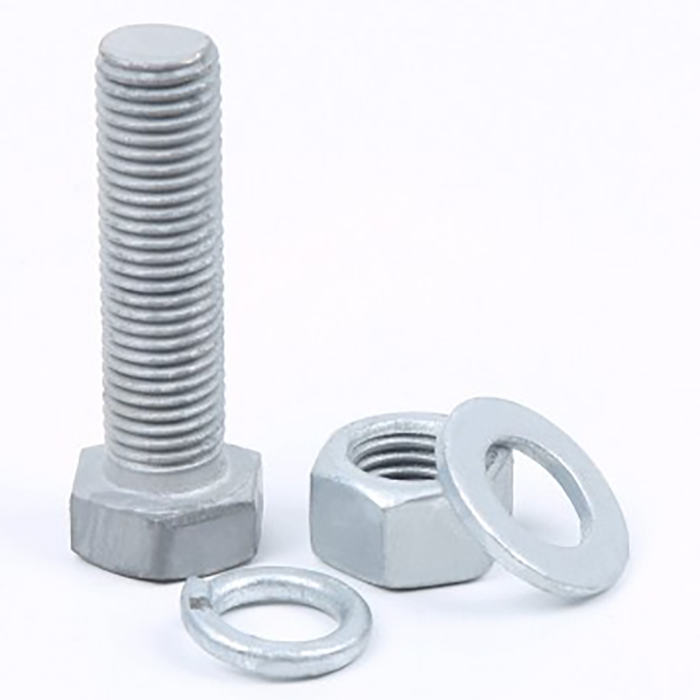
Hot-dip galvanizing is a proven process in which steel fasteners — such as hex bolts, anchor bolts, flange nuts, and threaded rods — are fully immersed in a bath of molten zinc at approximately 450 °C (842 °F). The zinc metallurgically bonds to the steel surface, forming a thick, multi-layer alloy coating (typically 45–85 µm) that acts as both a physical barrier and a sacrificial anode against corrosion.
Key advantages of HDG fasteners:
Long service life: Long service life: 20–70 years in most outdoor environments
Thick, durable zinc layer Thick, durable zinc layer withstands mechanical damage
Excellent performance Excellent performance in marine, construction, and infrastructure applications
Sacrificial protection Sacrificial protection — zinc corrodes before steel does
Cost-effective Cost-effective for large-volume bolts and structural fasteners
2.What Is Dacromet Coating?
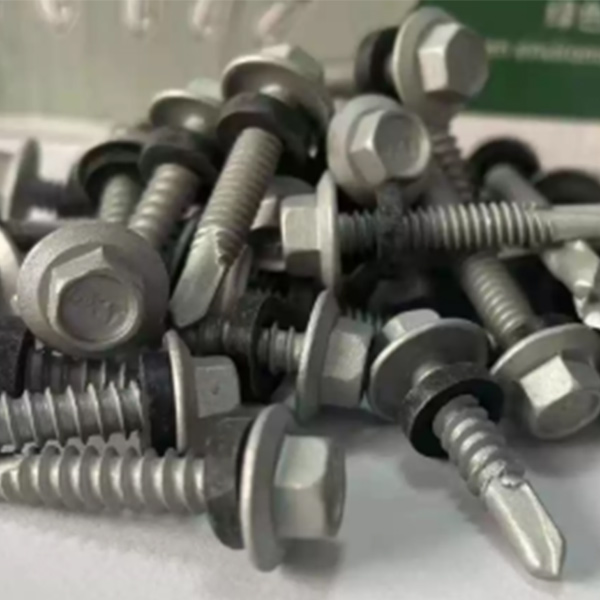
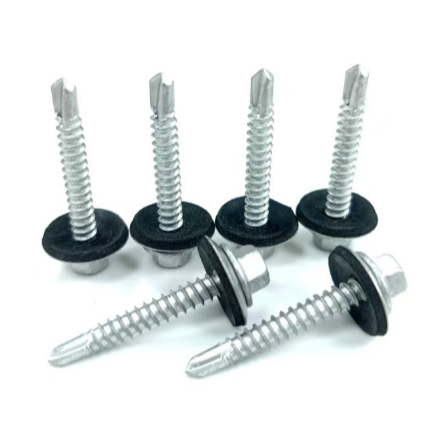
Dacromet (also written as Geomet or Dacrotized) is a water-based, chromate-free coating composed of microscopic zinc and aluminum flakes suspended in an inorganic binder. Screws, bolts, machine screws, self-tapping screws, and precision fasteners are dip-spin coated and then cured at 300 °C (572 °F). The resulting film is extremely thin (8–12 µm) yet delivers outstanding corrosion resistance — often exceeding 720 hours in neutral salt spray tests (ASTM B117).
Key advantages of Dacromet-coated fasteners:
Ultrathin coating Ultrathin coating — preserves tight tolerances on precision screws and bolts
No hydrogen embrittlement risk No hydrogen embrittlement risk — safe for high-strength bolts (Grade 8.8, 10.9, 12.9)
Excellent performance against road salts Excellent performance against road salts — ideal for automotive and machinery fasteners
Uniform coverage Uniform coverage on complex geometries: threaded holes, blind fasteners, small screws
Environmentally friendly Environmentally friendly — RoHS compliant, no hexavalent chromium
3.Side-by-Side Comparison
The table below summarizes the critical differences between hot-dip galvanizing and Dacromet coating for common fastener types including bolts, screws, nuts, anchor bolts, and threaded rods.
| Property | Hot-Dip Galvanizing (HDG) | Dacromet Coating |
| Coating Thickness | 45–85 µm | 8–12 µm |
| Corrosion Resistance | 20–70 years (outdoor) | >720 h salt spray (ASTM B117) |
| Process Temperature | ~450 °C (molten zinc bath) | ~300 °C (curing oven) |
| H₂ Embrittlement Risk | Possible (acid pickling) | None |
| Dimensional Impact | Significant (thick layer) | Minimal (precision-safe) |
| Typical Applications | Structural bolts, anchors, rods, nuts | Automotive screws, M3–M20 bolts, precision parts |
| Surface Appearance | Rough, spangled zinc finish | Smooth, matte silver-grey |
| Environmental Profile | Zinc — recyclable | RoHS compliant, Cr(VI)-free |
| Best For | Heavy construction, marine, infrastructure | Automotive, machinery, electronics, OEM |
4.Choosing the Right Coating for Your Fastener Application
The decision between HDG and Dacromet ultimately depends on three factors: application environment, fastener size and grade, and dimensional tolerance requirements.
Choose Hot-Dip Galvanizing when:
Fasteners will be used in outdoor, marine, or heavy industrial environments
Long-term (20+ year) corrosion protection is required without recoating
Products include large structural bolts (M16–M72), anchor bolts, hex nuts, or flat washers
Mechanical durability under abrasion or impact is a priority
Choose Dacromet Coating when:
Fastener grade is 10.9, 12.9, or higher — hydrogen embrittlement must be avoided
Tight dimensional tolerances are critical (e.g., metric screws, machine bolts, captive fasteners)
End-use involves exposure to road de-icing salts, chemicals, or high-frequency vibration
RoHS / ELV compliance is required (automotive OEM, electronics assembly)
5.FUJINRUI: Your Source for Anti-Corrosion Fasteners
FUJINRUI Metal specializes in corrosion-resistant fasteners for global export markets. Our product range includes hot-dip galvanized bolts, Dacromet-coated screws, stainless steel fasteners, and zinc-flake coated anchor bolts in sizes from M6 to M72. All products are manufactured to ISO, DIN, ASTM, and customer-specific standards.
Whether you need a small batch of precision metric screws or large-volume structural bolts and hex nuts for infrastructure projects, our team provides full technical support from material selection through surface treatment, inspection, and export packaging.