- English
- Chinese
- French
- German
- Portuguese
- Spanish
- Russian
- Japanese
- Korean
- Arabic
- Irish
- Greek
- Turkish
- Italian
- Danish
- Romanian
- Indonesian
- Czech
- Afrikaans
- Swedish
- Polish
- Basque
- Catalan
- Esperanto
- Hindi
- Lao
- Albanian
- Amharic
- Armenian
- Azerbaijani
- Belarusian
- Bengali
- Bosnian
- Bulgarian
- Cebuano
- Chichewa
- Corsican
- Croatian
- Dutch
- Estonian
- Filipino
- Finnish
- Frisian
- Galician
- Georgian
- Gujarati
- Hausa
- Hawaiian
- Hebrew
- Hmong
- Hungarian
- Icelandic
- Igbo
- Javanese
- Kannada
- Kazakh
- Khmer
- Kurdish
- Kyrgyz
- Latin
- Latvian
- Lithuanian
- Luxembou..
- Macedonian
- Malagasy
- Malay
- Malayalam
- Maltese
- Maori
- Marathi
- Mongolian
- Burmese
- Nepali
- Norwegian
- Pashto
- Persian
- Punjabi
- Serbian
- Sesotho
- Sinhala
- Slovak
- Slovenian
- Somali
- Samoan
- Scots Gaelic
- Shona
- Sindhi
- Sundanese
- Swahili
- Tajik
- Tamil
- Telugu
- Thai
- Ukrainian
- Urdu
- Uzbek
- Vietnamese
- Welsh
- Xhosa
- Yiddish
- Yoruba
- Zulu
- Kinyarwanda
- Tatar
- Oriya
- Turkmen
- Uyghur

High-Strength Bolts: Where and When to Use Them
2026-05-25
What Makes a Bolt High-Strength?
High-strength bolts are defined by three core parameters:
- Tensile strength — the maximum load a bolt can withstand before fracturing (measured in MPa)
- Yield strength — the load at which the bolt begins to deform permanently
- Proof load — the pre-tension applied during installation to create clamping force in the joint
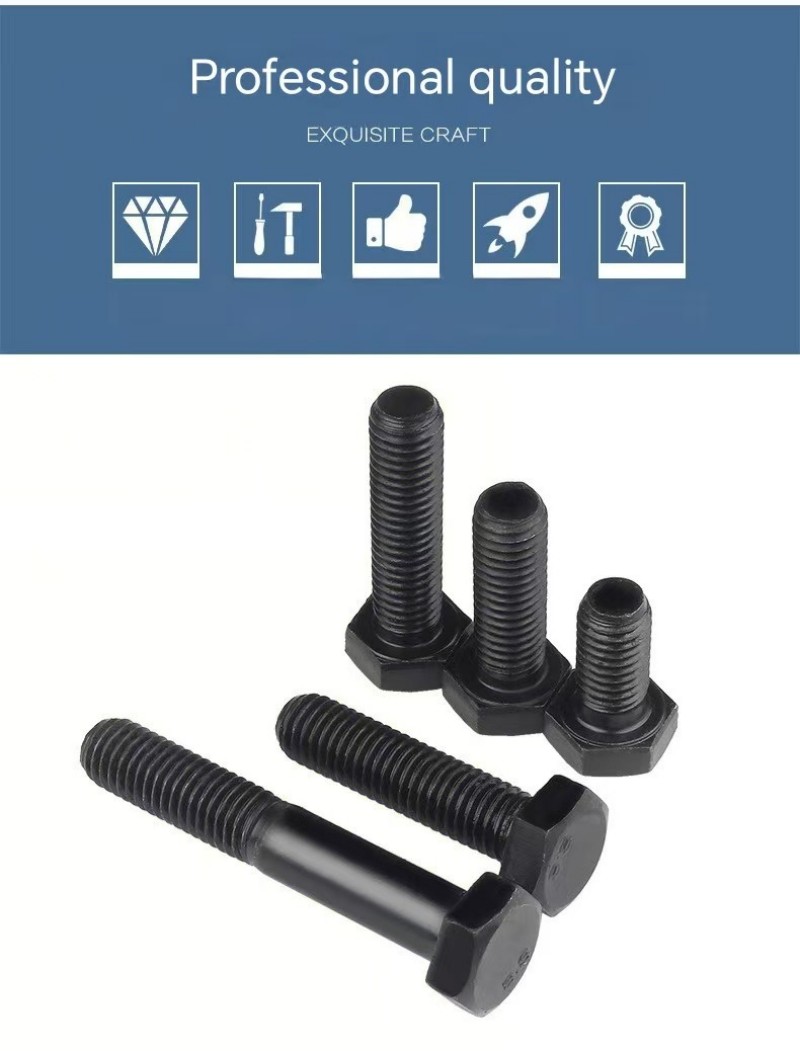
High-strength bolts are typically manufactured from medium-carbon steel or alloy steel and undergo heat treatment (quenching and tempering) to achieve the required mechanical properties. Surface coatings — such as zinc plating, Dacromet, or Luxubao — are applied to enhance corrosion resistance without compromising strength.
KEY FACT Grade 10.9 bolts have a tensile strength of 1,000 MPa — more than 3× stronger than a standard Grade 4.6 hardware bolt.
Key Application Sectors
High-strength bolts are used across virtually every heavy-industry sector. The table below outlines the most common application areas and the corresponding fastener types:
| Industry / Sector | Typical Application | Bolt / Fastener Type |
| Structural Steel & Construction | Beam-to-column connections, base plates, anchor bolts | High-strength hex bolt (Grade 8.8 / 10.9) |
| Bridges & Infrastructure | Flange joints, bridge girder splices | ASTM A325 / A490 structural bolt |
| Heavy Machinery & Equipment | Gearbox housings, press frames, crane rails | Heavy hex bolt, socket head cap screw |
| Wind Turbines & Energy | Tower flange bolts, nacelle assemblies | Grade 10.9 / 12.9 stud bolt with nut |
| Automotive & Rail | Engine mounts, chassis bolts, rail fishplates | Flange bolt, carriage bolt, set screw |
| Shipbuilding & Marine | Hull plating, bulkhead connections | Stainless / Dacromet-coated hex bolt |
| Oil & Gas / Petrochemical | Pipeline flanges, pressure vessel covers | ASTM A193 B7 stud bolt, heavy hex nut |
| Aerospace & Defense | Structural airframe fasteners | Titanium / alloy bolt, NAS / MS standard |
Structural Steel & Construction
The construction industry is the largest consumer of high-strength bolts. Structural bolt connections replace traditional welding in beam-to-column joints, offering faster installation, easier inspection, and greater resistance to seismic loads.
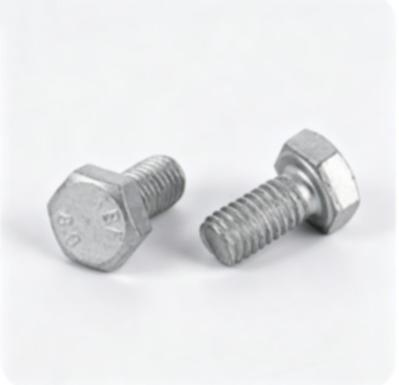
- Hex bolts (Grade 8.8 / 10.9) — used in moment-resisting connections, base plate anchors, and splice plates
- Anchor bolts — embedded in concrete foundations to secure structural steel columns
- Heavy hex bolts with nuts — standard for AISC and EN 1090-compliant steel frame connections
PRO TIP For slip-critical connections, always use ASTM A325 or A490 bolts with hardened washers and calibrated torque wrenches.
Bridges & Civil Infrastructure
Bridge construction demands fasteners that can withstand dynamic live loads, thermal expansion, and decades of environmental exposure. High-strength structural bolts are specified in international bridge codes including AASHTO, Eurocode 3, and GB/T standards.
- Flange bolts — connect steel girder sections at bridge spans
- Stud bolts with nuts — secure expansion joints and bearing plate assemblies
- Dacromet-coated hex bolts — specified for coastal and offshore bridge structures to prevent corrosion
Wind Energy & Power Generation
Wind turbine towers are assembled using large-diameter high-strength flange bolts — often Grade 10.9 or 12.9 — subjected to cyclic fatigue loads throughout their 25-year service life. Bolt preload accuracy is critical; undertightened bolts cause tower fatigue failure, while overtightened bolts risk yielding.
- Tower flange bolts (M36–M72, Grade 10.9) — the most demanding high-strength bolt application in the renewable energy sector
- Foundation anchor bolts — connect the tower base to the concrete pile foundation
- Nacelle and rotor hub bolts — internal structural connections with strict torque requirements
COATING NOTE Zinc-flake / Luxubao-coated bolts are preferred for wind tower applications — they provide superior corrosion resistance and are hydrogen-embrittlement-free.
Heavy Machinery & Industrial Equipment
Presses, crushers, mining equipment, and industrial gearboxes generate extreme dynamic loads that require precision high-strength fasteners. Bolt loosening in rotating machinery can cause catastrophic failures and production downtime.
- Socket head cap screws (Grade 12.9) — used in confined spaces where standard hex access is unavailable
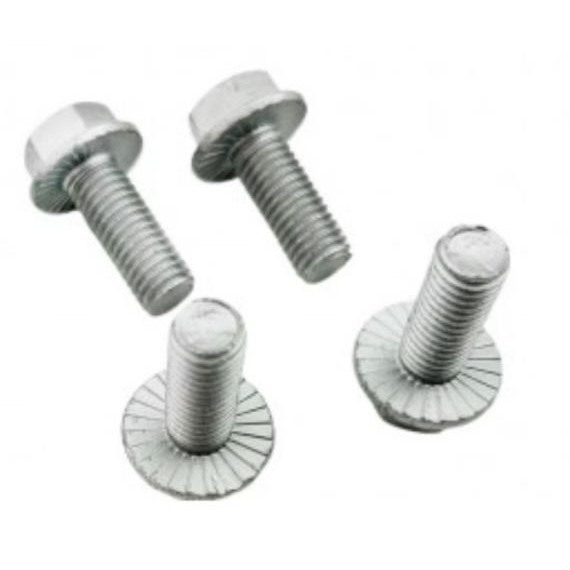
- Flange bolts — provide self-centering and resist lateral shear forces in machinery mounts
- Set screws and grub screws — secure rotating components to shafts without projecting heads
Oil, Gas & Petrochemical
Pipeline flange connections and pressure vessel covers in the oil and gas industry operate under high pressure, extreme temperatures, and corrosive media. Fasteners in these environments must meet ASME B16.5 and ASTM A193/A194 standards.
- ASTM A193 B7 stud bolts (Cr-Mo alloy steel) — the industry standard for high-temperature flange connections
- 2H heavy hex nuts (ASTM A194) — paired with B7 studs for pressure-rated flanges
- Incoloy / super-alloy bolts — specified for highly corrosive or cryogenic service conditions
Corrosion Protection for High-Strength Bolts
Corrosion is the leading cause of premature fastener failure in outdoor and industrial environments. Choosing the right surface treatment is essential — especially for high-strength bolts where hydrogen embrittlement from electroplating is a real risk above Grade 10.9.
- Dacromet coating — water-based, chromate-free, 480–1000+ h salt-spray resistance; safe for Grade 10.9/12.9 bolts
- Luxubao (zinc-flake) coating — similar to Geomet/Delta-Tone; excellent for wind energy and heavy construction
- Hot-dip galvanizing — suitable for Grade 8.8 and below; not recommended above Grade 10.9 due to hydrogen risk
- Zinc electroplating — economical option for indoor or low-exposure environments
- Stainless steel (A2-70 / A4-80) — inherently corrosion-resistant; no additional coating required
Why Choose FUJINRUI High-Strength Fasteners?
- Manufactured to ISO 898-1, ASTM A325/A490, and DIN 931/933 standards
- Full range of coatings: Dacromet, Ruspert, zinc-plated, hot-dip galvanized, phosphate
- Sizes from M6 to M64, strength grades 8.8 / 10.9 / 12.9
- Third-party mechanical testing certificates available (tensile, hardness, salt-spray)
- Competitive pricing with fast lead times for bulk OEM and project orders