- English
- Chinese
- French
- German
- Portuguese
- Spanish
- Russian
- Japanese
- Korean
- Arabic
- Irish
- Greek
- Turkish
- Italian
- Danish
- Romanian
- Indonesian
- Czech
- Afrikaans
- Swedish
- Polish
- Basque
- Catalan
- Esperanto
- Hindi
- Lao
- Albanian
- Amharic
- Armenian
- Azerbaijani
- Belarusian
- Bengali
- Bosnian
- Bulgarian
- Cebuano
- Chichewa
- Corsican
- Croatian
- Dutch
- Estonian
- Filipino
- Finnish
- Frisian
- Galician
- Georgian
- Gujarati
- Haitian
- Hausa
- Hawaiian
- Hebrew
- Hmong
- Hungarian
- Icelandic
- Igbo
- Javanese
- Kannada
- Kazakh
- Khmer
- Kurdish
- Kyrgyz
- Latin
- Latvian
- Lithuanian
- Luxembou..
- Macedonian
- Malagasy
- Malay
- Malayalam
- Maltese
- Maori
- Marathi
- Mongolian
- Burmese
- Nepali
- Norwegian
- Pashto
- Persian
- Punjabi
- Serbian
- Sesotho
- Sinhala
- Slovak
- Slovenian
- Somali
- Scots Gaelic
- Shona
- Sindhi
- Sundanese
- Swahili
- Tajik
- Tamil
- Telugu
- Thai
- Ukrainian
- Urdu
- Uzbek
- Vietnamese
- Welsh
- Xhosa
- Yiddish
- Yoruba
- Zulu
- Kinyarwanda
- Tatar
- Oriya
- Turkmen
- Uyghur

Introduction to Dacromet Flange Bolts-High-Performance Fasteners for Demanding Environments
2026-09-09
1. Introduction
In modern engineering and industrial applications, the reliability of fastening systems is critical to structural integrity, safety, and long-term performance. Among the various types of fasteners available, flange bolts have gained significant popularity due to their integrated design and superior load distribution. When these bolts are further enhanced with advanced surface treatments such as Dacromet coating, they become exceptionally suited for harsh operating conditions.
Dacromet flange bolts combine the mechanical advantages of a flanged head design with the outstanding corrosion protection offered by zinc-aluminum flake coatings. This combination addresses two of the most common challenges in fastening technology: achieving consistent clamping force without additional washers, and ensuring long-term resistance to rust and environmental degradation. This article provides a comprehensive overview of Dacromet flange bolts, covering their construction, coating technology, performance characteristics, applications, and practical considerations.
2. Understanding Flange Bolts
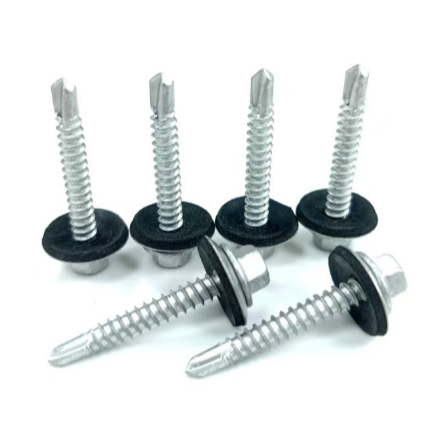
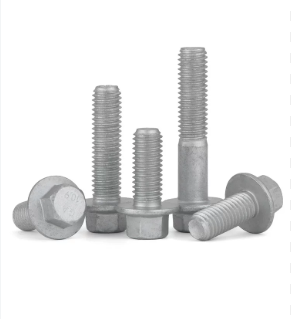
A flange bolt is a specialized fastener that features a wide, circular flange located directly beneath the bolt head. This flange functions similarly to a built-in washer, distributing the clamping load over a larger surface area. By increasing the bearing surface, flange bolts reduce the risk of surface damage to the joined materials and help prevent the bolt head from pulling through thin or soft materials.
Key design features of flange bolts include:
Integrated flange: Eliminates the need for a separate washer in many applications, simplifying assembly and reducing part count.
Improved load distribution: The larger contact area lowers localized stress concentrations on the mating surface.
Serrated options: Many flange bolts incorporate serrations (teeth) on the underside of the flange, which dig into the surface to provide resistance against vibration-induced loosening.
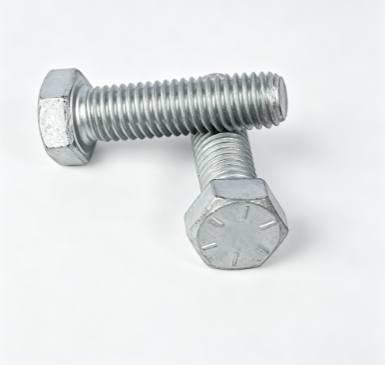
Common head styles: Hexagonal head flange bolts are the most widely used, allowing standard wrench or socket installation.
Flange bolts are manufactured in various strength grades (such as Grade 8.8, 10.9, and 12.9 in metric systems) and materials, ranging from carbon steel and alloy steel to stainless steel. Their versatility makes them suitable for automotive, construction, machinery, and infrastructure projects.
3. The Dacromet Coating Technology
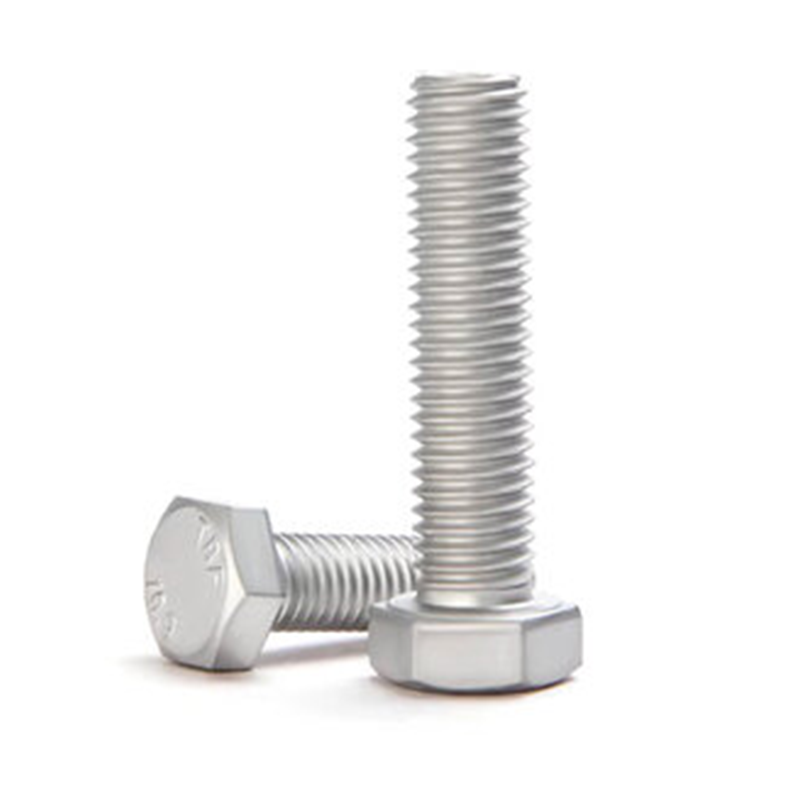
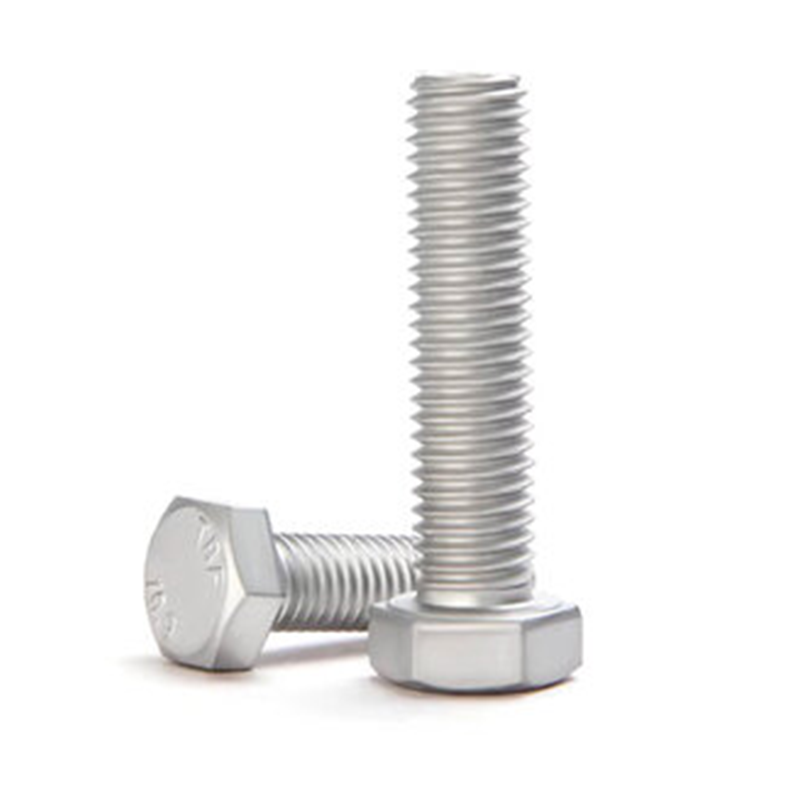
Dacromet (also known as DACROMET®) is a proprietary non-electrolytic zinc-aluminum flake coating system originally developed as a high-performance alternative to traditional electroplating and hot-dip galvanizing. The coating consists of overlapping zinc and aluminum flakes dispersed in an inorganic binder, typically containing chromium compounds. It is applied as a water-based slurry through dip-spin, spray, or dip-drain methods, followed by curing (baking) at elevated temperatures around 300°C.
During the curing process, the coating forms a dense, multi-layered inorganic film that chemically bonds to the metal substrate. Typical coating thickness ranges from 5 to 12 micrometers (μm), which is significantly thinner than hot-dip galvanizing layers while providing superior protection. The resulting surface has a distinctive metallic silver-gray appearance.
Core protective mechanisms of Dacromet include:
Barrier protection: The dense, overlapping flake structure creates a physical barrier that impedes the penetration of moisture, salts, and corrosive agents.
Sacrificial (cathodic) protection: Zinc flakes preferentially corrode, protecting the underlying steel substrate.
Passivation: Chromium compounds in the binder help form a stable passive layer that further enhances corrosion resistance.
4. Advantages of Dacromet Flange Bolts
The combination of a flanged design and Dacromet coating delivers a range of performance benefits that make these fasteners particularly valuable in demanding applications:
1.Exceptional Corrosion Resistance: Dacromet coatings routinely achieve more than 1,000 hours of neutral salt spray resistance (ASTM B117 / ISO 9227) without the appearance of red rust. In many cases, performance reaches 1,200–2,000 hours or more. This is typically 7 to 10 times the protection offered by conventional electro-galvanizing.
2.No Hydrogen Embrittlement: Unlike electroplating processes that involve acid pickling and electrolytic deposition, Dacromet application does not introduce hydrogen into the steel. This makes it ideal for high-strength fasteners (Grades 10.9, 12.9, and ASTM A490), where hydrogen embrittlement can cause delayed brittle fracture.
3.High Temperature Resistance: The coating remains stable and protective at continuous service temperatures up to approximately 300°C (572°F), far exceeding the temperature limits of most zinc electroplated coatings.
4.Thin, Uniform Coating: With a typical thickness of only 5–12 μm, the coating has minimal impact on thread dimensions and fit. Standard nuts can usually be used without re-tapping or adjustment, unlike thicker hot-dip galvanized coatings.
5.Good Mechanical and Chemical Resistance: The coating exhibits strong adhesion, resistance to minor mechanical damage during handling and installation, and compatibility with many chemicals, oils, and solvents.
6.Controlled Friction Characteristics: With appropriate topcoats or lubricants, the coefficient of friction can be engineered for consistent torque-tension relationships, improving joint reliability.
7.Environmental and Process Benefits: As a non-electrolytic, water-based process, Dacromet generates less hazardous waste than traditional plating and is widely regarded as a more environmentally responsible option (though older formulations contained hexavalent chromium; modern variants and alternatives continue to evolve toward lower environmental impact).
5. Performance Comparison
The following table summarizes typical performance characteristics of Dacromet coatings compared with conventional zinc plating and hot-dip galvanizing:
| Property | Dacromet | Electro-Galvanizing | Hot-Dip Galvanizing |
| Coating Thickness | 5–12 μm | 5–15 μm | 45–85 μm |
| Salt Spray (no red rust) | ≥1,000–1,200 h | 100–300 h | 500–800 h |
| Hydrogen Embrittlement Risk | None | High (requires bake) | Moderate |
| Max Continuous Temp. | ~300°C | ~100°C | ~200°C |
| Thread Fit Impact | Minimal | Low | Significant |
| Suitable for High-Strength Bolts | Excellent | Limited | Caution required |
Note: Actual performance varies with coating grade, thickness, topcoat, substrate preparation, and specific test conditions. Data are representative of typical industrial results.
6. Conclusion
Dacromet flange bolts represent a high-performance fastening solution that successfully merges mechanical design advantages with advanced corrosion protection technology. The integrated flange improves load distribution and can reduce the need for separate washers, while the thin yet highly effective Dacromet zinc-aluminum flake coating provides outstanding resistance to salt spray, humidity, chemicals, and elevated temperatures—without the hydrogen embrittlement risks associated with traditional electroplating.
These characteristics make Dacromet flange bolts particularly well suited for automotive, renewable energy, construction, agricultural, marine, and industrial applications where long service life and reliability under harsh conditions are essential. As environmental regulations and performance expectations continue to rise, the use of non-electrolytic zinc flake coatings such as Dacromet is expected to remain an important option for engineers specifying critical fasteners.
When selecting Dacromet flange bolts, careful attention to mechanical grade, coating specification, dimensional standards, and installation practices will ensure optimal performance and durability in the intended application.