- Chinese
- French
- German
- Portuguese
- Spanish
- Russian
- Japanese
- Korean
- Arabic
- Irish
- Greek
- Turkish
- Italian
- Danish
- Romanian
- Indonesian
- Czech
- Afrikaans
- Swedish
- Polish
- Basque
- Catalan
- Esperanto
- Hindi
- Lao
- Albanian
- Amharic
- Armenian
- Azerbaijani
- Belarusian
- Bengali
- Bosnian
- Bulgarian
- Cebuano
- Chichewa
- Corsican
- Croatian
- Dutch
- Estonian
- Filipino
- Finnish
- Frisian
- Galician
- Georgian
- Gujarati
- Haitian
- Hausa
- Hawaiian
- Hebrew
- Hmong
- Hungarian
- Icelandic
- Igbo
- Javanese
- Kannada
- Kazakh
- Khmer
- Kurdish
- Kyrgyz
- Latin
- Latvian
- Lithuanian
- Luxembou..
- Macedonian
- Malagasy
- Malay
- Malayalam
- Maltese
- Maori
- Marathi
- Mongolian
- Burmese
- Nepali
- Norwegian
- Pashto
- Persian
- Punjabi
- Serbian
- Sesotho
- Sinhala
- Slovak
- Slovenian
- Somali
- Samoan
- Scots Gaelic
- Shona
- Sindhi
- Sundanese
- Swahili
- Tajik
- Tamil
- Telugu
- Thai
- Ukrainian
- Urdu
- Uzbek
- Vietnamese
- Welsh
- Xhosa
- Yiddish
- Yoruba
- Zulu
- Kinyarwanda
- Tatar
- Oriya
- Turkmen
- Uyghur

Worried About Rust? When to Choose Dacromet A practical guide to selecting the right anti-corrosion coating for your fasteners
2026-05-06
The Rust Problem Is Real
Corrosion costs industries billions every year. For fasteners — the unseen backbone of any structure — choosing the wrong coating isn’t just a cosmetic issue. It’s a safety risk. So when does Dacromet make the most sense?
What Is Dacromet?
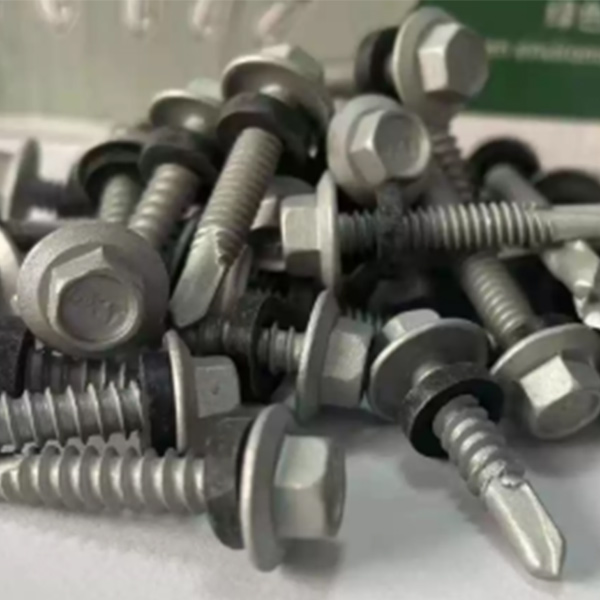
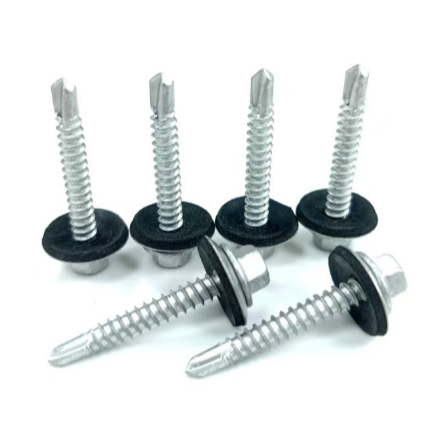
Dacromet is a zinc flake coating applied through a dip-spin process — no electroplating, no hydrogen embrittlement. It delivers salt spray resistance of 500–1,000+ hours while maintaining a thin, uniform film (4–8 μm).
| Key advantage: Zero hydrogen embrittlement. That makes Dacromet the go-to choice for high-strength fasteners (Class 10.9 and above) where safety is non-negotiable. |
4 Scenarios Where Dacromet Wins
🔩 High-Strength Fasteners
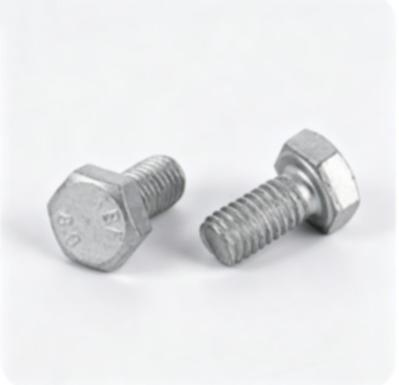
Class 10.9+ bolts risk hydrogen embrittlement with electroplating. Dacromet eliminates this risk entirely.
🌊 Saltwater & Humid Environments
Coastal infrastructure, marine hardware, offshore platforms — Dacromet delivers 500–1,000h salt spray resistance.
🚗 Automotive & EV Applications
OEMs specify Dacromet for chassis, brake, and structural components. It meets automotive industry standards.
📐 Tight Tolerance Parts
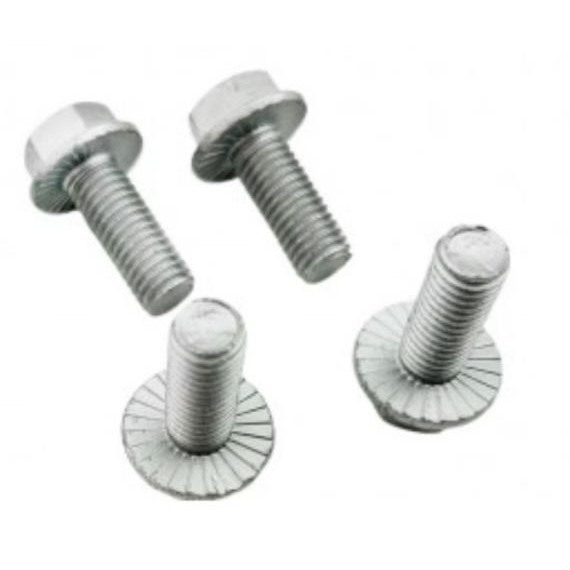
Thin coating (4–8 μm) means no thread interference. No re-tapping, no assembly issues.
How It Compares
| Property | Dacromet | Hot-Dip Galv. | E-Zinc Plating |
| Salt Spray (h) | 500–1,000+ | 200–600 | 24–96 |
| Hydrogen Embrittlement | None | Risk exists | High risk |
| Coating Thickness | 4–8 μm | 40–80 μm | 5–15 μm |
| Thread Fit | Excellent | Poor (thick) | Good |
| Baking Required | No | No | Yes (4–8h) |
| Cost Level | Medium | Low | Low |
When Dacromet Might NOT Be Best
Dacromet isn’t the answer for every situation. If you need a decorative finish, hot-dip galvanizing offers better visual appeal. For indoor, low-corrosion environments, standard zinc plating may be enough — and cheaper. And if extreme mechanical wear is the primary threat (not corrosion), hard chrome or ceramic coatings deserve a look.
The Bottom Line
If your project involves high-strength fasteners, saltwater exposure, automotive specs, or tight thread tolerance — Dacromet isn’t just an option. It’s the right option.