- English
- Chinese
- French
- German
- Portuguese
- Spanish
- Russian
- Japanese
- Korean
- Arabic
- Irish
- Greek
- Turkish
- Italian
- Danish
- Romanian
- Indonesian
- Czech
- Afrikaans
- Swedish
- Polish
- Basque
- Catalan
- Esperanto
- Hindi
- Lao
- Albanian
- Amharic
- Armenian
- Azerbaijani
- Belarusian
- Bengali
- Bosnian
- Bulgarian
- Cebuano
- Chichewa
- Corsican
- Croatian
- Dutch
- Estonian
- Filipino
- Finnish
- Frisian
- Galician
- Georgian
- Gujarati
- Hausa
- Hawaiian
- Hebrew
- Hmong
- Hungarian
- Icelandic
- Igbo
- Javanese
- Kannada
- Kazakh
- Khmer
- Kurdish
- Kyrgyz
- Latin
- Latvian
- Lithuanian
- Luxembou..
- Macedonian
- Malagasy
- Malay
- Malayalam
- Maltese
- Maori
- Marathi
- Mongolian
- Burmese
- Nepali
- Norwegian
- Pashto
- Persian
- Punjabi
- Serbian
- Sesotho
- Sinhala
- Slovak
- Slovenian
- Somali
- Samoan
- Scots Gaelic
- Shona
- Sindhi
- Sundanese
- Swahili
- Tajik
- Tamil
- Telugu
- Thai
- Ukrainian
- Urdu
- Uzbek
- Vietnamese
- Welsh
- Xhosa
- Yiddish
- Yoruba
- Zulu
- Kinyarwanda
- Tatar
- Oriya
- Turkmen
- Uyghur

RUSPERT Self-Tapping Screws–A Technical Overview of Anti-Corrosion Self-Tapping Fasteners
2026-07-13
Self-tapping screws with RUSPERT surface treatment combine the convenience of thread-forming installation with a premium three-layer anti-corrosion coating system. This document provides a concise overview of self-tapping screw types and the RUSPERT coating technology that delivers 1,000+ hours of salt spray protection without hydrogen embrittlement risk.
Part 1 — Self-Tapping Screw Types
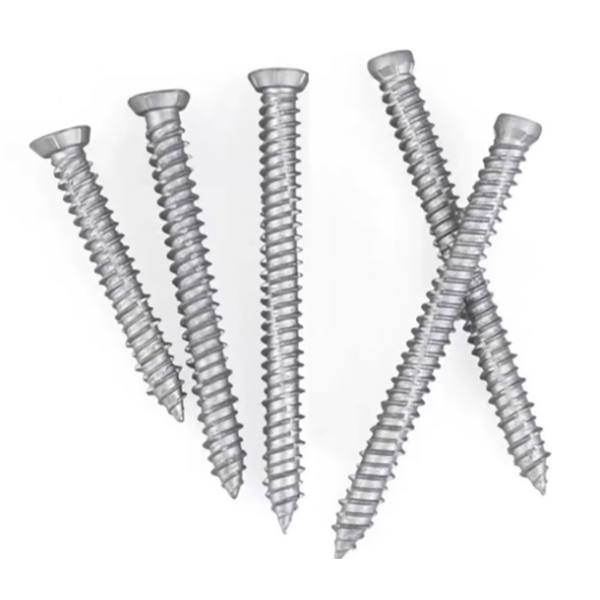
Self-tapping screws form their own internal threads during installation, eliminating the need for pre-tapping operations. Four primary categories serve different materials and load requirements, each distinguished by its thread-forming mechanism and point geometry.
Type Classification
| Type | Standard | Description | Best For |
| Thread-Forming | Type A / AB / B | Displaces material to form internal threads. Requires a pilot hole. No material removal. | Plastics, soft metals, wood |
| Thread-Cutting | Type F / BF / 25 | Features cutting flutes that remove material during installation, creating clean threads. | Harder metals, brittle materials |
| Thread-Rolling | Type TR / LO-DRIVE | Cold-forms threads without cutting. Produces no chips. Higher loosening resistance. | Sheet metal, extruded holes |
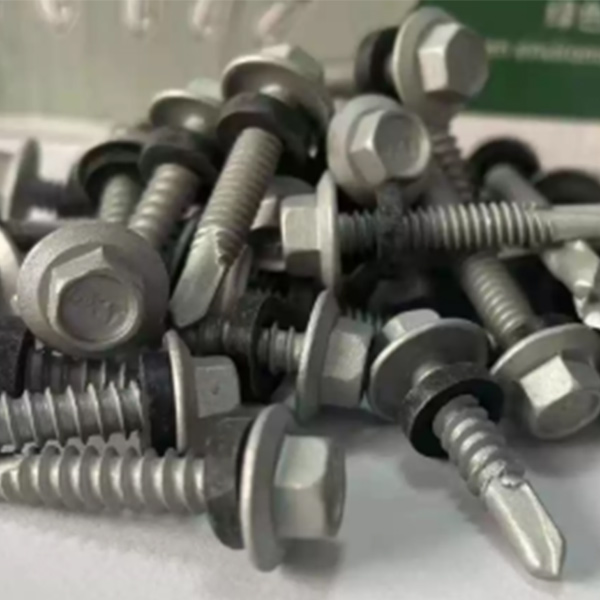
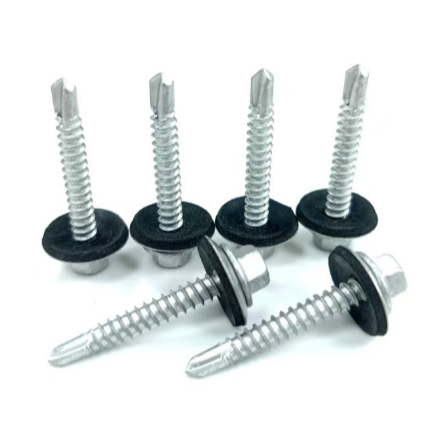
| Self-Drilling | DIN 7504 / TEK | Integral drill-bit point drills and taps in one operation. No pilot hole required. | Thin-gauge steel, HVAC, roofing |
Common Standards & Materials
Standards: DIN 7976, DIN 7504, ISO 15480, GB/T 43655
Materials: Carbon steel (C1018–C1045), alloy steel, stainless steel
Head types: Pan head, countersunk (flat head), hex head, hex washer head, round head
Part 2 — RUSPERT Coating Technology
RUSPERT (路锈宝) is a high-grade, environmentally friendly surface treatment system commonly applied to carbon and alloy steel fasteners. It utilises a three-layer coating structure that combines sacrificial galvanic protection with a durable ceramic barrier, achieving 1,000–1,500 hours of neutral salt spray resistance — far exceeding conventional zinc plating.
Three-Layer Structure
| Layer | Composition | Function | Protection Mechanism |
| Layer 1 — Metallic Zinc | Electrodeposited zinc | Sacrificial cathodic protection for steel substrate | Galvanic — zinc corrodes preferentially |
| Layer 2 — Chemical Conversion | Chromate / passivation film | Promotes adhesion between zinc and ceramic layers | Chemical bonding + self-healing |
| Layer 3 — Baked Ceramic Topcoat | Zinc-aluminum flake + resin | Barrier against moisture, salt, oxygen and chemicals | Physical barrier + non-conductive |
The three layers are bonded together through chemical reactions, forming a dense, rigid film that adheres tightly to the steel substrate. This unique combination of layers provides both active (sacrificial) and passive (barrier) corrosion protection.
Key Advantages
Superior corrosion resistance: 1,000–1,500 hours neutral salt spray (NSS) per ISO 9227, compared to 96–240 hours for standard zinc plating.
No hydrogen embrittlement: Low-temperature curing process avoids hydrogen absorption, making RUSPERT safe for high-strength fasteners (Grade 8.8–12.9) where electroplating poses embrittlement risk.
Higher surface hardness: RUSPERT coating is harder than Dacromet, providing superior wear and scratch resistance during installation and service.
Prevents bimetallic corrosion: The non-conductive ceramic topcoat isolates the zinc layer from contact with dissimilar metals (e.g., aluminum, galvanized steel), eliminating galvanic corrosion of adjacent structures.
Environmentally compliant: Cr⁶⁺-free, RoHS and REACH compliant. No toxic hexavalent chromium used in the process.
Coating Comparison
| Property | RUSPERT | Zinc Plating | Dacromet |
| Salt Spray (hrs) | 1,000 – 1,500 | 96 – 240 | 500 – 1,200 |
| Hydrogen Embrittlement | None | Risk (Grade 10.9+) | None |
| Surface Hardness | High | Medium | Medium |
| Cr⁶⁺ Free | Yes | Varies | Yes |
| Appearance | Dark grey / black | Blue-white / clear | Silver-grey |
| Bimetallic Corrosion | Prevented | Possible | Reduced |
| Cost Level | Medium-High | Low | Medium |
Salt spray per ISO 9227 NSS. Bimetallic corrosion refers to galvanic attack when RUSPERT-coated fasteners contact aluminum or galvanized steel surfaces.
Applications
Coastal & marine: Roofing, cladding, and structural connections in salt-laden atmospheres.
Outdoor structures: Fencing, decking, pergolas, and architectural facades exposed to weather.
ACQ-treated timber: RUSPERT withstands the corrosive copper-based preservatives in modern pressure-treated wood.
Automotive: Underbody fasteners, chassis connections, and exhaust system attachments.
Wind energy & steel framing: Long-life structural connections requiring maintenance-free corrosion protection.
Summary
RUSPERT-coated self-tapping screws offer a compelling combination of installation convenience and long-term corrosion protection. The self-tapping design eliminates pre-tapping, while the three-layer RUSPERT system delivers 1,000+ hours of salt spray resistance without hydrogen embrittlement — making these fasteners ideal for outdoor, coastal, and chemically aggressive environments where conventional zinc plating would fail prematurely.