- English
- Chinese
- French
- German
- Portuguese
- Spanish
- Russian
- Japanese
- Korean
- Arabic
- Irish
- Greek
- Turkish
- Italian
- Danish
- Romanian
- Indonesian
- Czech
- Afrikaans
- Swedish
- Polish
- Basque
- Catalan
- Esperanto
- Hindi
- Lao
- Albanian
- Amharic
- Armenian
- Azerbaijani
- Belarusian
- Bengali
- Bulgarian
- Cebuano
- Chichewa
- Corsican
- Croatian
- Dutch
- Estonian
- Filipino
- Finnish
- Frisian
- Galician
- Georgian
- Gujarati
- Haitian
- Hausa
- Hawaiian
- Hebrew
- Hmong
- Hungarian
- Icelandic
- Igbo
- Javanese
- Kannada
- Kazakh
- Khmer
- Kurdish
- Kyrgyz
- Latin
- Latvian
- Lithuanian
- Luxembou..
- Macedonian
- Malagasy
- Malay
- Malayalam
- Maltese
- Maori
- Marathi
- Mongolian
- Burmese
- Nepali
- Norwegian
- Pashto
- Persian
- Punjabi
- Serbian
- Sesotho
- Sinhala
- Slovak
- Slovenian
- Somali
- Samoan
- Scots Gaelic
- Shona
- Sindhi
- Sundanese
- Swahili
- Tajik
- Tamil
- Telugu
- Thai
- Ukrainian
- Urdu
- Uzbek
- Vietnamese
- Welsh
- Xhosa
- Yiddish
- Yoruba
- Zulu
- Kinyarwanda
- Tatar
- Oriya
- Turkmen
- Uyghur

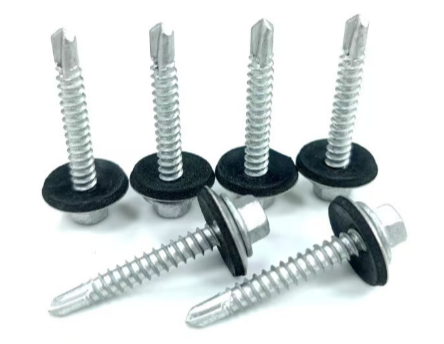
Samobušeći vijci obloženi Ruspertom
2026-09-09
1. Uvod
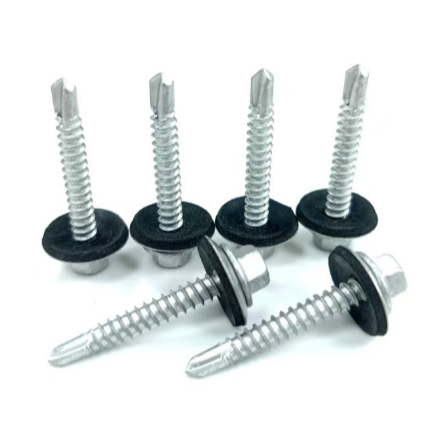
Self-drilling screws, commonly known as tek screws or drill-point screws, are specialized fasteners designed to drill their own pilot hole, cut mating threads, and fasten materials in a single operation. When these screws are treated with Ruspert coating—referred to in Chinese as “路锈宝” (Lùxiùbǎo)—they become high-performance, corrosion-resistant fastening solutions widely used in modern construction, steel structures, roofing systems, and outdoor installations.
Ruspert-coated self-drilling screws combine the efficiency of a hardened drill tip with a multi-layer advanced surface treatment that provides exceptional resistance to rust, salt spray, acid rain, and harsh environmental conditions. They offer an excellent balance of performance, durability, and cost-effectiveness compared with traditional zinc-plated or even certain grades of stainless-steel fasteners.
This article provides a detailed introduction to Ruspert-coated self-drilling screws, covering their material composition, coating technology, key performance advantages, typical applications, common specifications, and practical selection guidelines.
2. Šta je Ruspert premaz?
Ruspert je napredan, ekološki prilagodljiv, višeslojni sistem premaza za zaštitu od korozije posebno razvijen za pričvršćivače. Unlike conventional electro-galvanizing or simple zinc plating, Ruspert consists of several functional layers that work together to provide superior long-term protection.
2.1 Struktura premaza
Tipičan Ruspert sistem premaza uključuje:
- Metalni osnovni sloj– Obično sloj cinka ili legure cinka koji pruža žrtvu katodnu zaštitu.
- Sloj kemijske konverzije– Poboljšava prianjanje između metalnog sloja i naknadnih organskih premaza uz poboljšanje otpornosti na koroziju.
- Specijalni keramički/organski završni premaz– Gusti, tvrdi vanjski sloj koji nudi odličnu otpornost na abraziju, kemikalije, izlaganje UV zračenju i atmosfersku koroziju. Ovaj sloj je često odgovoran za prepoznatljiv izgled (obično srebrno-siva, plavo-siva ili druge boje u zavisnosti od formulacije).
Višeslojna struktura stvara sinergističku barijeru koja značajno nadmašuje jednoslojne cink premaze u agresivnom okruženju.
2.2 Učinak korozije
Independent laboratory tests (including SGS testing commonly referenced by manufacturers) typically show that quality Ruspert-coated carbon-steel screws can achieve:
- Otpornost na slani sprej od 500-1.000 sati ili više (ASTM B117 ili ekvivalent)
- Ciklična otpornost na kiselu kišu od 15 ciklusa ili više
- Corrosion resistance classifications often meeting or exceeding Class 3 (and in some formulations Class 4) requirements under relevant fastener standards such as AS 3566
For comparison, ordinary electro-galvanized screws may only withstand 48–120 hours of salt spray, while 410 stainless-steel screws typically offer around 200 hours. Visokokvalitetni Ruspert vijci od ugljičnog čelika često nadmašuju nehrđajući čelik 410 u ispitivanju slanom sprejom, a pritom su isplativiji.
3. Tipične primjene
Samobušeći vijci obloženi Ruspertom se široko koriste u više industrija i građevinskih scenarija:
Metalni krovovi i oblaganje zidova– Pričvršćivanje čeličnih limova premazanih bojama (彩钢瓦), valovitih ploča i sendvič panela na čelične grede ili okvire.
Konstrukcija čelične konstrukcije– Spojne sekundarne elemente, ugaone gvožđe i čelične okvire lake širine.
Fotonaponski (solarni) sistemi za montažu– Pričvršćivanje šina i modula u vanjskim solarnim instalacijama koje zahtijevaju dug vijek trajanja.
Industrijske zgrade i skladišta– Obimno pričvršćivanje krovnih i sporednih sistema.
Priobalna i visoko korozivna okruženja– Projekti u blizini mora, hemijskih postrojenja ili područja sa visokim industrijskim zagađenjem.
Opće pričvršćivanje metal na metal– HVAC sistemi, montaža opreme, ograde i privremene ili trajne konstrukcije.
4. Uobičajene specifikacije i vodič za odabir
Na kineskom i širem azijskom tržištu, najčešće korišteni prečnici za Ruspert samobušeće vijke su:
| Prečnik | Uobičajene dužine (mm) | Tipična upotreba | Kapacitet bušilice (približno) |
| M5.5 / #12 | 19–100+ | Općenito pokrivanje i oblaganje | Čelik do ~6 mm |
| M6.3 / #14 | 19–135+ | Teže strukture | Do ~6–9 mm |
| #10 / manji | 16–50 | Laki lim | Do ~4 mm |
Length selection should ensure that the screw fully penetrates the materials being joined and engages sufficiently with the supporting member (typically at least 3–4 full threads beyond the base material).
Prilikom odabira Ruspert vijaka za samobušenje, uzmite u obzir sljedeće faktore:
1.Debljina materijala– Uskladite tip točke bušenja (TEK broj točke) s ukupnom debljinom čelika koji treba probiti.
2. Ozbiljnost životne sredine– Za priobalna ili visoko korozivna mjesta, potvrdite specifičnu ocjenu slanog spreja i klasu premaza proizvoda.
3.Zahtjevi za zaptivanje– Koristite vijke sa vezanim EPDM podloškama za vodootporne krovove i oblaganje.
4.Zahtjevi za opterećenje– Provjerite vrijednosti zatezanja, smicanja i izvlačenja u odnosu na potrebe konstrukcijskog dizajna.
5.Compatibility– Uvjerite se da su materijali premaza i podloške kompatibilni s metalnim podlogama i svim premazima na pločama.
5. Poređenje sa alternativnim pričvršćivačima
Tabela ispod rezimira kako se vijci za samobušenje obloženi Ruspert-om uspoređuju s drugim uobičajenim opcijama:
| Feature | Ruspert Carbon Steel | 410 Stainless | Standardno pocinkovano |
| Otpornost na slani sprej | 500–1000+ sati | ~200 sati | 48–120 sati |
| Troškovi | Umjereno | Više | Nisko |
| Performanse bušenja | Odlično | Dobro | Dobro |
| Najbolje za | Vanjski / obalni / industrijski | Umjerena korozija | Unutarnji / suhi prostori |
Note: For extremely aggressive environments (e.g., continuous saltwater immersion or highly acidic industrial atmospheres), bi-metal composite screws (stainless head + hardened carbon-steel drill point) or higher-grade stainless solutions may still be preferred. However, for the majority of building envelope and steel construction applications, quality Ruspert-coated screws deliver an outstanding performance-to-cost ratio.
6. Zaključak
Ruspert-coated self-drilling screws (路锈宝钻尾丝) represent a mature and highly practical fastening technology that successfully bridges the gap between ordinary zinc-plated screws and expensive stainless-steel alternatives. By combining a high-strength carbon-steel substrate with a sophisticated multi-layer anti-corrosion coating, these fasteners deliver reliable drilling performance, excellent long-term durability, and attractive economics.
They have become a preferred choice for metal roofing, wall cladding, steel structures, solar mounting systems, and many other outdoor applications throughout Asia and beyond. When properly selected according to material thickness, environmental conditions, and structural requirements, Ruspert self-drilling screws provide secure, weather-resistant, and long-lasting connections that help reduce both installation time and future maintenance costs.
As construction standards continue to emphasize durability, sustainability, and efficiency, the role of advanced coated fasteners such as Ruspert self-drilling screws is expected to remain significant in modern building practice.