- Chinese
- French
- German
- Portuguese
- Spanish
- Russian
- Japanese
- Korean
- Arabic
- Irish
- Greek
- Turkish
- Italian
- Danish
- Romanian
- Indonesian
- Czech
- Afrikaans
- Swedish
- Polish
- Basque
- Catalan
- Esperanto
- Hindi
- Lao
- Albanian
- Amharic
- Armenian
- Azerbaijani
- Belarusian
- Bengali
- Bosnian
- Bulgarian
- Cebuano
- Chichewa
- Corsican
- Croatian
- Dutch
- Estonian
- Filipino
- Finnish
- Frisian
- Galician
- Georgian
- Gujarati
- Haitian
- Hausa
- Hawaiian
- Hebrew
- Hmong
- Hungarian
- Icelandic
- Igbo
- Javanese
- Kannada
- Kazakh
- Khmer
- Kurdish
- Kyrgyz
- Latin
- Latvian
- Lithuanian
- Luxembou..
- Macedonian
- Malagasy
- Malay
- Malayalam
- Maltese
- Maori
- Marathi
- Mongolian
- Burmese
- Nepali
- Norwegian
- Pashto
- Persian
- Punjabi
- Serbian
- Sesotho
- Sinhala
- Slovak
- Slovenian
- Somali
- Samoan
- Scots Gaelic
- Shona
- Sindhi
- Sundanese
- Swahili
- Tajik
- Tamil
- Telugu
- Thai
- Ukrainian
- Urdu
- Uzbek
- Vietnamese
- Welsh
- Xhosa
- Yiddish
- Yoruba
- Zulu
- Kinyarwanda
- Tatar
- Oriya
- Turkmen
- Uyghur

Ruspert-Coated Self-Drilling Screws
2026-09-09
1. Introduction
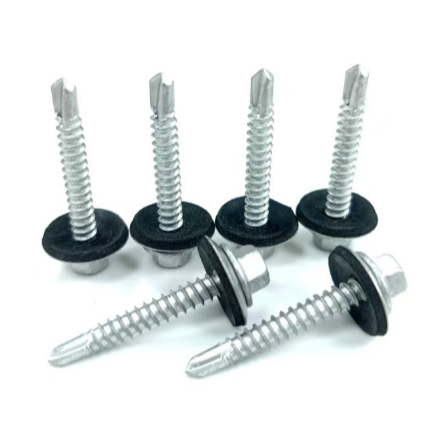
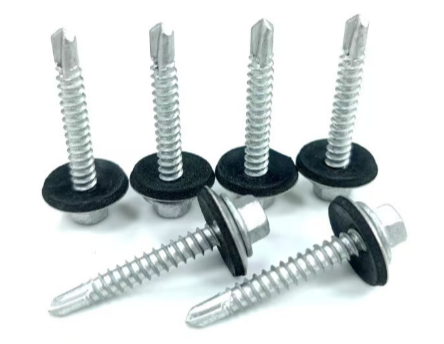
Self-drilling screws, commonly known as tek screws or drill-point screws, are specialized fasteners designed to drill their own pilot hole, cut mating threads, and fasten materials in a single operation. When these screws are treated with Ruspert coating—referred to in Chinese as “路锈宝” (Lùxiùbǎo)—they become high-performance, corrosion-resistant fastening solutions widely used in modern construction, steel structures, roofing systems, and outdoor installations.
Ruspert-coated self-drilling screws combine the efficiency of a hardened drill tip with a multi-layer advanced surface treatment that provides exceptional resistance to rust, salt spray, acid rain, and harsh environmental conditions. They offer an excellent balance of performance, durability, and cost-effectiveness compared with traditional zinc-plated or even certain grades of stainless-steel fasteners.
This article provides a detailed introduction to Ruspert-coated self-drilling screws, covering their material composition, coating technology, key performance advantages, typical applications, common specifications, and practical selection guidelines.
2. What Is Ruspert Coating?
Ruspert is an advanced, environmentally adaptive, multi-layer corrosion-protection coating system specifically developed for fasteners. Unlike conventional electro-galvanizing or simple zinc plating, Ruspert consists of several functional layers that work together to provide superior long-term protection.
2.1 Structure of the Coating
A typical Ruspert coating system includes:
- Metallic base layer– Usually a zinc or zinc-alloy layer that provides sacrificial cathodic protection.
- Chemical conversion layer– Enhances adhesion between the metallic layer and subsequent organic coatings while improving corrosion resistance.
- Special ceramic / organic topcoat– A dense, hard outer layer that offers excellent resistance to abrasion, chemicals, UV exposure, and atmospheric corrosion. This layer is often responsible for the distinctive appearance (commonly silver-gray, blue-gray, or other colors depending on formulation).
The multi-layer structure creates a synergistic barrier that significantly outperforms single-layer zinc coatings in aggressive environments.
2.2 Corrosion Performance
Independent laboratory tests (including SGS testing commonly referenced by manufacturers) typically show that quality Ruspert-coated carbon-steel screws can achieve:
- Salt spray resistance of 500–1,000 hours or more (ASTM B117 or equivalent)
- Acid-rain cyclic corrosion resistance of 15 cycles or higher
- Corrosion resistance classifications often meeting or exceeding Class 3 (and in some formulations Class 4) requirements under relevant fastener standards such as AS 3566
For comparison, ordinary electro-galvanized screws may only withstand 48–120 hours of salt spray, while 410 stainless-steel screws typically offer around 200 hours. High-quality Ruspert carbon-steel screws frequently outperform 410 stainless steel in salt-spray testing while remaining more cost-effective.
3. Typical Applications
Ruspert-coated self-drilling screws are widely used across multiple industries and construction scenarios:
Metal roofing and wall cladding– Fixing color-coated steel sheets (彩钢瓦), corrugated panels, and sandwich panels to steel purlins or frames.
Steel structure construction– Connecting secondary members, angle irons, and light-gauge steel framing.
Photovoltaic (solar) mounting systems– Fastening rails and modules in outdoor solar installations that demand long service life.
Industrial buildings and warehouses– High-volume fastening of roofing and siding systems.
Coastal and high-corrosion environments– Projects near the sea, chemical plants, or areas with high industrial pollution.
General metal-to-metal fastening– HVAC systems, equipment mounting, fencing, and temporary or permanent structures.
4. Common Specifications and Selection Guide
In the Chinese and broader Asian markets, the most frequently used diameters for Ruspert self-drilling screws are:
| Diameter | Common Lengths (mm) | Typical Use | Drill Capacity (approx.) |
| M5.5 / #12 | 19–100+ | General roofing & cladding | Up to ~6 mm steel |
| M6.3 / #14 | 19–135+ | Heavier structures | Up to ~6–9 mm |
| #10 / smaller | 16–50 | Light sheet metal | Up to ~4 mm |
Length selection should ensure that the screw fully penetrates the materials being joined and engages sufficiently with the supporting member (typically at least 3–4 full threads beyond the base material).
When choosing Ruspert self-drilling screws, consider the following factors:
1.Material thickness– Match the drill-point type (TEK point number) to the total thickness of steel to be penetrated.
2.Environmental severity– For coastal or highly corrosive sites, confirm the specific salt-spray rating and coating class of the product.
3.Sealing requirements– Use screws with bonded EPDM washers for waterproof roofing and cladding applications.
4.Load requirements– Verify tensile, shear, and pull-out values against structural design needs.
5.Compatibility– Ensure the coating and washer materials are compatible with the metal substrates and any coatings on the panels.
5. Comparison with Alternative Fasteners
The table below summarizes how Ruspert-coated carbon-steel self-drilling screws compare with other common options:
| Feature | Ruspert Carbon Steel | 410 Stainless | Standard Zinc Plated |
| Salt Spray Resistance | 500–1000+ hrs | ~200 hrs | 48–120 hrs |
| Cost | Moderate | Higher | Low |
| Drill Performance | Excellent | Good | Good |
| Best For | Outdoor / coastal / industrial | Moderate corrosion | Indoor / dry areas |
Note: For extremely aggressive environments (e.g., continuous saltwater immersion or highly acidic industrial atmospheres), bi-metal composite screws (stainless head + hardened carbon-steel drill point) or higher-grade stainless solutions may still be preferred. However, for the majority of building envelope and steel construction applications, quality Ruspert-coated screws deliver an outstanding performance-to-cost ratio.
6. Conclusion
Ruspert-coated self-drilling screws (路锈宝钻尾丝) represent a mature and highly practical fastening technology that successfully bridges the gap between ordinary zinc-plated screws and expensive stainless-steel alternatives. By combining a high-strength carbon-steel substrate with a sophisticated multi-layer anti-corrosion coating, these fasteners deliver reliable drilling performance, excellent long-term durability, and attractive economics.
They have become a preferred choice for metal roofing, wall cladding, steel structures, solar mounting systems, and many other outdoor applications throughout Asia and beyond. When properly selected according to material thickness, environmental conditions, and structural requirements, Ruspert self-drilling screws provide secure, weather-resistant, and long-lasting connections that help reduce both installation time and future maintenance costs.
As construction standards continue to emphasize durability, sustainability, and efficiency, the role of advanced coated fasteners such as Ruspert self-drilling screws is expected to remain significant in modern building practice.