- Chinese
- French
- German
- Portuguese
- Spanish
- Russian
- Japanese
- Korean
- Arabic
- Irish
- Greek
- Turkish
- Italian
- Danish
- Romanian
- Indonesian
- Czech
- Afrikaans
- Swedish
- Polish
- Basque
- Catalan
- Esperanto
- Hindi
- Lao
- Albanian
- Amharic
- Armenian
- Azerbaijani
- Belarusian
- Bengali
- Bosnian
- Bulgarian
- Cebuano
- Chichewa
- Corsican
- Croatian
- Dutch
- Estonian
- Filipino
- Finnish
- Frisian
- Galician
- Georgian
- Gujarati
- Haitian
- Hausa
- Hawaiian
- Hebrew
- Hmong
- Hungarian
- Icelandic
- Igbo
- Javanese
- Kannada
- Kazakh
- Khmer
- Kurdish
- Kyrgyz
- Latin
- Latvian
- Lithuanian
- Luxembou..
- Macedonian
- Malagasy
- Malay
- Malayalam
- Maltese
- Maori
- Marathi
- Mongolian
- Burmese
- Nepali
- Norwegian
- Pashto
- Persian
- Punjabi
- Serbian
- Sesotho
- Sinhala
- Slovak
- Slovenian
- Somali
- Samoan
- Scots Gaelic
- Shona
- Sindhi
- Sundanese
- Swahili
- Tajik
- Tamil
- Telugu
- Thai
- Ukrainian
- Urdu
- Uzbek
- Vietnamese
- Welsh
- Xhosa
- Yiddish
- Yoruba
- Zulu
- Kinyarwanda
- Tatar
- Oriya
- Turkmen
- Uyghur

Stainless Steel Bolts: Hex Bolts and Material Grades
2026-08-05
1. Introduction
Stainless steel bolts combine inherent corrosion resistance with mechanical strength, making them essential across construction, marine, food processing, and medical industries. Unlike carbon steel fasteners requiring protective coatings, stainless steel derives its corrosion resistance from a self-healing chromium oxide layer. This guide covers the two most critical aspects: hex bolt design and stainless steel grade selection.
2. Hex Bolts
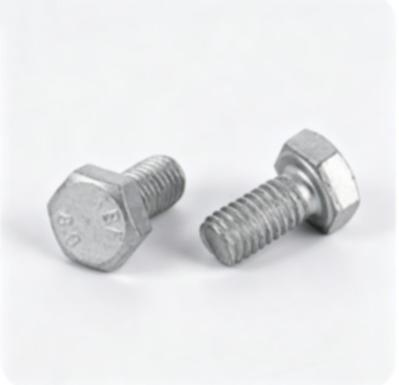
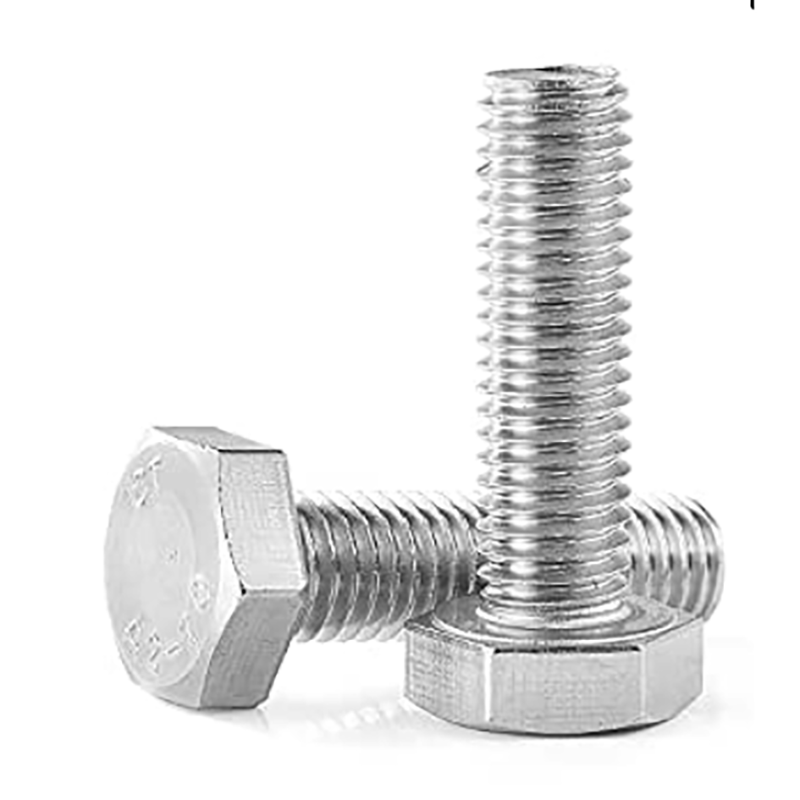
Hex bolts feature a six-sided head enabling efficient torque transfer via standard wrenches or sockets. The design comprises a hexagonal head, unthreaded shank, threaded portion, and chamfered tip. Key advantages include high torque capacity, universal accessibility, manufacturing efficiency, reusability, and compliance with international standards (ISO 4014, DIN 933, ASTM A325).
Table 1. Standard Hex Bolt Sizes (Stainless Steel)
| Nominal Size | Thread Pitch (TPI) | Head Width (mm) | Tensile Strength (MPa) |
| 1/4 - 20 | 20 | 11.1 | 520 |
| 3/8 - 16 | 16 | 14.3 | 520 |
| 1/2 - 13 | 13 | 19.1 | 520 |
| 3/4 - 10 | 10 | 28.6 | 520 |
3. Stainless Steel Grades
Stainless steel fasteners are classified into four families: austenitic (304, 316 — non-magnetic, high corrosion resistance), ferritic (430 — magnetic, economical), martensitic (410 — hardenable, moderate corrosion), and precipitation-hardening (17-4PH — high strength). Under ISO 3506, grades use a letter-number code where A = austenitic, C = martensitic, and the number denotes tensile strength class (50/70/80).
Table 2. Common Stainless Steel Grades for Bolts
| Grade | ISO Class | Tensile (MPa) | Corrosion Resist. | Key Elements | Typical Application |
| 304 | A2-70 | 700 | Good | 18% Cr, 8% Ni | General purpose, food |
| 316 | A4-70 | 700 | Excellent | 16% Cr, 10% Ni, 2% Mo | Marine, chemical, medical |
| 410 | C3-80 | 550 | Moderate | 12% Cr | Cutlery, valves |
| 17-4PH | A4-80 | 800 | Good | 16% Cr, 4% Ni, 4% Cu | Aerospace, high-strength |
3.1 Grade Selection by Environment
Table 3. Recommended Grades by Service Environment
| Environment | Recommended Grade | Reason |
| Indoor / Dry | 304 (A2) | Adequate at low cost |
| Outdoor / Coastal | 316 (A4) | Mo resists chloride attack |
| Chemical Plant | 316L / 904L | Superior acid resistance |
| High Strength Needs | 17-4PH (A4-80) | Precipitation-hardened |
4. Key Considerations
Galling: Austenitic grades (304, 316) are prone to thread seizing during tightening. Use anti-seize compounds or dissimilar grade pairings (A2 bolt with A4 nut) to mitigate.
Passivation: Acid treatment (ASTM A967) removes free iron and enhances the oxide layer, improving corrosion resistance after manufacturing.
Magnetism: Austenitic grades are non-magnetic when annealed but may become partially magnetic after cold working. Ferritic and martensitic grades are inherently magnetic.
5. Conclusion
Stainless steel hex bolts merge practical geometric design with metallurgical versatility. From economical Grade 304 for general use to high-strength 17-4PH for demanding applications, matching the correct grade to the service environment ensures optimal performance and longevity.