- Chinese
- French
- German
- Portuguese
- Spanish
- Russian
- Japanese
- Korean
- Arabic
- Irish
- Greek
- Turkish
- Italian
- Danish
- Romanian
- Indonesian
- Czech
- Afrikaans
- Swedish
- Polish
- Basque
- Catalan
- Esperanto
- Hindi
- Lao
- Albanian
- Amharic
- Armenian
- Azerbaijani
- Belarusian
- Bengali
- Bosnian
- Bulgarian
- Cebuano
- Chichewa
- Corsican
- Croatian
- Dutch
- Estonian
- Filipino
- Finnish
- Frisian
- Galician
- Georgian
- Gujarati
- Haitian
- Hausa
- Hawaiian
- Hebrew
- Hmong
- Hungarian
- Icelandic
- Igbo
- Javanese
- Kannada
- Kazakh
- Khmer
- Kurdish
- Kyrgyz
- Latin
- Latvian
- Lithuanian
- Luxembou..
- Macedonian
- Malagasy
- Malay
- Malayalam
- Maltese
- Maori
- Marathi
- Mongolian
- Burmese
- Nepali
- Norwegian
- Pashto
- Persian
- Punjabi
- Serbian
- Sesotho
- Sinhala
- Slovak
- Slovenian
- Somali
- Samoan
- Scots Gaelic
- Shona
- Sindhi
- Sundanese
- Swahili
- Tajik
- Tamil
- Telugu
- Thai
- Ukrainian
- Urdu
- Uzbek
- Vietnamese
- Welsh
- Xhosa
- Yiddish
- Yoruba
- Zulu
- Kinyarwanda
- Tatar
- Oriya
- Turkmen
- Uyghur

Understanding Dacromet Bolts- A Comprehensive Q&A Guide to High-Performance Anti-Corrosion Fasteners
2026-11-16
Q1: What are Dacromet bolts?
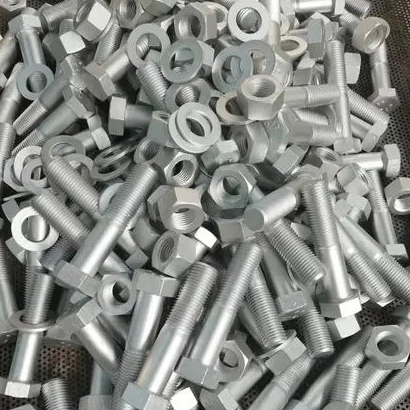
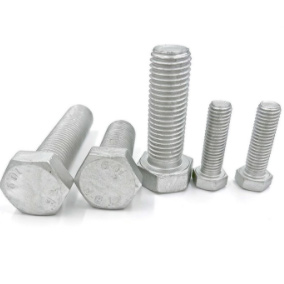
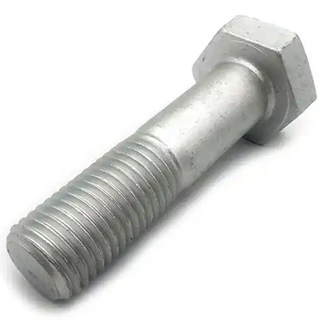
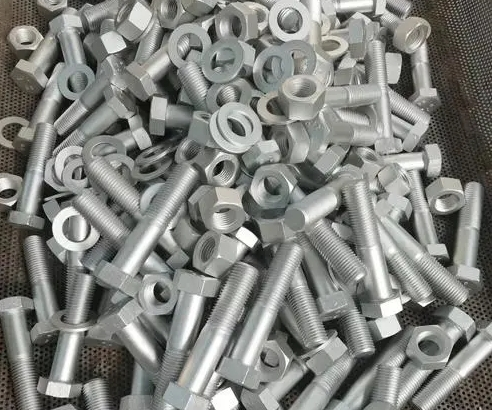
A: Dacromet bolts are high-performance steel fasteners protected by a specialized zinc-aluminum flake coating (Dacromet / zinc flake coating). This thin inorganic layer delivers outstanding corrosion resistance and long-lasting rust prevention. Unlike electroplated zinc or hot-dip galvanizing, Dacromet forms overlapping layers of zinc and aluminum flakes in a chromate binder, combining barrier protection, sacrificial cathodic protection, and passivation. Typical thickness is only 5–15 μm, preserving thread geometry while providing superior anti-corrosion performance for bolts, screws, nuts, and studs.
Q2: How does the Dacromet coating process protect bolts against rust?
A: Cleaned bolts are coated by dip-spin or spray with a water-based slurry of zinc flakes, aluminum flakes, and binder, then heat-cured (~280–320°C). The cured film provides three key anti-rust mechanisms:
- Barrier Protection – Overlapping metallic flakes block moisture, salt spray, and pollutants.
- Cathodic Protection – Zinc flakes sacrificially corrode to protect the steel substrate of the bolts.
- Passivation & Self-Healing – Chromate compounds seal the surface and help repair minor damage.
Q3: How strong is the corrosion resistance of Dacromet bolts?
A: Dacromet bolts typically withstand 720–1,500+ hours in neutral salt spray tests (ASTM B117 / ISO 9227) without red rust—often 7–20 times better than conventional electrogalvanized bolts (96–240 hours). High-grade coatings can exceed 1,200–2,000 hours. This exceptional rust prevention makes them ideal for coastal, industrial, automotive underbody, and outdoor structural applications.
Table 1: Comparison of Common Bolt Coatings for Corrosion Resistance
| Metric | Electroplated Zinc | Hot-Dip Galvanizing | Dacromet |
| Thickness | 5–15 μm | 40–100 μm | 5–15 μm |
| Salt Spray (no red rust) | 96–240 h | 500–1,000 h | 720–1,500+ h |
| H Embrittlement Risk | High (≥10.9) | Medium | None |
| Max Temp. | ~120–150°C | ~200°C | Up to 300°C+ |
| Thread Fit Impact | Minimal | Significant | Minimal |
Highlighted cells show Dacromet advantages in anti-rust performance and suitability for high-strength bolts.
Q4: Why are Dacromet bolts preferred for high-strength fasteners?
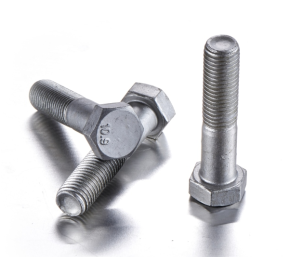
A: Grade 8.8, 10.9, 12.9 and similar high-tensile bolts are vulnerable to hydrogen embrittlement from traditional electroplating and acid pickling. This can cause delayed brittle fracture under load. Dacromet is a non-electrolytic process that introduces no hydrogen, eliminating embrittlement risk. Combined with excellent thread fit, controllable friction coefficients, and superior rust resistance, it is the coating of choice for safety-critical bolted joints in automotive, structural, rail, and wind-energy applications.
Q5: What are the main applications of Dacromet bolts?
A: Dacromet bolts excel wherever long-term corrosion resistance and rust prevention are essential:
- Automotive: Chassis, underbody, and high-strength engine/transmission fasteners.
- Infrastructure: Bridges, transmission towers, coastal and outdoor steel structures.
- Renewable energy: Wind turbine bolted connections and solar mounting systems.
- Rail & heavy equipment: Track fasteners and machinery exposed to moisture and vibration.
- Marine & offshore: Bolts requiring strong resistance to chloride-induced corrosion.
Q6: How do Dacromet bolts perform at elevated temperatures?
A: Dacromet coatings remain stable and retain anti-corrosion properties up to 300°C continuous service (higher short-term). Conventional zinc plating degrades near 100–150°C and hot-dip galvanizing near 200°C. This thermal durability, together with good adhesion and mechanical damage resistance, ensures reliable rust prevention even under thermal cycling.
Table 2: Key Technical Attributes of Dacromet Bolts
| Attribute | Typical Value / Characteristic |
| Coating System | Zinc-aluminum flake in inorganic binder |
| Appearance | Matte / satin silver-gray |
| Coating Thickness | 5–15 μm (typically 6–12 μm); preserves thread fit |
| Salt Spray Resistance | ≥720–1,000 h to red rust (higher grades >1,200 h) |
| Hydrogen Embrittlement | None – ideal for high-strength bolts (10.9 / 12.9) |
| Heat Resistance | Stable to 300°C continuous service |
| Friction Coefficient | Controllable with topcoats (μ ≈ 0.10–0.18) |
Q7: Are there any limitations when specifying Dacromet bolts?
A: The coating is thinner than heavy hot-dip galvanizing, so extremely abrasive environments may benefit from additional topcoats or design protection. Traditional Dacromet contained hexavalent chromium; modern chrome-free zinc-flake systems (e.g., certain Geomet grades) meet stricter environmental rules while retaining high corrosion resistance. Always pair bolts with compatible coated nuts and washers for uniform joint anti-rust performance, and ensure proper substrate preparation for optimal adhesion.
Q8: How should engineers specify Dacromet bolts for best results?
A: For reliable corrosion resistance and rust prevention:
- Specify required salt-spray hours (e.g., ≥1,000 h to red rust) and coating grade.
- Confirm compatibility with high-strength grades to exploit the hydrogen-embrittlement-free benefit.
- Define friction coefficient range if torque-controlled assembly is critical.
- Require matching coated nuts/washers for consistent joint protection.
- Reference ISO 10683 (non-electrolytically applied zinc flake coatings) or equivalent standards.
Summary: Why Choose Dacromet Bolts?
Dacromet bolts combine thin-film dimensional accuracy with multi-mechanism corrosion protection—barrier layers, sacrificial zinc action, and passivation. They deliver far superior rust resistance compared with conventional coatings, eliminate hydrogen embrittlement risk for high-strength fasteners, and maintain performance up to 300°C. Properly specified Dacromet-coated bolts provide reliable, long-lasting anti-corrosion and anti-rust durability for demanding bolted joints in automotive, infrastructure, energy, and industrial applications.