- Chinese
- French
- German
- Portuguese
- Spanish
- Russian
- Japanese
- Korean
- Arabic
- Irish
- Greek
- Turkish
- Italian
- Danish
- Romanian
- Indonesian
- Czech
- Afrikaans
- Swedish
- Polish
- Basque
- Catalan
- Esperanto
- Hindi
- Lao
- Albanian
- Amharic
- Armenian
- Azerbaijani
- Belarusian
- Bengali
- Bosnian
- Bulgarian
- Cebuano
- Chichewa
- Corsican
- Croatian
- Dutch
- Estonian
- Filipino
- Finnish
- Frisian
- Galician
- Georgian
- Gujarati
- Haitian
- Hausa
- Hawaiian
- Hebrew
- Hmong
- Hungarian
- Icelandic
- Igbo
- Javanese
- Kannada
- Kazakh
- Khmer
- Kurdish
- Kyrgyz
- Latin
- Latvian
- Lithuanian
- Luxembou..
- Macedonian
- Malagasy
- Malay
- Malayalam
- Maltese
- Maori
- Marathi
- Mongolian
- Burmese
- Nepali
- Norwegian
- Pashto
- Persian
- Punjabi
- Serbian
- Sesotho
- Sinhala
- Slovak
- Slovenian
- Somali
- Samoan
- Scots Gaelic
- Shona
- Sindhi
- Sundanese
- Swahili
- Tajik
- Tamil
- Telugu
- Thai
- Ukrainian
- Urdu
- Uzbek
- Vietnamese
- Welsh
- Xhosa
- Yiddish
- Yoruba
- Zulu
- Kinyarwanda
- Tatar
- Oriya
- Turkmen
- Uyghur

Composite Washer Self-Drilling Screws: Advanced Fastening Technology for Superior Corrosion Resistance and Weatherproof Performance
2026-11-16
1. Introduction
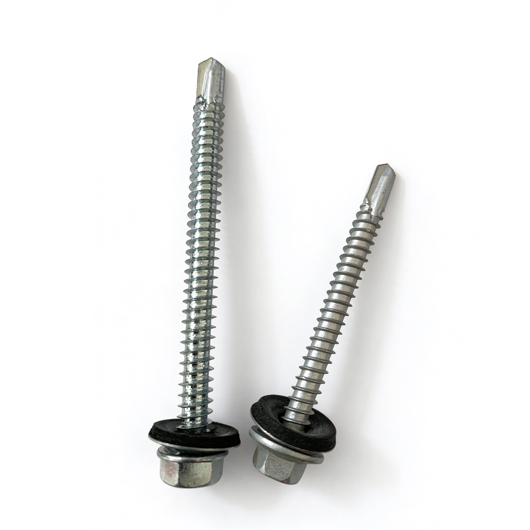
In modern construction and industrial applications, the demand for reliable, high-performance fasteners that can withstand harsh environmental conditions continues to grow. Composite washer self-drilling screws—also known as bonded washer drill-point screws or self-drilling screws with EPDM sealing washers—have emerged as a preferred solution for roofing, cladding, sandwich panel installation, and metal-to-metal connections.
These specialized fasteners combine a self-drilling tip that eliminates the need for pre-drilling, a high-strength threaded body for secure fastening, and a permanently bonded composite sealing washer that delivers exceptional waterproofing and corrosion protection. By preventing moisture ingress at the fastening point, they significantly reduce the risk of rust formation, base metal corrosion, and premature structural degradation.
This article provides a detailed examination of composite washer self-drilling screws, with particular emphasis on their anti-corrosion design features, rust-prevention coatings, material selection, performance advantages, and best practices for long-term durability in corrosive environments.
2. Product Structure and Core Components
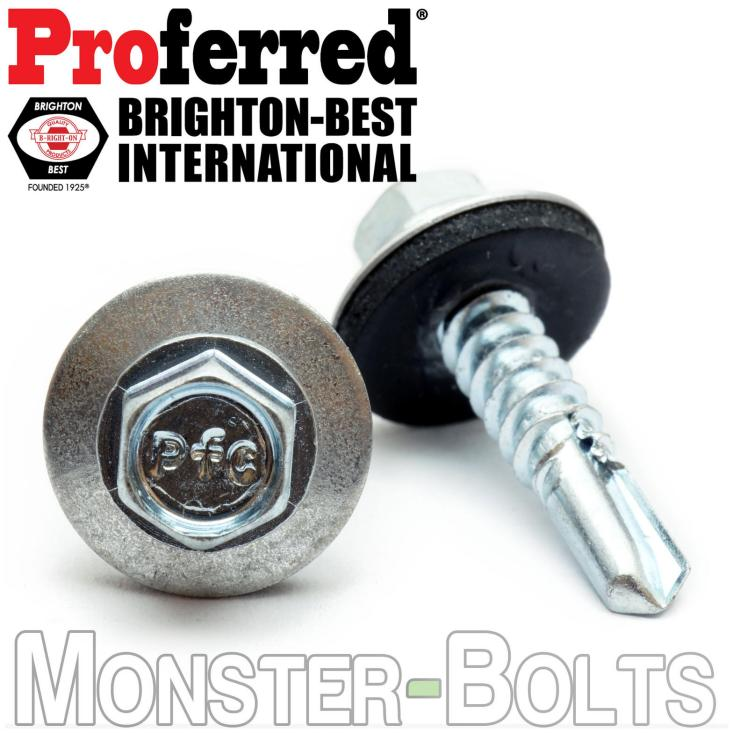
A composite washer self-drilling screw consists of several precisely engineered components working in synergy to deliver both mechanical strength and long-term corrosion resistance:
2.1 Self-Drilling Point
The tip is designed as a hardened drill point (commonly #2, #3, or #5 style) that cuts its own pilot hole through steel, aluminum, or composite materials. This eliminates separate drilling operations, reduces installation time, and minimizes metal swarf that could otherwise promote localized corrosion. High-quality points are case-hardened to maintain sharpness while the core remains tough enough to resist breakage under high torque.
2.2 Threaded Body and Hex Washer Head
The shank features optimized thread geometry for high pull-out resistance and anti-backout performance. The hex washer head (HWH) provides a large bearing surface and stable driving engagement. Many premium products use bi-metal construction: a hardened carbon steel drill point fusion-bonded or welded to a stainless steel (A2/304 or 410) body and head. This combination delivers superior drilling capability together with outstanding resistance to atmospheric corrosion and red rust.
3. Anti-Corrosion and Anti-Rust Technologies
Corrosion resistance is the cornerstone of composite washer self-drilling screw performance. Manufacturers employ multiple complementary strategies to achieve exceptional rust prevention and long-term durability in aggressive environments such as coastal zones, industrial atmospheres, and high-humidity regions.
3.1 Advanced Surface Coatings and Platings
High-performance coatings form the first line of defense against oxidation and red rust:
- Zinc electroplating with Cr(III) passivation (RoHS-compliant) – provides moderate corrosion protection for indoor and mild outdoor use.
- Multi-layer organic coatings (e.g., Climaseal®, Stalgard®, Ruspert®, or equivalent zinc-flake systems) – typically achieve 500–1,000+ hours of neutral salt spray resistance (ASTM B117) with no significant red rust on critical surfaces.
- Hot-dip galvanizing or zinc-nickel alloy plating – offers enhanced barrier protection and sacrificial anode action against substrate corrosion.
- Powder coating or color-matched organic finishes – add UV resistance and further barrier protection while blending aesthetically with cladding panels.
3.2 Corrosion Performance Comparison
The following table summarizes typical corrosion resistance levels of different surface treatments commonly used on composite washer self-drilling screws:
| Surface Treatment | Typical Salt Spray (ASTM B117) | Corrosion Category | Recommended Environment |
| Zinc + Cr(III) passivation | 72–240 hours | C2–C3 | Indoor / mild outdoor |
| Organic multi-layer (Climaseal / Stalgard type) | 500–1,000+ hours | C3–C4 | Industrial / coastal |
| Zinc-flake / Ruspert-type systems | 1,000–1,500 hours | C4–C5 | Severe industrial / marine |
| Bi-metal (SS body + CS point) + coating | 1,000–2,000+ hours | C5 / CX | Coastal, chemical, offshore |
| Full stainless (A2/304) + EPDM washer | Inherent high resistance | C5 / CX | Most aggressive atmospheres |
4. Key Performance Advantages
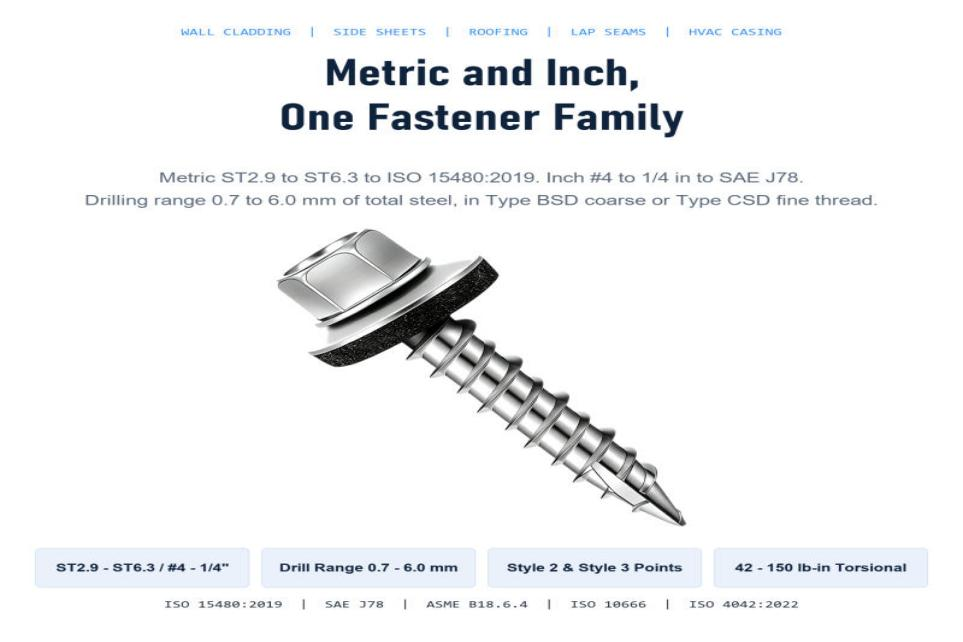
Beyond corrosion resistance, composite washer self-drilling screws offer several practical and technical benefits:
- One-step installation: Drill, tap, and fasten in a single operation—dramatically improving site productivity and reducing labor costs.
- Weather-tight and airtight sealing: The compressed EPDM washer creates a reliable barrier against rain, wind-driven moisture, and air leakage.
- High pull-out and shear strength: Optimized thread design and washer load distribution provide secure attachment even under wind uplift and vibration.
- Reduced risk of substrate damage: Proper sealing prevents water from entering the panel or structure, thereby avoiding hidden corrosion, insulation degradation, and mold growth.
- Compatibility with treated lumber and modern coatings: Certain organic finishes (e.g., Gray Stalgard®) are compatible with ACQ-treated wood and other preservative systems without accelerating fastener corrosion.
5. Conclusion
Composite washer self-drilling screws represent a mature, high-value fastening technology that simultaneously addresses installation efficiency, mechanical performance, weatherproofing, and long-term corrosion protection. Through the intelligent combination of hardened drill points, high-strength threads, advanced anti-rust coatings or stainless construction, and permanently bonded EPDM sealing washers, these fasteners deliver reliable service life even in demanding industrial, coastal, and outdoor environments.
When specifying these products, engineers and contractors should carefully match the corrosion protection level (coating system or stainless grade) to the environmental corrosivity category (C2–CX) of the project site. Proper installation further ensures that the sealing washer and protective coatings continue to prevent moisture-induced rust and substrate degradation throughout the structure’s design life.
By choosing quality composite washer self-drilling screws with proven salt-spray performance and durable sealing technology, project stakeholders can significantly reduce maintenance costs, extend service intervals, and enhance the overall durability and safety of metal building envelopes and industrial assemblies.