- Chinese
- French
- German
- Portuguese
- Spanish
- Russian
- Japanese
- Korean
- Arabic
- Irish
- Greek
- Turkish
- Italian
- Danish
- Romanian
- Indonesian
- Czech
- Afrikaans
- Swedish
- Polish
- Basque
- Catalan
- Esperanto
- Hindi
- Lao
- Albanian
- Amharic
- Armenian
- Azerbaijani
- Belarusian
- Bengali
- Bosnian
- Bulgarian
- Cebuano
- Chichewa
- Corsican
- Croatian
- Dutch
- Estonian
- Filipino
- Finnish
- Frisian
- Galician
- Georgian
- Gujarati
- Haitian
- Hausa
- Hawaiian
- Hebrew
- Hmong
- Hungarian
- Icelandic
- Igbo
- Javanese
- Kannada
- Kazakh
- Khmer
- Kurdish
- Kyrgyz
- Latin
- Latvian
- Lithuanian
- Luxembou..
- Macedonian
- Malagasy
- Malay
- Malayalam
- Maltese
- Maori
- Marathi
- Mongolian
- Burmese
- Nepali
- Norwegian
- Pashto
- Persian
- Punjabi
- Serbian
- Sesotho
- Sinhala
- Slovak
- Slovenian
- Somali
- Samoan
- Scots Gaelic
- Shona
- Sindhi
- Sundanese
- Swahili
- Tajik
- Tamil
- Telugu
- Thai
- Ukrainian
- Urdu
- Uzbek
- Vietnamese
- Welsh
- Xhosa
- Yiddish
- Yoruba
- Zulu
- Kinyarwanda
- Tatar
- Oriya
- Turkmen
- Uyghur

DACROMET HEX NUTS-A Comprehensive Introduction to Corrosion-Resistant Fasteners
2026-08-25
1. Introduction
Hexagonal nuts, commonly known as hex nuts, are among the most widely used fasteners in mechanical engineering, construction, automotive, and industrial applications. When combined with advanced surface treatments such as Dacromet coating, these components achieve exceptional corrosion resistance, making them suitable for harsh environments including marine, automotive underbody, and outdoor structural applications.
This article provides a dual-perspective introduction: first examining the fundamental design and standards of hex nuts, and second exploring the Dacromet (zinc-aluminum flake) coating technology that significantly enhances their durability and performance.
1.1 What Are Hex Nuts?
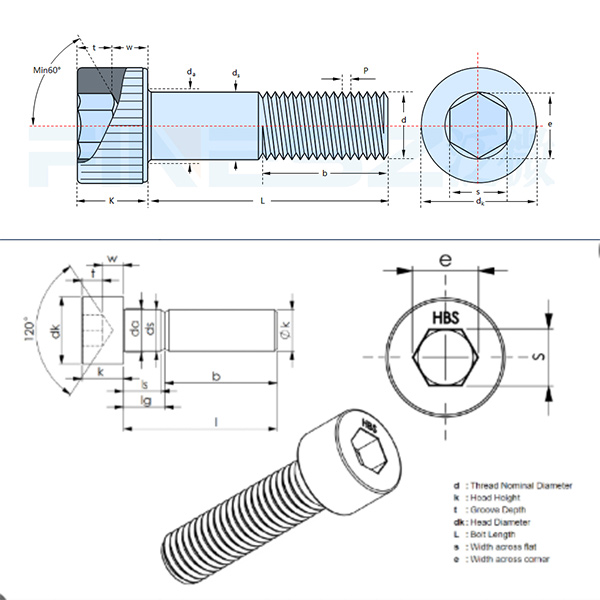
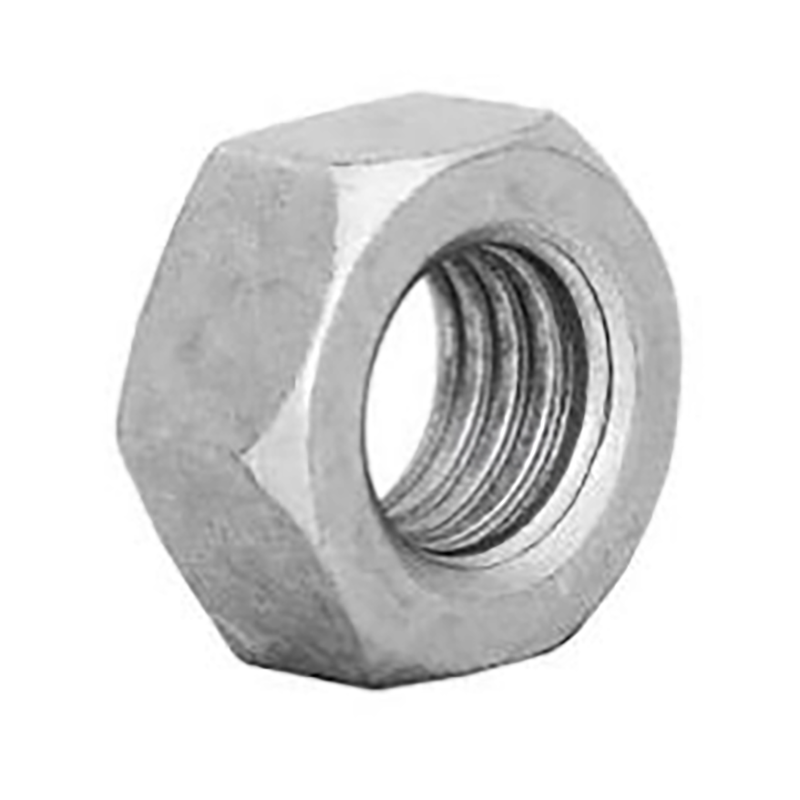
A hex nut is a type of fastener with a threaded hole and a hexagonal outer shape. The six-sided geometry allows efficient application of torque using standard wrenches or sockets, providing good access in confined spaces while resisting rounding under high loads. Hex nuts are almost always used in conjunction with a mating bolt or stud to clamp two or more components together.
Key characteristics include:
- Internal thread (metric or imperial) matching the bolt
- Width across flats (wrench size) and thickness defined by standards
- Available in various strength grades (e.g., Class 8, 10, Grade 5, 8)
- Common materials: carbon steel, alloy steel, stainless steel
1.2 The Role of Dacromet Coating
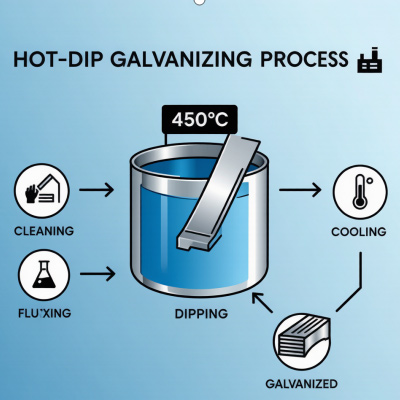
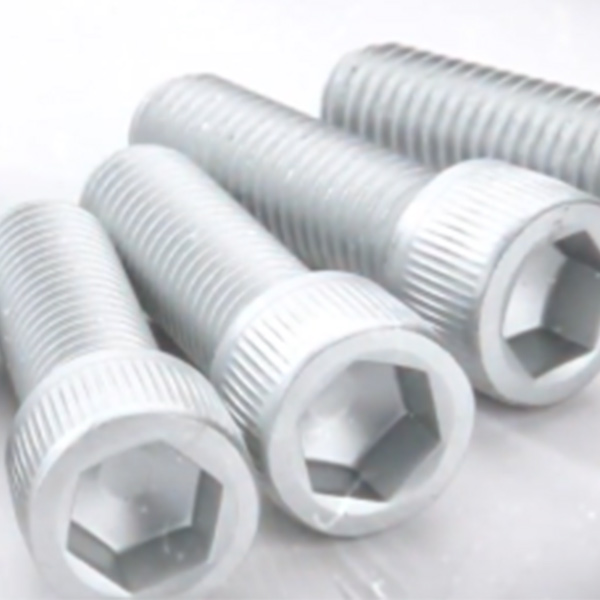
Dacromet is a proprietary zinc-aluminum flake coating system (originally developed by Metal Coatings International) applied as a thin, non-electrolytic film. It provides superior corrosion protection compared with conventional zinc electroplating or hot-dip galvanizing, particularly for high-strength fasteners where hydrogen embrittlement must be avoided. The coating typically appears metallic silver-gray and measures only 5–12 μm in thickness, preserving thread fit and dimensional accuracy.
2. Hex Nuts: Design, Standards & Dimensions
2.1 Types of Hex Nuts
Several variants exist to meet different functional needs:
- Standard (Finished) Hex Nut – General-purpose, most common form (ISO 4032 / DIN 934 / ASME B18.2.2).
- Heavy Hex Nut – Larger width across flats and greater thickness for structural applications (e.g., ASTM A563).
- Jam (Thin) Nut – Reduced thickness for locking or space-constrained uses.
- Nylon-Insert Lock Nut (Nylock) – Prevailing-torque locking feature.
- Flange Nut – Integrated washer face for improved load distribution.
2.2 Metric Hex Nut Dimensions (ISO 4032 / DIN 934)
The following table summarizes key dimensions for common metric sizes of standard hex nuts:
| Nominal Size | Pitch (mm) | Width Across Flats s (mm) | Width Across Corners e min (mm) | Thickness m (mm) | Approx. Weight (g) |
| M6 | 1.0 | 10 | 11.05 | 5.2 | ~2.0 |
| M8 | 1.25 | 13 | 14.38 | 6.8 | ~4.5 |
| M10 | 1.5 | 17 | 18.90 | 8.4 | ~8.0 |
| M12 | 1.75 | 19 | 21.10 | 10.8 | ~12.5 |
| M16 | 2.0 | 24 | 26.75 | 14.8 | ~28 |
| M20 | 2.5 | 30 | 33.53 | 18.0 | ~50 |
Table 1: Selected metric hex nut dimensions (approximate values based on ISO 4032 / DIN 934).
2.3 Strength Grades & Materials
Hex nuts are graded according to mechanical property standards. Common metric classes include Class 6, 8, and 10 (ISO 898-2). Higher classes correspond to higher proof load and hardness. For structural applications, heavy hex nuts conforming to ASTM A563 or EN standards are preferred. Carbon steel is the most common base material; stainless steel (A2/A4) is used when inherent corrosion resistance is required, although Dacromet-coated carbon steel often offers a more cost-effective high-performance alternative.
3. Dacromet Coating Technology
3.1 Composition and Structure
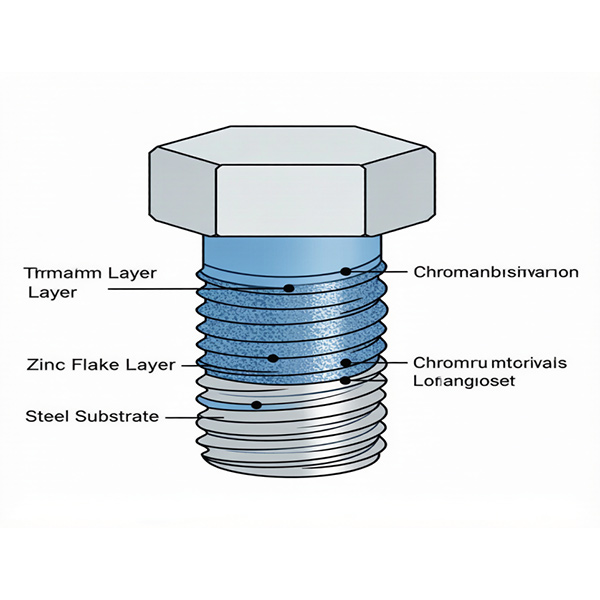
Dacromet is a water-based, non-electrolytic coating consisting primarily of overlapping zinc and aluminum flakes dispersed in an inorganic chromium-oxide binder. The resulting film is thin (typically 5–12 μm), metallic silver in appearance, and provides multi-layer protection:
- Barrier protection – Flake layers isolate the substrate from corrosive media.
- Galvanic (sacrificial) protection – Zinc acts as anode, preferentially corroding.
- Passivation – Metal oxides slow the corrosion reaction.
- Self-repairing – Zinc oxides and carbonates migrate to damaged areas.
3.2 Application Process
The typical process sequence avoids acid pickling, thereby eliminating the risk of hydrogen embrittlement:
- Surface preparation: Alkaline degreasing + mechanical descaling (shot blasting).
- Coating application: Dip-spin (most common for fasteners), spray, or dip-drain.
- Flash-off / pre-drying at moderate temperature to remove water.
- Thermal curing at approximately 280–320 °C to form the inorganic matrix.
3.3 Corrosion Performance
Performance is commonly evaluated by neutral salt-spray testing (ISO 9227 / ASTM B117). Typical results for Dacromet 320/500 systems are shown below:
| Grade / Type | Coating Weight | Salt Spray Performance (ISO 9227) |
| Dacromet 320/500 Grade A | ≈ 24 g/m² | 240 h no white rust; 600 h no red rust |
| Dacromet 320/500 Grade B | ≈ 36 g/m² | 240 h no white rust; 1000 h no red rust |
| High-thickness systems | ≈ 80 g/m² | Extended cyclic / Kesternich resistance |
Table 2: Typical corrosion performance of Dacromet coatings (results depend on substrate, geometry, and process).
Additional advantages include heat resistance up to approximately 300 °C, good paintability, controlled coefficient of friction (especially with lubricated topcoats such as PLUS or DACROLUB), and compatibility with aluminum (reduced galvanic corrosion risk).
4. Applications, Comparison & Conclusion
4.1 Typical Applications of Dacromet Hex Nuts
Because of their combination of high strength, precise geometry, and outstanding corrosion resistance without hydrogen-embrittlement risk, Dacromet-coated hex nuts are widely specified in:
- Automotive: chassis, underbody, engine and transmission fasteners (often Grade 10.9 / Class 10).
- Marine and coastal equipment: trailers, winches, structural hardware.
- Construction and infrastructure: outdoor steel structures, bridges, guardrails.
- Wind energy and heavy machinery: high-strength bolted joints exposed to weather.
- Railway and agricultural equipment requiring long service life in corrosive atmospheres.
4.2 Comparison with Alternative Coatings
| Property | Zinc Electroplating | Hot-Dip Galvanizing | Dacromet (Zinc Flake) |
| Typical Thickness | 5–15 μm | 40–100+ μm | 5–12 μm |
| Salt Spray (red rust) | ~72–300 h | ~500–1000+ h | 600–1000+ h |
| Hydrogen Embrittlement Risk | Yes (requires baking) | Low / Moderate | None |
| Thread Fit / Dimensional Impact | Minimal | Often requires oversize nuts | Minimal |
| Max Service Temperature | ~120 °C | ~200 °C | ~300 °C |
| Relative Cost | Low | Medium | Medium–High |
Table 3: Comparative overview of common fastener coatings.
4.3 Conclusion
Dacromet hex nuts represent a mature, high-performance solution that combines the mechanical reliability of standardized hexagonal fasteners with advanced zinc-aluminum flake corrosion protection. Their thin, uniform coating preserves precise thread geometry and eliminates hydrogen-embrittlement concerns associated with electrolytic processes, making them especially suitable for high-strength grades used in safety-critical or long-life outdoor applications.
When selecting fasteners, engineers should consider the specific corrosion environment, required service temperature, torque/friction requirements, and cost targets. In many automotive, marine, and infrastructure projects, Dacromet-coated hex nuts deliver an excellent balance of performance, reliability, and total life-cycle value.
As environmental regulations continue to favor chromium-reduced or chromium-free alternatives (e.g., Geomet® systems), the broader zinc-flake coating family remains a preferred technology for modern corrosion-resistant fastening solutions.