- Chinese
- French
- German
- Portuguese
- Spanish
- Russian
- Japanese
- Korean
- Arabic
- Irish
- Greek
- Turkish
- Italian
- Danish
- Romanian
- Indonesian
- Czech
- Afrikaans
- Swedish
- Polish
- Basque
- Catalan
- Esperanto
- Hindi
- Lao
- Albanian
- Amharic
- Armenian
- Azerbaijani
- Belarusian
- Bengali
- Bosnian
- Bulgarian
- Cebuano
- Chichewa
- Corsican
- Croatian
- Dutch
- Estonian
- Filipino
- Finnish
- Frisian
- Galician
- Georgian
- Gujarati
- Haitian
- Hausa
- Hawaiian
- Hebrew
- Hmong
- Hungarian
- Icelandic
- Igbo
- Javanese
- Kannada
- Kazakh
- Khmer
- Kurdish
- Kyrgyz
- Latin
- Latvian
- Lithuanian
- Luxembou..
- Macedonian
- Malagasy
- Malay
- Malayalam
- Maltese
- Maori
- Marathi
- Mongolian
- Burmese
- Nepali
- Norwegian
- Pashto
- Persian
- Punjabi
- Serbian
- Sesotho
- Sinhala
- Slovak
- Slovenian
- Somali
- Samoan
- Scots Gaelic
- Shona
- Sindhi
- Sundanese
- Swahili
- Tajik
- Tamil
- Telugu
- Thai
- Ukrainian
- Urdu
- Uzbek
- Vietnamese
- Welsh
- Xhosa
- Yiddish
- Yoruba
- Zulu
- Kinyarwanda
- Tatar
- Oriya
- Turkmen
- Uyghur

Dacromet Flange Bolts
2026-11-20
Introduction
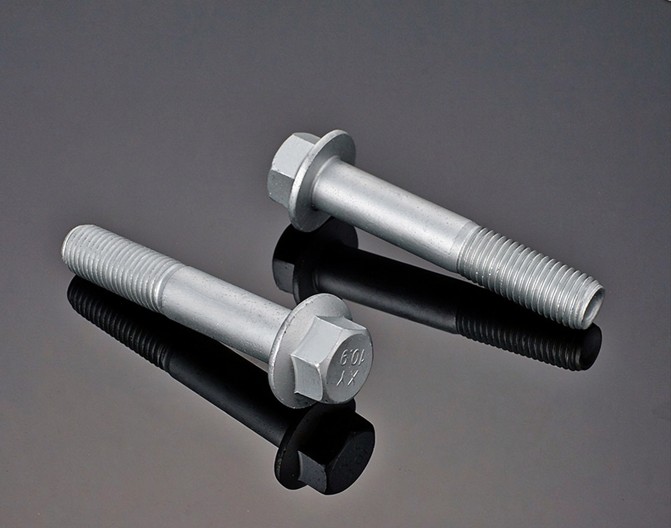
Flange bolts are among the most widely used fasteners in construction, automotive, machinery, and infrastructure projects. When these critical bolts are exposed to moisture, salt, chemicals, or outdoor weather, ordinary surface treatments often fail to provide adequate long-term protection. Rust and corrosion can compromise structural integrity, increase maintenance costs, and create safety risks.
Dacromet coating has emerged as a leading anti-corrosion solution for high-performance bolts. This zinc-aluminum flake coating delivers outstanding rust prevention, excellent salt spray resistance, and reliable protection without the hydrogen embrittlement risks associated with traditional electroplating. When applied to flange bolts, Dacromet creates a durable, corrosion-resistant fastener ideal for demanding environments.
This Q&A guide answers the most common questions about Dacromet flange bolts, focusing on their anti-corrosion mechanisms, rust-resistant performance, practical advantages, and typical applications. Whether you are a buyer, engineer, or project manager, this document will help you understand why Dacromet coated flange bolts are increasingly specified for projects that demand superior corrosion resistance and long service life.
Q1: What exactly are Dacromet flange bolts?
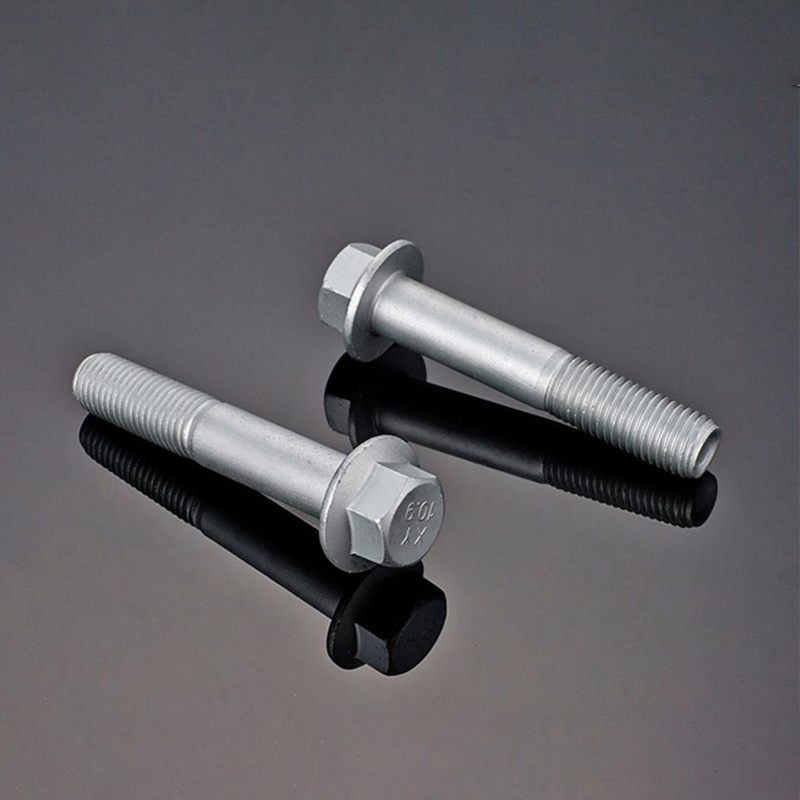
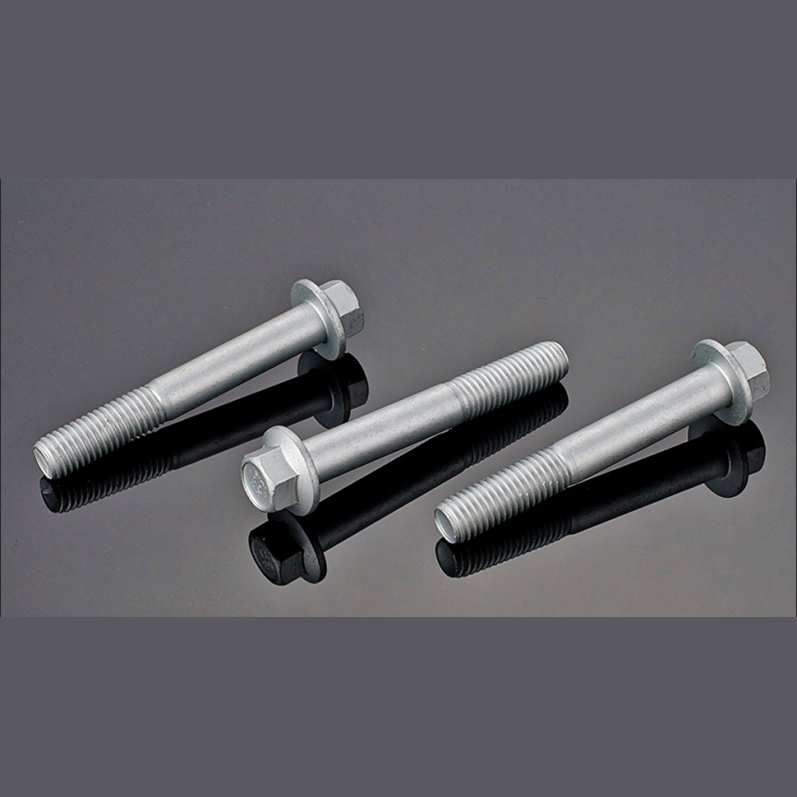
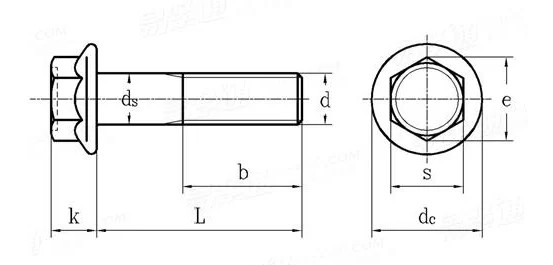
Dacromet flange bolts are hex flange bolts (or similar flange-head bolts) that have been surface-treated with a Dacromet zinc-aluminum flake coating. The flange under the bolt head acts as an integral washer, distributing load more evenly, reducing surface pressure, and helping prevent loosening under vibration. The Dacromet coating adds a high-performance anti-corrosion layer that protects the entire bolt—including the head, flange face, shank, and threads—from rust and environmental attack.
These bolts combine the mechanical advantages of a flange design with the proven rust-prevention capability of Dacromet technology. The result is a fastener that offers both reliable clamping force and long-term corrosion resistance in harsh conditions.
Q2: What is Dacromet coating and how does it provide superior anti-corrosion and anti-rust protection?
Dacromet is an inorganic zinc-aluminum flake coating system. It consists of microscopic zinc and aluminum flakes suspended in a special binder. When applied to a bolt and cured at elevated temperature, the flakes orient themselves into overlapping layers that form a dense, multi-layer barrier. This structure delivers two complementary protection mechanisms:
Barrier protection: The overlapping zinc-aluminum flakes create a physical shield that significantly slows the penetration of moisture, oxygen, and corrosive ions to the steel substrate of the bolt.
Sacrificial (cathodic) protection: Zinc in the coating acts as a sacrificial anode. Even if the coating is locally damaged, the zinc continues to protect the exposed steel of the bolt through galvanic action, greatly delaying the onset of red rust.
Because the coating is thin (typically 4–12 μm) yet highly effective, Dacromet flange bolts maintain precise thread dimensions while achieving corrosion resistance far superior to conventional zinc plating. The process is non-electrolytic, which also eliminates hydrogen embrittlement risks—an important advantage for high-strength bolts.
Q3: What are the main advantages of Dacromet flange bolts over traditional zinc-plated or hot-dip galvanized bolts?
Dacromet coated flange bolts offer several clear performance benefits in terms of rust prevention and overall reliability:
●Exceptional corrosion resistance – Salt spray performance commonly reaches 500–1,200+ hours to red rust, several times better than standard electroplated zinc coatings.
●No hydrogen embrittlement risk – The non-electrolytic Dacromet process is safe for high-strength bolts (Grade 10.9, 12.9 and above), avoiding the sudden fracture risk associated with electroplating.
●Thin, uniform coating – Precise coverage on threads and complex geometries without significant dimensional change, ensuring proper fit and consistent torque-tension performance of the flange bolt.
●High-temperature resistance – The coating remains protective at continuous service temperatures up to approximately 300°C, outperforming many conventional zinc finishes.
●Excellent coverage of recessed areas – Dip-spin application ensures the anti-corrosion layer reaches under the flange, into thread roots, and other hard-to-reach surfaces of the bolt.
●Good chemical and weather resistance – Suitable for outdoor, coastal, industrial, and mildly chemical environments where long-term rust prevention is required.
Q4: In which applications do Dacromet flange bolts deliver the best long-term rust prevention?
●Dacromet flange bolts are particularly valued in environments where ordinary bolts would corrode rapidly. Typical high-performance applications include:
●Automotive and commercial vehicle chassis, suspension, and engine-related assemblies that face road salt, moisture, and vibration.
●Coastal and marine infrastructure, bridges, and outdoor steel structures exposed to salt spray and humid air.
●Wind energy, solar mounting systems, and other renewable-energy structures requiring durable, low-maintenance fasteners.
●Agricultural machinery, construction equipment, and outdoor industrial machinery operating in wet or corrosive conditions.
●Railway, tunnel, and transportation infrastructure where long service intervals and high reliability are essential.
●Any application using high-strength bolts (10.9 / 12.9) that also demands superior anti-corrosion performance without hydrogen embrittlement concerns.
Q5: How is the Dacromet anti-corrosion coating applied to flange bolts?
The typical Dacromet process for flange bolts involves several carefully controlled steps. First, the bolts are thoroughly cleaned and degreased to ensure proper adhesion. The cleaned fasteners are then immersed in or sprayed with the water-based Dacromet slurry containing zinc and aluminum flakes. Excess coating is removed by spinning (dip-spin method), which leaves a uniform thin film on every surface of the bolt, including under the flange and within the threads.
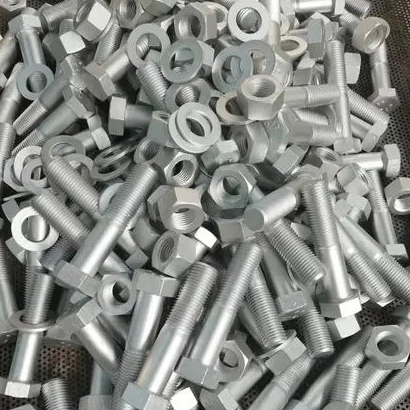
After coating, the bolts are cured in an oven at elevated temperature. During curing, the binder hardens and the zinc-aluminum flakes form the characteristic overlapping lamellar structure that provides both barrier and sacrificial protection. Multiple coats can be applied when higher corrosion resistance is specified. The finished Dacromet flange bolt has a characteristic matte silver-gray appearance and a thin, tightly adherent anti-rust coating that does not significantly alter critical dimensions.
Summary: Why Choose Dacromet Flange Bolts for Corrosion-Critical Applications
Dacromet flange bolts combine the mechanical benefits of an integral flange with one of the most effective thin-film anti-corrosion technologies available for fasteners. The zinc-aluminum flake coating delivers outstanding salt spray resistance, reliable barrier and sacrificial protection, high-temperature stability, and freedom from hydrogen embrittlement. These characteristics make Dacromet coated flange bolts an excellent choice whenever long-term rust prevention, dimensional precision, and mechanical reliability are all required.
From automotive chassis and coastal structures to wind-energy installations and high-strength industrial joints, Dacromet flange bolts help engineers and buyers achieve durable, low-maintenance connections. When specifying fasteners for corrosive environments, asking for Dacromet coating on flange bolts is a proven way to improve corrosion resistance and extend service life.
For project-specific recommendations, coating thickness options, or technical data sheets, contact a qualified fastener supplier who can provide certified Dacromet flange bolts matched to your corrosion-resistance and mechanical requirements.