- Chinese
- French
- German
- Portuguese
- Spanish
- Russian
- Japanese
- Korean
- Arabic
- Irish
- Greek
- Turkish
- Italian
- Danish
- Romanian
- Indonesian
- Czech
- Afrikaans
- Swedish
- Polish
- Basque
- Catalan
- Esperanto
- Hindi
- Lao
- Albanian
- Amharic
- Armenian
- Azerbaijani
- Belarusian
- Bengali
- Bosnian
- Bulgarian
- Cebuano
- Chichewa
- Corsican
- Croatian
- Dutch
- Estonian
- Filipino
- Finnish
- Frisian
- Galician
- Georgian
- Gujarati
- Haitian
- Hausa
- Hawaiian
- Hebrew
- Hmong
- Hungarian
- Icelandic
- Igbo
- Javanese
- Kannada
- Kazakh
- Khmer
- Kurdish
- Kyrgyz
- Latin
- Latvian
- Lithuanian
- Luxembou..
- Macedonian
- Malagasy
- Malay
- Malayalam
- Maltese
- Maori
- Marathi
- Mongolian
- Burmese
- Nepali
- Norwegian
- Pashto
- Persian
- Punjabi
- Serbian
- Sesotho
- Sinhala
- Slovak
- Slovenian
- Somali
- Samoan
- Scots Gaelic
- Shona
- Sindhi
- Sundanese
- Swahili
- Tajik
- Tamil
- Telugu
- Thai
- Ukrainian
- Urdu
- Uzbek
- Vietnamese
- Welsh
- Xhosa
- Yiddish
- Yoruba
- Zulu
- Kinyarwanda
- Tatar
- Oriya
- Turkmen
- Uyghur

A Comprehensive Guide to Dacromet Countersunk Hex Socket Bolts — The Preferred Fastener Solution with Outstanding Anti-Corrosion and Rust-Prevention Performance
2026-10-21
1. Introduction
In modern industrial manufacturing and construction engineering, the reliability of fasteners directly determines the safety performance and service life of products and structures. Countersunk hex socket bolts are widely used across automotive, rail transit, machinery, building curtain walls, home appliances, and electronic equipment industries due to their ability to sit flush with the workpiece surface, aesthetic appearance, and uniform load distribution. However, traditional electro-galvanized or hot-dip galvanized bolts often struggle to maintain effective anti-corrosion and rust-prevention capabilities in humid, salt-spray, acidic, or alkaline environments, leading to risks such as rusting, coating delamination, reduced clamping force, and even fracture.
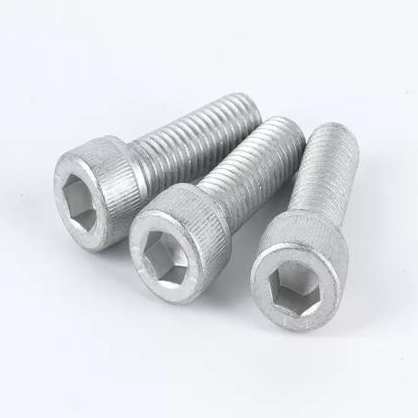
The emergence of Dacromet (also known as zinc-aluminum flake coating) technology provides an ideal solution to this challenge. Dacromet countersunk hex socket bolts combine advanced zinc-aluminum flake anti-corrosion coating with precise countersunk hex socket structural design. They not only deliver excellent corrosion resistance and rust prevention but also retain high mechanical strength and ease of assembly. This article comprehensively introduces the technical features and application value of Dacromet countersunk hex socket bolts from the perspectives of coating principles, product structure, anti-corrosion advantages, application scenarios, and selection recommendations.
2. Overview of Dacromet Coating Technology
Dacromet, also referred to as zinc-chromium coating or zinc-aluminum coating, is a non-electrolytic high-performance metal surface treatment technology. Ultra-fine zinc flakes and aluminum flakes are mixed with chromate and other inorganic binders to form a water-based coating. The coating is applied uniformly to the metal substrate by dipping, spraying, or brushing, then cured through high-temperature sintering to form a dense composite anti-corrosion layer. This multi-layered structure of overlapping zinc-aluminum flakes, bonded by chromate passivation films, creates a unique “labyrinth effect” barrier that effectively blocks the penetration of moisture, oxygen, and corrosive media, thereby achieving outstanding long-term anti-corrosion and rust-prevention performance.
2.2 Core Advantages of Dacromet Coating
Compared with traditional electro-galvanizing and hot-dip galvanizing processes, Dacromet coating offers significant advantages in anti-corrosion and rust prevention:
- Superior salt-spray corrosion resistance: Standard Dacromet coatings can withstand 500–1500 hours or more in neutral salt-spray tests, far exceeding ordinary electro-galvanizing (typically only 72–200 hours), greatly extending bolt service life in marine climates and road de-icing salt environments.
- No risk of hydrogen embrittlement: Traditional electroplating can introduce hydrogen atoms into high-strength steel substrates, causing hydrogen embrittlement fracture. Dacromet is a non-electrolytic process that completely eliminates this risk, making it especially suitable for high-strength bolts.
- Excellent high-temperature and weather resistance: The coating remains stable for long-term use at around 250°C and can withstand higher temperatures for short periods. It also shows strong resistance to ultraviolet radiation and humid heat cycles, ensuring durable anti-corrosion and rust-prevention performance.
- Self-healing and cathodic protection: When the coating is locally damaged, zinc and aluminum flakes act as sacrificial anodes, providing electrochemical protection to the exposed substrate and further enhancing overall anti-corrosion and rust-prevention capability.
3. Structural Features of Countersunk Hex Socket Bolts
Countersunk hex socket bolts (also known as flat-head hex socket screws) feature a conical or cylindrical countersunk head design. After installation, the head sits completely flush within the countersink of the workpiece, achieving a smooth, protrusion-free surface. The internal hex drive is located at the center of the head, allowing efficient tightening and removal with a hex key while minimizing the risk of slippage.
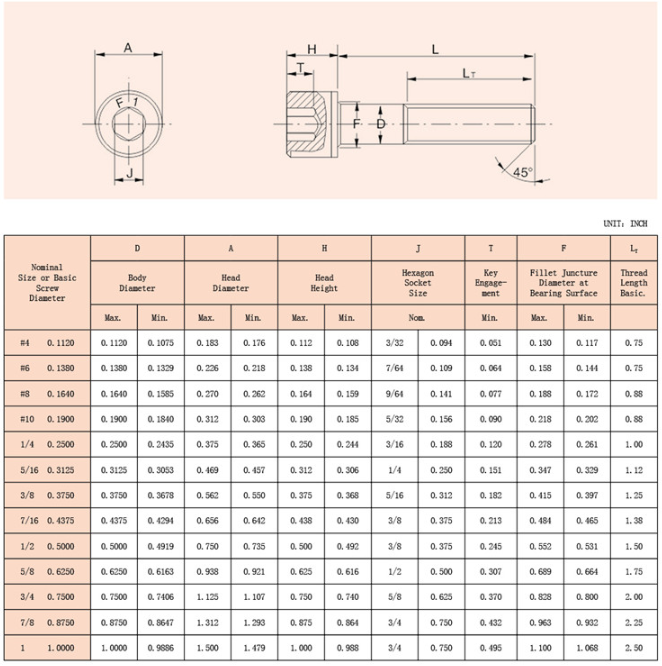
Common sizes range from M3 to M20 and larger diameters, with lengths customizable according to requirements. Materials are typically carbon steel, alloy steel, or stainless steel, heat-treated to achieve property classes such as 8.8, 10.9, or 12.9. Dacromet treatment provides comprehensive anti-corrosion and rust-prevention protection without compromising thread accuracy or mechanical properties, making these bolts particularly suitable for applications that demand both surface flatness and high corrosion resistance.
4. Selection and Usage Recommendations
To fully leverage the anti-corrosion and rust-prevention advantages of Dacromet countersunk hex socket bolts, the following points are recommended during selection and use:
- Select coating grade according to the service environment: Standard Dacromet coating is suitable for general industrial environments; for high salt-spray or severe corrosion environments, thickened or composite sealed Dacromet coatings are recommended to ensure long-term anti-corrosion and rust-prevention performance.
- Prefer high property classes: Since the Dacromet process carries no hydrogen embrittlement risk, it is particularly suitable for property class 8.8 and above high-strength bolts, ensuring both connection strength and anti-corrosion requirements.
- Control assembly torque carefully: Although the friction coefficient of Dacromet coating is relatively stable, it is still advisable to determine the appropriate tightening torque through testing to avoid over-tightening or under-tightening that could affect connection reliability.
- Avoid direct contact with dissimilar metals: In situations where galvanic corrosion may occur, insulating washers or coating isolation measures should be adopted to further safeguard the effectiveness of the overall anti-corrosion and rust-prevention system.
5. Conclusion
Dacromet countersunk hex socket bolts, with their unique zinc-aluminum flake composite coating technology, inject powerful anti-corrosion and rust-prevention capabilities into traditional fasteners. Whether facing the humid and saline marine climate, industrial exhaust gas erosion, or long-term outdoor exposure to sun and rain, they protect every critical connection with stable and reliable performance. In an era that pursues long product life, low maintenance, and high safety, choosing Dacromet countersunk hex socket bolts is not only a recognition of advanced anti-corrosion technology but also a solemn commitment to engineering quality and operational safety.
With continuous advances in coating technology and expanding application scenarios, Dacromet countersunk hex socket bolts will continue to demonstrate their irreplaceable value in more fields and become the preferred solution for anti-corrosion and rust prevention in modern industrial fastening connections.