- English
- Chinese
- French
- German
- Portuguese
- Spanish
- Russian
- Japanese
- Korean
- Arabic
- Irish
- Greek
- Turkish
- Italian
- Danish
- Romanian
- Indonesian
- Czech
- Afrikaans
- Swedish
- Polish
- Basque
- Catalan
- Esperanto
- Hindi
- Lao
- Albanian
- Amharic
- Armenian
- Azerbaijani
- Belarusian
- Bengali
- Bosnian
- Bulgarian
- Cebuano
- Chichewa
- Corsican
- Croatian
- Dutch
- Estonian
- Filipino
- Finnish
- Frisian
- Galician
- Georgian
- Gujarati
- Hausa
- Hawaiian
- Hebrew
- Hmong
- Hungarian
- Icelandic
- Igbo
- Javanese
- Kannada
- Kazakh
- Khmer
- Kurdish
- Kyrgyz
- Latin
- Latvian
- Lithuanian
- Luxembou..
- Macedonian
- Malagasy
- Malay
- Malayalam
- Maltese
- Maori
- Marathi
- Mongolian
- Burmese
- Nepali
- Norwegian
- Pashto
- Persian
- Punjabi
- Serbian
- Sesotho
- Sinhala
- Slovak
- Slovenian
- Somali
- Samoan
- Scots Gaelic
- Shona
- Sindhi
- Sundanese
- Swahili
- Tajik
- Tamil
- Telugu
- Thai
- Ukrainian
- Urdu
- Uzbek
- Vietnamese
- Welsh
- Xhosa
- Yiddish
- Yoruba
- Zulu
- Kinyarwanda
- Tatar
- Oriya
- Turkmen
- Uyghur

Dacromet Bolts: Superior Corrosion Protection and Rust Prevention for Modern Engineering
2026-10-14
1. Introduction to Dacromet Bolts
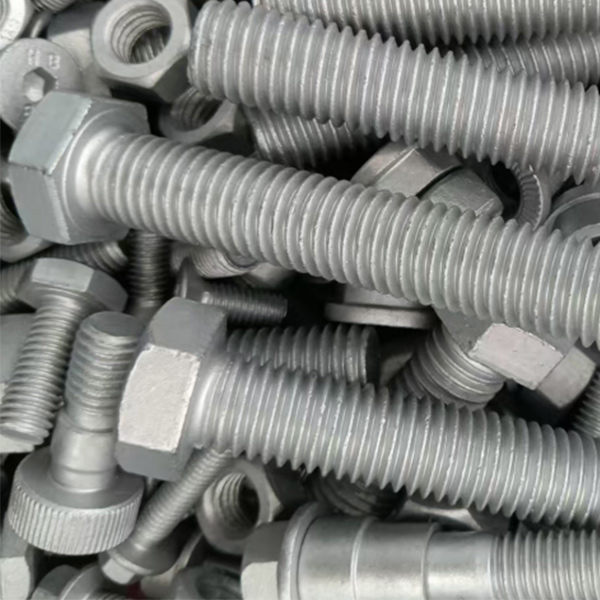
In the demanding world of industrial fastening, the need for reliable corrosion protection and effective rust prevention has never been greater. Dacromet bolts have emerged as a premier solution, offering exceptional performance in harsh environments where traditional coatings often fall short. These specialized fasteners combine the mechanical strength of high-grade steel with the advanced barrier properties of Dacromet coating technology, delivering long-lasting corrosion protection that significantly extends service life and reduces maintenance demands.
Dacromet bolts are widely recognized for their ability to provide superior rust prevention without the drawbacks associated with conventional electroplating or hot-dip galvanizing. The Dacromet process creates a thin yet highly effective protective layer that shields the underlying bolt material from moisture, salt, chemicals, and other corrosive agents. This unique combination of corrosion protection and mechanical integrity makes Dacromet bolts the preferred choice across automotive, construction, energy, and infrastructure sectors. As industries continue to demand higher durability standards, understanding Dacromet coating technology becomes essential for engineers, designers, and procurement professionals.
2. Understanding Dacromet Coating Technology
2.1 Composition and Structure
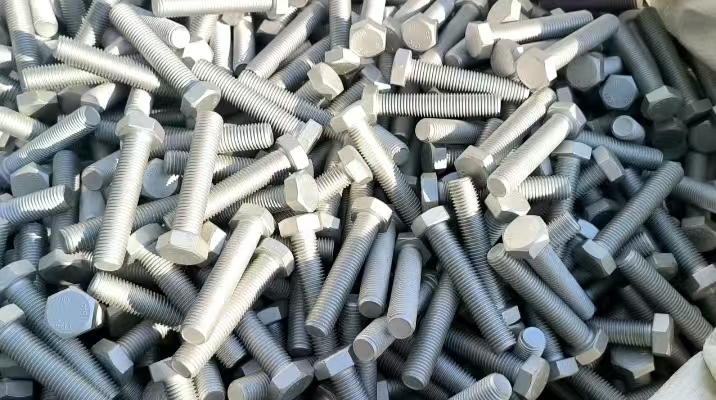
Dacromet is a proprietary zinc-flake coating system designed specifically for high-performance corrosion protection. The coating consists of overlapping microscopic zinc and aluminum flakes suspended in an inorganic binder matrix, typically based on chromium oxides or similar compounds. When applied to a bolt and subsequently cured through a controlled baking process, these flakes align in multiple layers, forming a dense, lamellar barrier that effectively blocks the penetration of corrosive media such as water, oxygen, and chloride ions.
Typical film thickness of a Dacromet coating on a bolt ranges from approximately 5 to 15 micrometers. Despite this relatively thin profile, the multilayered structure provides exceptional barrier properties. The zinc flakes act sacrificially, preferentially corroding to protect the steel substrate, while the aluminum components enhance overall stability and passivation characteristics. This dual-action mechanism is fundamental to the outstanding corrosion protection and rust prevention performance that distinguishes Dacromet bolts from conventional coated fasteners.
2.2 The Application Process
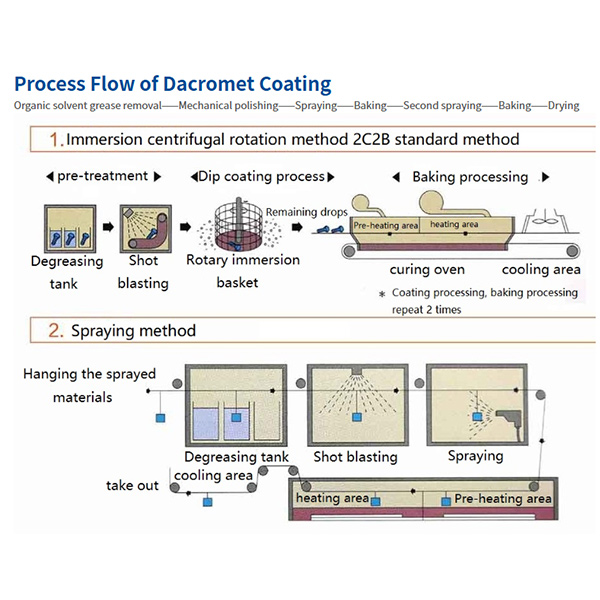
The Dacromet coating process begins with thorough surface preparation of the bolt to ensure optimal adhesion. The clean fastener is then dipped into or sprayed with a water-based zinc-aluminum slurry. After application, the coated bolt undergoes a carefully controlled curing cycle at elevated temperatures. During this thermal treatment, the inorganic binder crosslinks and the metallic flakes sinter into a continuous, adherent film that provides durable corrosion protection.
One of the most significant advantages of the Dacromet process for bolts is the absence of aggressive acid pickling in many process variants. Traditional electroplating often requires strong acid cleaning, which can introduce hydrogen into high-strength steels and lead to hydrogen embrittlement. By minimizing or eliminating this risk, Dacromet coating preserves the mechanical integrity of high-tensile bolts while still delivering outstanding corrosion protection and long-term rust prevention.
3. Corrosion Protection and Rust Prevention Performance
3.1 Laboratory Performance
The corrosion protection capabilities of Dacromet bolts are most commonly quantified through neutral salt spray testing in accordance with ASTM B117 or ISO 9227 standards. High-quality Dacromet coatings routinely achieve 720 to over 1,000 hours of exposure before the appearance of red rust on the bolt surface. In many advanced formulations that incorporate additional sealers or topcoats, performance can exceed 1,500 or even 2,000 hours. This level of rust prevention far surpasses conventional zinc electroplating and frequently outperforms traditional hot-dip galvanizing under comparable test conditions.
Beyond static salt spray testing, Dacromet bolts demonstrate excellent resistance in cyclic corrosion tests that more closely simulate real-world exposure. These protocols involve alternating periods of salt fog, humidity, and drying, challenging the coating’s ability to maintain continuous barrier protection. The layered zinc-aluminum structure of Dacromet responds effectively to such dynamic conditions, maintaining reliable corrosion protection even after prolonged and aggressive exposure cycles.
3.2 Mechanisms of Protection
The superior corrosion protection offered by Dacromet bolts results from several synergistic mechanisms. First, the physical barrier created by the overlapping metallic flakes impedes the diffusion of water, oxygen, and chloride ions toward the steel substrate. Second, the sacrificial action of the zinc flakes provides cathodic protection at any microscopic discontinuities in the coating. Third, the formation of stable corrosion products and passivation films further enhances long-term rust prevention by sealing potential pathways for further attack. This multi-layered defense strategy allows Dacromet-coated bolts to maintain structural integrity and appearance far longer than untreated or conventionally coated fasteners.
4. Key Advantages of Dacromet Bolts
Freedom from Hydrogen Embrittlement: High-strength bolts, particularly those of property classes 10.9 and 12.9, are highly susceptible to hydrogen embrittlement when subjected to traditional electroplating processes. The absorption of atomic hydrogen during acid cleaning or electrolytic deposition can lead to delayed brittle fracture under tensile load. Dacromet coating technology largely eliminates this concern because the process does not involve electrolytic hydrogen generation and often avoids strong acid pretreatment. As a result, engineers can specify high-tensile Dacromet bolts with confidence that the corrosion protection will not compromise mechanical reliability or safety.
Thin, Uniform, and Dimensionally Stable Coating: Unlike hot-dip galvanizing, which can deposit thick and sometimes uneven zinc layers that interfere with thread fit and torque-tension relationships, Dacromet coatings are characteristically thin and highly uniform. The typical 5–15 µm film thickness ensures that standard bolt and nut tolerances remain compatible without the need for special oversized nuts or undercutting of threads. This dimensional stability is particularly valuable in precision assemblies and automated fastening operations where consistent clamp loads are essential.
Excellent Heat Resistance and Chemical Stability: Dacromet coatings exhibit remarkable thermal stability, maintaining effective corrosion protection and rust prevention at continuous service temperatures up to approximately 250–300°C, depending on the specific formulation. This heat resistance makes Dacromet bolts suitable for applications near engines, exhaust systems, industrial ovens, and other elevated-temperature environments where organic coatings would degrade. Additionally, the inorganic nature of the coating provides good resistance to a range of industrial chemicals.
Controlled Friction and Assembly Performance: Many Dacromet systems incorporate specialized sealers or lubricants that allow precise control over the coefficient of friction. This feature is critical for achieving consistent preload in bolted joints. By offering predictable torque-tension behavior, Dacromet bolts support reliable assembly processes and reduce the risk of under- or over-tightening. The combination of excellent corrosion protection, stable friction characteristics, and freedom from hydrogen embrittlement positions Dacromet as a preferred surface treatment for safety-critical and high-performance fasteners.
5. Conclusion
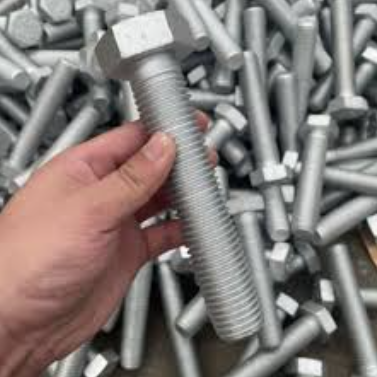
Dacromet bolts represent a mature yet continually evolving solution for demanding fastening applications where corrosion protection and rust prevention are paramount. By combining a thin, highly effective zinc-aluminum flake coating with a process that preserves the mechanical integrity of high-strength steel, Dacromet technology addresses many of the limitations inherent in traditional surface treatments.
From automotive assemblies and coastal infrastructure to offshore wind turbines and heavy industrial equipment, Dacromet-coated bolts deliver reliable, long-term performance under conditions that would rapidly degrade lesser coatings. Their proven ability to provide superior corrosion protection, controlled assembly characteristics, and freedom from hydrogen embrittlement makes them an indispensable tool for modern engineering practice. Specifying Dacromet bolts is not merely a choice of surface finish; it is a strategic decision that enhances safety, reduces lifecycle costs, and ensures the lasting integrity of critical bolted connections across a wide spectrum of industries.