- English
- Chinese
- French
- German
- Portuguese
- Spanish
- Russian
- Japanese
- Korean
- Arabic
- Irish
- Greek
- Turkish
- Italian
- Danish
- Romanian
- Indonesian
- Czech
- Afrikaans
- Swedish
- Polish
- Basque
- Catalan
- Esperanto
- Hindi
- Lao
- Albanian
- Amharic
- Armenian
- Azerbaijani
- Belarusian
- Bengali
- Bosnian
- Bulgarian
- Cebuano
- Chichewa
- Corsican
- Croatian
- Dutch
- Estonian
- Filipino
- Finnish
- Frisian
- Galician
- Georgian
- Gujarati
- Haitian
- Hausa
- Hawaiian
- Hebrew
- Hmong
- Hungarian
- Icelandic
- Igbo
- Javanese
- Kannada
- Kazakh
- Khmer
- Kurdish
- Kyrgyz
- Latin
- Latvian
- Lithuanian
- Luxembou..
- Macedonian
- Malagasy
- Malay
- Malayalam
- Maltese
- Maori
- Marathi
- Mongolian
- Burmese
- Nepali
- Norwegian
- Pashto
- Persian
- Punjabi
- Serbian
- Sesotho
- Sinhala
- Slovak
- Slovenian
- Somali
- Scots Gaelic
- Shona
- Sindhi
- Sundanese
- Swahili
- Tajik
- Tamil
- Telugu
- Thai
- Ukrainian
- Urdu
- Uzbek
- Vietnamese
- Welsh
- Xhosa
- Yiddish
- Yoruba
- Zulu
- Kinyarwanda
- Tatar
- Oriya
- Turkmen
- Uyghur

Shoulder Bolt Manufacturer | High-Quality Wholesale Supplier
2026-10-15
- What Is a Shoulder Bolt? Understanding the Design and Function
- Shoulder Bolt Specifications and Standards
- Applications of Shoulder Bolts in Industry
- How to Choose the Right Shoulder Bolt: A Selection Guide
- Manufacturing Excellence: The Hebei Fujinrui Advantage
- Common Mistakes in Shoulder Bolt Application
- FAQ: Frequently Asked Questions About Shoulder Bolts
- Why Partner with Hebei Fujinrui for Your Fastener Needs?
A shoulder bolt, also known as a stripper bolt or shoulder screw, is a specialized fastener featuring an unthreaded cylindrical section (the shoulder) between the head and the threaded portion. This unique design allows for precise alignment, low-friction rotation, and accurate spacing in mechanical assemblies. Unlike standard bolts, the shoulder acts as a bearing surface or a dowel pin, ensuring that mating parts remain perfectly aligned under load. For engineering teams and procurement specialists seeking high-precision components, selecting a manufacturer with rigorous quality control and extensive industry experience is critical to maintaining assembly integrity.
What Is a Shoulder Bolt? Understanding the Design and Function
The fundamental difference between a shoulder bolt and a conventional hex bolt lies in its geometry. A standard bolt is threaded along its entire shank (or most of it), which can cause binding or misalignment when used in clearance holes. In contrast, a shoulder bolt has three distinct sections:
- The Head: Typically hexagonal, socket cap, or flat, designed for tool engagement.
- The Shoulder: An unthreaded, precision-ground cylindrical section with a specific diameter and length.
- The Thread: Located only at the tip of the bolt, used to secure the fastener into a tapped hole.
This configuration allows the shoulder to fit snugly into a reamed or drilled hole, providing lateral stability while the threaded end secures the component axially. This dual function eliminates the need for separate dowel pins and screws in many applications, reducing part count and assembly time.
Key Mechanical Advantages
Engineers specify shoulder bolts primarily for their ability to handle shear loads and provide rotational freedom. The precision-ground shoulder ensures a tight fit with the mating hole, minimizing play or wobble. This is essential in high-speed machinery where vibration could loosen standard fasteners. Furthermore, because the shoulder does not engage with threads, it allows parts to pivot or slide smoothly along the bolt’s axis, making it ideal for linkages, hinges, and pulley systems.
Shoulder Bolt Specifications and Standards
Selecting the correct shoulder bolt requires a deep understanding of dimensional standards and material properties. In global manufacturing, adherence to recognized standards ensures interchangeability and reliability. At Hebei Fujinrui Metal Products Co., Ltd., our production lines are calibrated to meet American (ANSI/ASME), German (DIN), and international (ISO) specifications, ensuring compatibility with diverse industrial equipment.
| Parameter | Description | Importance in Application |
|---|---|---|
| Shoulder Diameter | The diameter of the unthreaded section. | Determines the fit within the mating hole; must match hole tolerance (e.g., H7/g6). |
| Shoulder Length | The length of the unthreaded section. | Must equal or slightly exceed the thickness of the parts being joined to prevent thread engagement in the clearance hole. |
| Thread Size | The diameter and pitch of the threaded portion. | Determines the clamping force and compatibility with the tapped hole. |
| Head Style | Hex, Socket Cap, Flat, etc. | Affects installation space and torque application method. |
| Material Grade | Steel, Stainless Steel, Alloy Steel. | Dictates tensile strength, corrosion resistance, and temperature tolerance. |
Common Material Choices
The choice of material directly impacts the performance of the shoulder bolt in its operating environment. Carbon steel alloys, such as Grade 8.8 or 10.9, are commonly used for high-strength structural applications where corrosion is not a primary concern. For environments exposed to moisture, chemicals, or extreme temperatures, stainless steel (such as 304 or 316 grades) offers superior resistance to oxidation and rust.
In specialized industries like aerospace or automotive racing, alloy steels treated with heat processes are preferred for their high strength-to-weight ratio. Hebei Fujinrui integrates metal surface corrosion protection technologies directly into our production workflow, ensuring that every bolt, whether carbon or stainless, meets the required durability standards for export to Europe, America, and the Middle East.
Applications of Shoulder Bolts in Industry
Shoulder bolts are versatile components found in a wide array of industries. Their ability to provide precise alignment and rotational movement makes them indispensable in complex mechanical systems. Understanding these applications helps engineers determine whether a shoulder bolt is the optimal solution for their design challenges.
1. Precision Machinery and Automation
In CNC machines and robotic arms, components must move with exact repeatability. Shoulder bolts are used to mount gears, pulleys, and idlers. The shoulder acts as an axle, allowing the component to rotate freely while maintaining its position relative to the frame. Any deviation in the shoulder diameter could lead to vibration, noise, and premature wear of the machinery.
2. Automotive and Aerospace Assemblies
Safety-critical systems in vehicles and aircraft require fasteners that can withstand high shear forces. Shoulder bolts are often used in suspension systems, engine mounts, and control linkages. Here, the bolt prevents lateral movement of components while allowing for necessary articulation. The high tensile strength of alloy shoulder bolts ensures they do not deform under dynamic loads.
3. Electronics and Consumer Goods
In smaller scale applications, such as laptop hinges or camera mounts, miniature shoulder bolts provide the smooth pivoting action required for user interfaces. These bolts often feature low-profile heads and are made from stainless steel to resist corrosion from human contact and environmental exposure.
4. Mold and Die Manufacturing
In injection molding, stripper plates must move parallel to the mold face to eject parts without damage. Shoulder bolts guide this movement, ensuring that the plate remains aligned during the high-pressure ejection cycle. The precision of the shoulder diameter is critical here; even microns of deviation can cause the mold to jam or produce defective parts.
How to Choose the Right Shoulder Bolt: A Selection Guide
Choosing the wrong fastener can lead to catastrophic failure. When specifying shoulder bolts, engineers must consider several critical factors beyond simple dimensions. This selection process involves analyzing load conditions, environmental factors, and assembly requirements.
Step 1: Determine Load Requirements
Identify whether the bolt will primarily handle shear loads (lateral forces) or tensile loads (pulling forces). Shoulder bolts are excellent for shear loads due to the solid cross-section of the shoulder. If high tensile strength is required, ensure the threaded portion is sufficiently long and engaged deeply enough into the tapped hole.
Step 2: Define Tolerance and Fit
The fit between the shoulder and the mating hole is crucial. For rotating applications, a loose fit (clearance) is necessary to allow free movement. For alignment applications, a tighter fit (interference or transition) may be required to prevent any lateral shift. Consult ISO or ANSI tolerance charts to specify the correct hole diameter for your chosen shoulder diameter.
Step 3: Assess Environmental Conditions
Consider the operating environment. Will the bolt be exposed to water, salt, chemicals, or extreme temperatures? For harsh environments, stainless steel or coated carbon steel is essential. Hebei Fujinrui’s integrated corrosion protection capabilities allow us to offer customized surface treatments that extend the lifespan of fasteners in aggressive conditions.
Step 4: Select Head Style and Drive Type
Space constraints often dictate the head style. Socket cap heads are ideal for confined spaces where a wrench cannot fit, while hex heads allow for higher torque application. Ensure that the drive type (hex, Allen, Torx) matches the available tooling in your assembly line to streamline production.
Manufacturing Excellence: The Hebei Fujinrui Advantage
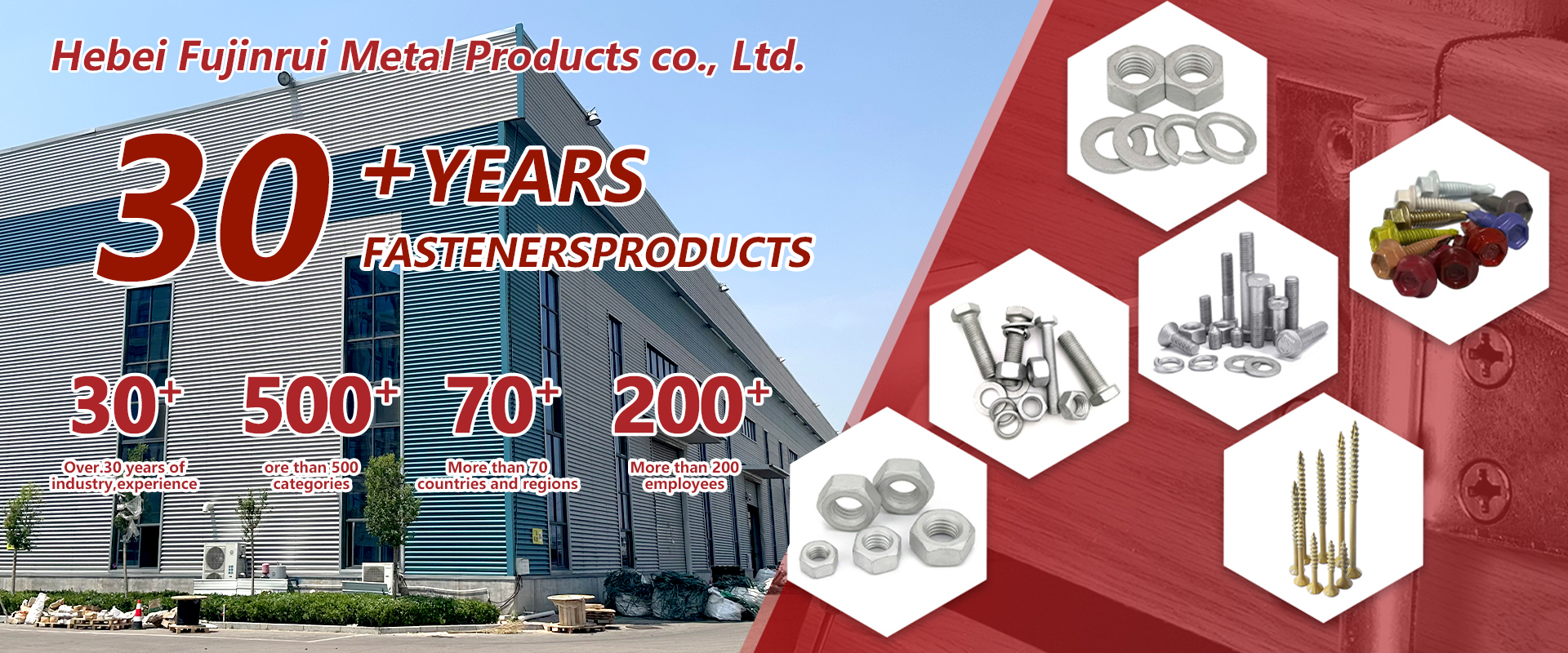
With over two decades of experience in the fastener industry, Hebei Fujinrui Metal Products Co., Ltd. has established itself as a reliable partner for global B2B clients. Established in 2004 in Handan City, Hebei Province, our facility spans 10,000 square meters and employs more than 200 skilled professionals. Our longevity in the market is a testament to our commitment to quality and continuous improvement.
Unlike generalist suppliers, we integrate fastener production with advanced metal surface corrosion protection. This vertical integration allows us to control every stage of the manufacturing process, from raw material selection to final packaging. Our mature production technology team ensures that every shoulder bolt meets strict dimensional tolerances and mechanical property requirements.
Comprehensive Product Range
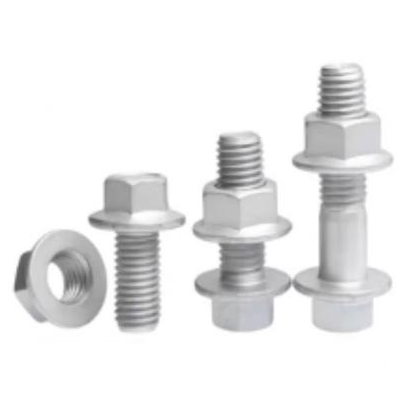
While we specialize in precision fasteners like shoulder bolts, our expertise extends to a broad spectrum of industrial products. We produce Self Drilling Screws, hexagonal bolts and nuts, flange bolts and nuts, and various washers. Our capability to manufacture according to American, German, and national standards ensures that we can meet the diverse needs of our international clientele. Whether you require standard off-the-shelf items or custom-engineered solutions, our inventory is available year-round to support your supply chain continuity.
Global Export Experience
We understand the logistical and regulatory complexities of international trade. Having exported extensively to Europe, America, the Middle East, and other regions, we are well-versed in the quality expectations and certification requirements of different markets. Our competitive pricing structure, combined with high-quality output, makes us a preferred choice for businesses looking to optimize their procurement costs without compromising on reliability.
Common Mistakes in Shoulder Bolt Application
Even with high-quality components, improper application can lead to failure. Being aware of common pitfalls can help engineers and assembly teams avoid costly downtime.
- Incorrect Hole Sizing: Using a standard drill bit instead of a reamer can result in a hole that is too large or out of round. This compromises the alignment function of the shoulder bolt. Always use precision reaming for tight-tolerance applications.
- Insufficient Shoulder Length: If the shoulder length is shorter than the thickness of the mounted part, the threads will engage with the clearance hole. This causes binding, damages the threads, and prevents proper clamping.
- Overtightening: Applying excessive torque can stretch the bolt or strip the threads in the tapped hole. Use torque wrenches calibrated to the specific material grade and size of the bolt.
- Mismatched Materials: Using a soft material bolt in a hard material hole (or vice versa) can lead to galvanic corrosion or galling. Ensure material compatibility or use appropriate lubricants and coatings.
FAQ: Frequently Asked Questions About Shoulder Bolts
What is the difference between a shoulder bolt and a dowel pin?
While both provide alignment, a dowel pin is typically a press-fit component that does not clamp parts together. A shoulder bolt combines the alignment function of a dowel pin with the clamping function of a screw, securing parts axially while aligning them laterally.
Can shoulder bolts be used in rotating applications?
Yes, this is one of their primary uses. The unthreaded shoulder allows components like gears or levers to rotate freely around the bolt axis. For high-speed rotation, ensure the shoulder is polished and properly lubricated to reduce friction and wear.
How do I measure a shoulder bolt?
To measure a shoulder bolt correctly, you need three key dimensions: the shoulder diameter, the shoulder length (from the underside of the head to the start of the threads), and the thread size/length. Standard calipers can measure the diameter and length, while thread gauges determine the pitch and diameter of the threaded section.
Are shoulder bolts more expensive than standard bolts?
Generally, yes. The manufacturing process for shoulder bolts involves additional steps, such as precision grinding of the shoulder and stricter tolerance controls. However, they often reduce overall assembly costs by eliminating the need for separate alignment pins and simplifying the bill of materials.
What surface treatments are available for shoulder bolts?
Common treatments include zinc plating, black oxide, nickel plating, and hot-dip galvanizing. The choice depends on the required corrosion resistance and aesthetic preferences. Hebei Fujinrui offers integrated corrosion protection services to ensure optimal surface finish and durability.
Why Partner with Hebei Fujinrui for Your Fastener Needs?
In the competitive landscape of industrial manufacturing, the reliability of your supply chain is as important as the quality of your product. Hebei Fujinrui Metal Products Co., Ltd. offers more than just components; we provide peace of mind. Our 20+ years of experience, robust production capacity, and integrated quality control systems ensure that every shoulder bolt you receive meets the highest standards of precision and durability.
We understand that every project has unique requirements. Whether you need high-volume wholesale supplies of standard hexagonal bolts or specialized shoulder bolts for precision machinery, our team is equipped to deliver consistent quality at competitive prices. Our exports to major global markets reflect our commitment to international standards and customer satisfaction.
Ready to Optimize Your Assembly Process?
Don’t let inferior fasteners compromise your product’s performance. Partner with a manufacturer that values precision, experience, and reliability. Explore our full range of fastener solutions, including self-drilling screws, flange bolts, and washers, designed to meet the rigorous demands of modern industry.
For detailed technical specifications, custom quotes, or to discuss your specific application needs, contact our sales team today. Let Hebei Fujinrui be your trusted source for high-quality wholesale fasteners.