- English
- Chinese
- French
- German
- Portuguese
- Spanish
- Russian
- Japanese
- Korean
- Arabic
- Irish
- Greek
- Turkish
- Italian
- Danish
- Romanian
- Indonesian
- Czech
- Afrikaans
- Swedish
- Polish
- Basque
- Catalan
- Esperanto
- Hindi
- Lao
- Albanian
- Amharic
- Armenian
- Azerbaijani
- Belarusian
- Bengali
- Bosnian
- Bulgarian
- Cebuano
- Chichewa
- Corsican
- Croatian
- Dutch
- Estonian
- Filipino
- Finnish
- Frisian
- Galician
- Georgian
- Gujarati
- Haitian
- Hausa
- Hawaiian
- Hebrew
- Hmong
- Hungarian
- Icelandic
- Igbo
- Javanese
- Kannada
- Kazakh
- Khmer
- Kurdish
- Kyrgyz
- Latin
- Latvian
- Lithuanian
- Luxembou..
- Macedonian
- Malagasy
- Malay
- Malayalam
- Maltese
- Maori
- Marathi
- Mongolian
- Burmese
- Nepali
- Norwegian
- Pashto
- Persian
- Punjabi
- Serbian
- Sesotho
- Sinhala
- Slovak
- Slovenian
- Somali
- Scots Gaelic
- Shona
- Sindhi
- Sundanese
- Swahili
- Tajik
- Tamil
- Telugu
- Thai
- Ukrainian
- Urdu
- Uzbek
- Vietnamese
- Welsh
- Xhosa
- Yiddish
- Yoruba
- Zulu
- Kinyarwanda
- Tatar
- Oriya
- Turkmen
- Uyghur

Coil Nut Manufacturer | Wholesale High Quality Factory Direct
2026-10-16
- What Is a Coil Nut? Definition and Core Mechanics
- Why Choose Coil Nuts? Advantages Over Traditional Fasteners
- Manufacturing Excellence: How Hebei Fujinrui Ensures Quality
- Common Applications of Coil Nuts in Industry
- Technical Specifications and Material Options
- How to Select the Right Coil Nut for Your Project
- Comparison: Coil Nuts vs. Traditional Hex Nuts
- FAQ: Frequently Asked Questions About Coil Nuts
- Partner with a Trusted Coil Nut Manufacturer
A coil nut, also known as a wire nut or spiral nut, is a specialized fastener formed from coiled wire rather than solid metal stock. Designed for high-volume assembly and vibration resistance, these nuts offer significant weight reduction and cost efficiency compared to traditional hex nuts. As a premier Coil Nut Manufacturer, Hebei Fujinrui Metal Products Co., Ltd. provides wholesale, factory-direct solutions engineered for automotive, aerospace, and industrial applications. Our 20+ years of expertise ensure precision threading, consistent torque performance, and reliable corrosion protection for global supply chains.
What Is a Coil Nut? Definition and Core Mechanics
A coil nut is a threaded fastener created by winding a triangular or trapezoidal cross-section wire into a helical shape. Unlike conventional nuts cut from bar stock or forged, the coil nut’s structure allows it to be lightweight while maintaining high tensile strength along the axis of the bolt. The unique geometry creates a spring-like effect that helps maintain clamp load under dynamic conditions.
In engineering contexts, these fasteners are often referred to as “speed nuts” or “wire form nuts” due to their ability to be installed rapidly in automated assembly lines. The continuous thread form engages with the mating bolt smoothly, reducing the risk of cross-threading during high-speed installation.
Key Structural Characteristics
- Helical Geometry: The wire is wound into a precise spiral, creating internal threads that match standard metric or imperial bolt sizes.
- Cross-Section Profile: Typically features a triangular or modified trapezoidal wire profile to maximize contact area with the bolt threads.
- Open Design: Many coil nuts are open on one or both sides, allowing for easy insertion and removal without full rotation in certain configurations.
- Material Efficiency: Uses significantly less raw material than solid nuts, reducing overall component weight and material costs.
Why Choose Coil Nuts? Advantages Over Traditional Fasteners
For manufacturers optimizing assembly line efficiency and product weight, coil nuts present a compelling alternative to hexagonal or flange nuts. The benefits extend beyond simple cost savings, impacting the overall performance of the final assembly.
1. Significant Weight Reduction
In industries such as automotive and aerospace, every gram counts. Coil nuts can weigh up to 50% less than their solid counterparts. This reduction contributes directly to fuel efficiency in vehicles and payload capacity in aircraft. The hollow center and minimal material usage do not compromise axial strength, making them ideal for non-structural or semi-structural connections.
2. Enhanced Vibration Resistance
The inherent springiness of the coiled wire design allows the nut to absorb minor vibrations and thermal expansion cycles. This elasticity helps maintain consistent preload on the bolt, reducing the likelihood of loosening over time. While not a replacement for dedicated locking mechanisms in critical safety applications, coil nuts offer superior resistance to vibrational loosening compared to standard plain nuts.
3. Cost-Effective Mass Production
The manufacturing process for coil nuts involves high-speed wire forming, which is significantly faster than machining or forging solid nuts. This efficiency translates to lower unit costs, especially for high-volume orders. For procurement managers, sourcing coil nuts from a specialized manufacturer like Hebei Fujinrui ensures competitive pricing without sacrificing quality control.
4. Rapid Assembly Compatibility
Coil nuts are designed for automation. Their smooth, continuous thread entry facilitates quick engagement with bolts, reducing cycle times in robotic assembly cells. This feature is particularly valuable in consumer electronics and appliance manufacturing, where thousands of units are assembled daily.
Manufacturing Excellence: How Hebei Fujinrui Ensures Quality
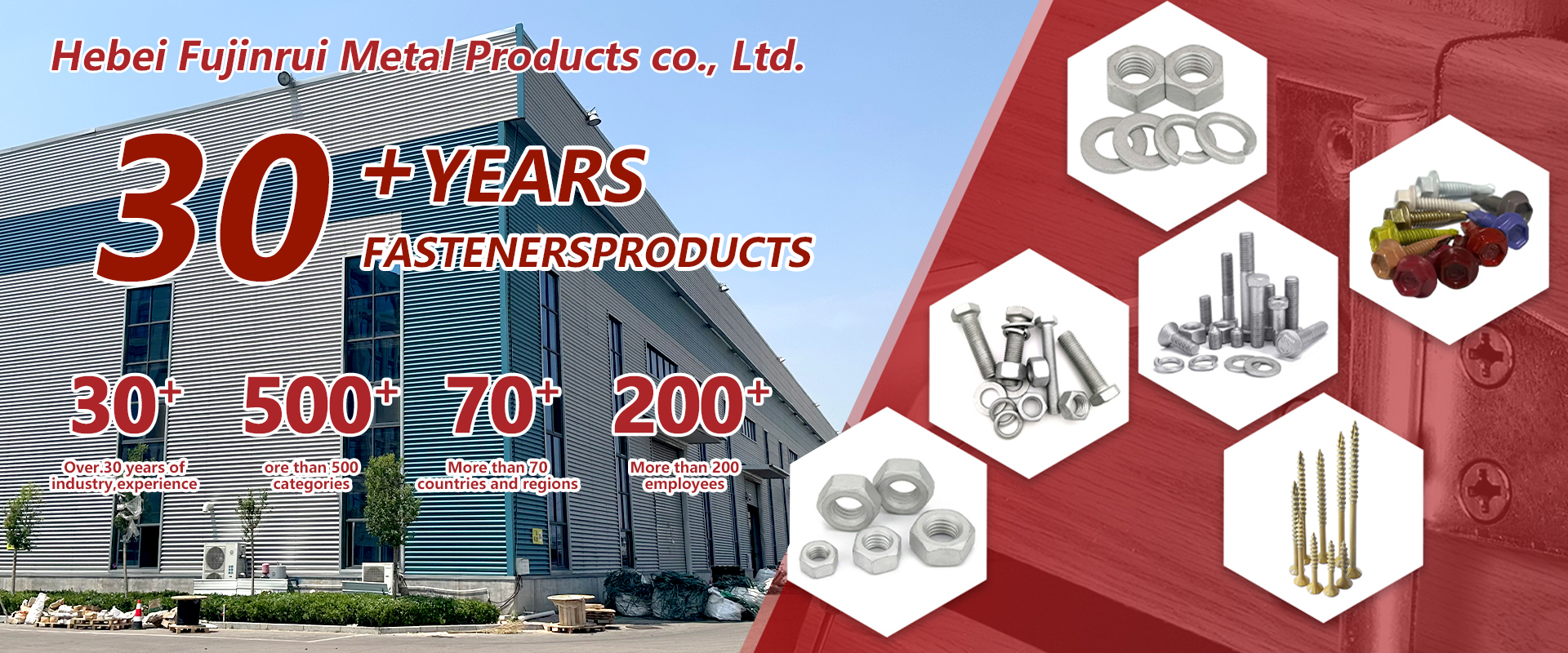
Quality in coil nut production is defined by dimensional accuracy, thread consistency, and material integrity. Hebei Fujinrui Metal Products Co., Ltd., established in 2004 in Handan City, Hebei Province, has spent over two decades refining these processes. With a facility covering 10,000 square meters and a team of more than 200 skilled professionals, we integrate fastener production with advanced metal surface corrosion protection.
Precision Wire Forming Technology
Our production line utilizes state-of-the-art cold heading and wire forming machinery. The process begins with high-quality steel wire, which is fed through precision dies to create the specific cross-sectional profile required for the coil nut. This profile is then wound into a helix under strict tension controls to ensure uniform pitch and diameter.
The maturity of our production technology team allows us to maintain tight tolerances on thread dimensions. This precision ensures that every coil nut meets international standards, including American (ANSI/ASME), German (DIN), and Chinese National Standards (GB). Consistency is key; a single out-of-spec nut can jam an automated assembly line, causing costly downtime.
Integrated Surface Treatment and Corrosion Protection
One of Hebei Fujinrui’s distinct advantages is its integrated approach to surface treatment. Fasteners are often exposed to harsh environments, making corrosion resistance critical. We offer various plating and coating options, including zinc plating, black oxide, and geometric coatings, tailored to the specific environmental requirements of the end application.
By handling both production and surface protection in-house, we eliminate the logistical delays and quality risks associated with outsourcing these steps. This vertical integration ensures that every coil nut leaving our factory meets rigorous quality checks for both mechanical performance and surface durability.
Common Applications of Coil Nuts in Industry
Coil nuts are versatile components used across a wide spectrum of industries. Their unique properties make them suitable for applications where weight, speed, and cost are primary concerns.
Automotive Manufacturing
The automotive sector is the largest consumer of coil nuts. They are extensively used in interior trim assemblies, dashboard mounts, seat frameworks, and under-hood components. The weight savings contribute to overall vehicle efficiency, while the vibration resistance ensures that interior panels remain rattle-free over the vehicle’s lifespan.
Aerospace and Aviation
In aerospace, weight reduction is paramount. Coil nuts are used in non-critical structural applications, cabin interiors, and avionics mounting. The ability to specify high-strength alloys with specialized coatings allows these fasteners to meet the stringent safety and performance standards of the aviation industry.
Consumer Electronics and Appliances
From washing machines to computer servers, coil nuts secure internal components and external casings. Their low profile and ease of installation make them ideal for tight spaces where traditional wrenches cannot fit. Additionally, the reduced material cost helps keep consumer product prices competitive.
Industrial Machinery and HVAC
In heating, ventilation, and air conditioning (HVAC) systems, coil nuts are used to secure ductwork and paneling. Their resistance to vibration is beneficial in machinery with moving parts, such as motors and compressors, where constant oscillation could loosen standard fasteners.
Technical Specifications and Material Options
Selecting the right coil nut requires understanding the available materials, finishes, and dimensional standards. Hebei Fujinrui offers a comprehensive range of specifications to meet diverse engineering needs.
Material Selection Guide
| Material Type | Characteristics | Typical Applications |
|---|---|---|
| Carbon Steel (Low/Medium) | High strength, cost-effective, requires plating for corrosion resistance. | General industrial, automotive interiors, appliances. |
| Stainless Steel (304/316) | Excellent corrosion resistance, moderate strength, higher cost. | Marine environments, food processing, medical equipment. |
| Aluminum Alloys | Lightweight, good corrosion resistance, lower strength than steel. | Aerospace, electronics, lightweight structures. |
| Brass | Non-magnetic, corrosion-resistant, conductive. | Electrical components, plumbing fixtures. |
Standard Sizes and Threads
We produce coil nuts in a wide variety of thread sizes, ranging from small M2 and M3 sizes for electronics to larger M12 and above for industrial machinery. Both metric and imperial (UNC/UNF) threads are available. Custom pitches and diameters can be manufactured upon request for specialized applications.
Surface Finishes
- Zinc Plating: Provides basic corrosion protection and a bright finish. Common in indoor applications.
- Black Oxide: Offers mild corrosion resistance and reduces glare. Preferred for aesthetic purposes in visible assemblies.
- Nickel Plating: Provides excellent corrosion resistance and a hard surface. Suitable for harsh environments.
- Dacromet/Geomet: High-performance coatings offering superior salt spray resistance, ideal for automotive underbody parts.
How to Select the Right Coil Nut for Your Project
Choosing the correct fastener involves balancing mechanical requirements with economic constraints. Here are key factors to consider when specifying coil nuts.
1. Load Requirements
Determine the axial and shear loads the fastener will endure. While coil nuts are strong in tension, they may not be suitable for high-shear applications where a solid hex nut would perform better. Ensure the tensile strength of the selected material exceeds the maximum expected load with an appropriate safety factor.
2. Environmental Conditions
Assess the operating environment. Will the fastener be exposed to moisture, chemicals, or extreme temperatures? For outdoor or marine use, stainless steel or heavily coated carbon steel is essential. For indoor electronics, standard zinc-plated carbon steel is usually sufficient.
3. Assembly Method
Consider how the nut will be installed. If using automated screwdrivers or robotic arms, ensure the coil nut’s geometry allows for smooth feeding and engagement. Manual assembly may allow for more flexibility in design but requires consideration of ergonomics and tool access.
4. Regulatory Compliance
Ensure the fastener meets relevant industry standards. For automotive applications, this may include IATF 16949 compliance. For aerospace, specific material certifications may be required. Hebei Fujinrui adheres to strict quality management systems to ensure all products meet international regulatory requirements.
Comparison: Coil Nuts vs. Traditional Hex Nuts
Understanding the differences between coil nuts and traditional fasteners helps in making informed design decisions.
| Feature | Coil Nut | Traditional Hex Nut |
|---|---|---|
| Weight | Very Light (up to 50% lighter) | Heavy |
| Material Usage | Minimal (Wire form) | High (Solid stock) |
| Cost | Lower (High-speed production) | Higher (Machining/Forging) |
| Vibration Resistance | Good (Spring effect) | Poor (Requires lock washer) |
| Installation Speed | Fast (Automated friendly) | Moderate |
| Load Capacity | Moderate to High | Very High |
| Best Use Case | High volume, weight-sensitive | High load, structural |
FAQ: Frequently Asked Questions About Coil Nuts
Are coil nuts as strong as regular nuts?
Coil nuts offer high tensile strength relative to their weight, but they generally have lower shear strength compared to solid hex nuts. For applications primarily subjected to axial tension, they are highly effective. However, for high-shear or critical structural joints, engineers should evaluate load requirements carefully or consider using solid nuts.
Can coil nuts be reused?
Yes, coil nuts can typically be reused multiple times without significant loss of performance. However, like all threaded fasteners, they should be inspected for wear, deformation, or corrosion before reuse. In high-vibration environments, it is often recommended to replace them to ensure optimal clamp load.
What is the minimum order quantity (MOQ) for wholesale coil nuts?
At Hebei Fujinrui, we cater to both small-scale projects and large industrial contracts. While specific MOQs may vary based on customization requirements (such as special coatings or non-standard sizes), we strive to offer flexible terms to support our partners. Contact our sales team for detailed pricing and MOQ information tailored to your needs.
Do you provide custom coil nut solutions?
Yes, with over 20 years of experience, our engineering team can develop custom coil nut designs to meet specific application requirements. This includes custom wire profiles, unique thread pitches, and specialized materials. We work closely with clients to prototype and validate custom solutions before full-scale production.
How do you ensure consistent quality in mass production?
Hebei Fujinrui implements rigorous quality control protocols at every stage of production. From incoming raw material inspection to in-process monitoring and final output testing, we use advanced measurement tools to ensure dimensional accuracy. Our integrated surface treatment facility also undergoes regular audits to guarantee coating thickness and adhesion standards.
Partner with a Trusted Coil Nut Manufacturer
Selecting the right supplier is as critical as choosing the right fastener. Hebei Fujinrui Metal Products Co., Ltd. combines decades of industry experience with modern manufacturing capabilities to deliver high-quality coil nuts at competitive prices. Our commitment to quality, coupled with our ability to handle large-scale exports to Europe, America, and the Middle East, makes us a reliable partner for your supply chain.
Whether you need standard DIN or ANSI compliant coil nuts or custom-engineered solutions, our team is ready to support your project. We understand the importance of timely delivery and consistent quality in maintaining your production schedules.
Ready to Optimize Your Fastener Supply Chain?
Don’t compromise on quality or efficiency. Partner with a manufacturer that understands the nuances of coil nut production and application. Reach out to Hebei Fujinrui today to discuss your specific requirements, request samples, or obtain a customized quote.
For more detailed technical specifications and product catalogs, explore our related products and technical solutions page. Let us help you secure your assemblies with precision, reliability, and value.