- Chinese
- French
- German
- Portuguese
- Spanish
- Russian
- Japanese
- Korean
- Arabic
- Irish
- Greek
- Turkish
- Italian
- Danish
- Romanian
- Indonesian
- Czech
- Afrikaans
- Swedish
- Polish
- Basque
- Catalan
- Esperanto
- Hindi
- Lao
- Albanian
- Amharic
- Armenian
- Azerbaijani
- Belarusian
- Bengali
- Bosnian
- Bulgarian
- Cebuano
- Chichewa
- Corsican
- Croatian
- Dutch
- Estonian
- Filipino
- Finnish
- Frisian
- Galician
- Georgian
- Gujarati
- Haitian
- Hausa
- Hawaiian
- Hebrew
- Hmong
- Hungarian
- Icelandic
- Igbo
- Javanese
- Kannada
- Kazakh
- Khmer
- Kurdish
- Kyrgyz
- Latin
- Latvian
- Lithuanian
- Luxembou..
- Macedonian
- Malagasy
- Malay
- Malayalam
- Maltese
- Maori
- Marathi
- Mongolian
- Burmese
- Nepali
- Norwegian
- Pashto
- Persian
- Punjabi
- Serbian
- Sesotho
- Sinhala
- Slovak
- Slovenian
- Somali
- Samoan
- Scots Gaelic
- Shona
- Sindhi
- Sundanese
- Swahili
- Tajik
- Tamil
- Telugu
- Thai
- Ukrainian
- Urdu
- Uzbek
- Vietnamese
- Welsh
- Xhosa
- Yiddish
- Yoruba
- Zulu
- Kinyarwanda
- Tatar
- Oriya
- Turkmen
- Uyghur

Dacromet Flange Bolts:Superior Anti-Corrosion Performance for Critical Fastening Applications
2026-10-08
Introduction to Flange Bolts and the Need for Advanced Protection
|
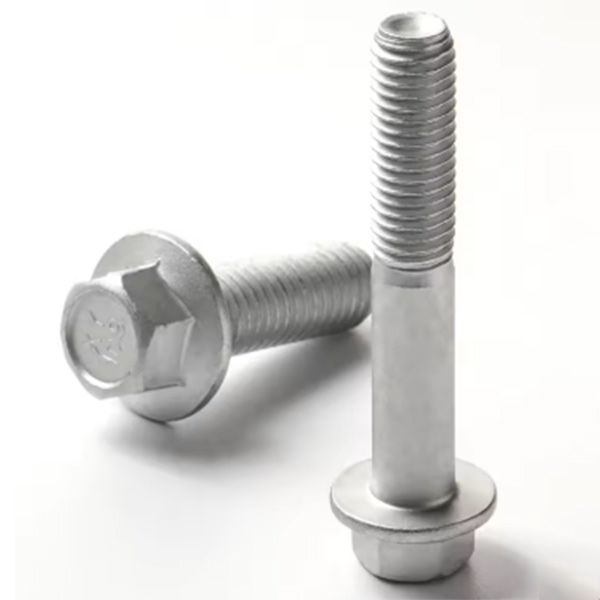
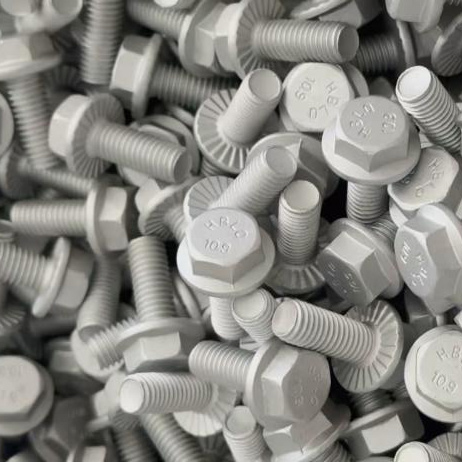
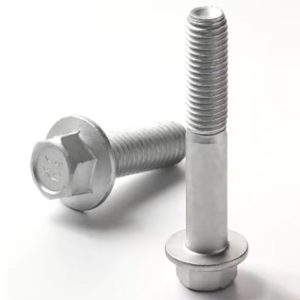
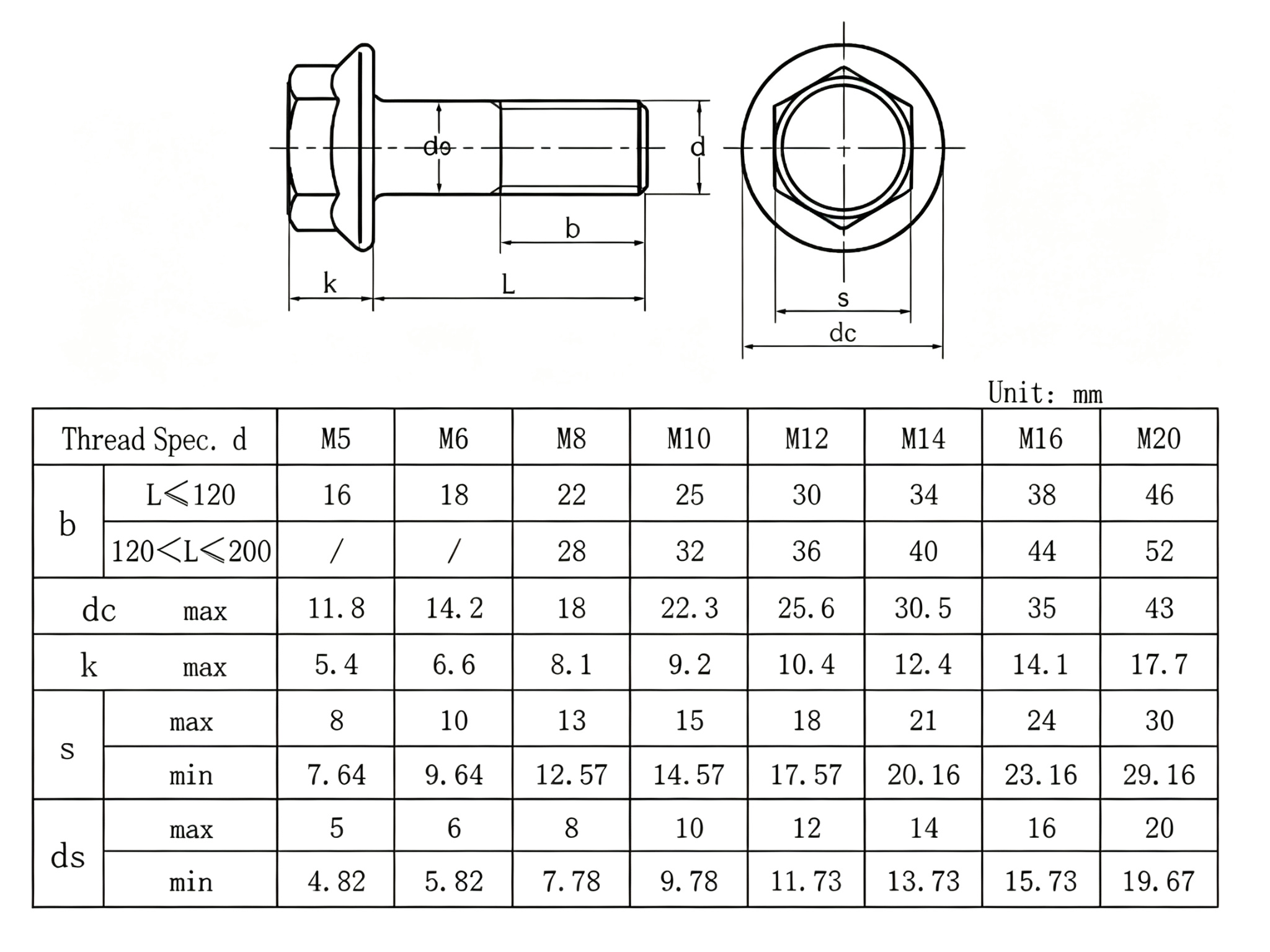
In modern engineering and industrial construction, the reliability of bolted joints is fundamental to structural integrity. Flange bolts—characterized by an integral washer-like flange beneath the hex head—distribute clamping force more evenly across the joint surface, reduce the risk of surface damage, and enhance overall assembly stability. These specialized bolts are widely specified for high-load connections in pipelines, pressure vessels, steel structures, automotive chassis, wind turbines, and offshore platforms.
|
 |
However, even the highest-grade alloy steel bolt remains vulnerable to environmental degradation. Exposure to moisture, salt-laden atmospheres, industrial chemicals, and cyclic temperature variations can initiate rust formation, progressive corrosion, and eventual loss of preload. Traditional protective finishes such as electro-galvanizing or hot-dip galvanizing often fall short when long-term corrosion resistance, thin-film consistency, and freedom from hydrogen embrittlement are simultaneously required. This is precisely where Dacromet technology delivers decisive advantages for flange bolts and other critical fasteners.
Understanding Dacromet Coating Technology
Dacromet is a proprietary, non-electrolytic, water-based zinc-aluminum flake coating system originally developed to provide exceptional corrosion protection on steel and iron components. The coating consists of overlapping zinc and aluminum flakes suspended in an inorganic chromium-oxide binder matrix. Applied by dip-spin or spray methods followed by controlled baking, Dacromet forms a thin yet highly effective metallic film—typically only 5 to 12 micrometers thick—that adheres strongly to the substrate.
Unlike conventional electroplating processes, the Dacromet application involves no acid pickling and no electrolytic deposition. Consequently, the risk of hydrogen embrittlement is essentially eliminated. This characteristic makes Dacromet particularly suitable for high-strength flange bolts of property classes 8.8, 10.9, and 12.9, where any introduction of hydrogen could compromise tensile integrity and lead to delayed fracture under sustained load.
The multi-layered flake structure creates a sophisticated four-way corrosion protection mechanism: physical barrier isolation, controlled sacrificial (galvanic) action of the zinc, self-repair through oxide formation that seals micro-damage, and chemical passivation that slows the consumption rate of the sacrificial metals. The result is outstanding anti-rust performance even in aggressive salt-spray and cyclic corrosion environments.
Key Advantages of Dacromet-Coated Flange Bolts
When Dacromet is applied to flange bolts, the combination of geometric load distribution and advanced surface protection yields a fastener system that excels in demanding service conditions. The principal benefits include:
Exceptional Corrosion and Anti-Rust Resistance
Independent laboratory testing according to ASTM B117 and ISO 9227 demonstrates that a properly applied Dacromet coating on flange bolts can withstand more than 1,000 hours of continuous neutral salt spray exposure with zero red rust. In many formulations, white corrosion products remain minimal even after extended exposure. Comparative studies show Dacromet outperforming conventional zinc plating by a factor of seven to ten and surpassing hot-dip galvanizing in thin-film consistency and long-term barrier integrity. Real-world service life in coastal, marine, and industrial atmospheres frequently exceeds fifteen to twenty years when the coating system is correctly specified and applied.
Freedom from Hydrogen Embrittlement
High-tensile flange bolts are especially sensitive to hydrogen-induced cracking. Because the Dacromet process is entirely non-electrolytic and avoids acidic surface preparation, no atomic hydrogen is generated or absorbed into the steel microstructure. Qualification testing on ASTM A490 structural bolts and similar high-strength grades has confirmed that Dacromet introduces neither internal hydrogen embrittlement nor promotes environmental hydrogen embrittlement under service conditions.
Thin, Uniform Coating Compatible with Precision Threads
The typical Dacromet film thickness of 5–12 µm is far thinner than hot-dip galvanizing (often 50–80 µm). Consequently, thread flanks and root radii remain accurately dimensioned, allowing standard nuts to assemble smoothly without the need for oversized taps or compensatory thread allowances. The coating also penetrates recesses, under-head fillets, and the flange underside of the bolt head, providing continuous anti-corrosion coverage where conventional plating may leave thin or porous zones.
Thermal Stability and Mechanical Durability
Dacromet maintains protective integrity at continuous service temperatures up to approximately 300 °C and tolerates short-term exposure beyond that threshold. The coating exhibits good adhesion, abrasion resistance during handling and installation, and controlled lubricity that contributes to consistent torque-tension relationships—particularly valuable for flange bolt assemblies where uniform preload is critical.
Environmental and Regulatory Compliance
As a water-based system free of cadmium, lead, and (in modern formulations) hexavalent chromium concerns when properly managed, Dacromet supports compliance with RoHS, REACH, and ELV directives. The process generates minimal hazardous waste compared with traditional electroplating lines, aligning with contemporary sustainability requirements for industrial fasteners.
Primary Application Fields for Dacromet Flange Bolts
The unique combination of high clamping reliability and long-term anti-rust performance makes Dacromet flange bolts the preferred choice across multiple industries:
Infrastructure and Civil Engineering: Bridge expansion joints, steel-frame buildings, transmission towers, and coastal structures exposed to chloride-rich atmospheres.
Energy and Offshore: Wind-turbine tower and nacelle bolted connections, oil and gas pipeline flanges, subsea equipment, and solar mounting systems requiring decades of maintenance-free corrosion protection.
Automotive and Heavy Equipment: Chassis, suspension, and powertrain flange bolts where salt-road exposure and thermal cycling demand robust anti-corrosion finishes without compromising high-strength bolt performance.
Chemical Processing and Marine: Pressure-vessel manways, pump and valve flanges, shipboard equipment, and port infrastructure subjected to aggressive chemical or saline environments.
Rail and Transportation: Track fastening systems and rolling-stock assemblies that benefit from vibration resistance combined with superior rust prevention.
Selection Considerations and Quality Assurance
Specifying Dacromet flange bolts requires attention to several practical factors. Coating thickness and formulation (for example, Dacromet 320 versus Dacromet 500 series) should be matched to the expected corrosivity category and required friction coefficient. For structural applications, the base bolt material and property class must satisfy the relevant ASTM, ISO, or EN standards, while the Dacromet finish itself should be applied by a licensed or qualified processor capable of consistent dip-spin or spray deposition and controlled curing.
Quality verification typically includes visual inspection for uniform silver-gray appearance, adhesion testing, coating thickness measurement, and salt-spray or cyclic corrosion testing on production samples. When the coated flange bolt is intended for use with corresponding Dacromet-coated nuts, torque-tension characteristics remain predictable; mixing with dissimilar finishes (for example, zinc-plated nuts) can alter friction and should be avoided unless validated by joint testing.
Proper storage and handling further preserve the anti-corrosion performance of Dacromet flange bolts. Although the coating is robust, prolonged outdoor exposure of unfinished assemblies or contact with incompatible chemicals should be minimized until final installation.
Conclusion
Dacromet flange bolts represent a mature, high-performance solution for engineers seeking reliable bolted joints in corrosive service environments. By uniting the mechanical advantages of an integral flange—improved load distribution and reduced bearing-surface stress—with the multi-mechanism corrosion protection of a zinc-aluminum flake coating, these fasteners deliver long-term anti-rust performance, freedom from hydrogen embrittlement, thermal stability, and dimensional consistency.
Whether deployed on coastal bridges, offshore wind foundations, chemical plant flanges, or heavy-vehicle chassis, Dacromet-coated flange bolts minimize maintenance intervals, extend structural service life, and reduce the total cost of ownership associated with corrosion-related failures. As environmental regulations tighten and the demand for durable infrastructure grows, the technical and economic case for specifying Dacromet on critical bolts continues to strengthen.
In summary, the combination of advanced surface engineering and optimized fastener geometry makes Dacromet flange bolts an indispensable element in modern corrosion-resistant design practice.