- Chinese
- French
- German
- Portuguese
- Spanish
- Russian
- Japanese
- Korean
- Arabic
- Irish
- Greek
- Turkish
- Italian
- Danish
- Romanian
- Indonesian
- Czech
- Afrikaans
- Swedish
- Polish
- Basque
- Catalan
- Esperanto
- Hindi
- Lao
- Albanian
- Amharic
- Armenian
- Azerbaijani
- Belarusian
- Bengali
- Bosnian
- Bulgarian
- Cebuano
- Chichewa
- Corsican
- Croatian
- Dutch
- Estonian
- Filipino
- Finnish
- Frisian
- Galician
- Georgian
- Gujarati
- Haitian
- Hausa
- Hawaiian
- Hebrew
- Hmong
- Hungarian
- Icelandic
- Igbo
- Javanese
- Kannada
- Kazakh
- Khmer
- Kurdish
- Kyrgyz
- Latin
- Latvian
- Lithuanian
- Luxembou..
- Macedonian
- Malagasy
- Malay
- Malayalam
- Maltese
- Maori
- Marathi
- Mongolian
- Burmese
- Nepali
- Norwegian
- Pashto
- Persian
- Punjabi
- Serbian
- Sesotho
- Sinhala
- Slovak
- Slovenian
- Somali
- Samoan
- Scots Gaelic
- Shona
- Sindhi
- Sundanese
- Swahili
- Tajik
- Tamil
- Telugu
- Thai
- Ukrainian
- Urdu
- Uzbek
- Vietnamese
- Welsh
- Xhosa
- Yiddish
- Yoruba
- Zulu
- Kinyarwanda
- Tatar
- Oriya
- Turkmen
- Uyghur

Hex Bolts vs. Socket Cap Screws: Choosing the Right Fastener for Every Application
2026-05-11
When engineers and procurement teams search for bolts, screws, or fasteners, one question always surfaces: should I use a hex bolt (external drive) or a socket cap screw (internal drive)? Both are workhorses of modern construction, machinery, and industrial assembly — yet each excels in a distinct set of applications. This guide breaks down the key differences, common use cases, and how FUJINRUI’s anti-corrosion treatment extends the service life of both types in harsh environments.
1. Hex Bolts — The Structural Workhorse
What Is a Hex Bolt?
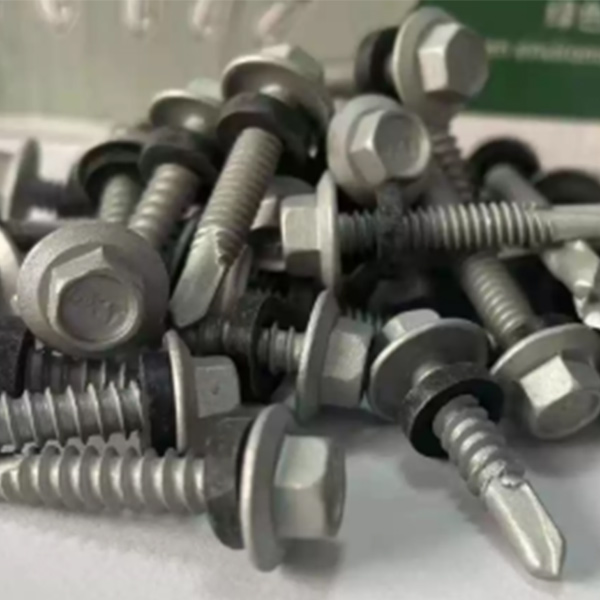
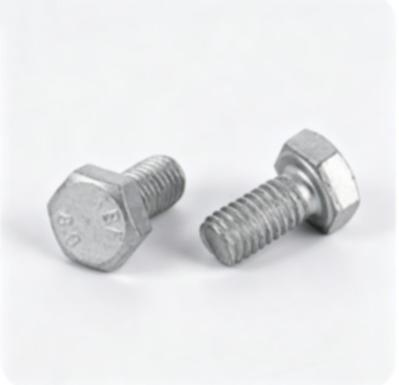
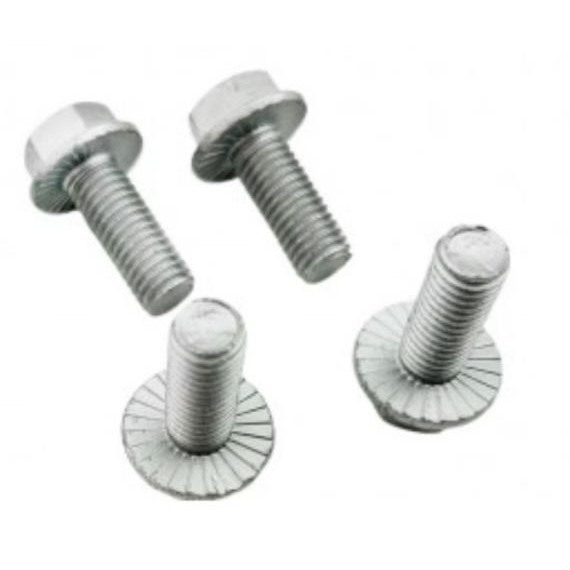
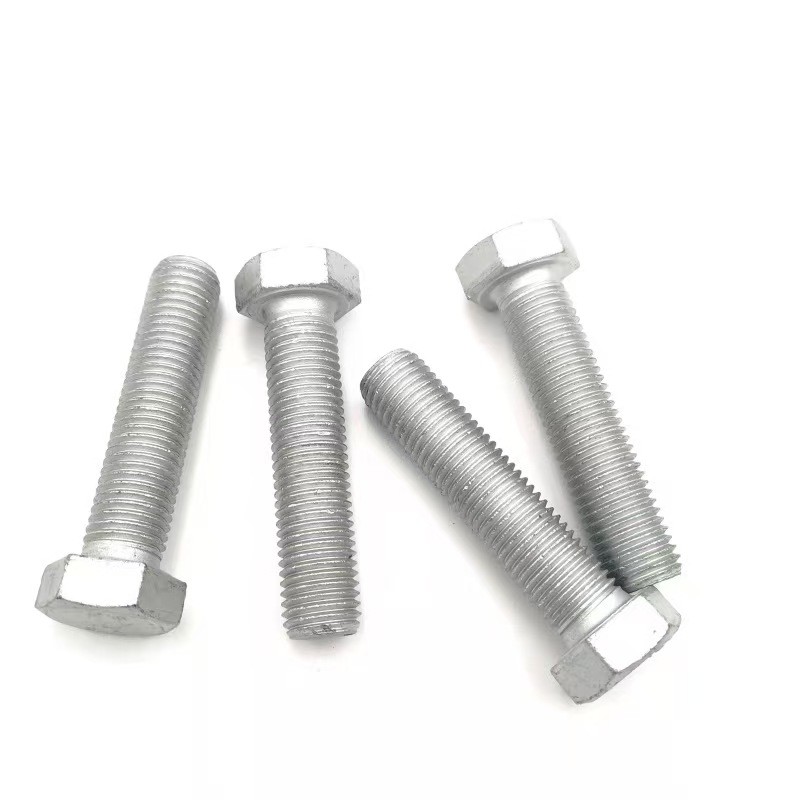
A hex bolt — also called an external hex bolt, hexagon head bolt, or simply a hex-head screw — features a six-sided (hexagonal) head that is tightened with a standard wrench or socket set. Governed by ISO 4014, ISO 4016, DIN 931, and ASME B18.2.1, hex bolts are the most widely used fastener type globally.
Primary Applications
(1) Steel & Civil Structures — Connecting I-beams, columns, and trusses in bridges, warehouses, and high-rise buildings. Grades 8.8, 10.9, and 12.9 hex bolts deliver the tensile strength required for structural joints.
(2) Heavy Machinery & Equipment — Mounting gearboxes, compressors, and pump housings where high clamping torque is critical and space around the bolt head is unrestricted.
(3) Automotive & Transportation — Chassis assembly, suspension components, and heavy vehicle frames routinely use hex-head bolts and hex-head screws for their ease of torque control.
(4) Agricultural Equipment — Combines, tractors, and irrigation systems demand large-diameter hex bolts with hot-dip galvanised (HDG) or Dacromet coating for long-term outdoor exposure.
(5)Infrastructure & Utilities — Power poles, transmission towers, and pipeline flanges rely on hex bolts treated with Dacromet or geometric anti-corrosion coatings to withstand salt spray and UV degradation.
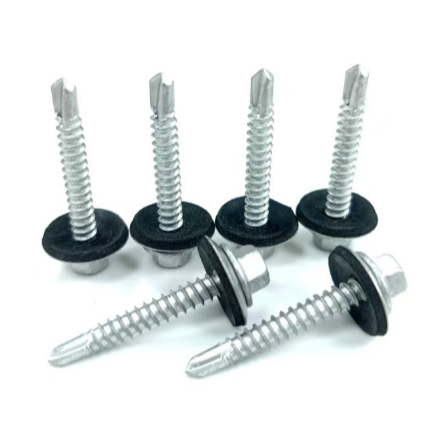
(6) Pre-Engineered Buildings (PEB) — Purlins, girts, and wall panels are fastened with hex screws or hex bolts, often with Dacromet Class 720 to meet 20-year anti-rust warranties.
Why Choose a Hex Bolt?
The large bearing surface of a hex head distributes clamping load over a wider area, reducing the risk of embedding or surface damage. Open-end wrenches and power impact drivers work fast on hex bolts — a major advantage in mass production and site assembly. When combined with appropriate hex nuts, washers, and corrosion-resistant coatings, hex bolts deliver decades of reliable service.
2. Socket Cap Screws — Precision in Tight Spaces
What Is a Socket Cap Screw?
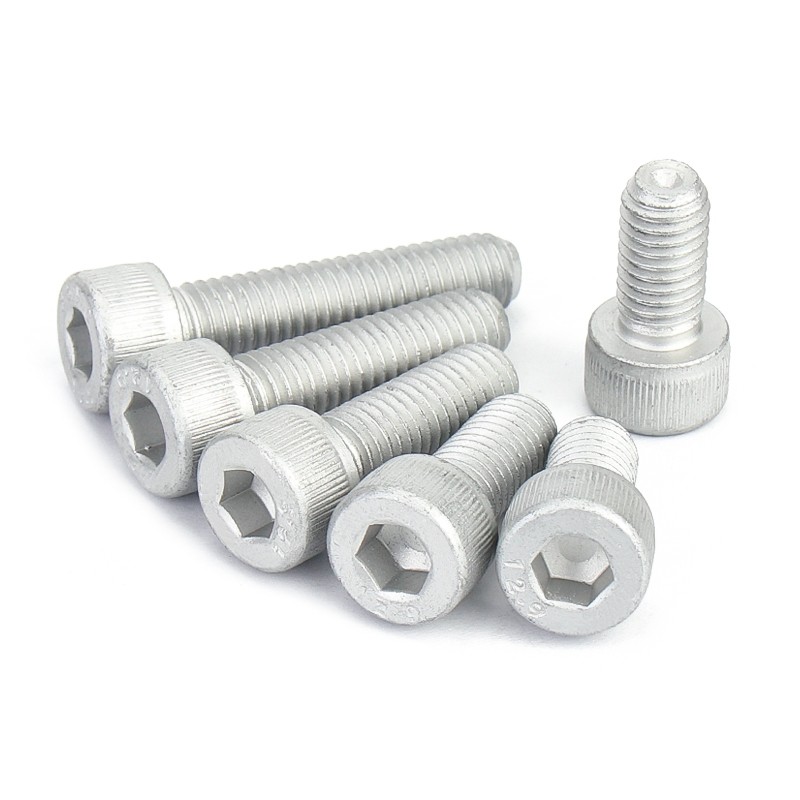
A socket cap screw — also known as an Allen bolt, Allen-head screw, socket head cap screw, hex socket screw, or cylinder head bolt — features a cylindrical head with a recessed internal hexagonal drive. Standardised under ISO 4762 and DIN 912, these screws are driven by an Allen key (hex key) or a socket hex bit. Their compact, low-profile head makes them indispensable wherever bolt heads must sit flush or below the surface.
Primary Applications
(1) CNC Machines & Precision Equipment — Tool holders, slides, and spindle covers are held by socket cap screws that resist vibration loosening and fit inside recessed bores without protruding.
(2)Automotive Engine Components — Valve covers, oil-pump housings, and crankcase assemblies frequently specify DIN 912 hex socket bolts for their high-torque-to-size ratio and clean appearance.
(3)Hydraulic & Pneumatic Systems — Manifold blocks, cylinder end caps, and valve mounting plates use socket-head screws to achieve a leak-free face seal within compact envelope dimensions.
(4)CElectronics & Semiconductor Equipment — Server racks, robotic arms, and cleanroom machinery rely on M3–M10 Allen screws for precise clamping without tool clearance issues.
(5)Furniture & Modular Systems — Furniture bolts (often called confirmat screws or socket furniture bolts) enable flush, tool-key assembly in flat-pack and modular furniture where aesthetics matter.
(6)Aerospace & Defense — Lightweight titanium or stainless-steel hex socket bolts are specified where weight saving, vibration resistance, and corrosion protection are simultaneously required.
Why Choose a Socket Cap Screw?
The recessed hex drive eliminates the need for wrench clearance on the sides, allowing bolts to be installed in blind holes or within housing pockets. A properly torqued Allen bolt develops high clamping force for its size, and the cylindrical head profile resists cross-threading. Combined with black-oxide, zinc, or Dacromet finishing, socket cap screws meet demanding corrosion-resistance requirements in both indoor and outdoor environments.
3. Quick Comparison: Hex Bolt vs. Socket Cap Screw
| Feature | Hex Bolt | Socket Cap Screw |
| Drive Type | External hex head | Internal hex (Allen key) |
| Tool | Wrench / Socket | Allen key / Hex bit |
| Clamping Torque | High (large bearing surface) | Medium-High |
| Space Required | Wide clearance needed | Compact — low profile |
| Typical Load | Heavy structural loads | Precision mechanical loads |
| Ease of Assembly | Fast with power tools | Suitable for tight spaces |
| Common Finish | HDG / Dacromet / Zinc | Black oxide / Zinc / Dacromet |
| Standards | ISO 4014 / DIN 931 | ISO 4762 / DIN 912 |
4. Anti-Corrosion Coatings — Making Fasteners Last
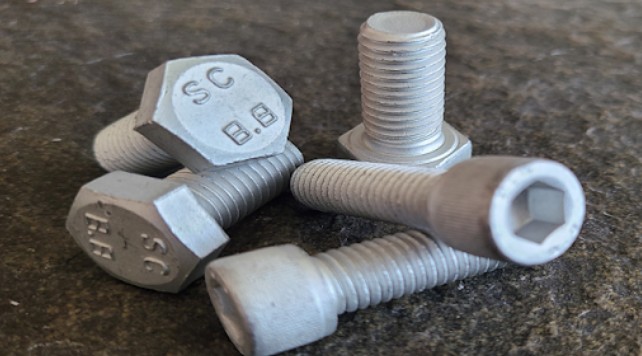
Regardless of bolt type, corrosion is the leading cause of fastener failure in outdoor, marine, and chemical environments. FUJINRUI specialises in anti-corrosion surface treatments that dramatically extend service life for both hex bolts and socket cap screws:
Dacromet Coating
Dacromet (zinc-chromate flake) provides 480–720 hours of salt-spray resistance with a coating thickness of only 4–8 μm. It bonds tightly to threads, preserving the dimensional accuracy of M6–M52 bolts and screws. Dacromet is the preferred surface treatment for Tier-1 automotive and wind-energy fasteners.
Hot-Dip Galvanising (HDG)
HDG delivers a zinc coating of 45–80 μm, ideal for large hex bolts used in civil structures, towers, and agricultural machinery. The zinc sacrificial layer cathodically protects the steel fastener, delivering 30+ years of outdoor service in moderate environments.
Zinc Electroplating + Passivation
Blue-white, yellow, or black zinc plating on hex-head bolts and socket-head screws suits indoor and mild-outdoor applications at cost-effective pricing. Trivalent chromate passivation meets RoHS and REACH requirements for export markets.
Geometric (Geomet®) Coating
Water-borne zinc-aluminium flake systems offer outstanding corrosion protection with zero hydrogen embrittlement — critical for high-strength bolts (Grade 10.9, 12.9) where hydrogen-induced failure is a concern. Approved by major OEMs globally.
5. How to Select the Right Bolt or Screw
Follow these three steps before placing a fastener order:
Step 1 — Define the Load & Joint Type. Heavy structural joints and flange connections favour hex bolts (M16–M52). Precision mechanical assemblies, blind holes, or recessed installations call for socket cap screws (M4–M24).
Step 2 — Assess Tool Clearance. If side clearance around the bolt head is limited (e.g., inside a housing or motor frame), choose internal-hex socket screws. If open torque access is available, hex-head bolts are faster to install.
Step 3 — Match the Coating to the Environment. Indoor / mild: zinc electroplating. Outdoor / coastal: Dacromet or HDG. Chemical / marine: stainless steel (A2 / A4) or heavy Dacromet with top coat. Always verify the salt-spray rating (ASTM B117 hours) with your supplier.
Need Anti-Corrosion Hex Bolts or Socket Cap Screws?
FUJINRUI supplies M4–M52 hex bolts, socket cap screws, stainless fasteners, and custom anti-corrosion solutions to customers in 30+ countries.
Minimum Order: 100 kg • Free Samples Available • OEM / Custom Coating Welcome