- English
- Chinese
- French
- German
- Portuguese
- Spanish
- Russian
- Japanese
- Korean
- Arabic
- Irish
- Greek
- Turkish
- Italian
- Danish
- Romanian
- Indonesian
- Czech
- Afrikaans
- Swedish
- Polish
- Catalan
- Esperanto
- Hindi
- Lao
- Albanian
- Amharic
- Armenian
- Azerbaijani
- Belarusian
- Bengali
- Bosnian
- Bulgarian
- Cebuano
- Chichewa
- Corsican
- Croatian
- Dutch
- Estonian
- Filipino
- Finnish
- Frisian
- Galician
- Georgian
- Gujarati
- Haitian
- Hausa
- Hawaiian
- Hebrew
- Hmong
- Hungarian
- Icelandic
- Igbo
- Javanese
- Kannada
- Kazakh
- Khmer
- Kurdish
- Kyrgyz
- Latin
- Latvian
- Lithuanian
- Luxembou..
- Macedonian
- Malagasy
- Malay
- Malayalam
- Maltese
- Maori
- Marathi
- Mongolian
- Burmese
- Nepali
- Norwegian
- Pashto
- Persian
- Punjabi
- Serbian
- Sesotho
- Sinhala
- Slovak
- Slovenian
- Somali
- Samoan
- Scots Gaelic
- Shona
- Sindhi
- Sundanese
- Swahili
- Tajik
- Tamil
- Telugu
- Thai
- Ukrainian
- Urdu
- Uzbek
- Vietnamese
- Welsh
- Xhosa
- Yiddish
- Yoruba
- Zulu
- Kinyarwanda
- Tatar
- Oriya
- Turkmen
- Uyghur

Understanding Dacromet Flange Bolts
2026-11-26
Q1: What are Dacromet Flange Bolts?
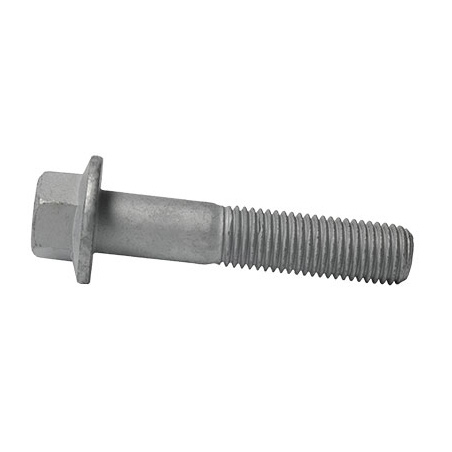
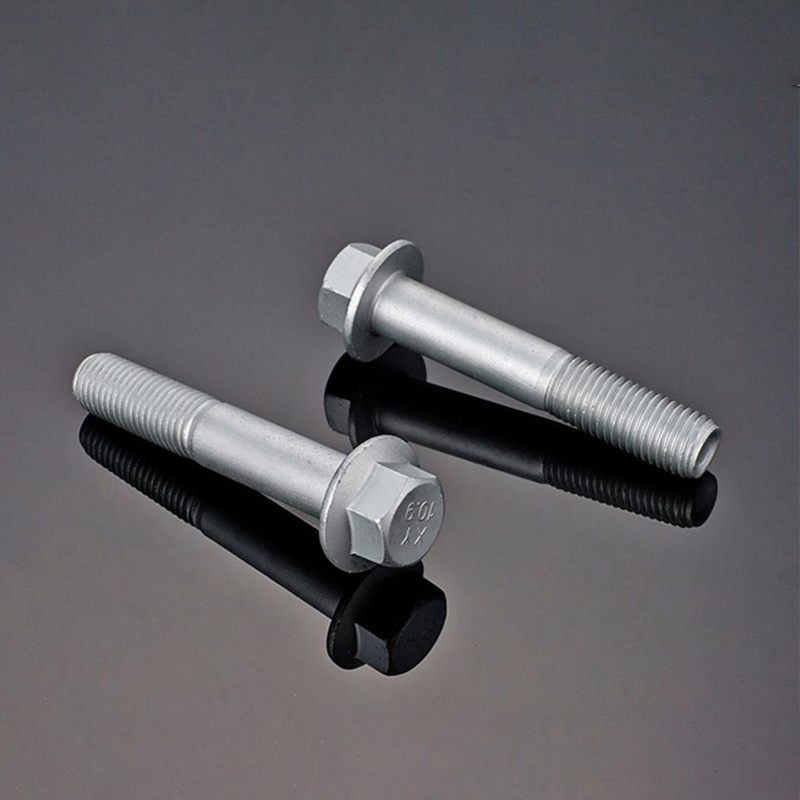
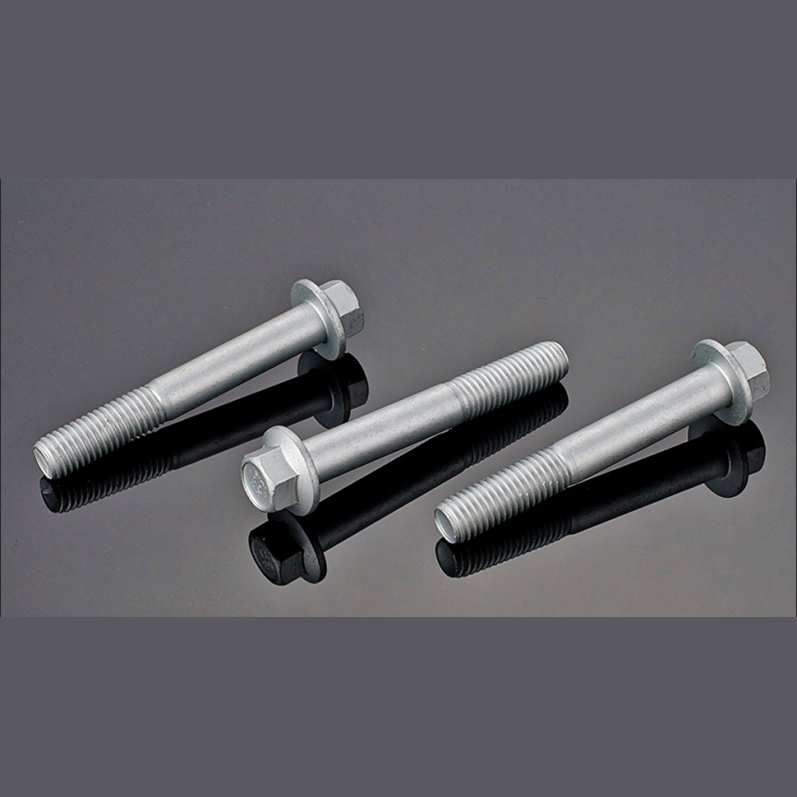
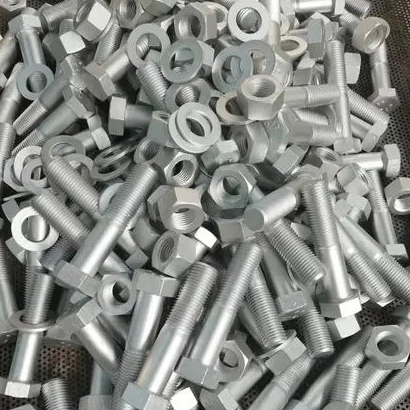
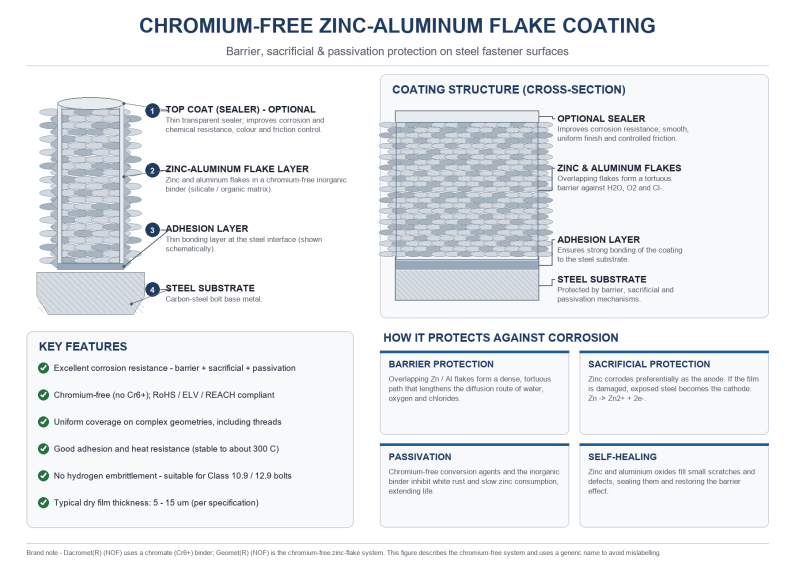
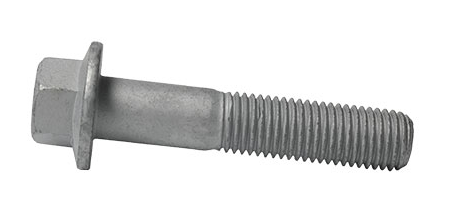
A: Dacromet flange bolts are high-strength fasteners featuring an integrated washer-like flange under the head and a specialized zinc-aluminum flake coating known as Dacromet (or zinc-flake coating). This advanced surface treatment delivers exceptional corrosion resistance and long-term rust prevention. Unlike conventional electroplated zinc or hot-dip galvanizing, the Dacromet coating forms a thin (typically 5–15 μm), conformal, multi-layer barrier of overlapping zinc and aluminum flakes bonded in an inorganic matrix. The flange design improves load distribution and reduces the need for separate washers, while the coating ensures outstanding anti-corrosion performance even in harsh marine, industrial, and outdoor environments.
These bolts are widely specified for applications where both mechanical strength and reliable anti-rust protection are critical, such as automotive chassis, structural steel connections, wind turbines, bridges, and coastal infrastructure.
Q2: How does the Dacromet coating provide superior anti-corrosion and rust-prevention?
A: The Dacromet system protects the underlying steel through three synergistic anti-corrosion mechanisms:
1.Barrier Protection: Dozens of overlapping zinc-aluminum flakes create a dense, tortuous physical barrier that severely restricts the diffusion of water, oxygen, chlorides, and other corrosive agents to the steel substrate, dramatically slowing oxidation and rust formation.
2.Cathodic (Sacrificial) Protection: Zinc acts as a sacrificial anode. When the coating is scratched or damaged, zinc corrodes preferentially, protecting the steel (cathode) from rust. This galvanic action continues to provide active anti-rust defense.
3.Passivation & Self-Healing: The binder and passivation chemistry form a stable oxide layer that further inhibits electrochemical reactions. Minor surface damage can be mitigated by the migration of protective compounds, enhancing long-term durability.
Q3: How does Dacromet compare to traditional coatings in corrosion resistance?
A: Dacromet coatings consistently outperform conventional zinc plating and often rival or exceed hot-dip galvanizing in salt spray and cyclic corrosion tests, while offering major advantages in coating thickness control and freedom from hydrogen embrittlement. The table below summarizes key performance differences related to anti-rust capability:
| Performance Attribute | Electroplated Zinc | Hot-Dip Galvanizing | Dacromet (Zinc Flake) |
| Typical Thickness | 5–15 μm | 40–100 μm | 5–15 μm |
| Salt Spray (NSS) to Red Rust | 96–240 hours | 500–1,500 hours | 720–1,000+ hours (often 1,500+) |
| Hydrogen Embrittlement Risk | High (requires baking) | Possible (pickling) | None (non-electrolytic) |
| Max Service Temperature | ~120–150 °C | ~200 °C | Up to 300 °C+ |
| Dimensional Impact on Threads | Minimal | Significant (thick) | Minimal / Controlled |
| Appearance | Bright / colored | Spangled silver | Matte silver-gray |
Table 1: Comparative corrosion-resistance and application characteristics of common fastener coatings. Dacromet offers an outstanding balance of thin-film precision, high salt-spray durability, and complete freedom from hydrogen embrittlement—critical for high-strength flange bolts (Grade 8.8 / 10.9 / 12.9).
Q4: Why is Dacromet especially suitable for high-strength flange bolts?
A: High-strength bolts (property classes 8.8, 10.9, 12.9 and structural grades such as ASTM A490) are highly susceptible to hydrogen embrittlement when processed by traditional acid pickling and electroplating. Hydrogen atoms introduced during these processes can cause delayed brittle fracture under load—an unacceptable risk for critical structural or safety-related joints.
Dacromet is applied by dip-spin or spray of a water-based zinc-aluminum slurry followed by curing at approximately 300 °C. No acid pickling or electrolysis is required, so no hydrogen is introduced. The thin, uniform coating preserves thread geometry and torque-tension characteristics while delivering industry-leading anti-corrosion performance. These attributes make Dacromet the preferred rust-prevention solution for high-tensile flange bolts used in automotive, heavy machinery, rail, wind energy, and offshore applications.
Q5: What real-world environments benefit most from Dacromet flange bolts?
A: Dacromet-coated flange bolts excel wherever prolonged exposure to moisture, salt, industrial pollutants, or temperature cycling threatens conventional fasteners:
- Marine & Coastal Infrastructure: Bridges, docks, offshore platforms, and coastal wind turbines face aggressive chloride attack. Dacromet’s multi-thousand-hour salt-spray resistance dramatically extends service life and reduces maintenance.
- Automotive & Transportation: Chassis, suspension, and underbody components exposed to road salt and humidity benefit from the coating’s combination of corrosion resistance, thin film, and controlled friction.
- Industrial & Chemical Environments: Resistance to mild acids, alkalis, and industrial atmospheres makes Dacromet ideal for process equipment, HVAC, and structural steel in factories.
- High-Temperature Applications: Unlike many organic coatings or standard zinc layers, Dacromet remains protective up to 300 °C and beyond, suitable for engine compartments and industrial heat-exposed assemblies.
Q6: What performance data supports the anti-rust claims of Dacromet?
A: Independent and industry testing consistently demonstrates the outstanding corrosion-protection capability of properly applied Dacromet systems:
| Test / Metric | Typical Dacromet Performance |
| Neutral Salt Spray (ASTM B117 / ISO 9227) | 720–1,000+ hours to first red rust (Grade B); many systems exceed 1,500 hours |
| Cyclic Corrosion Tests | Excellent ranking; often superior to cadmium and conventional zinc in automotive cyclic protocols |
| Coating Thickness | 5–15 μm typical; thin enough to maintain thread fit and torque consistency |
| Temperature Resistance | Continuous service up to ~300 °C without loss of adhesion or protection |
| Hydrogen Embrittlement | None — process introduces no hydrogen; ideal for Grade 10.9 / 12.9 and A490 bolts |
| Expected Service Life (outdoor/marine) | 15–25+ years depending on environment severity and coating grade; significantly longer than standard zinc plating |
Table 2: Key laboratory and field performance indicators confirming the superior anti-corrosion and anti-rust durability of Dacromet-coated fasteners.
Q7: Are there any practical considerations when specifying Dacromet flange bolts?
A: While Dacromet offers outstanding corrosion resistance, designers and purchasers should keep a few practical points in mind:
- Friction Control: Base Dacromet has a relatively high coefficient of friction. Many applications use a lubricated topcoat (PLUS® or similar) to achieve consistent torque-tension relationships.
- Appearance: The natural finish is a matte silver-gray. If a different color or higher gloss is required, additional organic topcoats can be applied without compromising the underlying anti-rust performance.
- Environmental Evolution: Traditional Dacromet formulations contained hexavalent chromium. Modern chrome-free or trivalent systems (often marketed under related brand names such as Geomet®) deliver comparable corrosion protection while meeting stricter environmental regulations.
- Quality Control: Salt-spray performance depends on correct coating weight, curing, and process control. Specifying recognized standards and reputable applicators ensures the expected long-term rust prevention.
Conclusion
Dacromet flange bolts represent a high-performance solution that simultaneously addresses mechanical requirements and the critical need for reliable, long-term corrosion resistance and rust prevention. By combining a thin, dimensionally friendly zinc-aluminum flake coating with proven barrier and cathodic protection mechanisms—and by completely avoiding hydrogen embrittlement—the technology has become the preferred choice for high-strength fasteners operating in corrosive environments worldwide.
When specifying fasteners for outdoor structures, marine installations, automotive underbodies, or any application where premature rust could compromise safety or increase maintenance costs, Dacromet-coated flange bolts offer a proven path to extended service life and reduced total cost of ownership.