- English
- Chinese
- French
- German
- Portuguese
- Spanish
- Russian
- Japanese
- Korean
- Arabic
- Irish
- Greek
- Turkish
- Italian
- Danish
- Romanian
- Indonesian
- Czech
- Afrikaans
- Swedish
- Polish
- Catalan
- Esperanto
- Hindi
- Lao
- Albanian
- Amharic
- Armenian
- Azerbaijani
- Belarusian
- Bengali
- Bosnian
- Bulgarian
- Cebuano
- Chichewa
- Corsican
- Croatian
- Dutch
- Estonian
- Filipino
- Finnish
- Frisian
- Galician
- Georgian
- Gujarati
- Haitian
- Hausa
- Hawaiian
- Hebrew
- Hmong
- Hungarian
- Icelandic
- Igbo
- Javanese
- Kannada
- Kazakh
- Khmer
- Kurdish
- Kyrgyz
- Latin
- Latvian
- Lithuanian
- Luxembou..
- Macedonian
- Malagasy
- Malay
- Malayalam
- Maltese
- Maori
- Marathi
- Mongolian
- Burmese
- Nepali
- Norwegian
- Pashto
- Persian
- Punjabi
- Serbian
- Sesotho
- Sinhala
- Slovak
- Slovenian
- Somali
- Samoan
- Scots Gaelic
- Shona
- Sindhi
- Sundanese
- Swahili
- Tajik
- Tamil
- Telugu
- Thai
- Ukrainian
- Urdu
- Uzbek
- Vietnamese
- Welsh
- Xhosa
- Yiddish
- Yoruba
- Zulu
- Kinyarwanda
- Tatar
- Oriya
- Turkmen
- Uyghur

How to Evaluate Bolt Quality: Key Manufacturing Standards and Testing Methods for Industrial Applications
2026-10-30
- Introduction: The Critical Importance of Bolt Quality in Industrial Applications
- Key International Manufacturing Standards for Bolts
- Material Composition and Metallurgical Integrity
- Essential Mechanical Testing Methods
- Surface Treatment and Corrosion Resistance Evaluation
- Dimensional Accuracy and Thread Quality
- How to Evaluate and Select a Reliable Bolt Company
- Common Quality Issues and How to Avoid Them
- FAQ: Evaluating Bolt Quality
- Conclusion
Summary Evaluating bolt quality requires a rigorous understanding of international manufacturing standards, material science, and mechanical testing protocols. This guide details the critical criteria for assessing fastener integrity, including tensile strength, hardness, corrosion resistance, and dimensional accuracy. It also explores how partnering with a reliable bolt company with vertically integrated manufacturing capabilities ensures compliance with industrial safety requirements and long-term performance in demanding applications.
Introduction: The Critical Importance of Bolt Quality in Industrial Applications
In the realms of construction, automotive manufacturing, energy infrastructure, and heavy machinery, the integrity of a structure is often only as strong as its weakest connection. Bolts, though seemingly simple components, are the fundamental elements that maintain structural stability under dynamic loads, vibration, and environmental stress. A single fastener failure can lead to catastrophic equipment downtime, safety hazards, and significant financial loss. Consequently, the evaluation of bolt quality is not merely a procedural checkbox but a critical engineering imperative.
For procurement managers, engineers, and quality assurance specialists, selecting the right fastener involves more than just matching thread size and length. It requires a deep understanding of the manufacturing standards that govern production, the material properties that determine performance, and the testing methods that verify compliance. As global supply chains expand, identifying a trustworthy bolt company that adheres to strict quality management systems becomes essential for mitigating risk.
This article provides a comprehensive framework for evaluating bolt quality. It examines key international standards such as ISO, ASTM, and DIN, outlines essential mechanical and chemical testing methods, and discusses the role of advanced surface treatments in enhancing durability. By understanding these technical dimensions, industry professionals can make informed decisions that ensure reliability, safety, and cost-efficiency in their projects.
Key International Manufacturing Standards for Bolts
Standards serve as the universal language of quality in the fastener industry. They define the chemical composition, mechanical properties, dimensional tolerances, and testing procedures required for bolts to be deemed fit for specific applications. Understanding these standards is the first step in evaluating whether a bolt meets the necessary engineering requirements.
ISO Standards: The Global Benchmark
The International Organization for Standardization (ISO) provides widely accepted guidelines for metric fasteners. ISO 898-1 is perhaps the most critical standard for evaluating the mechanical properties of bolts, screws, and studs made from carbon steel and alloy steel. It classifies fasteners into property classes, such as 4.6, 8.8, 10.9, and 12.9, where the numbers indicate the nominal tensile strength and yield strength ratios.
For instance, a Class 8.8 bolt has a minimum tensile strength of 800 MPa and a yield strength ratio of 0.8. Evaluating a bolt against ISO standards ensures that it possesses the predictable mechanical behavior required for structural connections. Additionally, ISO 4014 and ISO 4017 define the dimensional specifications for hexagon head bolts, ensuring compatibility with nuts and wrenches across different manufacturers.
ASTM Standards: Prevalent in North American Markets
In the United States and other regions following Imperial measurements, ASTM (American Society for Testing and Materials) standards are predominant. ASTM A307 covers carbon steel bolts and studs with a tensile strength of 60 ksi, typically used for general-purpose applications. For high-strength structural connections, ASTM A325 and ASTM A490 are the benchmarks. ASTM A325 specifies high-strength bolts for structural steel joints, while ASTM A490 denotes even higher strength heat-treated steel bolts.
Evaluating bolts for projects in North America or those involving American-designed equipment requires strict adherence to these specifications. A reputable bolt company exporting to these markets must demonstrate compliance with ASTM testing protocols, including wedge testing and rotational capacity tests, to ensure the bolts can withstand the shear and tension forces inherent in structural steelwork.
DIN and Other Regional Standards
German Institute for Standardization (DIN) standards, such as DIN 931 (partially threaded hexagon head bolts) and DIN 933 (fully threaded hexagon head bolts), remain highly influential, particularly in European and Asian markets. While many DIN standards have been harmonized with ISO equivalents, specific industry sectors still prefer DIN designations for their precision and historical reliability.
Other standards, such as JIS (Japanese Industrial Standards) and GB (Chinese National Standards), also play significant roles in regional supply chains. When evaluating bolts, it is crucial to confirm which standard the manufacturer claims to follow and to verify that the physical markings on the bolt head correspond to that standard. Discrepancies between claimed standards and actual product markings are a primary red flag in quality assessment.
Material Composition and Metallurgical Integrity
The performance of a bolt is fundamentally determined by its material composition. The choice of steel grade, alloying elements, and heat treatment processes directly influences tensile strength, ductility, and resistance to environmental degradation.
Carbon Steel vs. Alloy Steel vs. Stainless Steel
Carbon steel is the most common material for industrial bolts due to its balance of strength and cost. Low-carbon steels are used for lower-grade fasteners, while medium-carbon steels are quenched and tempered to achieve higher property classes like 8.8 or 10.9. Alloy steels, containing elements such as chromium, molybdenum, or nickel, offer enhanced strength and toughness, making them suitable for high-stress applications like aerospace or heavy machinery.
Stainless steel bolts, typically grades 304 or 316, are selected for their corrosion resistance rather than pure tensile strength. Grade 316, with its molybdenum content, offers superior resistance to chlorides and acidic environments, making it ideal for marine and chemical processing applications. When evaluating a bolt company, it is important to assess their ability to source certified raw materials and provide Material Test Reports (MTRs) that verify the chemical composition of each batch.
The Role of Heat Treatment
Heat treatment is the process that transforms raw steel into a high-performance fastener. Quenching and tempering are the standard procedures for achieving high tensile strengths. During quenching, the steel is heated to a specific temperature and rapidly cooled, creating a hard but brittle microstructure. Tempering follows, where the bolt is reheated to a lower temperature to reduce brittleness and increase toughness.
Improper heat treatment can lead to hydrogen embrittlement, a phenomenon where hydrogen atoms diffuse into the steel lattice during plating or cleaning processes, causing sudden, brittle failure under stress. Evaluating bolt quality involves checking for evidence of proper heat treatment, such as consistent hardness readings across the bolt head and shank, and ensuring that the manufacturer employs controlled atmosphere furnaces to prevent decarburization (loss of carbon at the surface), which can significantly weaken the threads.
Essential Mechanical Testing Methods
Verification of bolt quality relies on rigorous mechanical testing. These tests simulate the conditions the bolt will face in service, ensuring it meets the specified standards. A professional manufacturer will conduct these tests in-house or through accredited third-party laboratories.
Tensile Strength and Yield Strength Testing
Tensile testing is the most fundamental evaluation method. A bolt sample is placed in a universal testing machine and pulled until it fractures. This test determines two key values:
- Ultimate Tensile Strength (UTS): The maximum stress the bolt can withstand before breaking.
- Yield Strength: The stress level at which the bolt begins to deform permanently.
For high-quality bolts, the UTS and yield strength must meet or exceed the minimum values defined by the relevant standard (e.g., ISO 898-1). The test also measures elongation and reduction of area, which indicate the ductility of the material. A bolt that breaks without significant deformation is too brittle and poses a safety risk.
Hardness Testing
Hardness testing provides a quick, non-destructive indication of a bolt’s strength and heat treatment quality. Common methods include Rockwell (HRC), Brinell (HB), and Vickers (HV) hardness tests. For metric bolts, hardness is often correlated directly to property classes. For example, a Class 10.9 bolt typically exhibits a Rockwell C hardness between 33 and 39.
Testing is usually performed on the head, the end of the shank, and sometimes the threads. Consistency in hardness readings across these areas indicates uniform heat treatment. Significant variations may suggest improper quenching or surface defects. However, hardness alone is not sufficient for quality evaluation; it must be interpreted alongside tensile test results to ensure the bolt has the necessary combination of strength and toughness.
Torsional Strength and Wedge Testing
Torsional strength testing evaluates a bolt’s ability to resist twisting forces, which is critical during installation. Over-torquing can strip threads or cause the bolt to snap. The test involves applying a increasing torque to the bolt until failure occurs, ensuring that the torsional strength is adequate for the intended tightening method.
Wedge testing is specifically required for high-strength structural bolts (such as ASTM A325/A490). In this test, a wedge is placed under the bolt head to induce bending stress while the bolt is subjected to tension. This simulates the uneven loading conditions that can occur in real-world structural connections. A bolt passes the test if it fractures in the body or threads rather than the head, demonstrating sufficient head strength and ductility.
Surface Treatment and Corrosion Resistance Evaluation
In many industrial environments, corrosion is the primary enemy of fastener longevity. Surface treatments protect the base metal from oxidation and chemical attack. Evaluating the quality of these coatings is as important as assessing the bolt’s mechanical properties.
Common Coating Technologies
Zinc plating is the most common coating, offering moderate corrosion protection and a bright appearance. However, for more demanding environments, advanced treatments are required:
- Dacromet (Zinc Flake Coating): A non-electrolytic zinc flake coating that provides excellent corrosion resistance and eliminates the risk of hydrogen embrittlement. It is widely used in automotive and construction industries.
- Hot-Dip Galvanizing: Involves dipping bolts in molten zinc, creating a thick, durable layer suitable for outdoor structural applications. However, it can affect thread fit and requires oversize tapping.
- Geomet and Delta Protekt: High-performance zinc flake coatings with additional sealants, offering superior resistance to salt spray and chemicals.
Hebei Fujinrui Metal Products Co., Ltd., for example, specializes in advanced corrosion protection technologies such as Dacromet coating and 1500H-rated anti-corrosion treatments. These solutions are designed to enhance product longevity under demanding environmental conditions, ensuring that fasteners maintain their integrity even in coastal or industrial atmospheres.
Salt Spray Testing (ASTM B117)
The salt spray test is the industry standard for evaluating corrosion resistance. Bolts are exposed to a continuous mist of saline solution in a controlled chamber. The duration of exposure before the onset of red rust (white rust is acceptable for zinc coatings) determines the coating’s effectiveness.
For standard zinc plating, 48 to 96 hours of salt spray resistance might be typical. For high-performance coatings like Dacromet or 1500H treatments, resistance can exceed 1,000 hours. When evaluating a supplier, requesting salt spray test reports for specific batches provides objective evidence of coating quality. It is also important to inspect the coating for uniformity, absence of blisters, and proper coverage in thread roots, where corrosion often initiates.
Dimensional Accuracy and Thread Quality
Even a metallurgically perfect bolt is useless if it does not fit. Dimensional accuracy ensures that bolts engage correctly with nuts and tapped holes, distributing load evenly across the threads.
Thread Pitch and Diameter Tolerances
Threads must conform to strict tolerance classes, such as 6g for external threads (bolts) and 6H for internal threads (nuts) in the ISO metric system. Deviations in pitch diameter or major diameter can lead to cross-threading, stripping, or insufficient clamp load. Precision cold forging and thread rolling processes, as employed by leading manufacturers, ensure consistent thread geometry.
Quality evaluation involves using go/no-go gauges to check thread fit. A “go” gauge should screw on easily by hand, while a “no-go” gauge should not enter more than two turns. Advanced manufacturers also use optical sorting machines to inspect every bolt for dimensional consistency, rejecting any parts that fall outside specified tolerances.
Head Dimensions and Drive Features
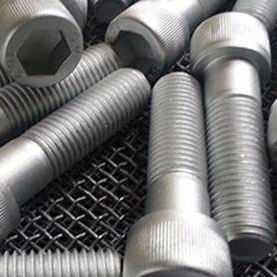
The dimensions of the bolt head (width across flats, height) must match standard wrench sizes to facilitate installation. For socket head cap screws, the internal hexagon must be precise to prevent cam-out (slipping) during tightening. Poorly formed drive features can lead to stripped heads, causing assembly delays and potential damage to the workpiece.
How to Evaluate and Select a Reliable Bolt Company
Choosing the right supplier is a strategic decision that impacts product quality, project timelines, and overall cost. Evaluating a bolt company goes beyond comparing price quotes; it requires assessing their technical capabilities, quality systems, and operational reliability.
Vertical Integration and Manufacturing Capabilities
A vertically integrated manufacturer controls the entire production process, from raw material sourcing to final packaging. This level of control allows for better quality assurance and traceability. Key capabilities to look for include:
- Precision Cold Forging: Ensures grain flow alignment for superior strength.
- Thread Rolling: Produces stronger threads compared to cutting.
- In-House Heat Treatment: Allows for precise control over mechanical properties.
- Surface Treatment Lines: Enables customized corrosion protection solutions.
Hebei Fujinrui Metal Products Co., Ltd. exemplifies this integrated approach. With a modern production base spanning 10,000 square meters and over 200 professionals, the company operates precision cold forging, thread rolling, heat treatment, and surface coating lines. This vertical integration ensures consistent performance, traceable batch control, and reliable on-time delivery, which are critical for OEM and project-based timelines.
Quality Management Systems and Certifications
A robust Quality Management System (QMS) is the backbone of consistent product quality. Look for suppliers certified to ISO 9001, which mandates rigorous documentation, process control, and continuous improvement. Additionally, industry-specific certifications such as IATF 16949 (automotive) or CE marking (construction) indicate a higher level of compliance and expertise.
Ask potential suppliers about their inspection protocols. Do they perform 100% automated optical inspection? Do they conduct regular batch testing for tensile strength and salt spray resistance? A transparent supplier will readily provide test reports and quality certificates.
Technical Expertise and Customer Support
The best suppliers act as partners, offering technical guidance on fastener selection, standardization, and application challenges. They should be able to advise on material choices for specific environments, recommend appropriate coatings, and assist with custom packaging solutions.
Hebei Fujinrui’s technical team, with more than two decades of cumulative experience, provides application guidance and standardization consultation. This depth of domain expertise helps customers avoid common pitfalls, such as selecting incompatible materials or inadequate corrosion protection, thereby reducing the risk of field failures.
Common Quality Issues and How to Avoid Them
Understanding common failure modes can help in preemptively evaluating bolt quality.
| Quality Issue | Cause | Prevention/Evaluation Strategy |
|---|---|---|
| Hydrogen Embrittlement | Hydrogen absorption during acid cleaning or electroplating of high-strength steel. | Use bake-out processes after plating; opt for non-electrolytic coatings like Dacromet for Class 10.9+ bolts. |
| Thread Stripping | Soft material, poor thread formation, or over-torquing. | Verify hardness and tensile strength; use torque-controlled tools; check thread fit with gauges. |
| Corrosion Failure | Inadequate coating thickness or wrong coating type for the environment. | Request salt spray test data; specify coatings based on environmental exposure (e.g., 316 SS for marine). |
| Head Shearing | Brittle material or improper heat treatment. | Conduct wedge testing; ensure proper tempering to balance hardness and ductility. |
FAQ: Evaluating Bolt Quality
What is the difference between property class 8.8 and 10.9?
Property class 8.8 indicates a minimum tensile strength of 800 MPa and a yield strength of 640 MPa. Class 10.9 indicates a minimum tensile strength of 1000 MPa and a yield strength of 900 MPa. Class 10.9 bolts are stronger but also more susceptible to hydrogen embrittlement and require more careful handling and installation.
How can I verify if a bolt meets ASTM standards?
Check the head marking. ASTM bolts have specific markings indicating the grade (e.g., three radial lines for A325 Type 1). Additionally, request a Mill Test Report (MTR) or Certificate of Compliance from the supplier, which details the chemical and mechanical test results for the specific batch.
Why is Dacromet coating preferred over standard zinc plating?
Dacromet offers superior corrosion resistance (often exceeding 1,000 hours in salt spray tests) and does not involve electrolytic processes, thereby eliminating the risk of hydrogen embrittlement. It also provides better torque-tension consistency, making it ideal for high-strength structural and automotive applications.
Can I use stainless steel bolts in high-strength structural applications?
Generally, no. Stainless steel bolts (A2-70 or A4-80) have lower tensile strengths compared to alloy steel bolts of class 8.8 or 10.9. They are chosen for corrosion resistance, not structural strength. For high-load structural connections, coated carbon or alloy steel bolts are typically required.
Conclusion
Evaluating bolt quality is a multifaceted process that demands attention to international standards, material science, and rigorous testing. From verifying tensile strength and hardness to assessing corrosion resistance through salt spray testing, each step ensures that the fasteners will perform reliably in their intended applications.
Partnering with a knowledgeable and capable bolt company is equally critical. Manufacturers like Hebei Fujinrui Metal Products Co., Ltd. demonstrate how vertical integration, advanced surface treatment technologies, and a commitment to quality management can deliver fasteners that meet the highest global standards. By prioritizing technical expertise and transparent quality verification, businesses can secure their supply chains and ensure the safety and longevity of their industrial projects.
For further information on high-performance fastening solutions and corrosion protection technologies, visit Hebei Fujinrui Metal Products Co., Ltd. to explore their comprehensive product portfolio and technical capabilities.