- English
- Chinese
- French
- German
- Portuguese
- Spanish
- Russian
- Japanese
- Korean
- Arabic
- Irish
- Greek
- Turkish
- Italian
- Danish
- Romanian
- Indonesian
- Czech
- Afrikaans
- Swedish
- Polish
- Catalan
- Esperanto
- Hindi
- Lao
- Albanian
- Amharic
- Armenian
- Azerbaijani
- Belarusian
- Bengali
- Bosnian
- Bulgarian
- Cebuano
- Chichewa
- Corsican
- Croatian
- Dutch
- Estonian
- Filipino
- Finnish
- Frisian
- Galician
- Georgian
- Gujarati
- Haitian
- Hausa
- Hawaiian
- Hebrew
- Hmong
- Hungarian
- Icelandic
- Igbo
- Javanese
- Kannada
- Kazakh
- Khmer
- Kurdish
- Kyrgyz
- Latin
- Latvian
- Lithuanian
- Luxembou..
- Macedonian
- Malagasy
- Malay
- Malayalam
- Maltese
- Maori
- Marathi
- Mongolian
- Burmese
- Nepali
- Norwegian
- Pashto
- Persian
- Punjabi
- Serbian
- Sesotho
- Sinhala
- Slovak
- Slovenian
- Somali
- Samoan
- Scots Gaelic
- Shona
- Sindhi
- Sundanese
- Swahili
- Tajik
- Tamil
- Telugu
- Thai
- Ukrainian
- Urdu
- Uzbek
- Vietnamese
- Welsh
- Xhosa
- Yiddish
- Yoruba
- Zulu
- Kinyarwanda
- Tatar
- Oriya
- Turkmen
- Uyghur

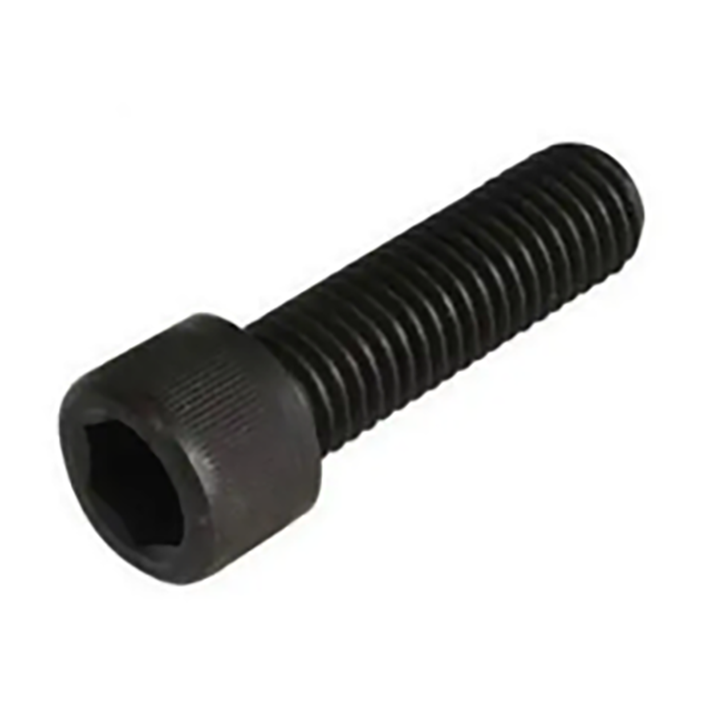
Grade 8.8 Black Oxide Hex Socket Head Cap Screws-A Technical Overview of Corrosion Protection and Head Design
2026-08-07
1. Introduction
Grade 8.8 black oxide hex socket head cap screws are among the most widely used medium-to-high strength fasteners in industrial mechanical assemblies. They combine the mechanical reliability of Grade 8.8 carbon steel with the economical corrosion protection of a black oxide finish, and the functional advantages of a cylindrical head driven by a hexagonal (Allen) socket. This article examines the two defining characteristics of this fastener: the black oxide surface treatment and the cylindrical head with hex socket drive, explaining how each contributes to performance, durability, and ease of use.
2. Grade 8.8 Black Oxide Finish: Corrosion Protection
2.1 What Is Black Oxide?
Black oxide, also referred to as blackening, is a chemical conversion coating produced by reacting the surface of ferrous metals with an alkaline oxidizing solution at elevated temperatures (typically 140 to 150 degrees Celsius). Unlike electroplated coatings such as zinc or Dacromet, which deposit a separate metallic layer on top of the substrate, black oxide converts the topmost layer of the steel itself into magnetite (Fe3O4), a stable black iron oxide. The result is a thin, matte-black surface that becomes an integral part of the fastener rather than an add-on layer.
2.2 The Black Oxide Process
The standard black oxide process for Grade 8.8 fasteners involves the following stages:
Degreasing and alkaline cleaning to remove oils, cutting fluids, and shop contaminants.
Acid pickling to remove any surface scale or light rust.
Immersion in a hot alkaline-oxidizing bath (approximately 141 degrees Celsius), where the magnetite layer forms in 10 to 20 minutes.
Rinsing and sealing with a rust-preventative oil or wax, which supplements the oxide layer with a hydrophobic barrier.
2.3 Corrosion Resistance Characteristics
On its own, the black oxide layer is thin (approximately 0.5 to 1.5 micrometers) and porous, which means it provides only modest corrosion resistance compared to zinc plating or hot-dip galvanizing. However, when combined with a supplementary rust-preventative oil or wax, the coating achieves a neutral salt spray resistance of approximately 24 to 96 hours, depending on the sealant quality. This level of protection is adequate for indoor, climate-controlled, or mildly corrosive environments where the fastener is not exposed to direct moisture or salt spray for prolonged periods.
2.4 Advantages and Limitations
1.Zero dimensional change: Because the oxide layer is under 2 micrometers thick, black oxide does not alter thread tolerances. Grade 8.8 fasteners maintain their original Class 6g fit, making the coating ideal for precision assemblies where thread interference must be avoided.
2.Cost-effective: Black oxide is one of the most economical surface treatments available, significantly cheaper than zinc-nickel plating, Dacromet, or stainless steel alternatives.
3.No hydrogen embrittlement: Unlike electroplating, the black oxide process does not generate hydrogen gas, eliminating the risk of hydrogen embrittlement. This is critical for Grade 8.8 fasteners operating at high stress levels.
4.Aesthetic appeal: The uniform matte-black finish provides a clean, professional appearance that blends with dark-colored assemblies and reduces light glare.
5.Limitation - Limited outdoor corrosion resistance: Black oxide is not suitable for outdoor, marine, or highly corrosive environments. For such applications, Dacromet, zinc-nickel plating, or stainless steel should be considered.
3. Cylindrical Head with Hex Socket Drive
3.1 Design Overview
The cylindrical head (commonly called a socket head cap screw head or DIN 912 / ISO 4762 head) features a flat-top cylindrical shape with a recessed hexagonal socket in the center. The head diameter is typically about 1.5 times the nominal thread diameter, and the head height is approximately 0.6 to 1.0 times the shank diameter, depending on the size. This geometry provides a large bearing surface under the head while keeping the overall profile compact and low-profile.
3.2 Advantages of the Cylindrical Head Design
High clamping force: The cylindrical head provides a larger bearing surface area than countersunk or button head designs, distributing clamping load over a wider area and reducing the risk of surface indentation or damage to the workpiece.
Compact footprint: Because the head sits on top of the surface rather than being countersunk, the cylindrical head requires only a simple through-hole or tapped hole. No countersinking operation is needed, simplifying manufacturing.
Flush or raised installation: The head can be installed flush with the surface (if the application permits a raised head) or recessed into a counterbore for a fully flush finish, offering design flexibility.
Clean appearance: The smooth cylindrical head presents a neat, uniform look that is aesthetically preferred in machinery, tooling, and consumer electronics.
3.3 Hex Socket Drive Benefits
The hexagonal socket (Allen) drive is the defining interface of the socket head cap screw. An Allen hex key (wrench) engages the six-point recess, transmitting torque to drive the screw. This drive system offers several distinct advantages over external hex, Phillips, or slotted drives:
Higher torque transmission: The internal hex socket can withstand significantly higher torque than Phillips or slotted drives, enabling reliable tightening to the high preload values required for Grade 8.8 fasteners (up to 80% of proof load in critical joints).
Cam-out resistance: Unlike Phillips drives which are designed to cam out (disengage) under high torque, the hex socket maintains full engagement, reducing the risk of tool slippage and head damage.
Low-profile access: The hex key approaches from the top (axial direction), allowing installation in confined spaces where a wrench cannot reach from the side. This is especially valuable in dense machinery assemblies.
Reduced stripping risk: The large contact area between the hex key and the socket walls distributes stress evenly, minimizing the chance of socket wall deformation or stripping, even after repeated installation and removal cycles.
4. Typical Applications
Grade 8.8 black oxide hex socket head cap screws are used across a broad range of industries where medium-high strength, indoor corrosion protection, and compact assembly access are required:
Machinery and equipment manufacturing: Engine mounts, gearbox housings, pump assemblies, and structural frame connections.
Automotive (interior and non-exposed components): Dashboard assemblies, seat frames, interior trim brackets, and under-hood components sheltered from direct weather exposure.
Tooling and fixtures: Mold bases, jig and fixture assemblies, and die sets where precise clamping and repeated disassembly are common.
Electronics and enclosures: Rack-mounted equipment, electrical junction boxes, and control panels where a clean black finish and low-profile head are preferred.
Furniture and architectural hardware: Modular furniture joints, exhibition stands, and interior architectural fittings.
5. Conclusion
Grade 8.8 black oxide hex socket head cap screws represent a well-balanced fastener solution that addresses two critical engineering needs simultaneously. The black oxide finish provides a thin, dimensionally stable, hydrogen-embrittlement-free corrosion barrier that is both economical and visually consistent. While its corrosion resistance is limited compared to premium coatings like Dacromet or zinc-nickel, it is more than sufficient for indoor and mildly corrosive environments. The cylindrical head with hex socket drive, meanwhile, delivers superior torque transmission, compact installation capability, and a clean aesthetic that makes it the preferred choice for mechanical assemblies where space, reliability, and appearance all matter. Together, these two features make the Grade 8.8 black oxide socket head cap screw a versatile, cost-effective, and dependable fastener for a wide spectrum of industrial applications.