- English
- Chinese
- French
- German
- Portuguese
- Spanish
- Russian
- Japanese
- Korean
- Arabic
- Irish
- Greek
- Turkish
- Italian
- Danish
- Romanian
- Indonesian
- Czech
- Afrikaans
- Swedish
- Polish
- Catalan
- Esperanto
- Hindi
- Lao
- Albanian
- Amharic
- Armenian
- Azerbaijani
- Belarusian
- Bengali
- Bosnian
- Bulgarian
- Cebuano
- Chichewa
- Corsican
- Croatian
- Dutch
- Estonian
- Filipino
- Finnish
- Frisian
- Galician
- Georgian
- Gujarati
- Haitian
- Hausa
- Hawaiian
- Hebrew
- Hmong
- Hungarian
- Icelandic
- Igbo
- Javanese
- Kannada
- Kazakh
- Khmer
- Kurdish
- Kyrgyz
- Latin
- Latvian
- Lithuanian
- Luxembou..
- Macedonian
- Malagasy
- Malay
- Malayalam
- Maltese
- Maori
- Marathi
- Mongolian
- Burmese
- Nepali
- Norwegian
- Pashto
- Persian
- Punjabi
- Serbian
- Sesotho
- Sinhala
- Slovak
- Slovenian
- Somali
- Samoan
- Scots Gaelic
- Shona
- Sindhi
- Sundanese
- Swahili
- Tajik
- Tamil
- Telugu
- Thai
- Ukrainian
- Urdu
- Uzbek
- Vietnamese
- Welsh
- Xhosa
- Yiddish
- Yoruba
- Zulu
- Kinyarwanda
- Tatar
- Oriya
- Turkmen
- Uyghur

Why is zinc plating not recommended for high-strength bolts? And what alternatives can be used instead? Protecting bolts and screws against corrosion without compromising strength or safety.
2026-05-12
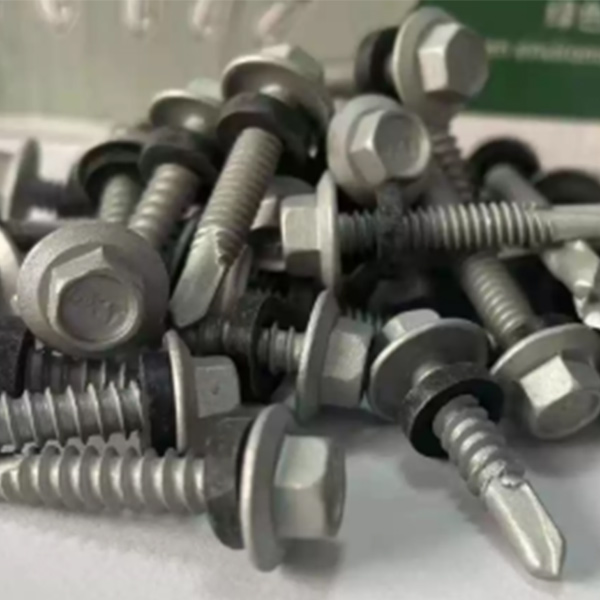
When engineers specify high-strength bolts (Grade 10.9, 12.9, or equivalent ASTM A325/A490) for structural connections, they expect maximum load-bearing performance. But when corrosion protection is also required, the default instinct is often to simply specify zinc galvanizing. That choice can be dangerous.
The problem is a phenomenon called hydrogen embrittlement — a silent failure mode that can cause bolts to fracture without warning, days or even weeks after installation. Here is what you need to know, and which anti-corrosion solutions are safe for high-tensile fasteners.
The Hidden Danger: Hydrogen Embrittlement
During the electroplating process, atomic hydrogen is generated as a byproduct. When bolts with a tensile strength above 1,000 MPa (hardness > 320 HV) absorb this hydrogen into their steel lattice, the result is a loss of ductility. The bolt may pass every quality inspection, torque correctly on site, and then fail suddenly under normal load.
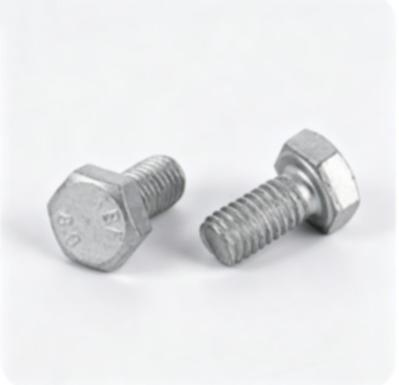
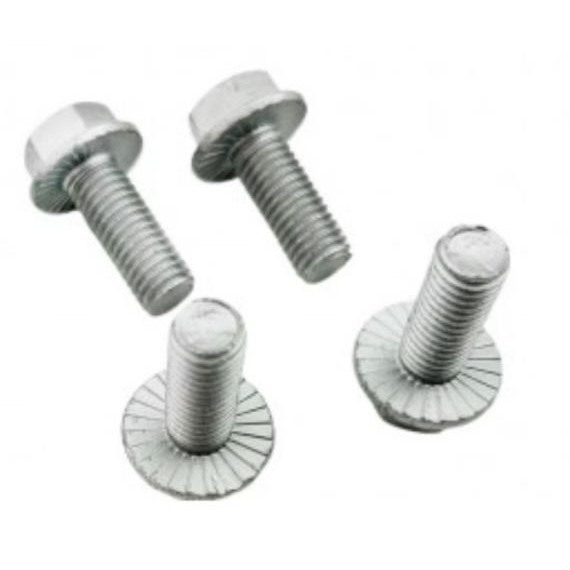
This delayed failure — with zero plastic deformation and no visible warning — makes hydrogen embrittlement one of the most insidious risks in structural engineering. For socket head cap screws, hex bolts, and other high-grade fasteners used in safety-critical applications (bridges, wind turbines, automotive suspensions), the consequences can be catastrophic.
| Key Fact: Even post-plating baking (hydrogen embrittlement relief) cannot guarantee complete hydrogen removal in Grade 10.9 and 12.9 bolts. The risk never drops to zero. |
Galvanizing Risk by Bolt Grade
| Bolt Grade | Tensile Strength | HE Risk | Recommendation |
| 8.8 | 800 MPa | Low | Galvanizing acceptable |
| 10.9 | 1,000 MPa | High | Use zinc flake coating |
| 12.9 | 1,200 MPa | Critical | Zinc flake or stainless steel |
Hot-dip galvanizing carries lower hydrogen risk than electroplating, but the acid pickling pre-treatment still introduces hydrogen. For high-safety applications, it is not the optimal choice either.
Safe Anti-Corrosion Alternatives
So how do you protect high-strength bolts and screws from rust when galvanizing is off the table? Here are the proven alternatives:
| 01 Zinc Flake Coating (Dacromet / Geomet) Applied mechanically — no acid bath, no electrolysis, zero hydrogen generation. Delivers 600–1,000+ hours salt spray resistance. Ideal for Grade 10.9 and 12.9 bolts, screws, and studs. Best Choice |
| 02 Mechanical Zinc Plating Cold-welds zinc particles onto the fastener surface without electrical current. No hydrogen risk, suitable for high-tensile hex bolts and nuts. No Hydrogen Risk |
| 03 Stainless Steel Fasteners A316 or A4 (316) stainless steel bolts and screws offer inherent corrosion resistance. Best for marine, chemical, and outdoor environments. Premium Solution |
| 04 PTFE / Fluoropolymer Coating Provides excellent chemical resistance and low friction. Often combined with a zinc underlayer for enhanced corrosion protection on industrial fasteners. Specialty Use |
“The right anti-corrosion coating protects your investment. The wrong one can destroy it.”
— FUJINRUI Engineering Team
Choosing the Right Solution
When selecting an anti-corrosion treatment for your fasteners, consider these factors:
- Bolt Grade— Grade 8.8 and below can generally use galvanizing. For 10.9 and above, always choose zinc flake or stainless steel.
- Environment— Marine and industrial atmospheres demand higher salt spray hours. Geomet coatingand stainless steel bolts excel here.
- Application— Automotive, wind energy, and structural steel connections require zero hydrogen risk. Mechanical plating and zinc flake systems are the standard.
- Cost vs. Performance— Zinc flake coatings (Dacromet, Geomet) offer the best balance of corrosion resistance, hydrogen safety, and cost for the majority of heavy-duty fastenerapplications.
What This Means for Procurement
For sourcing teams and project engineers, the takeaway is clear: never default to galvanizing for high-strength fasteners. Always specify the bolt grade and corrosion environment, and work with your fastener manufacturer to select a coating system that eliminates hydrogen embrittlement risk.
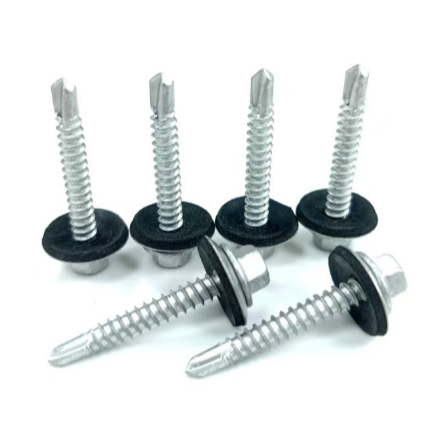
At FUJINRUI, we manufacture anti-corrosion bolts, screws, and custom fasteners with Dacromet, Geomet, mechanical zinc, and PTFE coatings — tailored to your application and environmental requirements. Every batch is tested for both mechanical strength and corrosion resistance before shipment.
─── ◆ ───
Need Anti-Corrosion Fasteners?
Get a free coating recommendation and quote for your project. Our engineers respond within 24 hours.
CONTACT OUR TEAM