- Chinese
- French
- German
- Portuguese
- Spanish
- Russian
- Japanese
- Korean
- Arabic
- Irish
- Greek
- Turkish
- Italian
- Danish
- Romanian
- Indonesian
- Czech
- Afrikaans
- Swedish
- Polish
- Basque
- Catalan
- Esperanto
- Hindi
- Lao
- Albanian
- Amharic
- Armenian
- Azerbaijani
- Belarusian
- Bengali
- Bosnian
- Bulgarian
- Cebuano
- Chichewa
- Corsican
- Croatian
- Dutch
- Estonian
- Filipino
- Finnish
- Frisian
- Galician
- Georgian
- Gujarati
- Haitian
- Hausa
- Hawaiian
- Hebrew
- Hmong
- Hungarian
- Icelandic
- Igbo
- Javanese
- Kannada
- Kazakh
- Khmer
- Kurdish
- Kyrgyz
- Latin
- Latvian
- Lithuanian
- Luxembou..
- Macedonian
- Malagasy
- Malay
- Malayalam
- Maltese
- Maori
- Marathi
- Mongolian
- Burmese
- Nepali
- Norwegian
- Pashto
- Persian
- Punjabi
- Serbian
- Sesotho
- Sinhala
- Slovak
- Slovenian
- Somali
- Samoan
- Scots Gaelic
- Shona
- Sindhi
- Sundanese
- Swahili
- Tajik
- Tamil
- Telugu
- Thai
- Ukrainian
- Urdu
- Uzbek
- Vietnamese
- Welsh
- Xhosa
- Yiddish
- Yoruba
- Zulu
- Kinyarwanda
- Tatar
- Oriya
- Turkmen
- Uyghur

Eye Nut Manufacturer: Wholesale High Quality DIN 582 & JIS Forged
2026-10-17
- What Is an Eye Nut and How Does It Function?
- DIN 582 vs. JIS Standards: Technical Specifications and Differences
- Manufacturing Excellence: Forged vs. Cast Eye Nuts
- Material Selection and Corrosion Protection
- Applications of High-Quality Eye Nuts
- How to Choose the Right Eye Nut for Your Project
- Installation and Safety Best Practices
- Why Partner with Hebei Fujinrui Metal Products Co., Ltd.?
- Frequently Asked Questions (FAQ)
- Conclusion: Secure Your Supply Chain with Premium Eye Nuts
An eye nut is a specialized fastener featuring a looped head, designed to create secure lifting points or attachment interfaces for threaded rods and bolts. Manufactured to rigorous international standards such as DIN 582 and JIS B 1169, these components are essential in rigging, construction, and industrial machinery. As a premier Eye Nut Manufacturer, Hebei Fujinrui Metal Products Co., Ltd. delivers wholesale, high-quality forged eye nuts that ensure load-bearing reliability and corrosion resistance for global B2B projects.
What Is an Eye Nut and How Does It Function?
An eye nut, often referred to as a lifting eye nut or hoist ring nut, is a hexagonal or forged nut with an integrated circular loop (eye) on one end. Unlike standard hex nuts that require separate washers or lifting accessories, the eye nut provides a direct, robust anchor point. This design allows engineers and technicians to attach hooks, shackles, cables, or ropes directly to a threaded stud or bolt.
The primary function of an eye nut is to facilitate safe lifting, pulling, and securing of heavy loads. When tightened onto a properly rated threaded rod, the eye nut transfers tensile and shear forces from the lifting apparatus into the structural connection. The integrity of this transfer relies heavily on the manufacturing quality, material grade, and adherence to dimensional standards like DIN or JIS.
Key Structural Components
- The Eye (Loop): The circular upper section that serves as the attachment point. In forged models, this is formed under high pressure to maintain grain flow and structural integrity.
- The Threaded Body: The internal threading that mates with external threads of bolts or studs. Precision here ensures full engagement and load distribution.
- The Bearing Surface: The bottom face that contacts the mounting surface, often designed to minimize stress concentrations.
DIN 582 vs. JIS Standards: Technical Specifications and Differences
When sourcing eye nuts for international projects, understanding the distinction between European (DIN) and Japanese (JIS) standards is critical. These standards dictate dimensions, load ratings, and material requirements. Hebei Fujinrui Metal Products Co., Ltd. specializes in producing both standards to meet diverse regional compliance needs.
DIN 582 Eye Nuts
The DIN 582 standard is widely recognized across Europe and many international markets. It specifies requirements for eye nuts made from steel, typically used for lifting applications. DIN 582 eye nuts are characterized by their specific geometric ratios between the eye diameter, nut height, and thread size. They are commonly available in property classes 4, 5, 6, 8, and 10, indicating their tensile strength capabilities.
JIS B 1169 Eye Nuts
The JIS B 1169 standard governs eye nuts in Japan and is frequently specified in Asian infrastructure and automotive manufacturing projects. JIS eye nuts often have slightly different dimensional tolerances compared to DIN equivalents. For instance, the shape of the eye and the transition radius may vary to optimize for specific local loading conditions. Compliance with JIS ensures compatibility with Japanese-made machinery and structural components.
| Feature | DIN 582 Standard | JIS B 1169 Standard |
|---|---|---|
| Primary Region | Europe, Middle East, Global | Japan, Asia-Pacific |
| Material Grades | Carbon Steel, Stainless Steel (A2/A4) | Carbon Steel, Stainless Steel |
| Thread Precision | ISO Metric Threads (Coarse/Fine) | JIS Metric Threads |
| Load Rating Focus | High tensile strength for heavy lifting | Balanced strength for machinery assembly |
| Surface Finish | Galvanized, Black Oxide, Dacromet | Zinc Plated, Chromate, Plain |
Manufacturing Excellence: Forged vs. Cast Eye Nuts
Not all eye nuts are created equal. The manufacturing process significantly impacts the safety factor and durability of the final product. At Hebei Fujinrui Metal Products Co., Ltd., we prioritize forging over casting for high-load applications. Understanding this difference is vital for procurement managers and engineers.
The Advantage of Forged Eye Nuts
Forging involves shaping metal using localized compressive forces. For eye nuts, this means heating high-quality steel billets and hammering or pressing them into shape. This process aligns the metal’s grain structure, resulting in superior mechanical properties.
- Higher Strength-to-Weight Ratio: Forged eye nuts can handle higher loads without increasing size.
- Improved Fatigue Resistance: The continuous grain flow reduces the risk of cracking under cyclic loading, a common scenario in vibrating machinery.
- Fewer Internal Defects: Unlike casting, forging minimizes porosity and voids, ensuring consistent density throughout the part.
Why Casting Is Less Suitable for Critical Lifting
Cast eye nuts are produced by pouring molten metal into a mold. While cost-effective for low-stress applications, casting can introduce micro-cracks and inconsistent grain structures. For critical lifting operations or dynamic loads, cast eye nuts pose a higher risk of sudden failure. Therefore, industry best practices recommend forged eye nuts for any application involving human safety or expensive equipment.
Material Selection and Corrosion Protection
The environment in which an eye nut operates dictates the required material and surface treatment. Using the wrong combination can lead to premature failure due to corrosion or brittle fracture. With over 20 years of experience in the fastener industry, Hebei Fujinrui integrates advanced metal surface corrosion protection technologies into our production line.
Common Materials
- Carbon Steel (Grade 4.8, 8.8, 10.9): Ideal for general industrial use where high strength is required. Often coated for protection.
- Stainless Steel (A2-304, A4-316): Essential for marine, chemical, and food processing environments. A4-316 offers superior resistance to chlorides and acids.
- Alloy Steel: Used for extreme high-load applications requiring heat treatment for enhanced hardness and tensile strength.
Surface Treatments for Durability
Corrosion is the enemy of fastener integrity. Our facility in Handan City employs mature production technology teams to apply various finishes:
- Hot-Dip Galvanizing (HDG): Provides a thick zinc layer, offering excellent outdoor durability for construction and infrastructure projects.
- Zinc Plating (Electro-galvanizing): A thinner, smoother finish suitable for indoor machinery and automotive applications.
- Dacromet/Geomet: Advanced coating systems providing high corrosion resistance without hydrogen embrittlement risks, ideal for high-strength bolts and nuts.
- Black Oxide: Offers mild corrosion resistance and a professional aesthetic, often used in conjunction with oil or wax.
Applications of High-Quality Eye Nuts
Eye nuts are versatile components found in numerous industries. Their ability to convert a simple threaded connection into a functional lifting or anchoring point makes them indispensable. Below are key sectors where DIN 582 and JIS eye nuts are extensively utilized.
Construction and Rigging
In construction, eye nuts are used to secure formwork, lift precast concrete elements, and anchor scaffolding. The high tensile strength of forged DIN 582 eye nuts ensures that heavy loads can be moved safely. They are also critical in tensioning systems for bridges and large structural steel frameworks.
Marine and Offshore Industry
The harsh marine environment demands fasteners that resist saltwater corrosion. Stainless steel eye nuts (A4-316) with appropriate coatings are standard on ships, offshore platforms, and port facilities. They are used for securing cargo, rigging sails, and attaching safety lines.
Machinery and Equipment Manufacturing
Industrial machines often require removable lifting points for maintenance and installation. Eye nuts allow manufacturers to integrate lifting eyes directly into the machine frame without welding, preserving the structural integrity of the base material. This is common in generators, pumps, and HVAC units.
Automotive and Transportation
JIS standard eye nuts are frequently found in Japanese automotive supply chains. They are used in engine assembly, chassis testing, and transportation securing systems. The precision of JIS B 1169 ensures tight tolerances required in automated assembly lines.
How to Choose the Right Eye Nut for Your Project
Selecting the correct eye nut involves more than just matching the thread size. Engineers must consider load dynamics, environmental factors, and regulatory compliance. Here is a step-by-step guide to making the right choice.
Step 1: Determine the Load Requirements
Calculate the maximum working load limit (WLL). Always apply a safety factor, typically 4:1 or 5:1 for lifting applications. Ensure the eye nut’s rated capacity exceeds your maximum expected load. Never exceed the proof load specified in the DIN or JIS standards.
Step 2: Identify the Thread Specification
Match the eye nut’s internal thread to the external thread of your bolt or stud. Common sizes range from M6 to M48. Verify whether you need coarse (standard) or fine threads. Mismatched threads can strip under load, leading to catastrophic failure.
Step 3: Assess Environmental Conditions
Will the eye nut be exposed to moisture, chemicals, or extreme temperatures? For outdoor or marine use, choose stainless steel or hot-dip galvanized carbon steel. For indoor, dry environments, zinc-plated carbon steel is cost-effective.
Step 4: Check Regulatory Compliance
Ensure the eye nuts meet the specific standards required by your client or local laws. European projects typically mandate DIN 582, while Asian projects may require JIS certification. Request material test reports (MTRs) and certificates of conformity from your manufacturer.
Installation and Safety Best Practices
Even the highest quality eye nut can fail if installed incorrectly. Proper installation is crucial for maintaining the safety integrity of the connection.
- Full Thread Engagement: Ensure the eye nut is screwed on until it seats firmly against the surface. Partial engagement reduces load capacity significantly.
- Avoid Side Loading: Eye nuts are designed primarily for axial tensile loads. Side loading or bending forces can deform the eye or strip the threads. Use shackles that align with the pull direction.
- Inspect Before Use: Check for cracks, deformation, or thread damage. Discard any eye nut that shows signs of wear or corrosion.
- Do Not Weld: Never weld an eye nut to a structure unless it is specifically designed for welding. Standard forged eye nuts lose their temper and strength when exposed to welding heat.
- Use Compatible Bolts: Ensure the bolt or stud is of equal or higher strength grade than the eye nut. A weak bolt will fail before the eye nut reaches its capacity.
Why Partner with Hebei Fujinrui Metal Products Co., Ltd.?
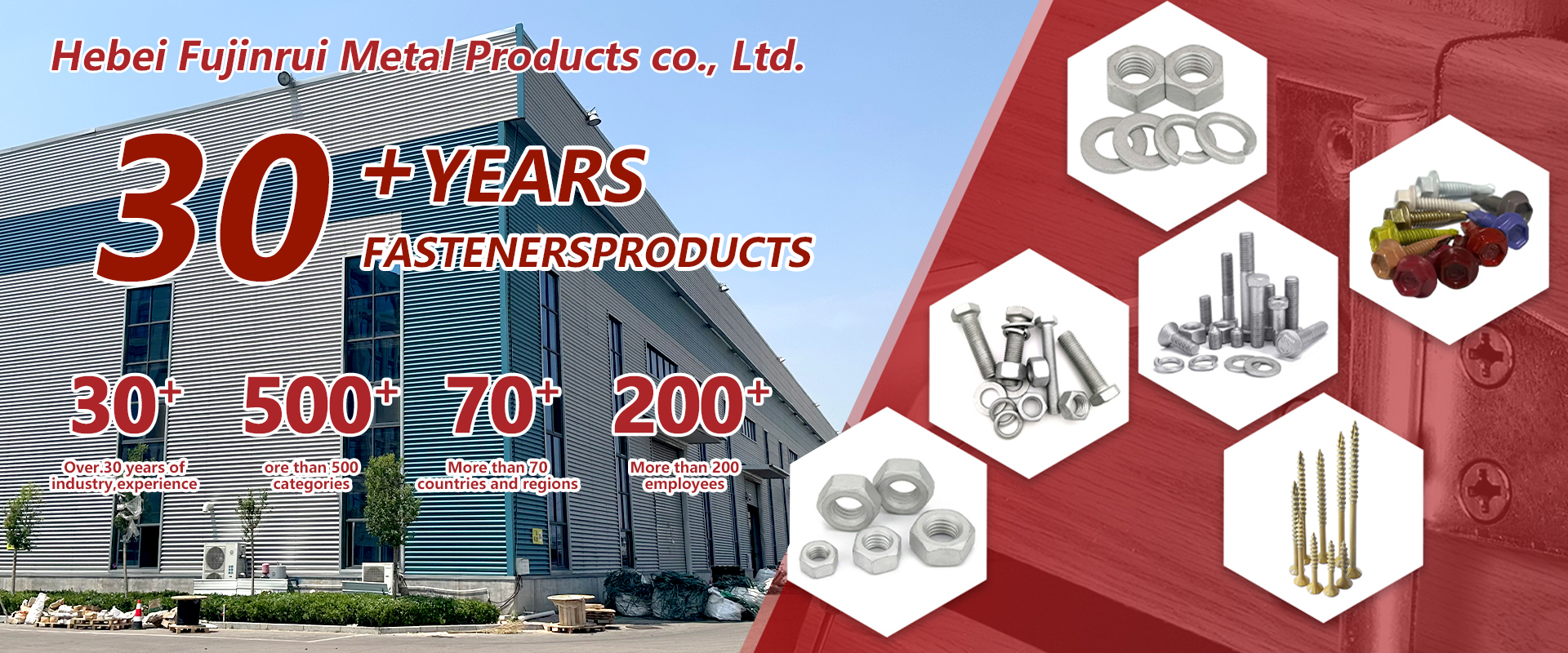
Founded in 2004, Hebei Fujinrui Metal Products Co., Ltd. has established itself as a trusted name in the global fastener industry. Located in Handan City, Hebei Province, our 10,000-square-meter facility is equipped with state-of-the-art forging and machining equipment. With a team of over 200 skilled professionals, we integrate fastener production with advanced metal surface corrosion protection, ensuring every product meets stringent international standards.
Two Decades of Industry Expertise
With more than 20 years of experience, we understand the nuances of B2B fastener supply. Our mature production technology team oversees every stage, from raw material selection to final quality inspection. We do not just manufacture parts; we engineer solutions that enhance the safety and efficiency of our clients’ operations.
Comprehensive Product Range
While we specialize in high-quality Eye Nuts (DIN 582 & JIS), our capabilities extend to a wide array of fasteners including Self Drilling Screws, hexagonal bolts and nuts, flange bolts and nuts, and flat and spring washers. We produce according to American (ANSI/ASTM), German (DIN), and National (GB) standards, ensuring versatility for global exports.
Global Reach and Reliable Supply
We export consistently to Europe, America, the Middle East, and other regions. Our commitment to high-quality products and competitive pricing has made us a preferred partner for distributors, construction firms, and manufacturing enterprises worldwide. Whether you need a small batch for a prototype or bulk wholesale for a major infrastructure project, we guarantee year-round availability and timely delivery.
Frequently Asked Questions (FAQ)
What is the difference between an eye nut and an eye bolt?
An eye nut has internal threads and screws onto a bolt or stud, whereas an eye bolt has external threads and screws into a tapped hole or through a clearance hole with a nut. Eye nuts are often preferred when the mounting surface already has a protruding stud.
Can DIN 582 eye nuts be used for overhead lifting?
Yes, DIN 582 eye nuts are specifically designed for lifting applications. However, they must be used within their rated working load limits and paired with compatible, high-strength threaded rods. Always adhere to local safety regulations regarding overhead lifting.
What is the minimum order quantity (MOQ) for wholesale eye nuts?
At Hebei Fujinrui, we offer flexible MOQs to accommodate different business needs. For standard sizes, we can often ship from stock. For custom specifications or large-scale wholesale orders, please contact our sales team for specific details tailored to your project volume.
Do you provide certification for your eye nuts?
Yes, we provide comprehensive documentation including Material Test Reports (MTRs), Certificates of Conformity, and mill certificates upon request. This ensures full traceability and compliance with EEAT principles for industrial procurement.
How does forgning improve the quality of eye nuts?
Forging aligns the metal’s grain structure, eliminating internal voids and increasing density. This results in higher tensile strength, better fatigue resistance, and improved reliability under dynamic loads compared to cast or machined alternatives.
Conclusion: Secure Your Supply Chain with Premium Eye Nuts
Choosing the right Eye Nut Manufacturer is a strategic decision that impacts the safety, efficiency, and cost-effectiveness of your projects. Whether you require DIN 582 standards for European markets or JIS specifications for Asian infrastructure, quality cannot be compromised. Hebei Fujinrui Metal Products Co., Ltd. combines two decades of expertise, advanced forging technology, and rigorous quality control to deliver fasteners that perform under pressure.
Our integrated approach to production and surface protection ensures that every eye nut we ship offers superior corrosion resistance and load-bearing capacity. From construction rigging to精密 machinery assembly, our products are engineered to meet the highest global standards.
Ready to optimize your fastener procurement?
Contact Hebei Fujinrui Metal Products Co., Ltd. today for competitive wholesale pricing, custom specifications, and reliable global shipping. Let our experienced team support your next project with high-quality, certified eye nuts.