- English
- Chinese
- French
- German
- Portuguese
- Spanish
- Russian
- Japanese
- Korean
- Arabic
- Irish
- Greek
- Turkish
- Italian
- Danish
- Romanian
- Indonesian
- Czech
- Afrikaans
- Swedish
- Polish
- Basque
- Catalan
- Esperanto
- Hindi
- Lao
- Albanian
- Amharic
- Armenian
- Azerbaijani
- Belarusian
- Bengali
- Bosnian
- Bulgarian
- Cebuano
- Chichewa
- Corsican
- Croatian
- Dutch
- Estonian
- Filipino
- Finnish
- Frisian
- Galician
- Georgian
- Gujarati
- Hausa
- Hawaiian
- Hebrew
- Hmong
- Hungarian
- Icelandic
- Igbo
- Javanese
- Kannada
- Kazakh
- Khmer
- Kurdish
- Kyrgyz
- Latin
- Latvian
- Lithuanian
- Luxembou..
- Macedonian
- Malagasy
- Malay
- Malayalam
- Maltese
- Maori
- Marathi
- Mongolian
- Burmese
- Nepali
- Norwegian
- Pashto
- Persian
- Punjabi
- Serbian
- Sesotho
- Sinhala
- Slovak
- Slovenian
- Somali
- Samoan
- Scots Gaelic
- Shona
- Sindhi
- Sundanese
- Swahili
- Tajik
- Tamil
- Telugu
- Thai
- Ukrainian
- Urdu
- Uzbek
- Vietnamese
- Welsh
- Xhosa
- Yiddish
- Yoruba
- Zulu
- Kinyarwanda
- Tatar
- Oriya
- Turkmen
- Uyghur

Dacromet Hexagonal Bolts | Technical Overview
2026-08-28
содержание
1. Introduction
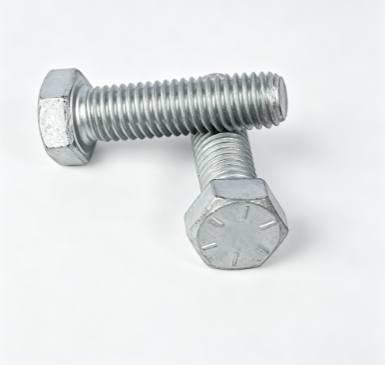
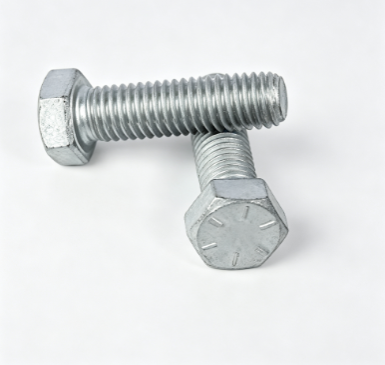
Hexagonal bolts, commonly known as hex bolts, are among the most widely used fasteners in engineering and construction. When enhanced with Dacromet coating technology, these bolts deliver exceptional corrosion resistance, mechanical integrity, and long-term reliability even in the harshest environments. This article provides a detailed overview of Dacromet hexagonal bolts, covering their composition, advantages, manufacturing process, technical specifications, and industrial applications.
Dacromet is a proprietary zinc-flake coating system originally developed for the automotive industry. It consists of zinc and aluminum flakes bonded by an inorganic chromate matrix. Unlike traditional electroplating or hot-dip galvanizing, the Dacromet process is non-electrolytic, resulting in a thin yet highly effective protective layer that does not induce hydrogen embrittlement—a critical advantage for high-strength fasteners.
What is Dacromet Coating?
Dacromet (also referred to as zinc-flake coating) is a water-based, inorganic coating formulated from zinc powder, aluminum powder, and chromate binders. Applied via a dip-spin or spray process followed by high-temperature curing (approximately 300°C), the coating forms a multi-layered barrier that provides cathodic protection, barrier protection, and self-healing characteristics.
Typical dry-film thickness ranges from 4 to 12 micrometers, far thinner than conventional hot-dip galvanizing (50–80 μm). Despite its thin profile, Dacromet-coated surfaces routinely withstand more than 1,000 hours of neutral salt-spray testing without the appearance of red rust.
2. Key Advantages of Dacromet Hex Bolts
Dacromet hexagonal bolts offer a unique combination of properties that outperform many traditional surface treatments:
- Superior Corrosion Resistance: Salt-spray performance exceeds 1,000–1,200 hours (ISO 9227 / ASTM B117), approximately 7–10 times better than standard electro-galvanizing.
- No Hydrogen Embrittlement: The non-electrolytic process eliminates hydrogen absorption, making Dacromet ideal for high-tensile bolts (Grade 8.8, 10.9, 12.9 and ASTM A490).
- High-Temperature Stability: Continuous service temperature up to 300°C without degradation of the protective film—far superior to conventional zinc coatings.
- Excellent Thread Fit & Dimensional Stability: Thin coating preserves thread geometry and allows smooth assembly with standard nuts.
- Good Paintability & Recoatability: Strong adhesion to organic topcoats enables further aesthetic or functional finishing.
- Bimetallic Compatibility: Performs well in contact with aluminum and other dissimilar metals, reducing galvanic corrosion risk.
Detailed Comparison Table
| Performance Indicator | Dacromet | Electro-Galvanizing | Hot-Dip Galvanizing |
| Coating Thickness | 4–12 μm | 5–15 μm | 50–80 μm |
| Salt Spray (no red rust) | ≥ 1,000–1,200 h | 100–300 h | 500–800 h |
| Hydrogen Embrittlement | None | High risk | Medium risk |
| Heat Resistance | Up to 300°C | ≤ 100°C | ≤ 200°C |
| Thread Interference | Minimal | Low | Significant |
3. Manufacturing Process
The Dacromet coating process for hexagonal bolts is a carefully controlled sequence that ensures uniform coverage and maximum performance:
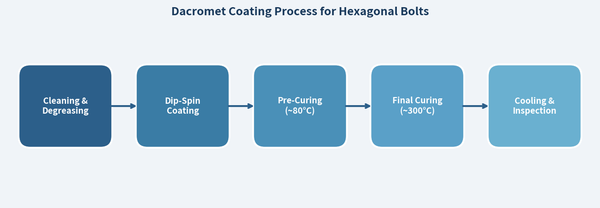
- Surface Preparation: Bolts are thoroughly cleaned and degreased to remove oils, oxides, and contaminants. No acid pickling is required, further reducing hydrogen risk.
- Dip-Spin Application: Parts are immersed in the aqueous Dacromet suspension and then spun at controlled speed to achieve uniform film thickness and remove excess coating.
- Pre-Curing & Final Curing: A low-temperature pre-bake evaporates water, followed by high-temperature sintering (~300°C) that fuses the zinc-aluminum flakes into a dense, adherent coating.
- Quality Inspection: Coating thickness, adhesion (cross-cut test), appearance, and salt-spray sampling are performed to guarantee batch consistency.
4. Technical Specifications & Standards
Dacromet hexagonal bolts are manufactured to a wide range of international standards and are available in multiple property classes.
| Parameter | Typical Values / Standards |
| Property Classes | Metric: 8.8, 10.9, 12.9 | Imperial: SAE Grade 5, Grade 8 | ASTM A325 / A490 |
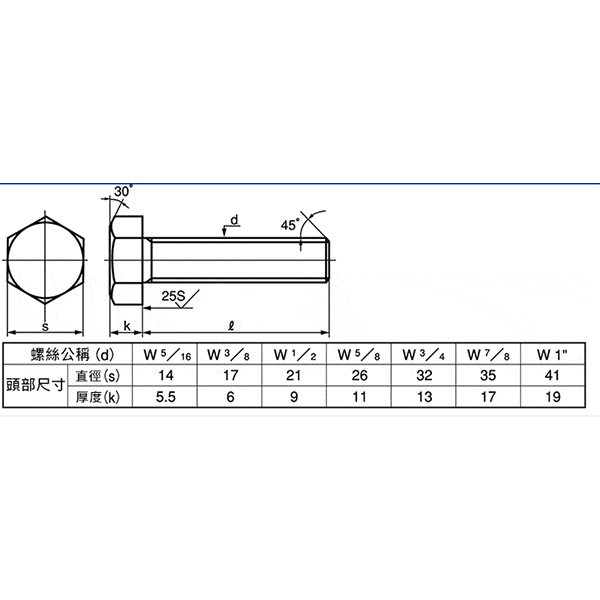
| Size Range | M5 – M64 (metric) | 1/4″ – 2-1/2″ (imperial) |
| Coating Standards | ASTM F1136 / F1136M, ISO 10683, EN ISO 10683, IFI-144 |
| Common Grades of Coating | Dacromet 320 (standard), Dacromet 500 (higher thickness / performance) |
| Friction Coefficient (typical) | 0.12 – 0.18 (with or without topcoat / lubricant) |
| Dimensional Standards | DIN 931 / 933, ISO 4014 / 4017, ASME B18.2.1, GB/T 5782 / 5783 |
5. Industrial Applications
Thanks to their outstanding combination of strength and corrosion resistance, Dacromet hexagonal bolts are specified across numerous demanding sectors:
| Industry | Typical Applications | Key Requirements Met |
| Automotive | Chassis, suspension, brake systems, engine components | Vibration resistance, thermal stability, long service life |
| Construction & Infrastructure | Steel structures, bridges, transmission towers, façade systems | High tensile strength, outdoor corrosion protection |
| Marine & Offshore | Shipbuilding, offshore platforms, port equipment | Salt-spray & humidity resistance |
| Wind Energy | Turbine towers, nacelle assemblies, foundation bolts | Long maintenance intervals, coastal exposure |
| Railway & Heavy Machinery | Track components, rolling stock, industrial equipment | Fatigue strength, chemical resistance |
6. Conclusion
Dacromet hexagonal bolts represent a mature, high-performance fastening solution that bridges the gap between conventional zinc coatings and more expensive alternatives such as stainless steel or specialized alloy systems. Their thin-film technology delivers outstanding corrosion protection, eliminates hydrogen embrittlement concerns, maintains precise dimensional tolerances, and withstands elevated temperatures—qualities that make them indispensable in modern engineering practice.
As industries continue to demand longer service life, reduced maintenance, and higher reliability under aggressive environmental conditions, the adoption of Dacromet-coated fasteners is expected to expand further. By selecting the appropriate grade, size, and coating specification, designers and procurement professionals can achieve both technical excellence and cost-effective performance.
For project-specific recommendations or technical data sheets, consult qualified fastener suppliers and coating specialists.