- English
- Chinese
- French
- German
- Portuguese
- Spanish
- Russian
- Japanese
- Korean
- Arabic
- Irish
- Greek
- Turkish
- Italian
- Danish
- Romanian
- Indonesian
- Czech
- Afrikaans
- Swedish
- Polish
- Basque
- Catalan
- Esperanto
- Hindi
- Lao
- Albanian
- Amharic
- Armenian
- Azerbaijani
- Belarusian
- Bengali
- Bosnian
- Bulgarian
- Cebuano
- Chichewa
- Corsican
- Croatian
- Dutch
- Estonian
- Filipino
- Finnish
- Frisian
- Galician
- Georgian
- Gujarati
- Haitian
- Hausa
- Hawaiian
- Hebrew
- Hmong
- Hungarian
- Icelandic
- Igbo
- Javanese
- Kannada
- Kazakh
- Khmer
- Kurdish
- Kyrgyz
- Latin
- Latvian
- Lithuanian
- Luxembou..
- Macedonian
- Malagasy
- Malay
- Malayalam
- Maltese
- Maori
- Marathi
- Mongolian
- Burmese
- Nepali
- Norwegian
- Pashto
- Persian
- Punjabi
- Serbian
- Sesotho
- Sinhala
- Slovak
- Slovenian
- Somali
- Scots Gaelic
- Shona
- Sindhi
- Sundanese
- Swahili
- Tajik
- Tamil
- Telugu
- Thai
- Ukrainian
- Urdu
- Uzbek
- Vietnamese
- Welsh
- Xhosa
- Yiddish
- Yoruba
- Zulu
- Kinyarwanda
- Tatar
- Oriya
- Turkmen
- Uyghur

Self-Tapping Screws vs. Self-Drilling Screws When to Use Which — A Practical Guide for Fastener Selection
2026-05-15
Introduction
Choosing the right fastener can make or break a project. Whether you are working with screws, bolts, or specialty fasteners, knowing when to use a self-tapping screw versus a self-drilling screw (drill screw) saves time, reduces costs, and ensures long-term structural integrity —
especially in corrosion-prone environments.
What Is a Self-Tapping Screw?
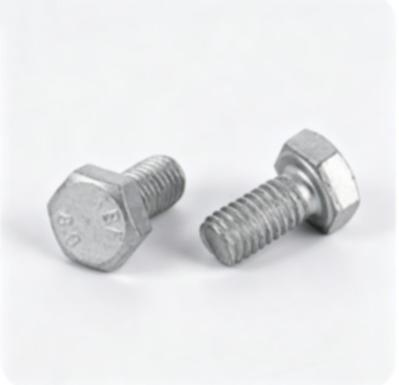
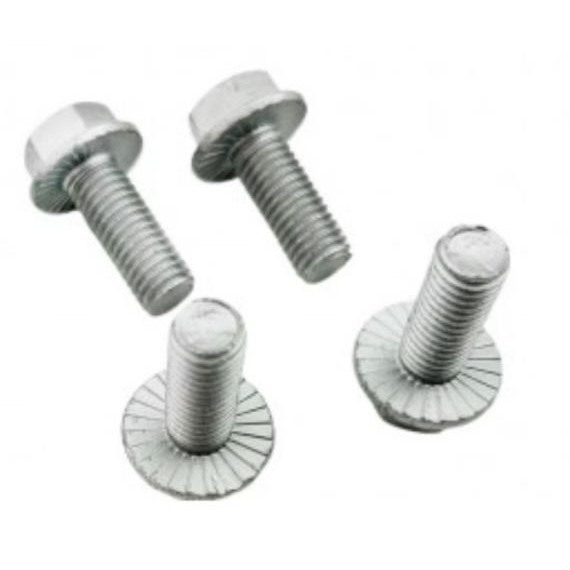
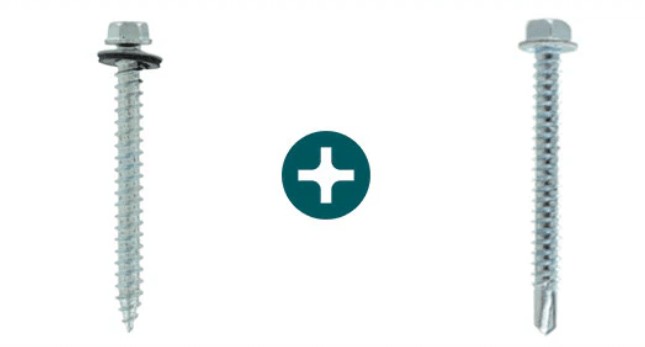
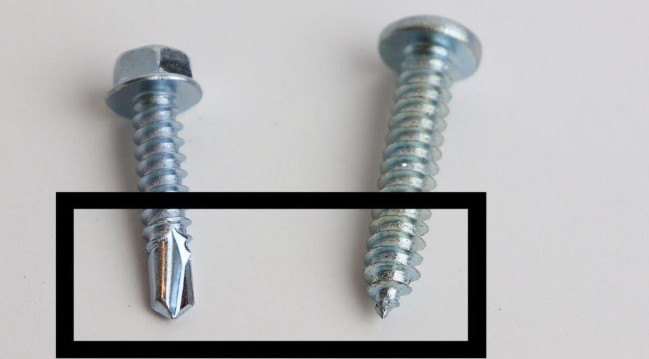
A self-tapping screw cuts its own thread as it is driven into a pre-drilled pilot hole. It does not drill through the material itself — it only taps the thread. Common types include machine screws, sheet metal screws, and hex bolts with tapping thread profiles.
When to Use Self-Tapping Screws
| Scenario | Why It Works |
| Attaching to pre-drilled metal, plastic, or wood | Creates clean, precise threads in existing holes |
| Light-gauge sheet metal assembly | Threads lock tightly without risk of over-drilling |
| Electrical panels & enclosures | Clean thread engagement, no debris from drilling |
| Dacromet / Zinc-coated applications | Anti-corrosion coating stays intact with controlled torque |
| Maintenance & repair work | Easy removal and re-engagement of threads |
KEY RULE If a pilot hole is already prepared, reach for a self-tapping screw.
What Is a Self-Drilling Screw (Drill Screw)?
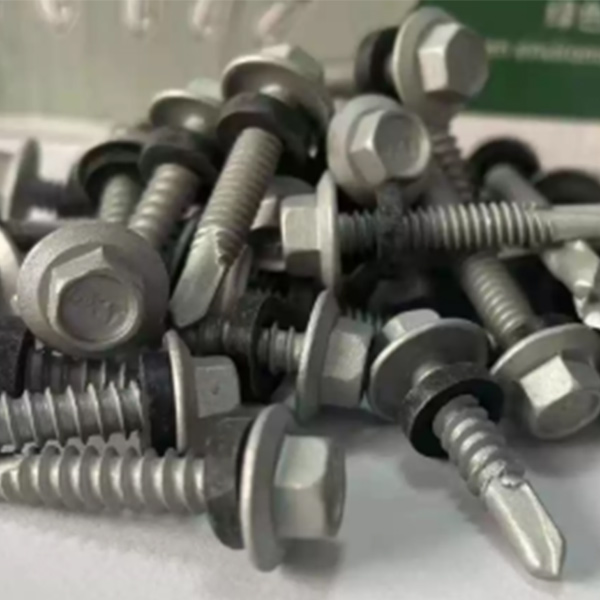
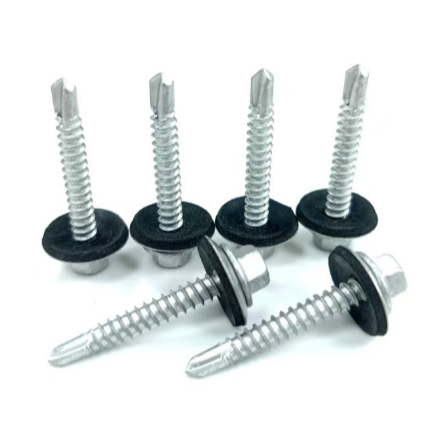
A self-drilling screw (also called a Tek screw or drill-point screw) has a drill-bit tip that bores through material and taps its own thread in a single step — no pilot hole needed. These fasteners are widely used in roofing, cladding, HVAC, and structural steel applications.
When to Use Self-Drilling Screws
| Scenario | Why It Works |
| Steel-to-steel fastening (no pre-drill needed) | Saves labor — drill, tap, and fasten in one pass |
| Roofing & cladding installation | Fast installation into purlins and metal decking |
| HVAC ductwork & ventilation | Quick assembly of thin-gauge steel components |
| Structural bolt alternatives in light frames | Replaces need for pilot drill in production lines |
| High-volume manufacturing | Reduces assembly time significantly |
KEY RULE If speed matters and no pilot hole exists, use a self-drilling screw.
Side-by-Side Comparison
| Feature | Self-Tapping Screw | Self-Drilling Screw |
| Pilot hole required | Yes | No |
| Drilling capability | No | Yes |
| Best material | Metal, plastic, wood | Steel, metal sheet |
| Installation speed | Moderate | Fast |
| Thread precision | High | High |
| Common coating | Zinc, Dacromet, Luxubao | Zinc, Phosphate |
| Typical use | Maintenance, repairs | Production, roofing |
Corrosion Protection: A Critical Factor
For outdoor, marine, or industrial environments, surface treatment is just as important as fastener type. At FUJINRUI, our anti-corrosion fasteners — including Dacromet-coated screws, Luxubao-coated hex bolts, and stainless steel hex socket cap screws — are engineered for extreme environments.
Whether you need a hex bolt, carriage bolt, machine screw, or specialty anti-corrosion fastener, the right coating protects your structure for years.
Key surface treatments available:
- Dacromet coating — superior salt-spray resistance, ideal for marine & outdoor bolts
- Ruspertcoating — enhanced corrosion protection for hex bolts & fasteners
- Zinc plating — cost-effective protection for general-use screws and bolts
- Stainless steel (304/316/410) — maximum corrosion resistance for critical applications
Quick Decision Guide
Need to fasten two pieces of steel quickly?
|
v
Is there a pre-drilled hole?
YES -> Use a Self-Tapping Screw
NO -> Use a Self-Drilling Screw
Conclusion
Both self-tapping screws and self-drilling screws are essential fasteners — but they serve different purposes. Match your fastener to your material and workflow, and always consider corrosion protection for long-term performance.
Need Help Choosing the Right Fastener?
Contact FUJINRUI — Your Anti-Corrosion Fastener Solution Partner