- Chinese
- French
- German
- Portuguese
- Spanish
- Russian
- Japanese
- Korean
- Arabic
- Irish
- Greek
- Turkish
- Italian
- Danish
- Romanian
- Indonesian
- Czech
- Afrikaans
- Swedish
- Polish
- Basque
- Catalan
- Esperanto
- Hindi
- Lao
- Albanian
- Amharic
- Armenian
- Azerbaijani
- Belarusian
- Bengali
- Bosnian
- Bulgarian
- Cebuano
- Chichewa
- Corsican
- Croatian
- Dutch
- Estonian
- Filipino
- Finnish
- Frisian
- Galician
- Georgian
- Gujarati
- Haitian
- Hausa
- Hawaiian
- Hebrew
- Hmong
- Hungarian
- Icelandic
- Igbo
- Javanese
- Kannada
- Kazakh
- Khmer
- Kurdish
- Kyrgyz
- Latin
- Latvian
- Lithuanian
- Luxembou..
- Macedonian
- Malagasy
- Malay
- Malayalam
- Maltese
- Maori
- Marathi
- Mongolian
- Burmese
- Nepali
- Norwegian
- Pashto
- Persian
- Punjabi
- Serbian
- Sesotho
- Sinhala
- Slovak
- Slovenian
- Somali
- Samoan
- Scots Gaelic
- Shona
- Sindhi
- Sundanese
- Swahili
- Tajik
- Tamil
- Telugu
- Thai
- Ukrainian
- Urdu
- Uzbek
- Vietnamese
- Welsh
- Xhosa
- Yiddish
- Yoruba
- Zulu
- Kinyarwanda
- Tatar
- Oriya
- Turkmen
- Uyghur

Wholesale Castle Nut Manufacturer: High Quality & Bulk Supply
2026-10-17
- What Is a Castle Nut and How Does It Work?
- Why Choose Wholesale Castle Nuts from Hebei Fujinrui?
- Castle Nut vs. Standard Hex Nut: A Technical Comparison
- Material Specifications and Standards
- Step-by-Step Installation Guide for Castle Nuts
- Common Applications of Castle Nuts
- Selection Guide: Choosing the Right Castle Nut
- Frequently Asked Questions (FAQ)
- Conclusion: Secure Your Supply Chain with Trusted Manufacturing
A castle nut is a specialized hexagonal fastener featuring six evenly spaced slots or notches on its top face, designed to align with a drilled hole in the bolt shank. This unique geometry allows for the insertion of a cotter pin, safety wire, or R-clip, mechanically locking the nut in place to prevent loosening under vibration and dynamic loads. As a premier wholesale castle nut manufacturer, Hebei Fujinrui Metal Products Co., Ltd. delivers high-precision, bulk-supply solutions compliant with ANSI, DIN, and ISO standards, ensuring critical safety in automotive, aerospace, and heavy machinery applications.
What Is a Castle Nut and How Does It Work?
In high-vibration environments, standard hex nuts often fail due to rotational loosening. A castle nut solves this engineering challenge through mechanical interlocking rather than relying solely on friction. The “castle” refers to the crenellated top of the nut, which resembles the battlements of a medieval fortress. These slots are precisely machined to align with a transverse hole drilled through the threaded bolt or stud.
Once the nut is tightened to the specified torque, the slots are aligned with the bolt hole. A cotter pin (also known as a split pin) is then inserted through the aligned holes and bent around the nut’s exterior. This physical barrier prevents the nut from rotating backward, securing the assembly even under extreme shock or continuous vibration. This mechanism is distinct from lock washers or chemical thread lockers, offering a visible and verifiable safety guarantee.
Key Components of a Castle Nut Assembly
- The Nut Body: Typically hexagonal, made from carbon steel, stainless steel, or alloy steel, providing the primary clamping force.
- The Slots: Usually six in number, machined with tight tolerances to ensure alignment with the bolt hole without over-tightening.
- The Cotter Pin: A semi-circular wire pin that passes through the nut and bolt, acting as the locking mechanism.
- The Bolt/Stud: Must be pre-drilled with a hole matching the diameter of the cotter pin, positioned correctly relative to the thread length.
Why Choose Wholesale Castle Nuts from Hebei Fujinrui?
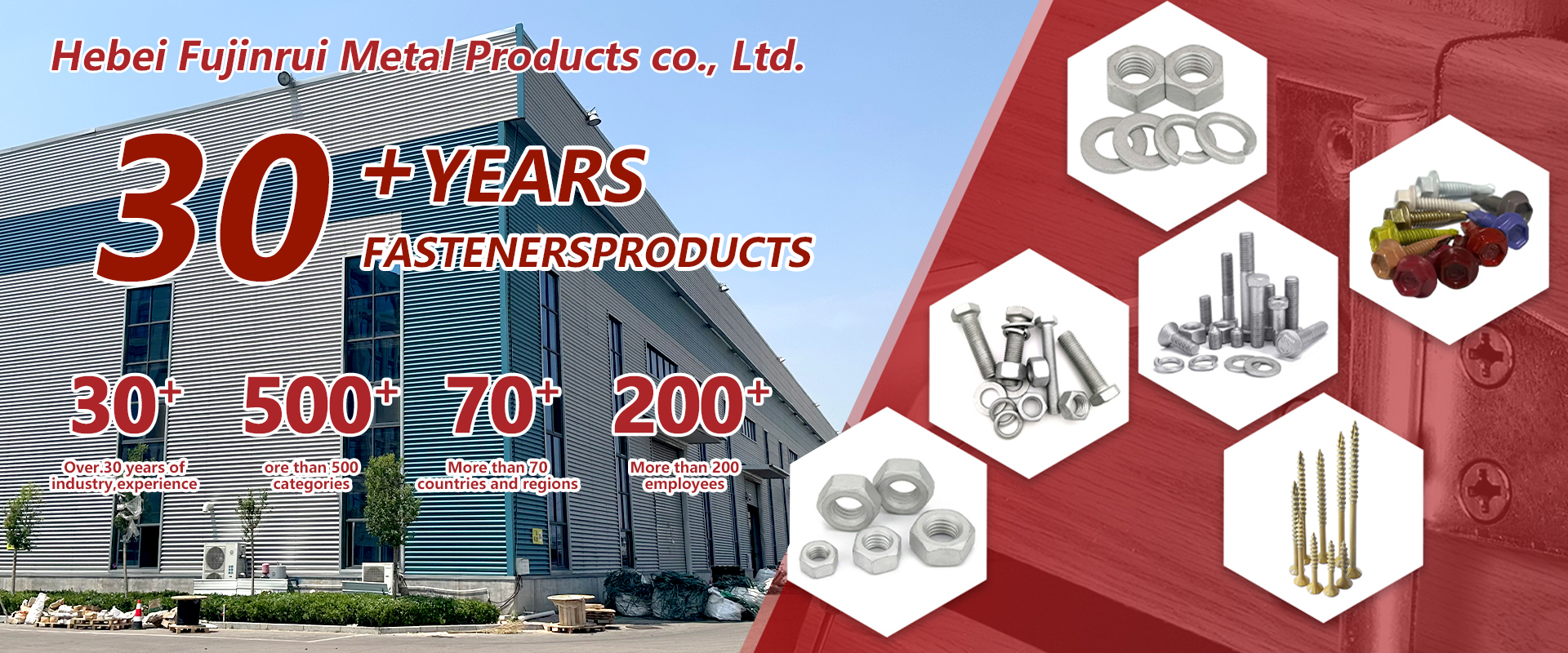
Sourcing fasteners for industrial applications requires more than just competitive pricing; it demands consistency, material integrity, and dimensional accuracy. Hebei Fujinrui Metal Products Co., Ltd., established in 2004 in Handan City, Hebei Province, has spent over two decades refining these exact capabilities. With a production facility spanning 10,000 square meters and a dedicated team of more than 200 professionals, we have evolved into an integrated enterprise specializing in fastener production and metal surface corrosion protection.
Our approach to manufacturing castle nuts combines mature production technology with rigorous quality control. Unlike generic suppliers, we integrate the production of self-drilling screws, hexagonal bolts and nuts, flange fasteners, and washers under one roof. This vertical integration allows us to maintain strict control over raw material sourcing, heat treatment, and threading processes. For buyers seeking bulk supply, our capacity ensures year-round availability of American (ANSI/ASME), German (DIN), and national (GB) standards, catering to diverse global markets including Europe, America, and the Middle East.
Engineering Expertise and Quality Assurance
The reliability of a castle nut depends heavily on the precision of its slots and the strength of its material. Our mature production technology team utilizes advanced cold-forming and CNC machining techniques to ensure that each slot is burr-free and uniformly spaced. Misaligned slots can lead to improper cotter pin installation, compromising safety. At Hebei Fujinrui, every batch undergoes dimensional inspection to verify slot alignment and thread tolerance compliance.
Furthermore, our expertise in metal surface corrosion protection adds significant value to our castle nuts. Whether you require zinc plating, hot-dip galvanizing, or black oxide finishes, our in-house treatment facilities ensure that the fasteners withstand harsh environmental conditions without sacrificing mechanical performance. This comprehensive capability makes us a trusted partner for B2B buyers who prioritize both quality and supply chain stability.
Castle Nut vs. Standard Hex Nut: A Technical Comparison
Understanding when to use a castle nut versus a standard hex nut is crucial for optimal mechanical design. While both serve to clamp components together, their locking mechanisms and application scenarios differ significantly.
| Feature | Castle Nut | Standard Hex Nut |
|---|---|---|
| Locking Mechanism | Mechanical (Cotter Pin/Wire) | Friction (Preload) |
| Vibration Resistance | Excellent (Positive Lock) | Moderate (Requires Lock Washer/Adhesive) |
| Bolt Requirement | Requires Drilled Hole | Standard Threaded Bolt |
| Installation Complexity | Higher (Alignment & Pin Insertion) | Low (Simple Torque Application) |
| Reusability | High (Pin Replacement Needed) | Moderate (Thread Wear Over Time) |
| Primary Applications | Wheel bearings, Steering linkages, Aerospace | General Construction, Static Loads |
| Visual Inspection | Easy (Pin Visibility Confirms Lock) | Difficult (Torque Check Required) |
This comparison highlights why castle nuts are indispensable in safety-critical systems. The ability to visually confirm that a cotter pin is in place provides an immediate safety check that friction-based locks cannot offer. For industries where failure is not an option, the slight increase in installation time is a worthwhile trade-off for enhanced security.
Material Specifications and Standards
Selecting the right material for your castle nuts is essential to match the environmental and load requirements of your application. Hebei Fujinrui produces castle nuts in various grades and materials, ensuring compatibility with international standards.
Common Materials
- Carbon Steel (Grade 5/8.8, Grade 8/10.9): Offers high tensile strength and is cost-effective for general industrial use. Typically coated with zinc or phosphate for corrosion resistance.
- Stainless Steel (304/316): Ideal for marine, chemical, and food processing environments where corrosion resistance is paramount. Grade 316 offers superior resistance to chlorides and acids.
- Alloy Steel: Used in high-stress applications such as aerospace and heavy automotive suspensions, often heat-treated for enhanced durability.
Industry Standards Compliance
Our manufacturing processes adhere to strict international specifications. Buyers can specify requirements based on:
- ANSI/ASME B18.2.2: The standard for square and hex nuts in the United States, defining dimensions and mechanical properties.
- DIN 935 / ISO 4035: European and international standards that govern the dimensions of slotted hexagon nuts.
- JIS B1181: Japanese Industrial Standard for slotted hexagon nuts, often required in Asian manufacturing supply chains.
By maintaining stock and production capabilities for these diverse standards, Hebei Fujinrui ensures that our clients receive products that seamlessly integrate into their existing assemblies, regardless of the regional origin of their other components.
Step-by-Step Installation Guide for Castle Nuts
Proper installation is critical to realizing the safety benefits of a castle nut. Incorrect alignment or improper pin bending can lead to premature failure. Follow these engineering best practices for secure assembly.
Preparation and Inspection
Before installation, inspect the bolt threads for damage and ensure the drilled hole is clean and free of burrs. Verify that the cotter pin diameter matches the hole size. A pin that is too loose will vibrate out, while one that is too tight may break during installation.
Installation Steps
- Position the Components: Place the washer (if required) and thread the castle nut onto the bolt by hand until it seats against the component.
- Tighten to Torque: Use a torque wrench to tighten the nut to the manufacturer’s specified value. Do not overtighten, as this may misalign the slots with the bolt hole.
- Align the Slots: If the slots do not align with the bolt hole, slightly loosen the nut (never tighten further to align) until the nearest slot lines up with the hole. The alignment should be within a reasonable tolerance; if significant adjustment is needed, check the bolt length or nut height specifications.
- Insert the Cotter Pin: Push the cotter pin through the aligned holes in the nut and bolt. Ensure the pin passes through completely.
- Secure the Pin: Bend the legs of the cotter pin around the outer faces of the nut. Use pliers to bend the legs firmly against the nut sides. Avoid bending the pins back over the top of the nut, as this can interfere with future maintenance or create stress points.
This method ensures a positive lock that can withstand significant vibrational forces. Regular maintenance checks should include verifying that the cotter pin remains intact and properly bent.
Common Applications of Castle Nuts
Castle nuts are ubiquitous in industries where safety and reliability are non-negotiable. Their ability to resist loosening makes them ideal for dynamic mechanical systems.
Automotive and Transportation
In automotive suspensions, castle nuts are frequently used to secure wheel bearings and tie rod ends. The constant vibration and shock loads from road surfaces make standard nuts prone to loosening. A castle nut with a cotter pin ensures that wheel assemblies remain secure, preventing catastrophic failures. Similarly, in steering linkages, they maintain precise alignment and connection integrity.
Aerospace and Aviation
The aerospace industry relies heavily on castle nuts for control surface linkages and engine mounts. In these applications, weight savings and absolute reliability are critical. Stainless steel or high-grade alloy castle nuts are often used, secured with safety wire instead of cotter pins in some high-performance contexts, following similar locking principles.
Heavy Machinery and Agriculture
Tractors, harvesters, and construction equipment operate in rough terrains with high vibration levels. Castle nuts secure pivot points, hydraulic cylinder mounts, and axle assemblies. The rugged environment demands fasteners that can endure dirt, moisture, and constant movement without failing. Hebei Fujinrui’s corrosion-resistant coatings are particularly beneficial in these agricultural and industrial settings.
Selection Guide: Choosing the Right Castle Nut
When sourcing castle nuts for your project, several factors must be considered to ensure optimal performance and cost-efficiency.
1. Load Requirements
Determine the tensile and shear loads the fastener will encounter. For high-load applications, select Grade 8 or Class 10.9 alloy steel nuts. For moderate loads, Grade 5 or Class 8.8 carbon steel is sufficient.
2. Environmental Conditions
Assess the exposure to moisture, chemicals, and temperature extremes. For outdoor or marine environments, stainless steel (316 grade) or hot-dip galvanized carbon steel is recommended to prevent rust and seizing.
3. Dimensional Compatibility
Ensure the nut’s thread pitch and diameter match the bolt exactly. Additionally, verify that the bolt’s drilled hole position allows for proper slot alignment at the correct torque. Using a bolt with an incorrectly positioned hole can render the castle nut ineffective.
4. Regulatory Compliance
For exports to specific regions, ensure the nuts meet local standards. Hebei Fujinrui provides certifications and test reports for ANSI, DIN, and ISO compliance, facilitating smoother customs clearance and quality acceptance in Europe, America, and the Middle East.
Frequently Asked Questions (FAQ)
Can I reuse a cotter pin?
It is generally recommended to replace cotter pins every time they are removed. Bending and unbending the metal weakens its structure, making it prone to fatigue and breakage. New pins are inexpensive and ensure maximum safety.
What happens if the castle nut slots don’t align with the bolt hole?
If alignment is off, slightly loosen the nut until the nearest slot aligns. Never tighten a nut beyond its specified torque just to align the slots, as this can overstress the bolt or strip the threads. If alignment is consistently poor, check if the bolt length or nut height is appropriate for the application.
Are castle nuts suitable for high-temperature applications?
Standard carbon steel castle nuts may lose strength at very high temperatures. For high-heat environments, such as near engines or exhaust systems, use alloy steel or stainless steel nuts designed for elevated temperature resistance. Always consult the material data sheet for specific temperature limits.
How does Hebei Fujinrui ensure batch consistency?
With over 20 years of experience and a staff of more than 200, our factory employs rigorous quality control protocols. From raw material inspection to final packaging, each step is monitored. Our integrated production and surface treatment capabilities allow us to maintain consistent quality across large bulk orders, ensuring that every nut meets the specified standards.
Conclusion: Secure Your Supply Chain with Trusted Manufacturing
Castle nuts play a pivotal role in maintaining the integrity of mechanical assemblies under stress. Their unique design offers a level of security that standard fasteners cannot match, making them essential for automotive, aerospace, and industrial applications. However, the effectiveness of a castle nut is directly tied to its manufacturing quality, material grade, and dimensional precision.
Hebei Fujinrui Metal Products Co., Ltd. stands as a reliable partner for businesses seeking high-quality, bulk supplies of castle nuts. With our established presence since 2004, extensive production capacity, and commitment to international standards, we provide the consistency and expertise needed to keep your operations running smoothly. Whether you require ANSI, DIN, or custom specifications, our team is equipped to deliver solutions that meet your exact technical and logistical needs.
For detailed product specifications, bulk pricing, or custom manufacturing inquiries, contact our sales team today. Let us help you secure your next project with fasteners you can trust.