- Chinese
- French
- German
- Portuguese
- Spanish
- Russian
- Japanese
- Korean
- Arabic
- Irish
- Greek
- Turkish
- Italian
- Danish
- Romanian
- Indonesian
- Czech
- Afrikaans
- Swedish
- Polish
- Basque
- Catalan
- Esperanto
- Hindi
- Lao
- Albanian
- Amharic
- Armenian
- Azerbaijani
- Belarusian
- Bengali
- Bosnian
- Bulgarian
- Cebuano
- Chichewa
- Corsican
- Croatian
- Dutch
- Estonian
- Filipino
- Finnish
- Frisian
- Galician
- Georgian
- Gujarati
- Haitian
- Hausa
- Hawaiian
- Hebrew
- Hmong
- Hungarian
- Icelandic
- Igbo
- Javanese
- Kannada
- Kazakh
- Khmer
- Kurdish
- Kyrgyz
- Latin
- Latvian
- Lithuanian
- Luxembou..
- Macedonian
- Malagasy
- Malay
- Malayalam
- Maltese
- Maori
- Marathi
- Mongolian
- Burmese
- Nepali
- Norwegian
- Pashto
- Persian
- Punjabi
- Serbian
- Sesotho
- Sinhala
- Slovak
- Slovenian
- Somali
- Samoan
- Scots Gaelic
- Shona
- Sindhi
- Sundanese
- Swahili
- Tajik
- Tamil
- Telugu
- Thai
- Ukrainian
- Urdu
- Uzbek
- Vietnamese
- Welsh
- Xhosa
- Yiddish
- Yoruba
- Zulu
- Kinyarwanda
- Tatar
- Oriya
- Turkmen
- Uyghur

Countersunk Washer Manufacturer | Wholesale & Custom Solutions
2026-10-19
- What Is a Countersunk Washer and How Does It Work?
- Key Types of Countersunk Washers by Material and Finish
- Technical Specifications and Standards Compliance
- Why Choose Hebei Fujinrui as Your Countersunk Washer Manufacturer?
- Common Applications of Countersunk Washers
- Installation Best Practices and Common Mistakes
- How to Select the Right Countersunk Washer for Your Project
- Frequently Asked Questions (FAQ)
- Conclusion: Secure Your Supply Chain with a Trusted Partner
A countersunk washer is a specialized fastener component designed with a conical recess that matches the angle of a countersunk screw head, typically 82° or 90°. Its primary function is to distribute load evenly while allowing the screw head to sit flush with or below the material surface. For industrial buyers seeking reliability, sourcing from an experienced countersunk washer manufacturer ensures precise dimensional tolerances and superior corrosion resistance. Hebei Fujinrui Metal Products Co., Ltd. leverages over two decades of production expertise to deliver high-quality washers that meet American, German, and national standards, supporting wholesale and custom requirements for global markets.
What Is a Countersunk Washer and How Does It Work?
In mechanical assembly, achieving a smooth, flat surface is often critical for both aesthetics and functionality. A standard flat washer cannot accommodate the angled head of a countersunk screw, leading to uneven pressure distribution or protrusion. This is where the countersunk washer becomes essential.
The geometry of a countersunk washer features a tapered inner diameter that mirrors the slope of the screw head. When tightened, the screw head seats perfectly into this cone. This design achieves two main engineering goals:
- Flush Surface Finish: It allows the fastener head to disappear into the material, reducing drag in moving parts or improving aerodynamic profiles in automotive and aerospace applications.
- Load Distribution: By increasing the bearing surface area under the screw head, it prevents the screw from pulling through soft materials like aluminum, plastic, or wood.
Unlike standard washers, the manufacturing precision required for the conical angle is higher. Even a slight deviation in the angle can cause the screw to bottom out incorrectly, leading to joint failure. This technical nuance highlights why partnering with a specialized manufacturer with mature production technology is vital for high-stakes industrial projects.
Key Types of Countersunk Washers by Material and Finish
Selecting the right material is crucial for durability and performance. The choice depends on the operating environment, the base material being fastened, and regulatory requirements. Below are the most common types available in the industry.
Stainless Steel Countersunk Washers
Stainless steel, particularly grades 304 and 316, is the preferred choice for environments prone to moisture and corrosion. Grade 316 offers superior resistance to chlorides and acids, making it ideal for marine applications or chemical processing plants. These washers maintain structural integrity under high stress and do not require additional plating, ensuring a clean, metallic finish.
Carbon Steel with Zinc Plating
For general industrial use where extreme corrosion resistance is not the primary concern, carbon steel provides excellent tensile strength at a competitive cost. Zinc plating (electro-galvanized) adds a protective layer against rust. This combination is widely used in construction, machinery assembly, and automotive interiors. Hebei Fujinrui Metal Products Co., Ltd. utilizes advanced surface corrosion protection technologies to ensure uniform coating thickness and adhesion, extending the service life of these components.
Brass and Copper Variants
Brass countersunk washers are chosen for their electrical conductivity and non-magnetic properties. They are commonly found in electrical enclosures and decorative hardware where aesthetic appeal matters. Copper variants offer similar benefits but with higher malleability, allowing for tighter seals in plumbing applications.
Non-Metallic Options (Nylon and Plastic)
In applications requiring electrical insulation or chemical inertness, nylon or PVC countersunk washers are effective. They prevent galvanic corrosion when joining dissimilar metals and provide a cushioning effect that absorbs vibration. However, they have lower load-bearing capacities compared to metal counterparts and should be used within specified temperature limits.
| Material Type | Corrosion Resistance | Strength | Typical Application |
|---|---|---|---|
| Stainless Steel (304/316) | High | High | Marine, Food Processing, Outdoor Structures |
| Carbon Steel (Zinc Plated) | Moderate | Very High | General Machinery, Construction, Automotive |
| Brass | Good | Medium | Electrical, Decorative, Plumbing |
| Nylon/Plastic | Excellent (Chemical) | Low | Electronics Insulation, Light Duty Assembly |
Technical Specifications and Standards Compliance
Global trade requires adherence to recognized standards to ensure interchangeability and safety. A reputable countersunk washer supplier must produce components that align with international specifications. Hebei Fujinrui Metal Products Co., Ltd. manufactures washers compliant with American (ANSI/ASME), German (DIN), and Chinese National (GB) standards.
Understanding Angle Standards: 82° vs. 90°
The most critical specification for a countersunk washer is the cone angle. Mismatched angles between the screw and washer result in point loading, which can deform the washer or strip the screw head.
- 82° Countersunk Washers: This is the standard for most imperial (UNC/UNF) countersunk screws used in the United States and many other regions. It is the default choice for general engineering tasks.
- 90° Countersunk Washers: Commonly associated with metric standards and specific European applications. Some aerospace and automotive sectors also utilize 90° or even 100° angles for specialized fasteners.
When requesting a quote, specifying the exact angle required for your application is essential. Our production team verifies these angles using precision optical comparators to ensure every batch meets the designated tolerance levels.
Dimensional Tolerances and Thickness
The outer diameter (OD) and inner diameter (ID) determine the load-bearing area and fitment. Thicker washers provide better load distribution but require deeper counterboring in the substrate. Standard thicknesses range from 1mm to 3mm, depending on the screw size. Custom thicknesses are available for heavy-duty applications where standard options may deform under extreme torque.
Why Choose Hebei Fujinrui as Your Countersunk Washer Manufacturer?
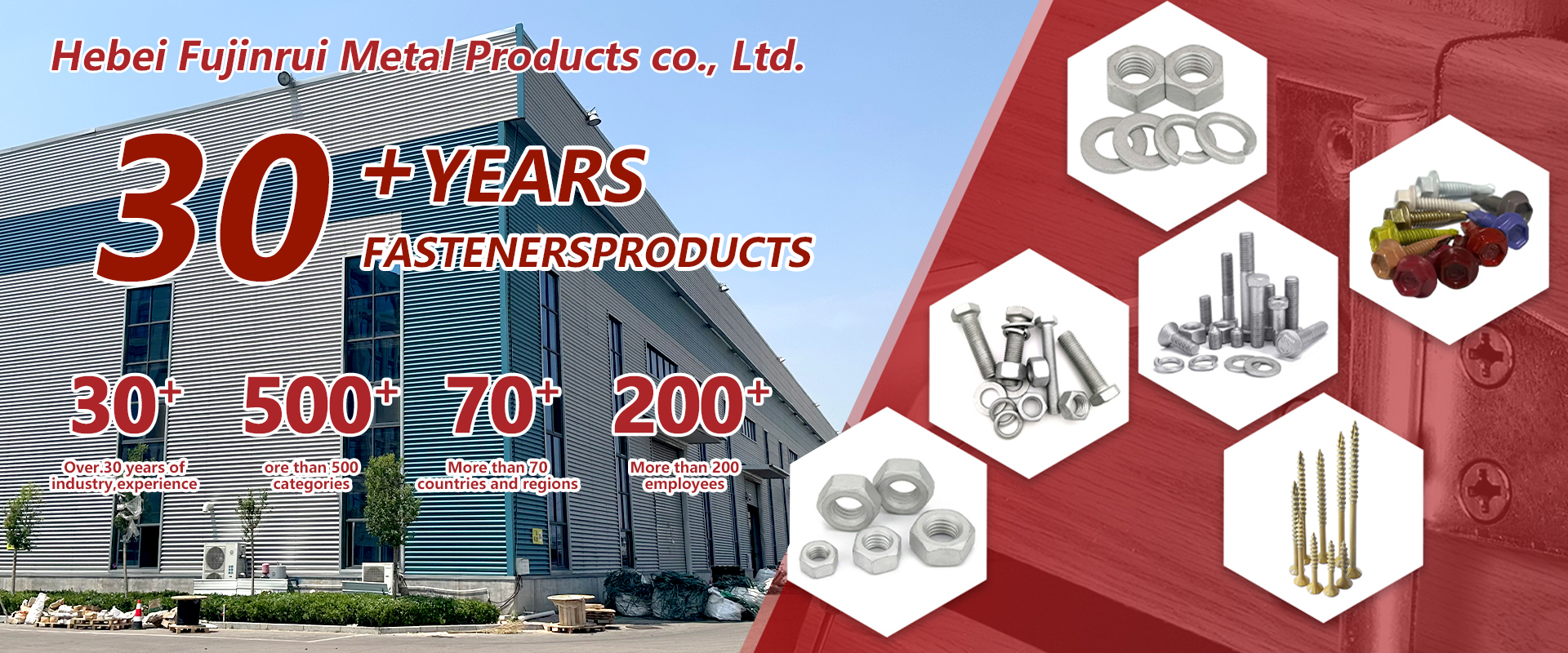
Founded in 2004 in Handan City, Hebei Province, Hebei Fujinrui Metal Products Co., Ltd. has evolved into a comprehensive enterprise integrating fastener production with advanced metal surface corrosion protection. With a facility spanning 10,000 square meters and a dedicated workforce of over 200 professionals, we have spent more than 20 years refining our craft in the fastener industry.
Our competitive advantage lies in our integrated approach. Unlike traders who outsource production, we control the entire manufacturing process—from raw material selection to final surface treatment. This vertical integration allows us to maintain strict quality control, offer competitive pricing, and ensure consistent lead times.
Advanced Production Capabilities
Our mature production technology team operates state-of-the-art cold heading and stamping equipment capable of producing high volumes of self-drilling screws, hexagonal bolts, flange nuts, and various washers, including flat, spring, and countersunk types. We handle annual exports to Europe, America, the Middle East, and other regions, demonstrating our ability to meet diverse international quality expectations.
Customization and Wholesale Solutions
We understand that off-the-shelf solutions do not fit every engineering challenge. Whether you need non-standard diameters, unique materials, or specific surface coatings like black oxide or hot-dip galvanizing, our team can tailor products to your specifications. Our wholesale model supports both large-scale industrial procurement and smaller, specialized batches for prototype development.
Common Applications of Countersunk Washers
The versatility of countersunk washers makes them indispensable across multiple industries. Understanding these applications helps engineers select the right fastening strategy.
Automotive and Aerospace
In vehicle body panels and aircraft fuselages, aerodynamic efficiency and smooth surfaces are paramount. Protruding screw heads create drag and turbulence. Countersunk washers allow fasteners to sit flush, maintaining the streamlined profile. Additionally, they help distribute vibrational loads, preventing fatigue cracks around the hole.
Electronics and Enclosures
Electronic housings often have limited internal space. A protruding screw head can interfere with circuit boards or wiring. Using countersunk screws with matching washers ensures a compact assembly. Furthermore, when using insulated washers, they prevent short circuits between the screw and conductive chassis components.
Furniture and Woodworking
In high-end furniture manufacturing, visible hardware is often undesirable. Countersunk washers enable screws to be buried beneath the wood surface, which can then be filled and sanded for a seamless finish. They also prevent the screw head from crushing softwood fibers during tightening.
Marine and Outdoor Structures
Decking, boat building, and outdoor signage require fasteners that resist weathering. Stainless steel countersunk washers paired with appropriate screws provide a robust solution that withstands rain, salt spray, and UV exposure without compromising structural integrity.
Installation Best Practices and Common Mistakes
Even the highest quality washer can fail if installed incorrectly. Following best practices ensures the longevity and reliability of the joint.
Step-by-Step Installation Guide
- Prepare the Hole: Drill a pilot hole slightly smaller than the screw’s major diameter. Then, use a countersink bit to create the conical recess. Ensure the angle of the bit matches the washer and screw (e.g., 82°).
- Insert the Washer: Place the countersunk washer into the recess. It should sit snugly without wobbling. If it sits too high, the recess is too shallow; if it sinks too deep, the recess is too wide.
- Align the Screw: Insert the countersunk screw through the washer. Ensure the threads engage correctly with the mating material or nut.
- Tighten Gradually: Use a torque-controlled driver to tighten the screw. Stop when the screw head is flush with the washer surface. Over-tightening can strip the threads or deform the washer, negating its load-distributing benefits.
Avoiding Common Errors
- Angle Mismatch: Never mix 82° screws with 90° washers. This creates a gap that reduces contact area and leads to premature loosening.
- Incorrect Hole Size: A hole that is too large allows the washer to spin or shift, causing misalignment. A hole that is too small prevents the screw head from seating fully.
- Ignoring Material Hardness: Using a hard steel washer on soft aluminum without proper care can gall the surface. Consider using softer washers or lubricants in such cases.
How to Select the Right Countersunk Washer for Your Project
Choosing the appropriate washer involves balancing several factors. Here is a checklist to guide your decision-making process:
- Load Requirements: Determine the shear and tensile loads the joint will endure. Higher loads require larger outer diameters and thicker materials.
- Environmental Conditions: Will the assembly be exposed to moisture, chemicals, or extreme temperatures? Select stainless steel for corrosive environments and high-temp alloys for heat-intensive applications.
- Substrate Material: Soft materials like plastic or wood benefit from wider washers to prevent pull-through. Hard metals may only need standard dimensions.
- Regulatory Compliance: Ensure the material and manufacturing process meet industry-specific certifications (e.g., RoHS for electronics, ASTM for construction).
If you are unsure about the specifications, consulting with a knowledgeable manufacturer like Hebei Fujinrui can provide valuable engineering insights. Our team can analyze your application needs and recommend the most cost-effective and durable solution.
Frequently Asked Questions (FAQ)
What is the difference between a countersunk washer and a flat washer?
A flat washer has parallel faces and is used with hex head or pan head screws. A countersunk washer has a conical recess designed specifically to mate with the angled head of a countersunk screw, allowing it to sit flush with the surface.
Can I use a countersunk washer with a standard hex bolt?
No. A standard hex bolt head will not seat properly in the conical recess of a countersunk washer. This mismatch leads to instability and potential failure. Always match the washer type to the screw head geometry.
Do you offer custom sizes for countersunk washers?
Yes, Hebei Fujinrui Metal Products Co., Ltd. specializes in custom solutions. We can manufacture washers with non-standard inner diameters, outer diameters, thicknesses, and angles to meet unique project requirements.
What is the typical lead time for wholesale orders?
Lead times vary based on order volume and customization levels. For standard items, we maintain year-round stock for quick dispatch. Custom orders typically require a production run, but our efficient manufacturing process ensures competitive turnaround times. Contact us for a specific timeline based on your quantity.
How do I prevent galvanic corrosion when using metal washers?
Galvanic corrosion occurs when two dissimilar metals are in contact in the presence of an electrolyte. To prevent this, use washers made of the same material as the screw and the substrate, or use insulated non-metallic washers. Stainless steel and brass are also less prone to severe galvanic reactions in many environments.
Conclusion: Secure Your Supply Chain with a Trusted Partner
In the realm of precision engineering, small components like countersunk washers play a disproportionately large role in structural integrity and aesthetic finish. Choosing the right manufacturer is not just about price; it is about securing a partner who understands the nuances of material science, dimensional accuracy, and global compliance.
Hebei Fujinrui Metal Products Co., Ltd. stands ready to support your business with high-quality, reliable fastening solutions. With over 20 years of experience, a robust production capacity, and a commitment to customer satisfaction, we are equipped to handle everything from standard wholesale orders to complex custom fabrication. Our products, exported globally to Europe, America, and the Middle East, reflect our dedication to excellence.
Whether you are designing a new automotive component, assembling electronic enclosures, or constructing marine infrastructure, our team is here to provide the technical support and product quality you need. Do not compromise on the foundations of your assembly.
Ready to optimize your fastening strategy? Contact Hebei Fujinrui Metal Products Co., Ltd. today to request a quote, discuss custom specifications, or learn more about our comprehensive range of fasteners and surface treatment services.