- English
- Chinese
- French
- German
- Portuguese
- Spanish
- Russian
- Japanese
- Korean
- Arabic
- Irish
- Greek
- Turkish
- Italian
- Danish
- Romanian
- Indonesian
- Czech
- Afrikaans
- Swedish
- Polish
- Basque
- Catalan
- Esperanto
- Hindi
- Lao
- Albanian
- Amharic
- Armenian
- Azerbaijani
- Belarusian
- Bengali
- Bosnian
- Bulgarian
- Cebuano
- Chichewa
- Corsican
- Croatian
- Dutch
- Estonian
- Filipino
- Finnish
- Frisian
- Galician
- Georgian
- Gujarati
- Hausa
- Hawaiian
- Hebrew
- Hmong
- Hungarian
- Icelandic
- Igbo
- Javanese
- Kannada
- Kazakh
- Khmer
- Kurdish
- Kyrgyz
- Latin
- Latvian
- Lithuanian
- Luxembou..
- Macedonian
- Malagasy
- Malay
- Malayalam
- Maltese
- Maori
- Marathi
- Mongolian
- Burmese
- Nepali
- Norwegian
- Pashto
- Persian
- Punjabi
- Serbian
- Sesotho
- Sinhala
- Slovak
- Slovenian
- Somali
- Samoan
- Scots Gaelic
- Shona
- Sindhi
- Sundanese
- Swahili
- Tajik
- Tamil
- Telugu
- Thai
- Ukrainian
- Urdu
- Uzbek
- Vietnamese
- Welsh
- Xhosa
- Yiddish
- Yoruba
- Zulu
- Kinyarwanda
- Tatar
- Oriya
- Turkmen
- Uyghur

Wholesale Slotted Machine Screws | Direct Factory Supplier
2026-10-15
- What Is a Slotted Machine Screw? Technical Definition and Core Function
- Why Choose Slotted Machine Screws? Advantages and Limitations
- Material Specifications and Corrosion Protection Standards
- Head Styles and Drive Types: A Selection Guide
- Standards and Dimensions: ANSI, DIN, and ISO
- Manufacturing Excellence at Hebei Fujinrui Metal Products
- Applications Across Industries
- How to Install Slotted Machine Screws Correctly
- Frequently Asked Questions (FAQ)
- Conclusion: Partnering for Quality and Reliability
Slotted machine screws are precision fasteners characterized by a single linear drive slot and a machine-threaded shank, designed for secure assembly in pre-tapped holes or with nuts. As a direct factory supplier since 2004, Hebei Fujinrui Metal Products Co., Ltd. manufactures these components to strict international standards (ANSI, DIN, ISO), offering superior corrosion resistance and dimensional accuracy for industrial, automotive, and electronics applications. Our wholesale supply chain ensures competitive pricing without compromising on the mechanical integrity required for high-load environments.
What Is a Slotted Machine Screw? Technical Definition and Core Function
A slotted machine screw is a type of externally threaded fastener intended for insertion into holes in assembled parts. Unlike self-tapping screws, machine screws require a pre-formed internal thread (a nut or a tapped hole) to function. The defining feature is the “slotted” head, which features a single recessed channel designed to be driven by a flat-blade screwdriver.
In engineering contexts, these fasteners are critical where simplicity and low-profile head designs are prioritized. While modern automation often favors Phillips or Hex drives for higher torque transmission, the slotted drive remains indispensable in specific sectors. These include delicate electronics, vintage machinery restoration, and applications where the aesthetic of a clean, linear line is preferred. The “machine” designation differentiates them from wood screws or sheet metal screws, indicating that the threads are uniform in diameter along the shank and are designed for mating with metal threads rather than cutting into soft materials.
Key Structural Components
- Head: Contains the drive slot. Common profiles include Flat Head (countersunk), Round Head, Pan Head, and Fillister Head.
- Shank: The unthreaded portion between the head and the start of the threads. In fully threaded machine screws, this may be minimal or non-existent.
- Threads: Precision-cut helical ridges that engage with the internal threads of a nut or tapped hole. Pitch and diameter adhere to standardized metrics (e.g., M6x1.0 or #10-32).
- Point: Typically flat or slightly chamfered to facilitate initial alignment into the tapped hole.
Why Choose Slotted Machine Screws? Advantages and Limitations
Selecting the right fastener involves balancing drive efficiency, cost, and application requirements. Slotted machine screws offer distinct benefits but also present specific operational constraints. Understanding these factors is essential for procurement engineers and product designers.
Primary Advantages
- Simplicity and Availability: The flat-head screwdriver is one of the most ubiquitous tools globally. This ensures that maintenance and assembly can be performed with minimal specialized equipment.
- Low Profile Aesthetics: Flat head slotted screws sit flush with the surface, providing a clean, uninterrupted finish ideal for visible panels in consumer appliances and architectural hardware.
- Cost-Effectiveness: The manufacturing process for slotted heads is straightforward, often resulting in lower unit costs compared to complex multi-axis drives like Torx or Hex.
- Historical Compatibility: For restoration projects involving legacy machinery or vintage automobiles, slotted screws are often the only authentic choice to maintain original specifications.
Operational Limitations
- Cam-Out Risk: The primary disadvantage is the tendency of the screwdriver to slip out of the slot under high torque (“cam-out”). This can damage the screw head or the surrounding material.
- Automation Challenges: Slotted screws are difficult to feed and drive in high-speed automated assembly lines compared to Phillips or Hex heads, which self-center more effectively.
- Torque Limitations: They are generally not suitable for high-torque applications where significant clamping force is required, as the driver may strip the slot before the desired tension is achieved.
Material Specifications and Corrosion Protection Standards
The performance of a slotted machine screw is heavily dependent on its material composition and surface treatment. At Hebei Fujinrui Metal Products Co., Ltd., we integrate fastener production with advanced metal surface corrosion protection, ensuring longevity even in harsh environments. With over 20 years of experience, our technical team selects materials based on the specific mechanical and environmental demands of the project.
Common Base Materials
| Material | Properties | Typical Applications |
|---|---|---|
| Carbon Steel (Grade 4.8, 8.8, 10.9) | High tensile strength, cost-effective, requires coating for corrosion resistance. | General machinery, construction, automotive frames. |
| Stainless Steel (A2-70 / 304, A4-80 / 316) | Excellent corrosion resistance, moderate strength, non-magnetic (304). | Marine environments, food processing, chemical plants, outdoor fixtures. |
| Brass | Natural corrosion resistance, non-magnetic, aesthetically pleasing, lower strength. | Electrical components, decorative hardware, marine fittings. |
| Aluminum | Lightweight, good conductivity, low strength. | Aerospace, electronics heat sinks, lightweight assemblies. |
Surface Treatments and Coatings
Raw carbon steel is susceptible to oxidation. To enhance durability, we apply various surface treatments. Zinc plating is the most common, offering a balance of cost and protection. For higher corrosion resistance, zinc-nickel or hot-dip galvanizing is recommended. In highly aggressive chemical environments, PTFE coatings or passivation of stainless steel provides an additional barrier. Our facility in Handan City utilizes mature technology to ensure uniform coating thickness, adhering to ASTM and ISO standards for salt spray testing.
Head Styles and Drive Types: A Selection Guide
The head style of a slotted machine screw determines how it sits relative to the workpiece and the amount of bearing surface it provides. Choosing the correct head style is crucial for both mechanical stability and aesthetic finish.
Flat Head (Countersunk)
Designed to sit flush with or below the surface of the material. This is ideal for applications where protruding heads would interfere with moving parts or create safety hazards. The conical underside requires a countersunk hole prepared at a specific angle (usually 82° or 90°).
Round Head
Features a domed top and a flat bearing surface. Round heads are used when the screw needs to clamp against a large surface area or when the hole is not countersunk. They are common in electrical connections and terminal blocks.
Pan Head
A hybrid between round and flat, pan heads have a slightly rounded top with vertical sides. They offer a larger bearing surface than round heads and are often used in sheet metal applications where a low profile is desired but countersinking is not feasible.
Fillister Head
Similar to a round head but taller and narrower. This design allows for a deeper drive slot, which can accommodate a wider screwdriver blade, potentially reducing cam-out issues in manual applications.
Standards and Dimensions: ANSI, DIN, and ISO
Global trade requires adherence to recognized standards to ensure interchangeability. Hebei Fujinrui Metal Products Co., Ltd. produces slotted machine screws compliant with American (ANSI/ASME), German (DIN), and International (ISO) standards. Understanding these differences is vital for cross-border procurement.
Key Standard Comparisons
- ANSI B18.6.3: Covers slotted flat head and round head machine screws in inch series. Common in the US and North American markets.
- DIN 84 / DIN 85: German standards for slotted flat head and round head machine screws. Widely accepted in Europe and known for tight tolerances.
- ISO 2009 / ISO 2010: International equivalents for flat head and raised counternsunk head screws. These standards harmonize dimensions for global compatibility.
When sourcing, it is critical to specify the standard required. While metric threads (M-series) are dominant globally, inch-based threads (UNC/UNF) remain standard in the United States. Mixing standards can lead to thread stripping and assembly failure. Our production lines are equipped to handle both metric and imperial specifications, ensuring precise thread pitch and diameter control.
Manufacturing Excellence at Hebei Fujinrui Metal Products
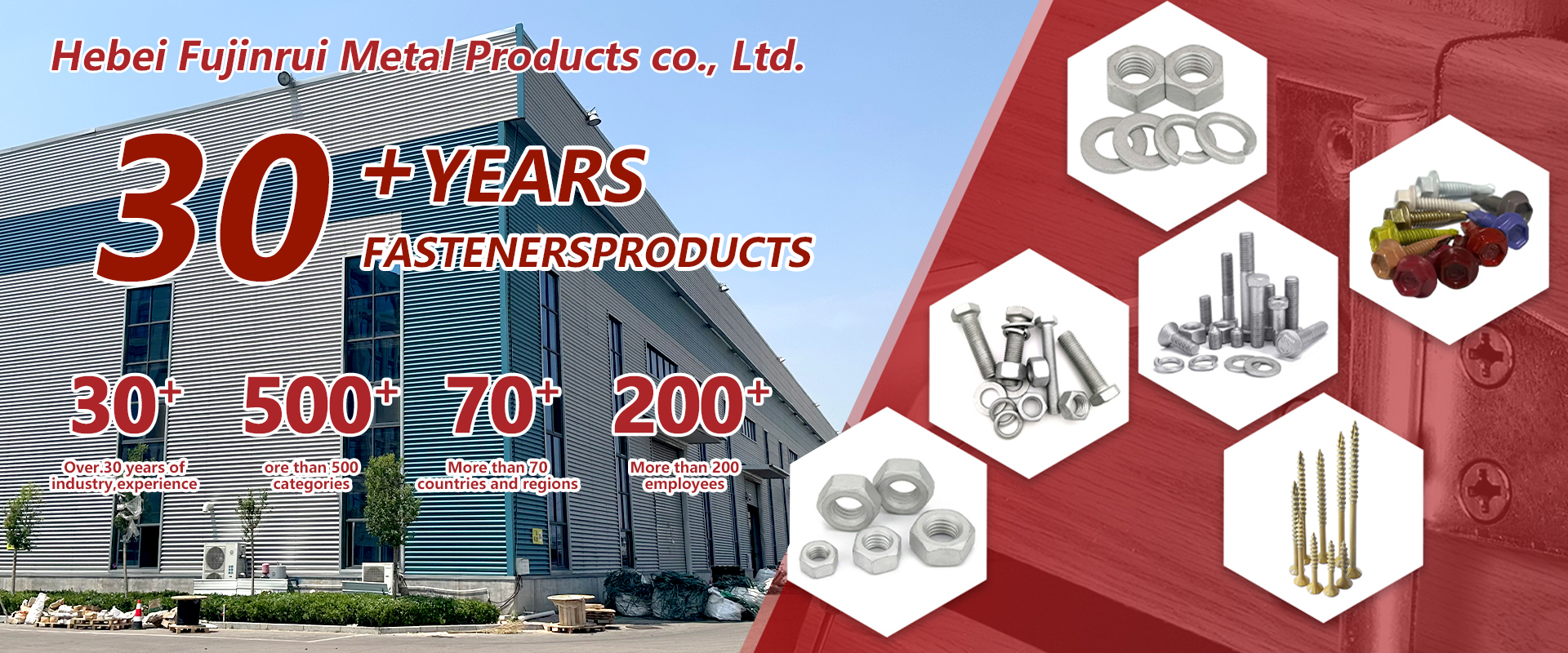
Established in 2004, Hebei Fujinrui Metal Products Co., Ltd. has evolved into a comprehensive enterprise integrating fastener production with metal surface corrosion protection. Located in Handan City, Hebei Province, our 10,000-square-meter facility houses advanced cold heading, threading, and heat treatment machinery. With a staff of more than 200 people, including a mature production technology team, we maintain rigorous quality control throughout the manufacturing process.
Our expertise extends beyond slotted machine screws. We produce a wide range of fasteners, including Self Drilling Screws, hexagonal bolts and nuts, flange bolts and nuts, and flat and spring washers. This diverse capability allows us to serve as a one-stop supplier for complex assembly needs. Whether your project requires American, German, or national standards, we ensure consistent availability year-round.
Quality is not just a claim; it is embedded in our workflow. From raw material inspection to final packaging, every batch undergoes strict dimensional and mechanical testing. Our exports to Europe, America, the Middle East, and other countries are a testament to our commitment to high-quality products and competitive pricing. We understand that in the B2B sector, reliability and consistency are paramount. Our 20+ years of experience enable us to anticipate supply chain challenges and deliver on time, every time.
Applications Across Industries
Slotted machine screws are versatile components found in a myriad of industries. Their usage is dictated by the need for secure, removable joints and, in many cases, aesthetic considerations.
Electronics and Electrical Equipment
In circuit boards and electrical enclosures, slotted screws are frequently used for terminal connections. The simple drive allows technicians to make quick adjustments during maintenance. Brass slotted screws are particularly popular here due to their excellent conductivity and corrosion resistance.
Automotive and Transportation
While high-torque areas use hex or Torx drives, slotted screws are still found in interior trim, dashboard assemblies, and lighting fixtures. Their low-profile heads ensure they do not interfere with passenger comfort or safety systems.
Consumer Appliances
White goods such as refrigerators, washing machines, and ovens often utilize slotted flat head screws for panel attachment. The flush finish contributes to the sleek design of modern appliances, while the material choice (often stainless steel) ensures resistance to humidity and cleaning agents.
Industrial Machinery
For light-duty machinery and access panels, slotted screws provide a secure yet easily removable fastening solution. Maintenance teams appreciate the ability to service equipment with basic tools, reducing downtime during repairs.
How to Install Slotted Machine Screws Correctly
Proper installation is critical to prevent damage to the screw head and ensure a secure joint. Due to the nature of the slotted drive, specific techniques should be employed to minimize cam-out.
- Select the Right Screwdriver: Use a flat-blade screwdriver that fits the slot width and thickness precisely. A blade that is too narrow will dig into the slot walls, while one that is too thick will not seat properly.
- Align Perpendicularly: Ensure the screwdriver is aligned perfectly perpendicular to the screw head. Angled insertion increases the risk of slipping and stripping the slot.
- Apply Downward Pressure: Apply firm axial pressure while turning. This keeps the blade engaged in the slot and reduces the likelihood of cam-out.
- Torque Control: Do not overtighten. Slotted heads are prone to stripping if excessive torque is applied. Use a torque-controlled screwdriver if possible, especially in automated or high-volume settings.
- Pre-Tapped Holes: Ensure the receiving hole is correctly tapped. Misaligned or damaged internal threads will cause the screw to bind, leading to head damage.
Frequently Asked Questions (FAQ)
What is the difference between a machine screw and a self-tapping screw?
A machine screw has uniform threads and requires a pre-tapped hole or a nut. It does not cut its own threads. A self-tapping screw has a pointed tip and sharper threads designed to cut into material (like sheet metal or plastic) to create its own mating thread.
Can slotted machine screws be used in automated assembly?
While possible, slotted screws are challenging for high-speed automation due to the difficulty in maintaining driver engagement. Vibratory bowl feeders can orient them, but driving them requires precise control. For high-volume automated assembly, Phillips, Pozidriv, or Hex drives are generally preferred for their self-centering properties.
How do I prevent the screwdriver from slipping out of the slot?
Use a screwdriver with a blade width that matches the slot exactly. Apply strong downward pressure while turning. If stripping is a recurring issue, consider switching to a Phillips or Hex drive screw for higher torque applications, or use a fillister head screw which allows for a wider blade.
What material is best for outdoor use?
For outdoor applications, Stainless Steel (304 or 316) is the best choice due to its inherent corrosion resistance. If using carbon steel, it must be heavily coated, such as with hot-dip galvanizing or a high-quality zinc-nickel plating, to withstand weather exposure.
Does Hebei Fujinrui offer custom sizes?
Yes, with our mature production technology and experienced team, we can accommodate custom specifications for length, diameter, and head style. We also offer customized surface treatments to meet specific environmental requirements. Contact our sales team with your drawings or samples for a quote.
Conclusion: Partnering for Quality and Reliability
Slotted machine screws remain a fundamental component in modern manufacturing and maintenance. Their simplicity, cost-effectiveness, and aesthetic versatility make them irreplaceable in many applications. However, the quality of the fastener directly impacts the integrity of the final product. Choosing a supplier with deep industry experience, robust quality control, and integrated production capabilities is essential.
Hebei Fujinrui Metal Products Co., Ltd. stands ready to support your supply chain with high-quality slotted machine screws and a comprehensive range of other fasteners. Our 20-year track record, combined with our state-of-the-art facility in Handan City, ensures that you receive products that meet international standards and your specific project needs. Whether you require standard DIN/ANSI parts or custom solutions, our team is equipped to deliver excellence.
For wholesalers, distributors, and industrial buyers seeking a reliable partner, we offer competitive pricing, consistent quality, and timely delivery. Explore our full range of fastener products and technical solutions today. Contact us to request a catalog, discuss your specific requirements, or schedule a factory audit. Let us demonstrate why we are the preferred choice for businesses across Europe, America, and the Middle East.