- English
- Chinese
- French
- German
- Portuguese
- Spanish
- Russian
- Japanese
- Korean
- Arabic
- Irish
- Greek
- Turkish
- Italian
- Danish
- Romanian
- Indonesian
- Czech
- Afrikaans
- Swedish
- Polish
- Basque
- Catalan
- Esperanto
- Hindi
- Lao
- Albanian
- Amharic
- Armenian
- Azerbaijani
- Belarusian
- Bengali
- Bosnian
- Bulgarian
- Cebuano
- Chichewa
- Corsican
- Croatian
- Dutch
- Estonian
- Filipino
- Finnish
- Frisian
- Galician
- Georgian
- Gujarati
- Hausa
- Hawaiian
- Hebrew
- Hmong
- Hungarian
- Icelandic
- Igbo
- Javanese
- Kannada
- Kazakh
- Khmer
- Kurdish
- Kyrgyz
- Latin
- Latvian
- Lithuanian
- Luxembou..
- Macedonian
- Malagasy
- Malay
- Malayalam
- Maltese
- Maori
- Marathi
- Mongolian
- Burmese
- Nepali
- Norwegian
- Pashto
- Persian
- Punjabi
- Serbian
- Sesotho
- Sinhala
- Slovak
- Slovenian
- Somali
- Samoan
- Scots Gaelic
- Shona
- Sindhi
- Sundanese
- Swahili
- Tajik
- Tamil
- Telugu
- Thai
- Ukrainian
- Urdu
- Uzbek
- Vietnamese
- Welsh
- Xhosa
- Yiddish
- Yoruba
- Zulu
- Kinyarwanda
- Tatar
- Oriya
- Turkmen
- Uyghur

Wholesale Connecting Nuts: Direct Factory Supply
2026-10-17
- What Are Connecting Nuts and How Do They Function?
- Types of Connecting Nuts for Industrial Applications
- Material Selection and Corrosion Protection
- Technical Specifications and Standards
- Why Choose Direct Factory Supply for Connecting Nuts?
- Application Scenarios for Connecting Nuts
- How to Select the Right Connecting Nut: A Buyer’s Guide
- Common Mistakes to Avoid When Using Connecting Nuts
- FAQ: Frequently Asked Questions About Connecting Nuts
- Partnering with Hebei Fujinrui Metal Products Co., Ltd.
- Conclusion: Secure Your Supply Chain with Premium Connecting Nuts
Connecting nuts are specialized fasteners designed to join two threaded rods, studs, or bolts end-to-end, creating a continuous linear assembly. Unlike standard hex nuts that secure components against a surface, connecting nuts—often referred to as coupling nuts or extension nuts—are typically longer and feature internal threading on both ends. This design allows for the seamless extension of structural elements in construction, furniture assembly, and industrial machinery. Sourcing these components directly from a manufacturer ensures strict adherence to dimensional tolerances, material integrity, and cost efficiency for bulk procurement.
What Are Connecting Nuts and How Do They Function?
A connecting nut serves a distinct mechanical purpose: bridging the gap between two male-threaded components. In engineering applications, it is often impossible to manufacture a single rod or bolt of the required length due to logistical constraints or material limitations. Connecting nuts solve this by allowing two shorter segments to be joined securely.
The functionality relies on precise internal threading. One end of the nut engages with the first rod, while the opposite end engages with the second. The length of the nut provides sufficient thread engagement depth to distribute shear and tensile loads effectively across the joint. This prevents stripping and ensures the structural integrity of the connection under stress.
Key Structural Characteristics
- Double-Ended Threading: Threads are cut into both ends, often meeting in the center or running through the entire length depending on the design.
- Extended Length: Compared to standard nuts, connecting nuts are significantly longer to accommodate the engagement of two separate fasteners.
- Hexagonal or Round Exterior: Most feature a hexagonal outer shape for wrench tightening, though round barrel nuts exist for concealed applications.
- Material Consistency: High-grade steel or stainless steel is used to match the strength class of the connected bolts.
Types of Connecting Nuts for Industrial Applications
Selecting the correct type of connecting nut is critical for application success. The variety stems from differences in thread direction, exterior shape, and intended load-bearing capacity. Understanding these distinctions helps procurement managers and engineers specify the right component for their projects.
Standard Hex Coupling Nuts
The most common variant, the hex coupling nut, features a standard hexagonal outer profile. This allows for easy tightening using standard wrenches or sockets. They are available in various finishes, including zinc-plated, hot-dip galvanized, and black oxide, to suit different environmental conditions. These are ideal for general construction, scaffolding, and machinery assembly where accessibility for tools is not an issue.
Round Barrel Connecting Nuts
Round barrel nuts, also known as sleeve nuts, have a cylindrical exterior. They are often used in furniture manufacturing and architectural applications where aesthetics matter. Since they lack flats for a wrench, they typically feature knurling or holes for spanner pins to facilitate installation. Their smooth exterior allows them to be concealed within pre-drilled holes, providing a clean finish.
Reduced Coupling Nuts
Reduced coupling nuts are designed to connect two threaded rods of different diameters. One end has a larger internal thread, while the other has a smaller one. This is particularly useful in retrofitting scenarios or when adapting legacy equipment to new components. Precision in thread pitch and angle is vital here to prevent cross-threading and ensure a secure fit.
Left-Hand and Right-Hand Thread Nuts
In specific mechanical applications, such as turnbuckles or tensioning systems, connecting nuts may feature left-hand threads on one end and right-hand threads on the other. Rotating the nut tightens or loosens the assembly simultaneously on both sides. This mechanism is essential for adjusting tension in cables, rods, or structural supports without rotating the connected elements themselves.
Material Selection and Corrosion Protection
The longevity and reliability of connecting nuts depend heavily on material selection and surface treatment. In industrial environments, exposure to moisture, chemicals, and temperature fluctuations can compromise fastener integrity. Therefore, choosing the right material and coating is as important as the mechanical design.
| Material Type | Key Properties | Typical Applications | Corrosion Resistance |
|---|---|---|---|
| Carbon Steel (Grade 8.8/10.9) | High tensile strength, cost-effective, durable | Structural steel, heavy machinery, construction | Moderate (requires coating) |
| Stainless Steel (A2/A4) | Excellent corrosion resistance, hygienic, moderate strength | Marine environments, food processing, chemical plants | High |
| Brass | Non-magnetic, conductive, aesthetically pleasing | Electrical fixtures, decorative hardware, plumbing | Good (against water) |
| Aluminum | Lightweight, non-corrosive, lower strength | Aerospace, automotive, lightweight structures | High (natural oxide layer) |
Surface Treatments for Enhanced Durability
For carbon steel connecting nuts, surface treatment is mandatory to prevent rust. Zinc plating offers a basic level of protection suitable for indoor use. Hot-dip galvanizing provides a thicker zinc layer, making it ideal for outdoor construction and harsh weather conditions. For extreme environments, such as offshore platforms, Dacromet or geometric coatings provide superior salt-spray resistance.
Hebei Fujinrui Metal Products Co., Ltd. integrates metal surface corrosion protection directly into its production line. With over 20 years of experience, the company ensures that every batch of connecting nuts undergoes rigorous quality control for coating thickness and adhesion, ensuring compliance with international standards like ASTM and DIN.
Technical Specifications and Standards
Global trade in fasteners requires adherence to standardized dimensions and mechanical properties. Connecting nuts are manufactured according to various national and international standards to ensure interoperability. Understanding these standards is crucial for sourcing compatible components.
Common Standards Overview
- DIN 6334: The German standard for hexagon long nuts. It specifies dimensions for heavy-duty hex nuts used for coupling. This is widely recognized in European and Asian markets.
- ANSI/ASME B18.2.2: The American standard for square and hex nuts. It covers dimensions and mechanical requirements for coupling nuts used in the US market.
- ISO 4033: The International Organization for Standardization guideline for hexagon thick nuts, which often serves as a reference for coupling nut designs.
- JIS B 1181: The Japanese Industrial Standard for hexagon long nuts, prevalent in Asian manufacturing sectors.
Thread Pitch and Tolerance
Thread pitch—the distance between threads—must match exactly between the connecting nut and the rods. Metric threads (e.g., M10x1.5) and Imperial threads (e.g., 1/4″-20 UNC) are not interchangeable. Using a metric nut on an imperial bolt will result in immediate failure. High-precision manufacturing ensures that thread tolerances fall within the 6H or 7H class, guaranteeing smooth assembly without excessive play or binding.
Why Choose Direct Factory Supply for Connecting Nuts?
Procuring connecting nuts directly from a manufacturer offers significant advantages over trading companies or distributors. For B2B buyers, especially in construction, manufacturing, and wholesale distribution, direct supply chains enhance profitability and project reliability.
Cost Efficiency and Price Competitiveness
Eliminating intermediaries reduces markup costs. Factories like Hebei Fujinrui Metal Products Co., Ltd. can offer competitive pricing because they control the entire production process, from raw material sourcing to final packaging. This cost advantage is particularly pronounced in large-volume orders, allowing buyers to improve their margins or offer more competitive bids to their own clients.
Quality Control and Customization
Direct manufacturers have full oversight of quality control. They can perform real-time inspections during machining and threading. Furthermore, factories are better equipped to handle customization requests. Whether it is a non-standard length, a specific material grade, or a unique coating requirement, a factory can adjust its production lines to meet these needs. Trading companies often lack this flexibility and must rely on third-party suppliers, leading to longer lead times and higher risks of error.
Consistent Supply Chain Stability
With a facility covering 10,000 square meters and a staff of over 200 people, established manufacturers maintain substantial inventory levels of raw materials and finished goods. This capacity ensures that large orders can be fulfilled promptly, even during peak demand periods. For projects with tight deadlines, such as infrastructure development or emergency repairs, this reliability is invaluable.
Application Scenarios for Connecting Nuts
Connecting nuts are versatile components used across diverse industries. Their ability to extend lengths and join components makes them indispensable in several key sectors.
Construction and Civil Engineering
In construction, connecting nuts are used to join anchor bolts, rebar, and structural studs. They allow for the creation of long tension rods used in bridge suspensions, building facades, and foundation anchoring. The high strength of Grade 8.8 or 10.9 steel ensures these connections can withstand significant static and dynamic loads.
Furniture Manufacturing
Modern flat-pack furniture often utilizes connecting nuts to assemble frames. Round barrel nuts are commonly embedded in wooden panels, allowing metal rods to screw in and hold pieces together securely. This method provides strong joints that can be disassembled if necessary, facilitating transport and assembly by the end-user.
Industrial Machinery and Automation
Machinery often requires precise alignment of shafts and rods. Connecting nuts allow for the adjustment of component positions during assembly. In automation equipment, they are used to link linear actuators and guide rods, ensuring smooth operation and accurate positioning.
Plumbing and Pipeline Systems
In plumbing, long nuts are used to connect pipes and fittings, especially in tight spaces where standard wrenches cannot rotate a full nut. They provide a leak-proof seal when used with appropriate gaskets or O-rings, making them essential for maintenance and repair work in complex piping networks.
How to Select the Right Connecting Nut: A Buyer’s Guide
Choosing the correct connecting nut involves evaluating several technical parameters. Making the wrong choice can lead to joint failure, safety hazards, and costly rework. Follow this guide to ensure optimal selection.
Step 1: Determine Thread Size and Pitch
Measure the diameter and pitch of the rods you intend to connect. Use a thread gauge for accuracy. Ensure the nut’s internal thread matches exactly. For metric systems, verify if it is coarse (standard) or fine pitch. For imperial systems, distinguish between UNC (coarse) and UNF (fine).
Step 2: Assess Load Requirements
Calculate the tensile and shear loads the joint will endure. For high-load applications, select high-strength carbon steel (Grade 8.8 or higher). For corrosive environments, prioritize stainless steel (A4/316) despite its slightly lower strength compared to hardened carbon steel.
Step 3: Evaluate Environmental Conditions
Consider the operating environment. Will the nut be exposed to moisture, chemicals, or extreme temperatures? Outdoor applications require hot-dip galvanizing or stainless steel. Indoor, dry environments may only require zinc plating or black oxide finishes.
Step 4: Check Dimensional Constraints
Ensure the length of the connecting nut provides sufficient thread engagement. A general rule of thumb is that the engagement length should be at least equal to the nominal diameter of the bolt. Verify that the outer diameter fits within the available space, especially in confined assemblies.
Common Mistakes to Avoid When Using Connecting Nuts
Even with high-quality products, improper usage can lead to failure. Awareness of common pitfalls helps ensure safe and effective installations.
- Cross-Threading: Forcing a nut onto a misaligned rod damages the threads. Always start threading by hand to ensure proper alignment before using tools.
- Insufficient Engagement: Using a nut that is too short for the load reduces the contact area, increasing the risk of stripping. Always adhere to minimum engagement depth guidelines.
- Mixing Materials: Combining stainless steel nuts with carbon steel bolts can lead to galvanic corrosion. Ensure material compatibility or use insulating washers.
- Over-Tightening: Excessive torque can stretch the threads or crack the nut, especially in brittle materials like cast iron or certain alloys. Use torque wrenches to apply specified force.
- Ignoring Locking Mechanisms: In vibrating environments, standard connecting nuts may loosen. Consider using nylon-insert lock nuts or applying thread-locking adhesives for added security.
FAQ: Frequently Asked Questions About Connecting Nuts
What is the difference between a connecting nut and a regular hex nut?
A regular hex nut is designed to clamp a component against a surface, featuring threading on only one side. A connecting nut is elongated and threaded on both ends, allowing it to join two male-threaded components end-to-end. Connecting nuts are generally longer and have higher thread engagement capacity.
Can connecting nuts be used for structural applications?
Yes, provided they meet the required strength grades (such as Grade 8.8 or 10.9) and are installed correctly. Structural connecting nuts must comply with relevant building codes and standards, such as ASTM or EN specifications, to ensure they can handle design loads.
How do I prevent connecting nuts from loosening due to vibration?
To prevent loosening, use locking mechanisms such as double-nutting (using two standard nuts tightened against each other), nylon-insert lock nuts, or chemical thread lockers. In high-vibration environments, mechanical locking devices like wire locking may also be employed.
What is the maximum length available for connecting nuts?
Standard lengths vary by manufacturer and diameter. However, custom lengths can be produced to meet specific project requirements. Hebei Fujinrui Metal Products Co., Ltd. offers customization services, allowing clients to specify exact lengths for specialized applications.
Are connecting nuts reusable?
Connecting nuts can be reused if the threads are not damaged during removal. However, repeated use can wear down the threads, reducing holding power. For critical applications, it is recommended to replace nuts after disassembly to ensure maximum safety and reliability.
Partnering with Hebei Fujinrui Metal Products Co., Ltd.
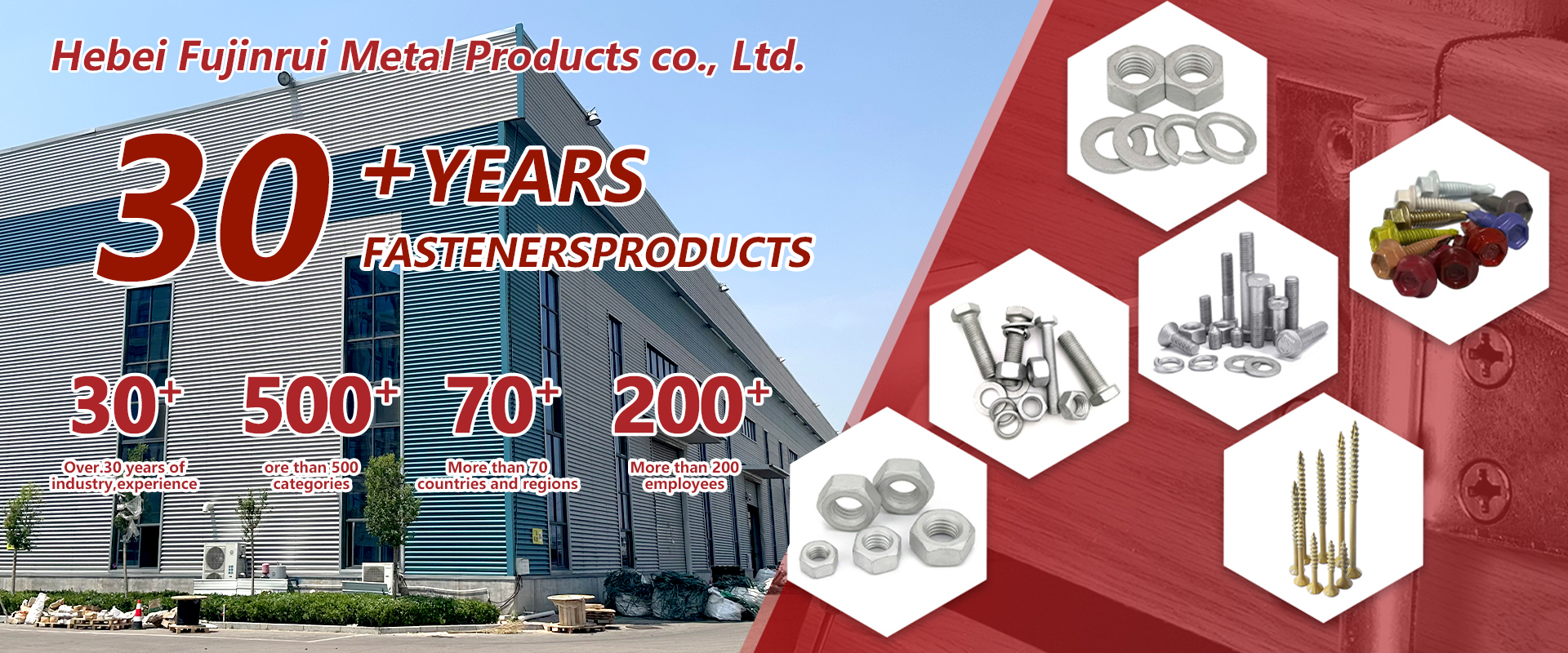
When sourcing wholesale connecting nuts, partnering with an experienced manufacturer is key to securing quality and reliability. Hebei Fujinrui Metal Products Co., Ltd., established in 2004, brings more than two decades of expertise to the fastener industry. Located in Handan City, Hebei Province, our 10,000-square-meter facility is equipped with advanced production technology and a skilled team of over 200 professionals.
We specialize in the production of a wide range of fasteners, including self-drilling screws, hexagonal bolts and nuts, flange bolts and nuts, and washers. Our product line adheres to American, German, and national standards, ensuring global compatibility. With integrated metal surface corrosion protection capabilities, we deliver products that withstand harsh environments, exporting successfully to Europe, America, the Middle East, and beyond.
Our commitment to high-quality products and competitive pricing makes us a preferred choice for B2B buyers seeking direct factory supply. We understand the nuances of international trade and the critical nature of supply chain consistency. By choosing Hebei Fujinrui, you gain a partner dedicated to supporting your project’s success with precision-engineered connecting nuts.
Conclusion: Secure Your Supply Chain with Premium Connecting Nuts
Connecting nuts are fundamental components in modern engineering and construction, enabling the flexible and robust assembly of structural systems. Whether for heavy-duty industrial machinery, elegant furniture design, or critical infrastructure projects, the quality of these fasteners directly impacts performance and safety.
By understanding the types, materials, and standards associated with connecting nuts, buyers can make informed decisions that optimize cost and reliability. Sourcing directly from a reputable manufacturer like Hebei Fujinrui Metal Products Co., Ltd. ensures access to premium products, customized solutions, and stable supply chains.
For businesses looking to enhance their procurement strategy, direct factory engagement offers unmatched value. Explore our comprehensive range of fasteners and discover how our expertise can support your next project.
Ready to place an order or need technical specifications? Contact our sales team today for a personalized quote and detailed product catalog. Let us provide the reliable connecting nuts your business demands.