- English
- Chinese
- French
- German
- Portuguese
- Spanish
- Russian
- Japanese
- Korean
- Arabic
- Irish
- Greek
- Turkish
- Italian
- Danish
- Romanian
- Indonesian
- Czech
- Afrikaans
- Swedish
- Polish
- Basque
- Catalan
- Esperanto
- Hindi
- Lao
- Albanian
- Amharic
- Armenian
- Azerbaijani
- Belarusian
- Bengali
- Bosnian
- Bulgarian
- Cebuano
- Chichewa
- Corsican
- Croatian
- Dutch
- Estonian
- Filipino
- Finnish
- Frisian
- Galician
- Georgian
- Gujarati
- Hausa
- Hawaiian
- Hebrew
- Hmong
- Hungarian
- Icelandic
- Igbo
- Javanese
- Kannada
- Kazakh
- Khmer
- Kurdish
- Kyrgyz
- Latin
- Latvian
- Lithuanian
- Luxembou..
- Macedonian
- Malagasy
- Malay
- Malayalam
- Maltese
- Maori
- Marathi
- Mongolian
- Burmese
- Nepali
- Norwegian
- Pashto
- Persian
- Punjabi
- Serbian
- Sesotho
- Sinhala
- Slovak
- Slovenian
- Somali
- Samoan
- Scots Gaelic
- Shona
- Sindhi
- Sundanese
- Swahili
- Tajik
- Tamil
- Telugu
- Thai
- Ukrainian
- Urdu
- Uzbek
- Vietnamese
- Welsh
- Xhosa
- Yiddish
- Yoruba
- Zulu
- Kinyarwanda
- Tatar
- Oriya
- Turkmen
- Uyghur

Weld Nut Manufacturer: Custom & Wholesale Supply
2026-10-18
- What Is a Weld Nut and How Does It Work?
- Common Types of Weld Nuts and Their Applications
- Material Specifications and Standards
- Manufacturing Excellence: The Hebei Fujinrui Advantage
- How to Choose the Right Weld Nut for Your Project
- Common Welding Issues and Troubleshooting
- Frequently Asked Questions (FAQ)
- Conclusion: Securing Your Supply Chain with Reliable Fasteners
A weld nut is a specialized fastener designed to be permanently affixed to a metal workpiece through welding, creating a robust internal thread where none previously existed. Unlike standard nuts that rely on external bolts for retention, weld nuts fuse directly to the base material, offering superior resistance to vibration and tampering. For industries requiring high-volume, precision-engineered components, selecting a reliable weld nut manufacturer is critical to ensuring structural integrity and assembly efficiency. This guide details the types, applications, and selection criteria for weld nuts, highlighting how custom manufacturing solutions can optimize your supply chain.
What Is a Weld Nut and How Does It Work?
A weld nut serves as a permanent threaded insert. The primary function is to provide a strong, durable thread in sheet metal or structural steel applications where a through-hole for a bolt is not feasible or where the back of the joint is inaccessible. The “weld” aspect refers to the projection welding process typically used to attach the nut.
The mechanism relies on small projections or weld bosses located on the bearing surface of the nut. When placed against the workpiece and subjected to high electrical current and pressure in a resistance welding machine, these projections melt rapidly. This creates a localized molten pool that fuses the nut to the base metal. Once cooled, the connection is often stronger than the surrounding material.
This method eliminates the need for secondary operations like tapping holes or using loose nuts and washers during final assembly. It streamlines production lines, particularly in automotive and appliance manufacturing, by allowing components to be bolted on quickly at a later stage.
Key Advantages of Using Weld Nuts
- Vibration Resistance: Since the nut is fused to the substrate, it cannot loosen due to mechanical vibration, a common failure point for traditional nut-and-bolt assemblies.
- Tamper Proofing: The permanent nature of the attachment prevents unauthorized removal, enhancing security in public infrastructure and automotive applications.
- Space Efficiency: Weld nuts require less clearance than standard hex nuts, making them ideal for compact designs where space is constrained.
- Assembly Speed: Pre-welding nuts allows for rapid final assembly, reducing labor costs and cycle times in high-volume manufacturing.
- Sealing Capabilities: Certain types, such as cap weld nuts, can seal the threaded hole from contaminants like paint, dirt, or moisture during pre-treatment processes.
Common Types of Weld Nuts and Their Applications
Choosing the correct type of weld nut depends on the base material thickness, the required load capacity, and the specific welding equipment available. Below are the most prevalent types found in industrial applications.
Projection Weld Nuts (Hex and Round)
Projection weld nuts are the most common variety. They feature three or more small projections on the bearing surface. These projections concentrate the welding current, ensuring a consistent and strong weld even on slightly uneven surfaces.
Hex Projection Weld Nuts: These resemble standard hex nuts but include weld projections. They are widely used in automotive frames, chassis components, and heavy machinery. The hexagonal shape allows for easy torque application during final assembly.
Round Projection Weld Nuts: Similar to hex types but with a circular body. They are often used where aesthetic appearance is less critical or where space constraints favor a round profile. They provide excellent concentricity for precise bolt alignment.
Tab Weld Nuts
Tab weld nuts feature one or more extended tabs with pre-punched holes. These tabs are spot-welded to the workpiece, while the nut body remains free-standing until a bolt is inserted. This design is particularly useful when welding access is limited to one side, or when the nut needs to be aligned with a specific hole pattern before welding.
They are frequently seen in electronics enclosures, HVAC systems, and light-gauge sheet metal assemblies. The tab provides a larger surface area for heat dissipation, reducing the risk of burn-through on thin materials.
Cap Weld Nuts
Cap weld nuts include a integrated cap that covers the threaded hole. This cap protects the internal threads during downstream processes such as e-coating, powder coating, or painting. After the finishing process, the cap is easily removed, revealing clean, undamaged threads ready for assembly.
This type is essential in the automotive and appliance industries, where components undergo rigorous corrosion protection treatments. Using cap weld nuts eliminates the need for masking tapes or temporary plugs, significantly reducing preparation time and material waste.
Tube End Weld Nuts
Designed specifically for hollow structural sections (HSS) or square tubing, tube end weld nuts fit inside or over the end of a tube. They allow for the attachment of brackets, feet, or other components to the end of a tubular structure.
These nuts are critical in furniture manufacturing, shelving units, and structural frameworks. They provide a clean, finished look while maintaining high structural strength. Proper fitment is crucial to ensure uniform contact around the tube perimeter for a consistent weld.
Material Specifications and Standards
The performance of a weld nut is heavily influenced by its material composition and adherence to international standards. As a manufacturer with over 20 years of experience, Hebei Fujinrui Metal Products Co., Ltd. ensures that all products meet rigorous quality benchmarks.
| Standard | Description | Typical Application |
|---|---|---|
| DIN 928 / DIN 929 | German standards for square and hex weld nuts. | European automotive and machinery sectors. |
| JIS B 1196 | Japanese Industrial Standard for weld nuts. | Asian manufacturing and electronics. |
| ANSI/ASME | American National Standards for inch-series weld nuts. | North American construction and automotive. |
| ISO 4866 | International Organization for Standardization guidelines. | Global export and multi-national projects. |
Material Grades
- Low Carbon Steel (C1008-C1010): The most common material due to its excellent weldability. It offers good ductility and strength for general-purpose applications.
- Stainless Steel (304/316): Used in corrosive environments such as marine, chemical, or food processing industries. Requires careful control of welding parameters to prevent carbide precipitation.
- High-Strength Alloys: For applications requiring higher tensile strength, alloy steels may be used, though they often require post-weld heat treatment to restore mechanical properties.
Manufacturing Excellence: The Hebei Fujinrui Advantage
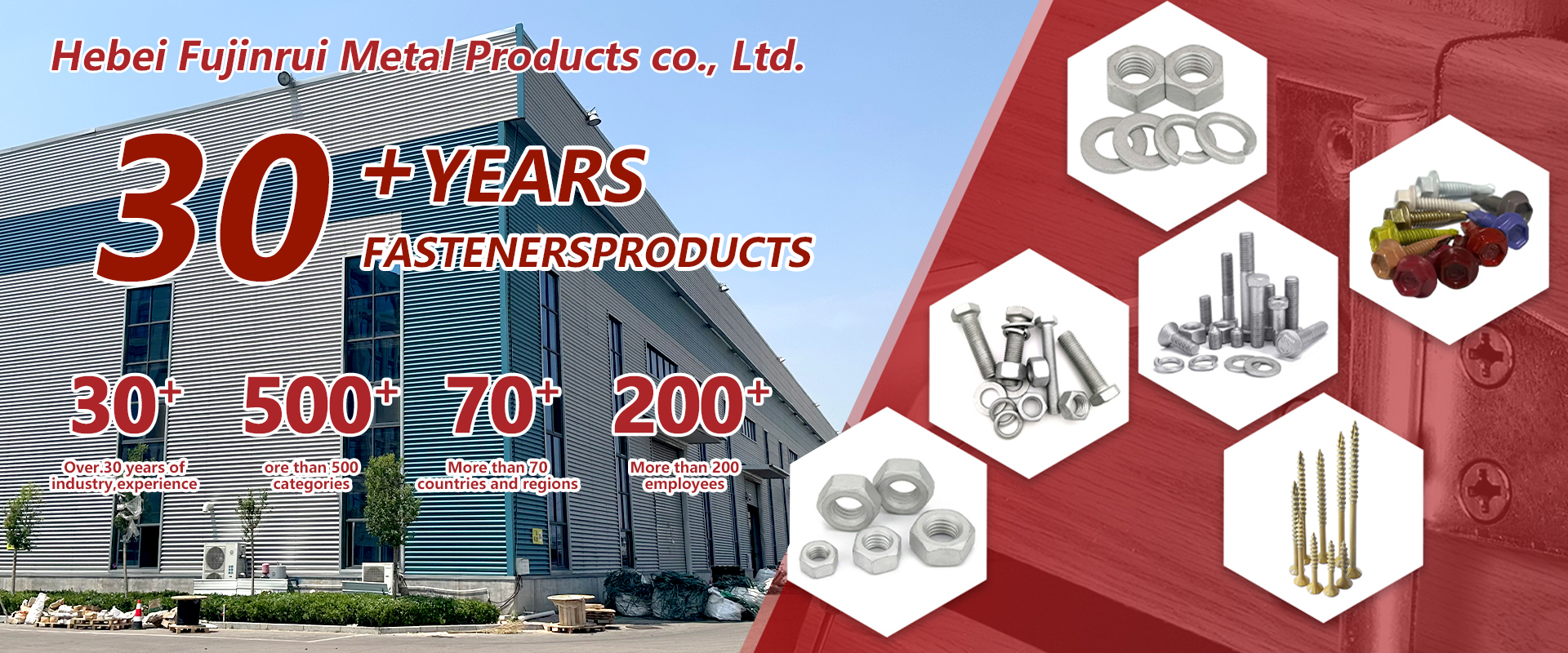
Selecting the right partner for custom and wholesale weld nut supply involves evaluating manufacturing capabilities, quality control, and industry experience. Hebei Fujinrui Metal Products Co., Ltd., established in 2004 in Handan City, Hebei Province, has built a reputation for reliability and precision in the fastener industry.
With a facility covering 10,000 square meters and a team of over 200 skilled professionals, we integrate fastener production with advanced metal surface corrosion protection. This vertical integration allows us to control every step of the process, from raw material selection to final coating, ensuring consistent quality and competitive pricing.
Technical Expertise and Production Capacity
Our mature production technology team specializes in producing a wide range of fasteners, including self-drilling screws, hexagonal bolts and nuts, flange bolts and nuts, and various washers. We adhere to American, German, and national standards, ensuring compatibility with global supply chains.
For weld nuts specifically, our capabilities include:
- Customization: We can manufacture weld nuts to specific drawings, accommodating unique projections, thread sizes, and body shapes.
- Surface Treatment: Our in-house corrosion protection facilities offer zinc plating, hot-dip galvanizing, and black oxide finishes, enhancing durability for outdoor and harsh environments.
- Volume Scalability: Whether you require a small batch for prototyping or millions of units for mass production, our infrastructure supports flexible order volumes without compromising lead times.
Our exports to Europe, America, the Middle East, and other regions reflect our commitment to meeting diverse international quality requirements. By combining high-quality products with competitive pricing, we aim to be the preferred choice for businesses seeking long-term supply stability.
How to Choose the Right Weld Nut for Your Project
Proper selection prevents assembly failures and reduces overall project costs. Consider the following factors when specifying weld nuts.
1. Base Material Thickness
The thickness of the workpiece determines the type of weld nut suitable. Thin sheets may require tab weld nuts to distribute heat and prevent burn-through. Thicker plates can accommodate projection weld nuts, which provide deeper penetration and stronger fusion.
2. Load Requirements
Assess the tensile and shear loads the joint will endure. High-stress applications, such as structural steel connections, demand high-grade materials and larger bearing surfaces. Ensure the weld nut’s proof load exceeds the maximum expected operational load.
3. Welding Equipment Compatibility
Verify that your welding machines can deliver the necessary current and pressure for the selected nut type. Projection weld nuts require precise control of weld time and current to melt the projections without damaging the threads. Consult with your equipment supplier and fastener manufacturer to optimize welding parameters.
4. Environmental Conditions
For outdoor or corrosive environments, select stainless steel weld nuts or apply appropriate surface coatings. Zinc plating offers moderate protection, while hot-dip galvanizing provides superior resistance to rust and chemical exposure.
Common Welding Issues and Troubleshooting
Even with high-quality weld nuts, improper welding techniques can lead to joint failures. Understanding common issues helps maintain production efficiency.
Weak Welds
If the nut detaches easily, the weld may be insufficient. Causes include low welding current, short weld time, or inadequate pressure. Check electrode alignment and ensure the workpiece surface is clean and free of oil or rust.
Burn-Through
Holes in the base material indicate excessive heat input. This is common in thin sheets. Reduce welding current or switch to tab weld nuts to distribute heat more evenly. Ensure proper grounding of the welding fixture.
Thread Damage
Distorted threads result from excessive heat affecting the nut body. Use water-cooled electrodes or reduce weld time. Cap weld nuts can also help protect threads by acting as a heat sink.
Spatter and Arc Strikes
Excessive spatter suggests poor contact between the nut and workpiece. Ensure the nut sits flat and the projections are uniform. Clean electrodes regularly to maintain consistent current flow.
Frequently Asked Questions (FAQ)
What is the difference between a weld nut and a regular nut?
A regular nut is designed to be tightened onto a bolt and secured with a locking mechanism or friction. A weld nut is permanently attached to a metal surface via welding, providing a fixed threaded point that resists vibration and tampering.
Can weld nuts be reused?
No, weld nuts are designed for permanent installation. Removing them typically destroys the nut and may damage the base material. However, the bolt screwed into the weld nut can be removed and reused multiple times.
Do I need special equipment to install weld nuts?
Yes, resistance welding machines (spot welders) are typically used. These machines provide the precise control of current, time, and pressure required to create a strong metallurgical bond without damaging the threads.
Are weld nuts suitable for aluminum?
Welding nuts to aluminum is challenging due to its high thermal conductivity and oxide layer. Specialized techniques and nut coatings are required. In many cases, mechanical fastening or rivet nuts are preferred for aluminum applications unless specific welding protocols are followed.
How does Hebei Fujinrui ensure quality control?
We implement strict quality control measures at every stage, from raw material inspection to final product testing. Our team conducts dimensional checks, torque tests, and salt spray tests for corrosion resistance. With over 20 years of experience, we adhere to international standards to ensure every batch meets customer specifications.
Conclusion: Securing Your Supply Chain with Reliable Fasteners
Weld nuts are indispensable components in modern manufacturing, offering strength, efficiency, and reliability. Whether you are producing automotive frames, agricultural machinery, or consumer appliances, the quality of your fasteners directly impacts the performance and longevity of your final product.
Partnering with an experienced manufacturer like Hebei Fujinrui Metal Products Co., Ltd. ensures access to high-quality, standardized, and custom weld nuts tailored to your specific needs. Our integration of production and surface treatment, combined with two decades of industry expertise, allows us to deliver consistent value to clients across Europe, America, and the Middle East.
For businesses seeking to optimize their assembly processes and reduce long-term maintenance costs, investing in premium weld nuts is a strategic decision. We invite you to explore our comprehensive range of fasteners and discuss your custom requirements.
Ready to streamline your production? Contact our technical team today for detailed specifications, sample requests, or a customized quote. Let us help you select the perfect weld nut solution for your next project.