- English
- Chinese
- French
- German
- Portuguese
- Spanish
- Russian
- Japanese
- Korean
- Arabic
- Irish
- Greek
- Turkish
- Italian
- Danish
- Romanian
- Indonesian
- Czech
- Afrikaans
- Swedish
- Polish
- Basque
- Catalan
- Esperanto
- Hindi
- Lao
- Albanian
- Amharic
- Armenian
- Azerbaijani
- Belarusian
- Bengali
- Bosnian
- Bulgarian
- Cebuano
- Chichewa
- Corsican
- Croatian
- Dutch
- Estonian
- Filipino
- Finnish
- Frisian
- Galician
- Georgian
- Gujarati
- Hausa
- Hawaiian
- Hebrew
- Hmong
- Hungarian
- Icelandic
- Igbo
- Javanese
- Kannada
- Kazakh
- Khmer
- Kurdish
- Kyrgyz
- Latin
- Latvian
- Lithuanian
- Luxembou..
- Macedonian
- Malagasy
- Malay
- Malayalam
- Maltese
- Maori
- Marathi
- Mongolian
- Burmese
- Nepali
- Norwegian
- Pashto
- Persian
- Punjabi
- Serbian
- Sesotho
- Sinhala
- Slovak
- Slovenian
- Somali
- Samoan
- Scots Gaelic
- Shona
- Sindhi
- Sundanese
- Swahili
- Tajik
- Tamil
- Telugu
- Thai
- Ukrainian
- Urdu
- Uzbek
- Vietnamese
- Welsh
- Xhosa
- Yiddish
- Yoruba
- Zulu
- Kinyarwanda
- Tatar
- Oriya
- Turkmen
- Uyghur

T Bolt Supplier: High Quality Wholesale Prices
2026-10-16
- What Is a T Bolt and How Does It Work?
- Why Choose Hebei Fujinrui for Wholesale T Bolts?
- Types of T Bolts: Selection Guide
- Common Applications of T Bolts in Industry
- How to Choose the Right T Bolt for Your Project
- Installation Best Practices and Common Mistakes
- Maintenance and Inspection Guidelines
- Frequently Asked Questions (FAQ)
- Conclusion: Secure Your Supply Chain with Reliable Fasteners
A T bolt is a specialized fastener featuring a T-shaped head designed to slide into T-slots on machinery beds, worktables, and structural frames. Unlike standard hex bolts, T bolts provide secure clamping without requiring access to the nut side, making them essential for modular fixturing, CNC machining setups, and heavy-duty industrial assembly. For procurement managers and engineers seeking reliability, sourcing from an established manufacturer ensures strict adherence to dimensional tolerances and material strength standards.
What Is a T Bolt and How Does It Work?
The fundamental design of a T bolt allows it to function within a specific mechanical constraint: the T-slot. The head of the bolt is narrower than the slot width but wider than the slot neck. This geometry enables the bolt to be inserted vertically and then rotated or slid into position. Once aligned, tightening the nut draws the T-head against the underside of the slot, creating a rigid anchor point.
This mechanism is critical in environments where drilling holes into the base material is impossible or undesirable. In 2026, industrial applications demand higher precision and faster setup times. The T bolt meets these needs by allowing rapid repositioning of clamps, vises, and fixtures. Understanding the mechanics behind this simple yet robust component is the first step in selecting the right hardware for your operation.
Key Components of a T Bolt Assembly
- T-Head: The load-bearing element that locks into the slot. Its width and thickness must match the specific T-slot profile.
- Shank: The unthreaded or partially threaded body that provides shear strength and alignment.
- Threads: Typically metric (ISO) or imperial (UNC/UNF), designed to engage with hex nuts or wing nuts.
- Nut and Washer: Essential for distributing load and preventing loosening due to vibration.
Why Choose Hebei Fujinrui for Wholesale T Bolts?
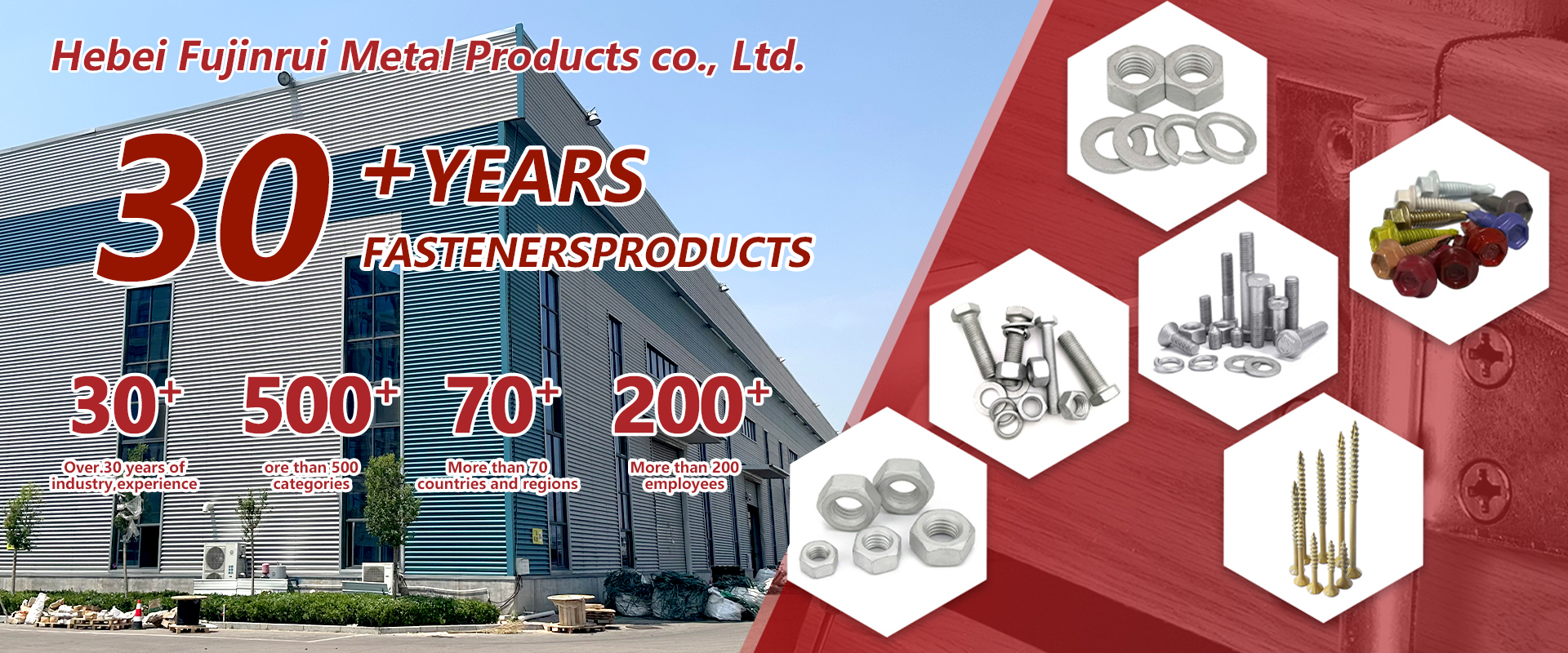
When sourcing industrial fasteners, supply chain stability and manufacturing consistency are paramount. Hebei Fujinrui Metal Products Co., Ltd. has been a dedicated player in the fastener industry since 2004. Located in Handan City, Hebei Province, our facility spans 10,000 square meters and employs over 200 skilled professionals. We are not just a trader; we are an enterprise integrating fastener production with advanced metal surface corrosion protection.
With more than 20 years of experience, we have refined our production technology to meet international standards. Our product line extends beyond T bolts to include Self Drilling Screws, hexagonal bolts and nuts, flange bolts, and various washers. We produce according to American (ANSI/ASTM), German (DIN), and national standards, ensuring compatibility with global machinery. Our exports reach Europe, America, the Middle East, and other regions, driven by a commitment to high-quality products and competitive wholesale prices.
Manufacturing Capabilities and Quality Control
Our mature production technology team oversees every stage of manufacturing, from raw material selection to final packaging. For T bolts, this means precise forging or machining of the T-head to ensure it fits snugly into standard slots without excessive play. We also integrate surface treatment processes directly into our workflow, enhancing corrosion resistance for harsh industrial environments.
- Material Integrity: We use certified carbon steel and alloy steel grades to ensure tensile strength.
- Dimensional Accuracy: Strict QC checks guarantee that head dimensions match DIN 787, DIN 799, or ANSI B18.10 specifications.
- Surface Treatment: Options include zinc plating, black oxide, and hot-dip galvanizing, applied using our in-house corrosion protection lines.
Types of T Bolts: Selection Guide
Selecting the correct T bolt type is crucial for safety and performance. The two most common standards are DIN 787 and DIN 799, each serving distinct mechanical purposes. Misidentifying these types can lead to poor clamping force or damage to the T-slot table.
DIN 787 vs. DIN 799: What’s the Difference?
| Feature | DIN 787 (Standard T-Bolt) | DIN 799 (Hammer Head T-Bolt) |
|---|---|---|
| Head Shape | Square or rectangular T-head with a flat top. | Round or oval head with a tapered neck, resembling a hammer head. |
| Installation | Must be inserted from above and rotated 90 degrees. | Can be dropped into the slot and pulled through; ideal for blind slots. |
| Strength | High shear strength due to larger head contact area. | Slightly lower shear capacity but superior ease of installation. |
| Application | General-purpose clamping, CNC tables, milling machines. | Heavy-duty structural connections, railway tracks, conveyor systems. |
| Standards | Commonly ISO 7380, DIN 787. | Commonly DIN 799, BS 4235. |
Material Grades and Strength Classes
T bolts are available in various strength classes, typically ranging from Grade 4.8 to Grade 12.9. The choice depends on the load requirements of your application.
- Grade 4.8 / Class 4.6: Low carbon steel. Suitable for light-duty fixtures and non-critical structural supports. Cost-effective for high-volume, low-stress uses.
- Grade 8.8 / Class 8.8: Medium carbon steel, quenched and tempered. The industry standard for general machinery and automotive assembly lines. Offers a balanced mix of strength and ductility.
- Grade 10.9 / Class 10.9: Alloy steel. Used in high-vibration environments and heavy engineering. Provides higher yield strength to prevent stretching under load.
- Grade 12.9 / Class 12.9: High-alloy steel. Reserved for extreme load applications such as mining equipment and large-scale structural steelwork. Requires careful handling to avoid brittleness.
Common Applications of T Bolts in Industry
The versatility of T bolts makes them indispensable across multiple sectors. Their ability to provide adjustable, reusable anchoring points reduces downtime and maintenance costs.
CNC Machining and Manufacturing
In machine shops, T bolts are the backbone of workholding systems. They secure vises, rotary tables, and custom fixtures to the machine bed. The ability to quickly reposition clamps allows operators to switch between different parts efficiently. Precision-ground T bolts minimize runout, ensuring that the workpiece remains stable during high-speed cutting operations.
Construction and Structural Steel
Heavy-duty T bolts, particularly the DIN 799 hammer head type, are used in connecting steel beams and columns. They allow for adjustments during erection before final welding or bolting. In pre-engineered metal buildings, T bolts facilitate the attachment of facade panels and roofing systems to the primary frame.
Railway and Transportation
Rail tracks utilize specialized T bolts to secure rails to sleepers or baseplates. These fasteners must withstand dynamic loads, vibration, and environmental exposure. Hebei Fujinrui’s expertise in corrosion protection ensures that our railway-grade T bolts maintain integrity even in humid or saline conditions.
Automotive Assembly Lines
Modular fixture systems in automotive manufacturing rely on T-slots and T bolts to hold car bodies and components during welding and assembly. The repeatability of T bolt positioning ensures consistent quality across thousands of units.
How to Choose the Right T Bolt for Your Project
Choosing the wrong T bolt can lead to equipment failure or safety hazards. Follow this step-by-step guide to ensure proper selection.
Step 1: Measure the T-Slot Dimensions
Accurate measurement is critical. You need three key dimensions:
- Slot Width (A): The width of the opening at the top.
- Slot Neck Width (B): The narrower part of the slot below the opening.
- Slot Depth (C): The total depth of the T-channel.
The T bolt head width must be smaller than the slot width (A) to allow insertion but larger than the neck width (B) to lock in place. A general rule is to leave a clearance of 0.5mm to 1mm between the head and the slot walls for smooth movement.
Step 2: Determine Load Requirements
Assess the forces acting on the fastener. Is it primarily tensile (pulling out) or shear (sliding sideways)? For high shear loads, choose a bolt with a larger head area and higher grade material (e.g., Grade 10.9). For dynamic loads, consider using locking nuts or thread-locking adhesives.
Step 3: Select Material and Coating
Consider the operating environment:
- Indoor/Dry: Zinc-plated carbon steel is sufficient and cost-effective.
- Outdoor/Humid: Hot-dip galvanized or stainless steel (A2/A4) is recommended to prevent rust.
- Chemical Exposure: Stainless steel 316 or specialized coatings like Xylan may be required.
Step 4: Verify Thread Compatibility
Ensure the thread pitch matches your existing nuts and tapped holes. Mixing metric and imperial threads is a common error that can strip the fastener. At Hebei Fujinrui, we clearly label all products with their standard (e.g., M10 x 1.5 or 3/8″-16) to prevent confusion.
Installation Best Practices and Common Mistakes
Even the highest quality T bolt can fail if installed incorrectly. Adhering to best practices extends the life of both the fastener and the machinery.
Correct Installation Procedure
- Clean the Slot: Remove chips, dirt, and debris from the T-slot. Contaminants can prevent the bolt head from seating properly.
- Insert the Bolt: Place the T bolt into the slot. For DIN 787, rotate it 90 degrees so the head locks under the lips of the slot.
- Position the Fixture: Slide the bolt to the desired location along the slot.
- Add Washers: Always use a flat washer under the nut to distribute pressure. For vibrating environments, add a spring washer.
- Tighten Gradually: Tighten the nut using a torque wrench. Avoid impact guns unless specified, as they can overstress the bolt.
Common Errors to Avoid
- Using Damaged Bolts: Inspect T heads for burrs or deformation. A damaged head can get stuck in the slot or fail to lock.
- Over-Tightening: Exceeding the yield strength of the bolt can cause it to stretch or snap. Refer to torque charts for specific grades.
- Ignoring Clearance: If the bolt is too tight in the slot, it will jam. If too loose, it will wobble, reducing clamping accuracy.
- Mismatched Standards: Do not mix DIN and ANSI bolts in the same assembly unless dimensions are verified compatible.
Maintenance and Inspection Guidelines
Regular maintenance ensures the reliability of T bolt assemblies. In high-use environments like CNC shops, inspect bolts weekly for signs of wear.
- Check for Stretching: Look for elongation in the shank or neck area.
- Inspect Threads: Ensure threads are clean and free from galling.
- Monitor Corrosion: Replace any bolts showing significant rust, especially if structural integrity is compromised.
- Lubrication: Apply anti-seize compound to threads if bolts are frequently removed and reinstalled. This prevents seizing and ensures consistent torque values.
Frequently Asked Questions (FAQ)
What is the difference between a T bolt and a standard hex bolt?
A standard hex bolt requires access to both sides of the material for installation (bolt head on one side, nut on the other). A T bolt is designed to anchor into a T-slot, requiring access only from the top. This makes T bolts ideal for modular setups where the back of the workpiece is inaccessible.
Can T bolts be used for permanent structural connections?
While T bolts are primarily designed for adjustable clamping, heavy-duty hammer head T bolts (DIN 799) are used in semi-permanent structural applications. However, for critical permanent joints, welded studs or high-strength hex bolts are often preferred. Always consult an engineer for structural decisions.
How do I calculate the required length of a T bolt?
The length should be sufficient to pass through the fixture plate, any washers, and extend enough threads for the nut to engage fully. A good rule of thumb is: Length = Fixture Thickness + Washer Thickness + Nut Height + 2-3mm clearance. Avoid bolts that are too long, as they may bottom out in the slot.
Does Hebei Fujinrui offer custom T bolts?
Yes, with over 20 years of manufacturing experience, we can produce custom T bolts based on your drawings or samples. Whether you need non-standard sizes, specific materials, or unique surface treatments, our team can accommodate specialized requests for bulk orders.
What surface treatments are available for corrosion resistance?
We offer zinc plating (clear, blue, yellow), black oxide, hot-dip galvanizing, and Dacromet. For marine or chemical environments, we recommend hot-dip galvanizing or stainless steel options. Our in-house corrosion protection line ensures consistent coating thickness and adhesion.
Conclusion: Secure Your Supply Chain with Reliable Fasteners
T bolts are small components with a massive impact on operational efficiency and safety. Whether you are setting up a precision CNC machine or assembling a steel structure, the quality of your fasteners dictates the reliability of your system. Choosing a supplier with proven expertise, such as Hebei Fujinrui Metal Products Co., Ltd., ensures that you receive products meeting rigorous international standards.
With our 10,000-square-meter facility, 200+ skilled staff, and two decades of industry experience, we deliver more than just hardware—we deliver peace of mind. Our integrated production and corrosion protection capabilities allow us to offer competitive wholesale prices without compromising on quality. From DIN 787 to DIN 799, and from Grade 4.8 to 12.9, we have the inventory and expertise to meet your diverse needs.
Don’t let inferior fasteners compromise your projects. Partner with a manufacturer that understands the nuances of industrial fastening. Contact us today to discuss your T bolt requirements, request a quote, or learn more about our comprehensive fastener solutions.
Explore Our Full Range of Industrial Fasteners and Technical Solutions