- English
- Chinese
- French
- German
- Portuguese
- Spanish
- Russian
- Japanese
- Korean
- Arabic
- Irish
- Greek
- Turkish
- Italian
- Danish
- Romanian
- Indonesian
- Czech
- Afrikaans
- Swedish
- Polish
- Basque
- Catalan
- Esperanto
- Hindi
- Lao
- Albanian
- Amharic
- Armenian
- Azerbaijani
- Belarusian
- Bengali
- Bosnian
- Bulgarian
- Cebuano
- Chichewa
- Corsican
- Croatian
- Dutch
- Estonian
- Filipino
- Finnish
- Frisian
- Galician
- Georgian
- Gujarati
- Hausa
- Hawaiian
- Hebrew
- Hmong
- Hungarian
- Icelandic
- Igbo
- Javanese
- Kannada
- Kazakh
- Khmer
- Kurdish
- Kyrgyz
- Latin
- Latvian
- Lithuanian
- Luxembou..
- Macedonian
- Malagasy
- Malay
- Malayalam
- Maltese
- Maori
- Marathi
- Mongolian
- Burmese
- Nepali
- Norwegian
- Pashto
- Persian
- Punjabi
- Serbian
- Sesotho
- Sinhala
- Slovak
- Slovenian
- Somali
- Samoan
- Scots Gaelic
- Shona
- Sindhi
- Sundanese
- Swahili
- Tajik
- Tamil
- Telugu
- Thai
- Ukrainian
- Urdu
- Uzbek
- Vietnamese
- Welsh
- Xhosa
- Yiddish
- Yoruba
- Zulu
- Kinyarwanda
- Tatar
- Oriya
- Turkmen
- Uyghur

Hot-Dip Galvanized Hex Bolts-A Comprehensive Technical Guide-Corrosion Protection Meets Mechanical Excellence
2026-08-24
1.Introduction
Hot-dip galvanized hex bolts represent a critical category of industrial fasteners that combine the robust mechanical properties of high-strength steel with superior corrosion protection through zinc coating. These fasteners are widely used in construction, infrastructure, marine environments, and outdoor structures where long-term durability is essential.
This article provides a comprehensive overview of hot-dip galvanized hex bolts from two fundamental perspectives: the hot-dip galvanizing process that provides corrosion resistance, and the hex bolt design that delivers reliable mechanical performance. By understanding both aspects, engineers, procurement specialists, and quality assurance teams can make informed decisions when selecting fasteners for demanding applications.
2.Hot-Dip Galvanizing: Process and Principles
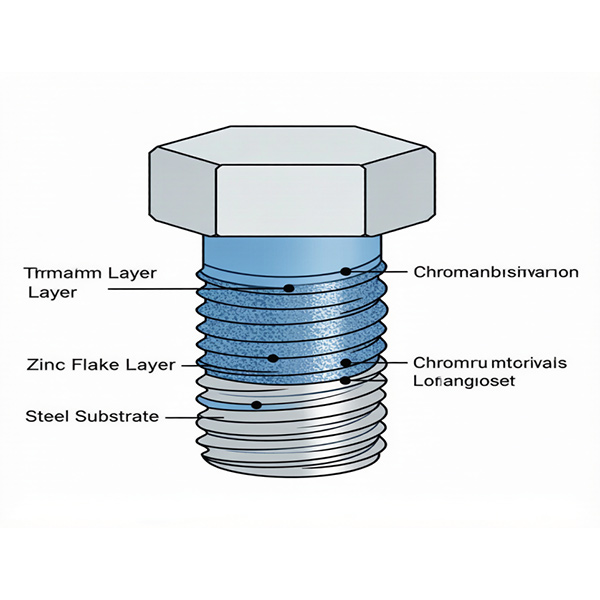
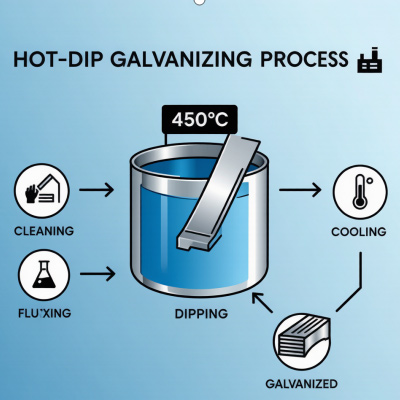
Hot-dip galvanizing (HDG) is a metallurgical process in which clean steel components are immersed in a bath of molten zinc at approximately 450°C (842°F). During this process, the zinc reacts with the steel surface to form a series of zinc-iron alloy layers that are metallurgically bonded to the substrate. Unlike paint or other barrier coatings that merely adhere to the surface, hot-dip galvanizing creates a protective coating that becomes an integral part of the steel itself.
The resulting coating provides both barrier protection — physically isolating the steel from corrosive elements — and sacrificial (cathodic) protection, where the zinc preferentially corrodes to protect the underlying steel even if the coating is scratched or damaged.
The Galvanizing Process
The hot-dip galvanizing process consists of several carefully controlled stages:
Surface Preparation: The steel is degreased, acid-pickled, and flux-treated to remove all oxides, oils, and contaminants, ensuring a clean surface for optimal zinc adhesion.
Pre-heating: The fluxed steel is dried and pre-heated to prevent thermal shock when immersed in the zinc bath.
Zinc Immersion: The component is submerged in molten zinc (at 445–465°C) for a controlled duration, allowing the formation of zinc-iron alloy layers.
Withdrawal and Cooling: The part is slowly withdrawn to allow excess zinc to drain off, then quenched or air-cooled to solidify the coating.
Inspection: The coating thickness, adhesion, and surface appearance are verified against applicable standards such as ISO 1461 or ASTM A153.
3.Hex Bolts: Design and Specifications
3.1 What Are Hex Bolts?
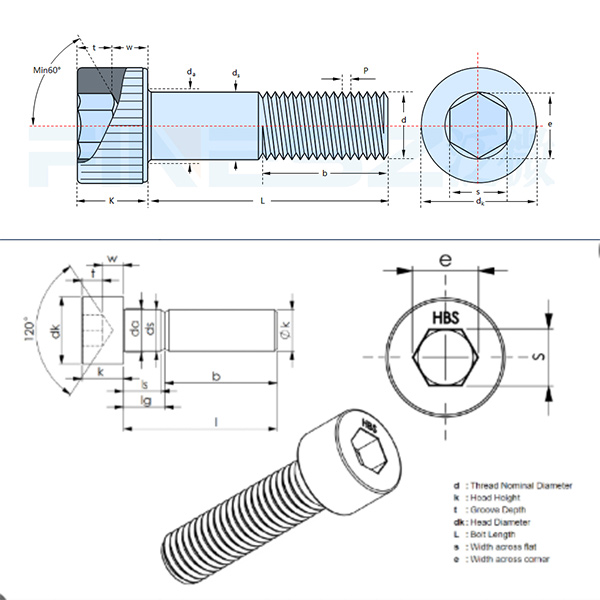
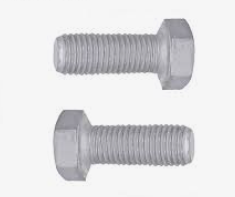
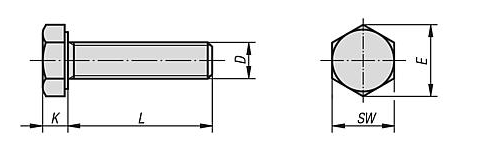
Hex bolts (also known as hex head bolts or externally threaded fasteners) are one of the most common types of mechanical fasteners used in industrial and construction applications. They feature a six-sided (hexagonal) head designed to be driven with a wrench or socket, and a partially or fully threaded cylindrical shaft. The hexagonal head design provides excellent torque transmission and allows for easy installation and removal from both sides.
Hex bolts are manufactured to various international standards, including ISO 4014 (partial thread), ISO 4017 (full thread), ASTM A325 (structural bolts), and DIN 933/931. They are available in a wide range of sizes, materials, and strength grades to suit diverse engineering requirements
4.Hot-Dip Galvanized Hex Bolts: The Combined Solution
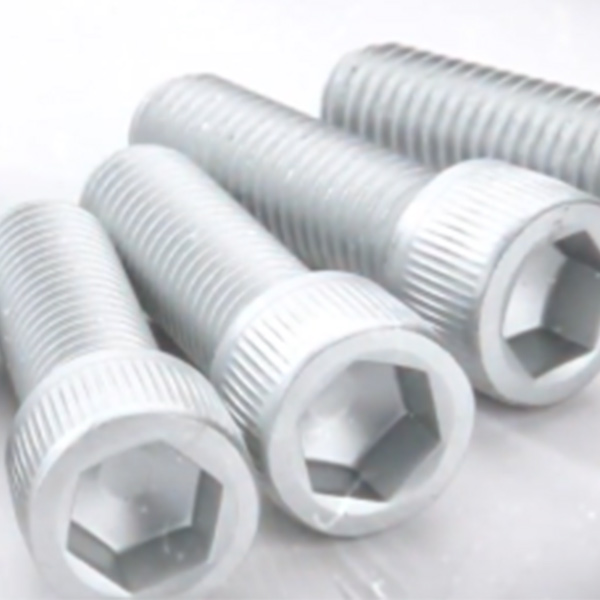
Hot-dip galvanized hex bolts combine the mechanical reliability of hex head fasteners with the exceptional corrosion protection of zinc coating. These bolts are specifically engineered for applications where structural integrity and long-term corrosion resistance are equally critical. The galvanizing process is typically applied after the bolts are manufactured and threaded, ensuring complete coverage of all surfaces including the threads.
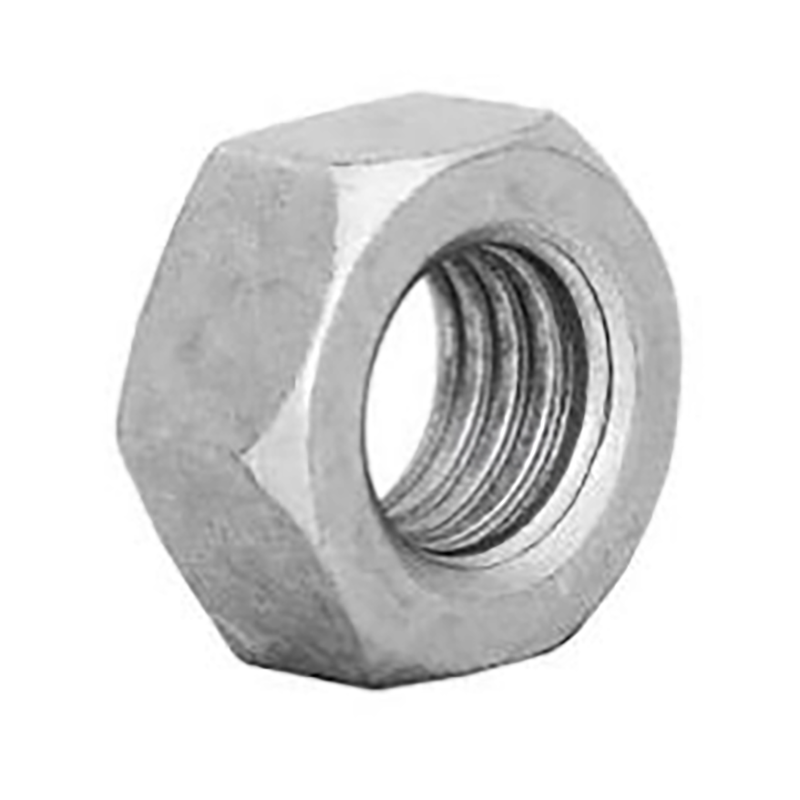
A key consideration when specifying hot-dip galvanized hex bolts is the issue of thread fit. The zinc coating adds a measurable thickness (typically 50–125 microns) to the threaded surfaces. To accommodate this, hot-dip galvanized bolts must be paired with over-tapped (oversized) nuts, typically one size larger than standard. This ensures proper assembly without damaging the zinc coating on the threads.
5.Conclusion
Hot-dip galvanized hex bolts represent an optimal fusion of mechanical engineering and corrosion protection technology. The hex bolt design provides reliable, high-strength fastening with easy installation, while the hot-dip galvanizing process delivers decades of maintenance-free corrosion resistance in even the most demanding environments.
When properly specified, installed, and maintained, these fasteners offer a total lifecycle cost that is significantly lower than alternatives requiring periodic repainting or replacement. Their proven performance in structural, marine, and infrastructure applications has made them an indispensable component in modern engineering and construction projects worldwide.
For projects requiring certified quality, it is essential to source hot-dip galvanized hex bolts from reputable manufacturers who adhere to international standards such as ISO 1461, ASTM A153, and ASTM F2329, and who provide material test certificates and coating thickness verification.