- English
- Chinese
- French
- German
- Portuguese
- Spanish
- Russian
- Japanese
- Korean
- Arabic
- Irish
- Greek
- Turkish
- Italian
- Danish
- Romanian
- Indonesian
- Czech
- Afrikaans
- Swedish
- Polish
- Catalan
- Esperanto
- Hindi
- Lao
- Albanian
- Amharic
- Armenian
- Azerbaijani
- Belarusian
- Bengali
- Bosnian
- Bulgarian
- Cebuano
- Chichewa
- Corsican
- Croatian
- Dutch
- Estonian
- Filipino
- Finnish
- Frisian
- Galician
- Georgian
- Gujarati
- Haitian
- Hausa
- Hawaiian
- Hebrew
- Hmong
- Hungarian
- Icelandic
- Igbo
- Javanese
- Kannada
- Kazakh
- Khmer
- Kurdish
- Kyrgyz
- Latin
- Latvian
- Lithuanian
- Luxembou..
- Macedonian
- Malagasy
- Malay
- Malayalam
- Maltese
- Maori
- Marathi
- Mongolian
- Burmese
- Nepali
- Norwegian
- Pashto
- Persian
- Punjabi
- Serbian
- Sesotho
- Sinhala
- Slovak
- Slovenian
- Somali
- Samoan
- Scots Gaelic
- Shona
- Sindhi
- Sundanese
- Swahili
- Tajik
- Tamil
- Telugu
- Thai
- Ukrainian
- Urdu
- Uzbek
- Vietnamese
- Welsh
- Xhosa
- Yiddish
- Yoruba
- Zulu
- Kinyarwanda
- Tatar
- Oriya
- Turkmen
- Uyghur

Ruspert Composite Washer Self-Drilling Screws- A Comprehensive Guide to High-Performance Anti-Corrosion Fastening Solutions
2026-10-15
1. Introduction
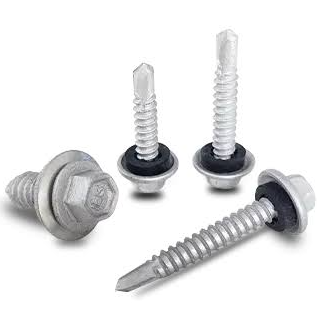
In modern construction and metal fabrication, the demand for reliable, efficient, and long-lasting fastening systems continues to grow. Among the most versatile solutions available today are Ruspert composite washer self-drilling screws. These specialized screws combine a sharp self-drilling point, precision-formed threads, a bonded composite sealing washer, and an advanced multi-layer anti-corrosion coating. The result is a screw that drills, taps, and fastens in a single operation while delivering outstanding rust protection and weather resistance.
Commonly known in the industry as composite pad drill-tail screws or bonded-washer self-drilling screws, these products are widely used for securing color-coated steel sheets, composite sandwich panels, light-gauge steel framing, roofing systems, and cladding. The Ruspert surface treatment significantly enhances the screw’s ability to resist corrosion, salt spray, humidity, and chemical attack, making it ideal for both inland and coastal environments.
This article provides a detailed overview of Ruspert composite washer self-drilling screws, covering their structure, anti-rust technology, performance advantages, typical applications, and selection guidelines.
2. Product Structure and Key Components
A high-quality Ruspert composite washer self-drilling screw is engineered as a complete fastening system. Each screw integrates several functional elements that work together to ensure fast installation, strong holding power, and long-term durability.
Self-Drilling Point
The tip of the screw features a hardened drill point (typically Type 2, Type 3, or Type 5 depending on the substrate thickness). This drill point allows the screw to penetrate thin to medium-gauge steel sheets without the need for pre-drilling. The geometry of the drill point is carefully designed to reduce drilling torque, minimize heat generation, and produce clean chips, thereby extending the life of both the screw and the driving tool.
Thread Design
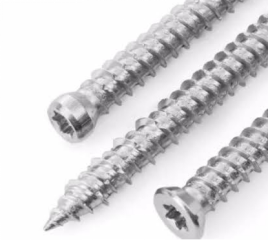
The body of the screw carries precisely rolled threads that provide high pull-out resistance and vibration resistance. Many models incorporate a dual-thread or high-thread section near the head to improve grip on soft outer layers such as insulation or thin cladding. The thread profile is optimized for steel-to-steel or steel-to-timber connections, ensuring the screw remains secure under dynamic loads.
Hexagonal Washer Head
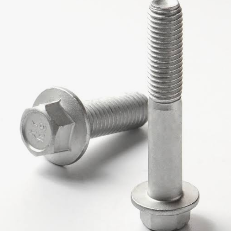
Most Ruspert composite washer screws use a hexagonal washer head (HWH). The hex head provides positive engagement with a socket driver, reducing cam-out and allowing higher installation torque. The integrated metal washer under the head distributes clamping force over a larger area, protecting the panel surface from crushing or dimpling.
Composite (Bonded) Sealing Washer
A bonded EPDM (ethylene propylene diene monomer) rubber washer is permanently attached to the metal washer. When the screw is tightened, the EPDM washer compresses and fills microscopic gaps around the hole, creating a waterproof and airtight seal. This composite pad is critical for roofing and exterior cladding applications where moisture intrusion must be prevented. The EPDM material remains flexible across a wide temperature range and resists ozone, UV radiation, and aging.
3. Advanced Anti-Corrosion and Anti-Rust Technology
The defining feature of Ruspert composite washer self-drilling screws is their superior corrosion-resistant coating system. Conventional zinc plating or electro-galvanizing provides only limited protection and can fail relatively quickly in humid or coastal environments. Ruspert technology addresses this limitation with a multi-layer protective system.
3.1 What Is Ruspert Coating?
Ruspert is a high-performance anti-corrosion surface treatment that typically consists of three layers:
1.Metallic base layer – A zinc or zinc-alloy coating that provides sacrificial cathodic protection.
2.Chemical conversion layer – Improves adhesion and adds an extra barrier against corrosion.
3.Organic topcoat – A durable polymer film that seals the surface, resists abrasion, and enhances chemical resistance.
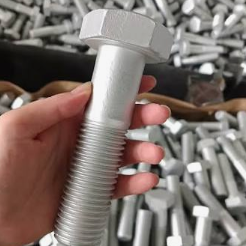
This layered structure gives the screw exceptional resistance to rust, salt spray, acid rain, and industrial pollutants. Independent salt-spray tests often show Ruspert-coated screws lasting well beyond 1,000 hours without red rust, far outperforming standard zinc-plated screws.
3.2 Key Anti-Corrosion Benefits
- Excellent rust-proof performance in high-humidity and marine atmospheres.
- Strong resistance to galvanic corrosion when used with dissimilar metals.
- Uniform coating thickness that protects threads and the drill point equally.
- Maintains corrosion resistance even after installation torque is applied.
- Compatible with color-coated steel sheets without accelerating substrate corrosion.
4. Typical Technical Specifications
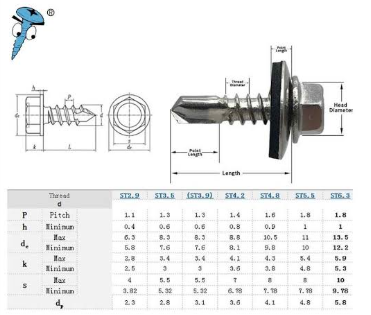
The following table summarizes common sizes and performance data for Ruspert composite washer self-drilling screws used in light-gauge steel applications. Actual values may vary by manufacturer and specific product series.
| Diameter (mm) | Length Range (mm) | Drill Point | Max Drilling Thickness | Typical Coating |
| 4.2 / 4.8 | 16 – 75 | Type 2 / 3 | Up to 2.0–3.0 mm | Ruspert / Zinc Flake |
| 5.5 | 25 – 150 | Type 3 / 5 | Up to 5.0–6.0 mm | Ruspert Multi-Layer |
| 6.3 | 25 – 200 | Type 5 | Up to 12 mm | Ruspert / Bi-Metal Option |
Note: Bi-metal versions combine a hardened stainless or high-carbon steel drill point with a carbon-steel body, further improving drilling performance on thicker sections while maintaining overall corrosion resistance through the Ruspert coating.
5. Typical Applications
Ruspert composite washer self-drilling screws are engineered for a wide range of construction and industrial uses:
- Color steel roofing and wall cladding fixation
- Composite sandwich panel installation (roof and wall)
- Light-gauge steel framing and purlin connections
- Solar mounting structures and photovoltaic racking
- HVAC ducting and ventilation systems
- Metal building systems and pre-engineered buildings
- Coastal and industrial environments requiring superior anti-rust performance
6. Conclusion
Ruspert composite washer self-drilling screws represent a mature and highly effective fastening solution for contemporary construction. By combining a sharp self-drilling tip, high-strength threads, a reliable EPDM sealing washer, and an advanced multi-layer anti-corrosion coating, these screws deliver fast installation, excellent weather sealing, and outstanding resistance to rust and environmental degradation.
Whether used on color-steel roofs, insulated composite panels, light steel structures, or solar mounting systems, the right Ruspert screw provides long-term structural integrity and peace of mind. Specifiers and contractors who prioritize durability and reduced lifecycle cost will find these corrosion-resistant screws an indispensable component of high-quality metal construction projects.
For critical applications, always consult the manufacturer’s technical data sheets regarding drilling capacity, recommended torque, and specific corrosion-resistance test results to ensure the selected screw fully meets project requirements.