- Chinese
- French
- German
- Portuguese
- Spanish
- Russian
- Japanese
- Korean
- Arabic
- Irish
- Greek
- Turkish
- Italian
- Danish
- Romanian
- Indonesian
- Czech
- Afrikaans
- Swedish
- Polish
- Basque
- Catalan
- Esperanto
- Hindi
- Lao
- Albanian
- Amharic
- Armenian
- Azerbaijani
- Belarusian
- Bengali
- Bosnian
- Bulgarian
- Cebuano
- Chichewa
- Corsican
- Croatian
- Dutch
- Estonian
- Filipino
- Finnish
- Frisian
- Galician
- Georgian
- Gujarati
- Haitian
- Hausa
- Hawaiian
- Hebrew
- Hmong
- Hungarian
- Icelandic
- Igbo
- Javanese
- Kannada
- Kazakh
- Khmer
- Kurdish
- Kyrgyz
- Latin
- Latvian
- Lithuanian
- Luxembou..
- Macedonian
- Malagasy
- Malay
- Malayalam
- Maltese
- Maori
- Marathi
- Mongolian
- Burmese
- Nepali
- Norwegian
- Pashto
- Persian
- Punjabi
- Serbian
- Sesotho
- Sinhala
- Slovak
- Slovenian
- Somali
- Samoan
- Scots Gaelic
- Shona
- Sindhi
- Sundanese
- Swahili
- Tajik
- Tamil
- Telugu
- Thai
- Ukrainian
- Urdu
- Uzbek
- Vietnamese
- Welsh
- Xhosa
- Yiddish
- Yoruba
- Zulu
- Kinyarwanda
- Tatar
- Oriya
- Turkmen
- Uyghur

Advantages and Comprehensive Comparative Analysis of Main Surface Treatment Processes for Fasteners
2026-01-27
As core basic components for industrial connections, the service life and operational stability of fasteners directly depend on surface treatment processes. High-quality surface treatment not only enhances the corrosion resistance and wear resistance of fasteners but also optimizes assembly performance, avoids safety risks (e.g., hydrogen embrittlement), and adapts to diverse working condition requirements.
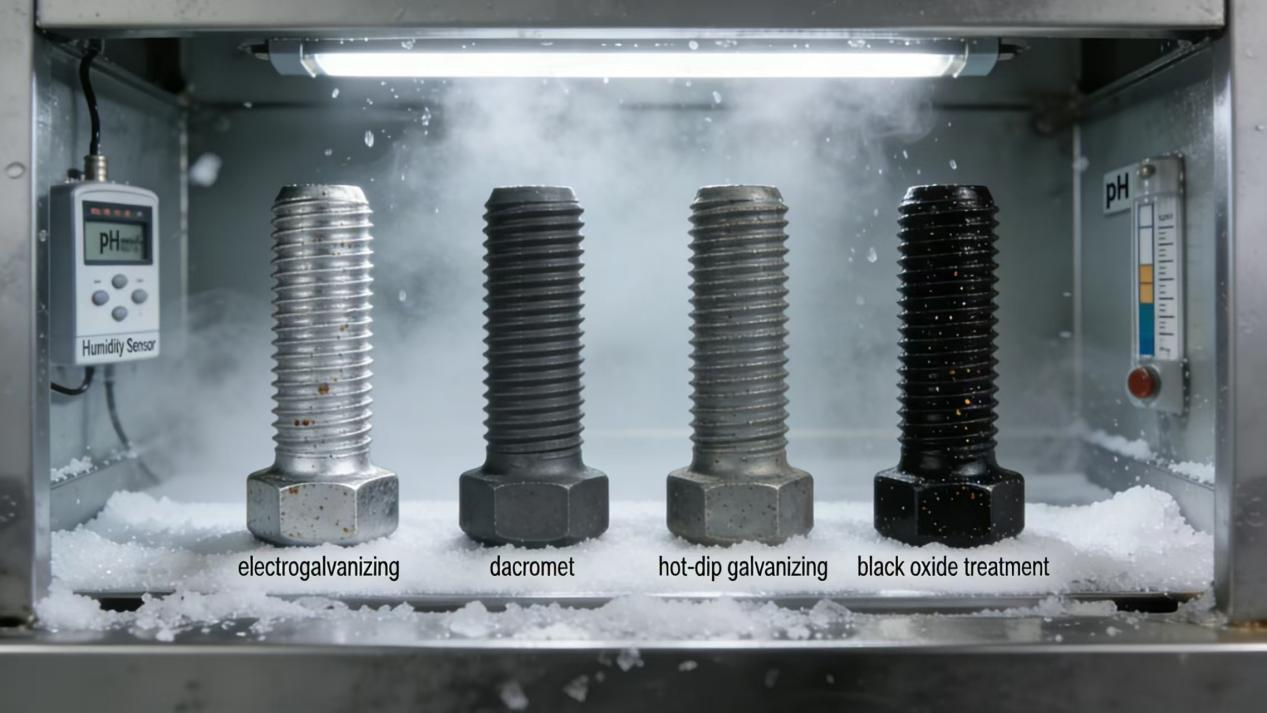
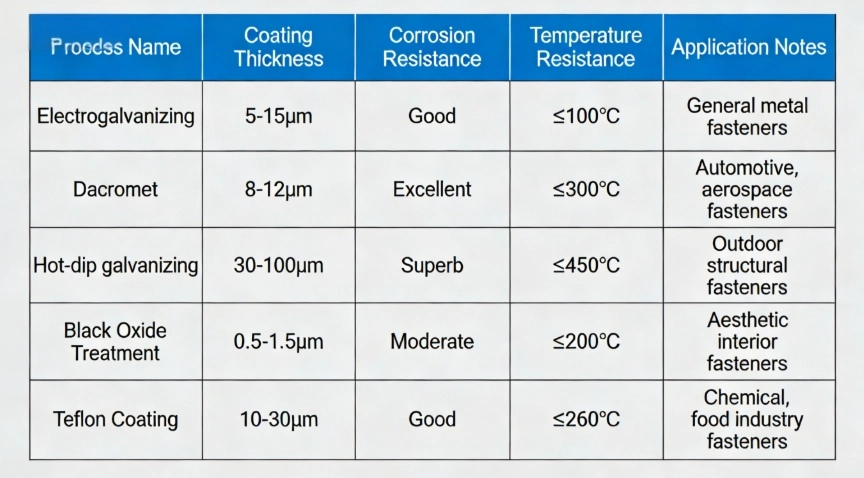
I. Main Surface Treatment Processes for Fasteners and Their Core Advantages
1. Electrogalvanizing (Including Blue-White Zinc and Color Zinc)
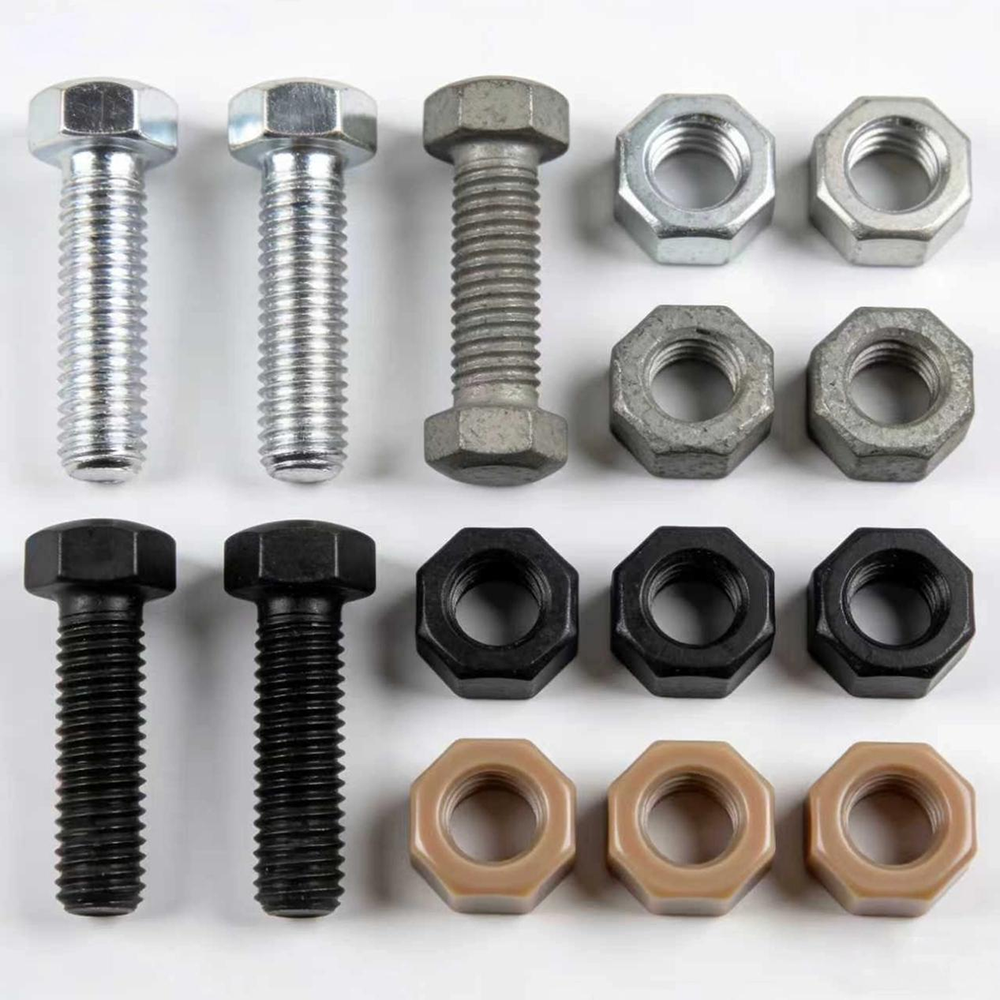
Electrogalvanizing (cold galvanizing) is a process that deposits a uniform zinc layer on fastener surfaces via electrolysis, available in types such as blue-white zinc and color zinc. It is the most widely adopted low-cost treatment method for commercial fasteners. Its core advantages include mature technology, low cost, controllable coating thickness (5-15μm), high surface finish, and multiple color options, making it suitable for appearance requirements in indoor light anti-corrosion scenarios. For small-size threaded fasteners (e.g., below M8), electrogalvanizing does not block threads or slots, offering excellent assembly functionality, extremely high market availability, and short processing cycles.
It should be noted that electrogalvanizing has a certain risk of hydrogen embrittlement and is only applicable to fasteners with hardness below HRC38. Moreover, its anti-corrosion performance is moderate. The neutral salt spray test (NSS) duration of ordinary electrogalvanizing is usually 24-96 hours, which can be extended to more than 200 hours after treatment with special sealants, but the cost will increase by 5-8 times accordingly.
2. Non-Electrolytic Zinc Flake Coating (Dacromet/DACROMET)
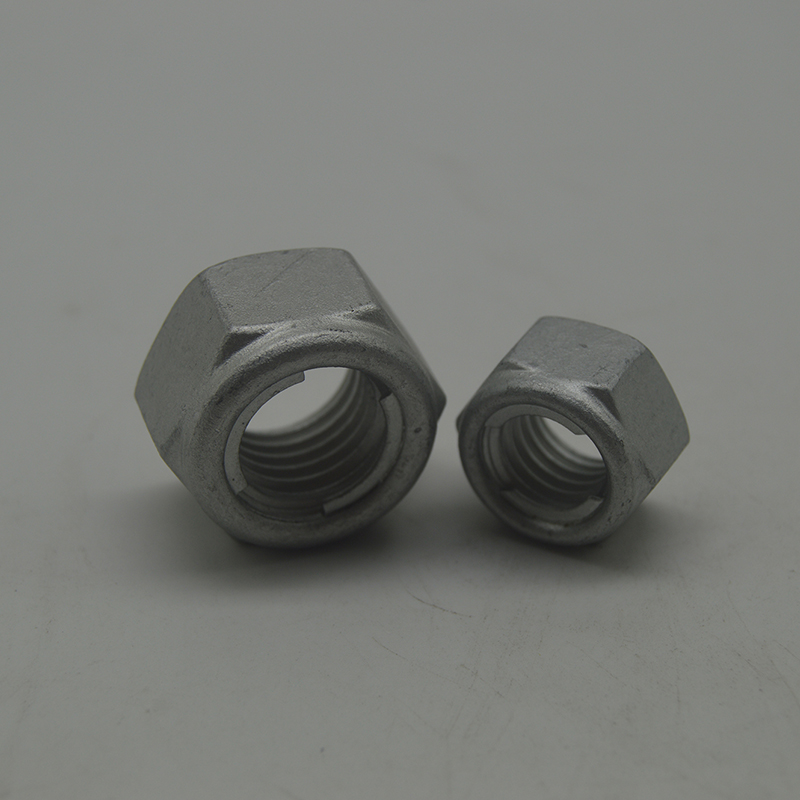
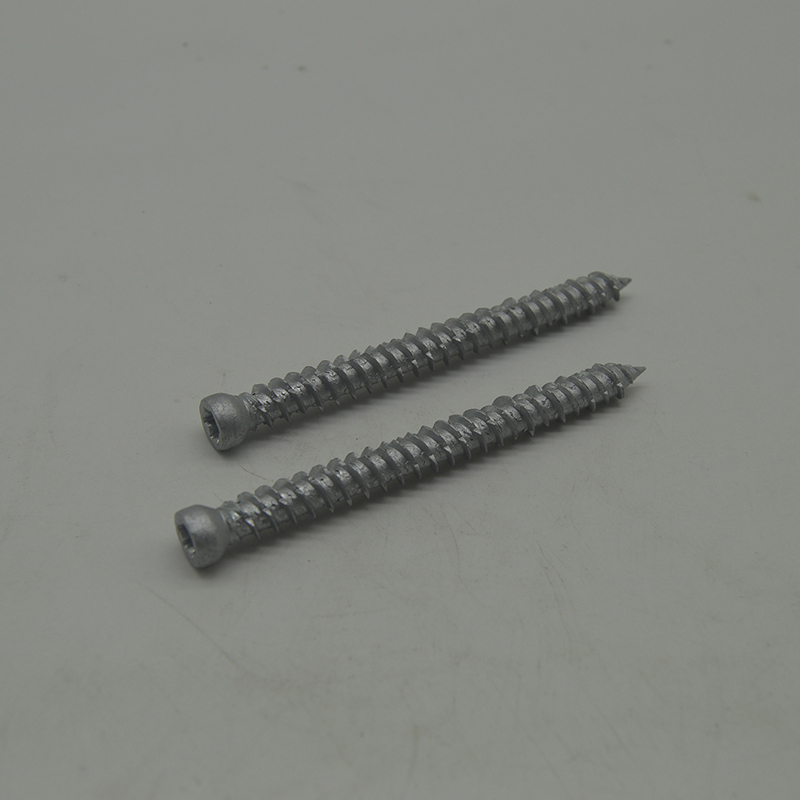
Dacromet is a new type of coating mainly composed of zinc powder, aluminum powder, and chromic acid, formed through dip coating and baking curing. It is the preferred process for long-term anti-corrosion in harsh environments, with prominent core advantages: no hydrogen embrittlement risk, making it suitable for high-strength fasteners; excellent corrosion resistance, with a neutral salt spray test (NSS) duration of 500-800 hours for a single layer and 1500-2000 hours for a double layer, along with good temperature resistance (long-term ≤250℃); precise friction performance control, which ensures clamping force consistency for critical connections and is suitable for scenarios with high requirements for connection integrity.
Its disadvantages are poor adaptability to small-size fasteners below M8 or internal drive threaded fasteners, as the coating may affect assembly; medium cost level, general market availability, and traditional Dacromet contains hexavalent chromium, so environmental compliance needs to be paid attention to.
3. Hot-Dip Galvanizing
Hot-dip galvanizing is a benchmark process for outdoor heavy anti-corrosion scenarios, forming a coating by immersing fasteners in molten zinc at 440-460℃. Its core advantages are a thick coating (50-100μm), extremely strong adhesion, and excellent damage resistance. Even if scratches occur on the surface, it can continue to resist corrosion through the sacrificial anode effect of zinc, with an NSS duration of 300-1000 hours after passivation. This process features medium cost, good market availability, and low hydrogen embrittlement risk for high-strength fasteners, making it widely used in outdoor structural components.
Its limitations are poor surface finish, not suitable for precision assembly scenarios; small-size threaded fasteners below M8 need secondary tapping after treatment, affecting efficiency; and the processing process may cause tempering hardness changes, so it is prohibited to use for 12.9-grade or alloy steel grade parts.
4. Black Oxide (Blueing) Treatment
Black oxide (blueing) treatment forms a 1-3μm thick iron tetroxide (Fe₃O₄) film on fastener surfaces through high-temperature oxidation. Its core advantages are extremely low cost, short processing cycles, and no impact on fastener dimensional accuracy, making it suitable for basic rust prevention of low-precision parts in indoor non-corrosive environments. This process requires no electroplating, poses no hydrogen embrittlement risk, and serves as an economical option for non-exposed parts such as internal transmission components of machine tools and connecting parts of tool bases.
Its anti-corrosion performance is the weakest, with a neutral salt spray test duration of only 4-24 hours, which can be extended to 48-72 hours after oil immersion sealing, only meeting the basic rust prevention needs, and the surface gloss is low, with no decorative property.
II. Horizontal Comparison of Core Performances of Main Processes
| Process Type | Hydrogen Embrittlement Risk | Anti-Corrosion Level | Damage Resistance | Cost Level | Friction Control | Applicable Size |
| Electrogalvanizing | Yes (for low hardness only) | Mild-Moderate | General | Low | Difficult to Control | Full Size (Preferred for Small Sizes) |
| Dacromet | None | High-Extremely High | General | Medium | Excellent | ≥M6 Large Size |
| Hot-Dip Galvanizing | Low (Prohibited for High Grades) | High-Extremely High | Excellent | Medium | Difficult to Control | ≥M8 Large Size |
| Black Oxide Treatment | None | Mild | Weak | Extremely Low | General | Full Size (Non-Exposed Parts) |
For more customized advice, professional technical consultation is recommended.