- English
- Chinese
- French
- German
- Portuguese
- Spanish
- Russian
- Japanese
- Korean
- Arabic
- Irish
- Greek
- Turkish
- Italian
- Danish
- Romanian
- Indonesian
- Czech
- Afrikaans
- Swedish
- Polish
- Basque
- Catalan
- Esperanto
- Hindi
- Lao
- Albanian
- Amharic
- Armenian
- Azerbaijani
- Belarusian
- Bengali
- Bosnian
- Bulgarian
- Cebuano
- Chichewa
- Corsican
- Croatian
- Dutch
- Estonian
- Filipino
- Finnish
- Frisian
- Galician
- Georgian
- Gujarati
- Hausa
- Hawaiian
- Hebrew
- Hmong
- Hungarian
- Icelandic
- Igbo
- Javanese
- Kannada
- Kazakh
- Khmer
- Kurdish
- Kyrgyz
- Latin
- Latvian
- Lithuanian
- Luxembou..
- Macedonian
- Malagasy
- Malay
- Malayalam
- Maltese
- Maori
- Marathi
- Mongolian
- Burmese
- Nepali
- Norwegian
- Pashto
- Persian
- Punjabi
- Serbian
- Sesotho
- Sinhala
- Slovak
- Slovenian
- Somali
- Samoan
- Scots Gaelic
- Shona
- Sindhi
- Sundanese
- Swahili
- Tajik
- Tamil
- Telugu
- Thai
- Ukrainian
- Urdu
- Uzbek
- Vietnamese
- Welsh
- Xhosa
- Yiddish
- Yoruba
- Zulu
- Kinyarwanda
- Tatar
- Oriya
- Turkmen
- Uyghur

Rolling Bearing Spring Nut Supplier: Best Factory Price 2026
2026-05-28
- What Defines a High-Performance Rolling Bearing Nut?
- The Role of Spring Mechanics in Bearing Retention
- Manufacturing Excellence: How We Ensure Factory Price Quality
- Applications Across Industries
- Selection Guide: Choosing the Right Specification
- Installation Best Practices for Maximum Longevity
- Cost Efficiency and Value Proposition in 2026
- Frequently Asked Questions (FAQ)
- Conclusion and Next Steps
As a leading Rolling Bearing Spring Nut Supplier, we deliver precision-engineered fastening solutions at the best factory price for 2026. A rolling bearing nut, often integrated with spring mechanisms, secures axial loads in rotating assemblies while compensating for thermal expansion and vibration. Our manufacturing process ensures strict tolerance control, making these components essential for high-performance industrial machinery, automotive systems, and heavy equipment applications requiring reliable locking capabilities.
What Defines a High-Performance Rolling Bearing Nut?
The core function of a rolling bearing nut extends beyond simple fastening; it acts as a critical interface between rotating elements and stationary shafts. In modern engineering, the integration of spring elements creates a dynamic locking system that maintains preload even under severe vibrational stress. This design prevents loosening, a common failure mode in traditional static nuts.
Our production facilities utilize advanced CNC machining centers to achieve micron-level accuracy. The geometry of the thread profile is optimized to distribute load evenly across the bearing raceway. This reduces point loading and extends the service life of the entire assembly. Industry standards dictate that these components must withstand cyclic loading without deformation.
Material selection plays a pivotal role in performance. We predominantly use high-grade alloy steels treated for enhanced hardness and corrosion resistance. The heat treatment process is carefully monitored to ensure the core remains tough while the surface achieves necessary wear resistance. This balance is crucial for applications involving high rotational speeds.
The term “spring nut” in this context often refers to the elastic behavior required during installation and operation. Unlike standard hex nuts, these specialized fasteners may incorporate slotted sections or rely on the elasticity of the material itself to generate a restoring force. This force counteracts the tendency of the nut to rotate backward due to vibration.
Quality control protocols include rigorous testing of thread fit and concentricity. Any deviation can lead to uneven clamping forces, potentially damaging the rolling bearing rings. Our factory implements automated optical inspection systems to verify every unit before shipment, ensuring consistency across large production batches.
Key Technical Characteristics
- Precision Threading: Threads are ground or rolled to ISO metric or inch standards with tight tolerance classes to ensure smooth engagement.
- Locking Mechanism: Integrated features such as nylon inserts, metal deformations, or external spring washers provide reliable vibration resistance.
- Load Distribution: Designed to transfer axial forces uniformly to the bearing inner ring, preventing brinelling or raceway damage.
- Material Integrity: Utilization of case-hardened or through-hardened steels to withstand high dynamic loads and shock impacts.
- Corrosion Protection: Optional coatings including zinc plating, black oxide, or geometrically applied sealants for harsh environments.
The Role of Spring Mechanics in Bearing Retention
Understanding the mechanics behind the spring nut concept is vital for selecting the right component. The primary challenge in rotating machinery is maintaining clamp load over time. Thermal cycles cause expansion and contraction, while operational vibrations induce micro-movements that can gradually loosen conventional fasteners.
Spring-based solutions address this by introducing a controlled elastic element. When the nut is tightened, the spring component compresses, storing potential energy. If the joint attempts to loosen due to vibration, the stored energy exerts a counter-torque, effectively locking the nut in place. This self-adjusting capability is superior to static locking methods.
In rolling bearing applications, the axial position of the inner ring must be fixed precisely. A loose nut allows axial play, leading to misalignment and premature bearing failure. The spring action ensures that even if minor settling occurs in the mating surfaces, the clamping force remains constant, preserving the bearing’s internal clearance settings.
Engineers often debate the merits of separate spring washers versus integrated spring nut designs. Integrated designs reduce the part count and eliminate the risk of incorrect assembly order. They also provide a more compact solution, which is beneficial in space-constrained gearbox or wheel hub applications.
The stiffness of the spring element is calculated based on the expected operating conditions. Too stiff, and it may not compensate for thermal growth; too soft, and it may not provide sufficient locking force. Our engineering team performs finite element analysis (FEA) to optimize this parameter for specific customer requirements.
Comparison: Static vs. Dynamic Locking Systems
| Feature | Static Locking (Traditional) | Dynamic Locking (Spring Nut) |
|---|---|---|
| Vibration Resistance | Moderate; relies on friction or adhesives | High; active counter-force generation |
| Thermal Compensation | None; rigid connection | Excellent; absorbs expansion/contraction |
| Reusability | Limited; often single-use if deformed | High; retains elasticity over multiple cycles |
| Installation Complexity | Low; standard torque application | Medium; requires specific torque sequencing |
| Long-Term Reliability | Prone to gradual loosening | Maintains preload indefinitely under normal conditions |
Manufacturing Excellence: How We Ensure Factory Price Quality
Achieving the best factory price does not mean compromising on quality. Our competitive advantage lies in vertical integration and lean manufacturing principles. By controlling the entire supply chain from raw material sourcing to final packaging, we eliminate intermediary markups while maintaining strict oversight.
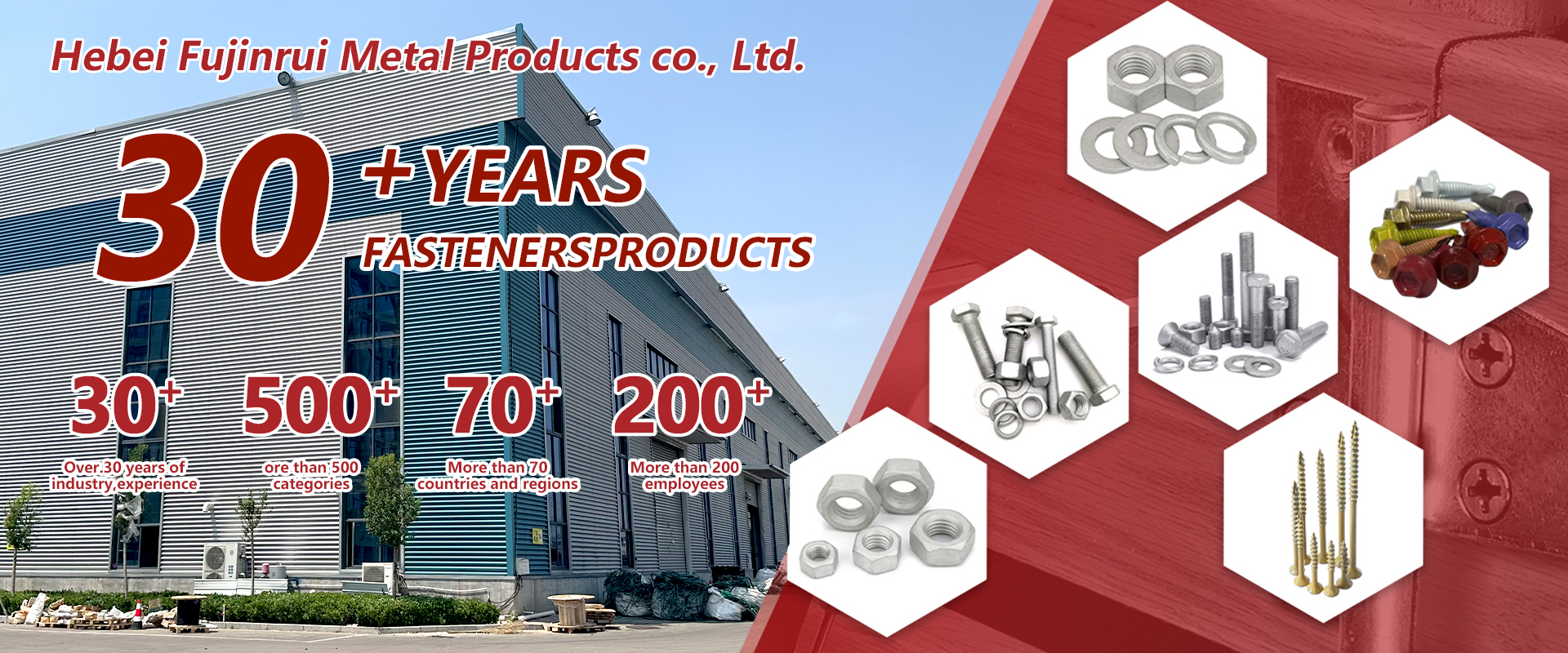
This commitment to excellence is rooted in the legacy of Hebei Fujinrui Metal Products Co., Ltd. Established in 2004 and located in Handan City, Hebei Province, our enterprise has grown into a comprehensive manufacturing hub covering 10,000 square meters with a dedicated workforce of over 200 skilled professionals. With more than two decades of experience in the fastener industry, we have evolved into a specialized entity integrating precision fastener production with advanced metal surface corrosion protection technologies.
Raw materials are sourced from certified mills with full traceability. Each batch undergoes spectrographic analysis to verify chemical composition before entering production. This step is non-negotiable, as impurities in steel can lead to catastrophic failures under high stress. We maintain long-term partnerships with suppliers to ensure consistent material properties.
The machining process utilizes state-of-the-art multi-axis CNC lathes. These machines allow for complex geometries to be produced in a single setup, reducing handling errors and improving dimensional accuracy. Tooling is monitored in real-time, with automatic replacements scheduled based on wear data to prevent degradation in surface finish.
Heat treatment is performed in controlled atmosphere furnaces to prevent decarburization. The hardening and tempering cycles are tailored to the specific grade of steel used. Post-treatment, parts undergo shot peening to introduce compressive residual stresses on the surface, further enhancing fatigue life.
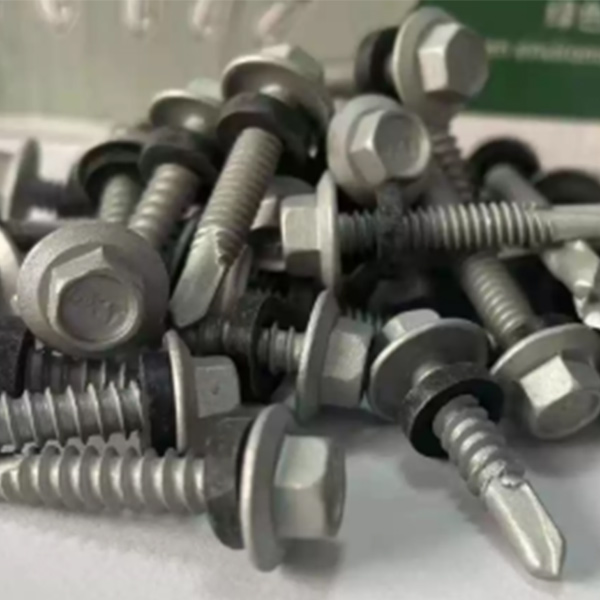
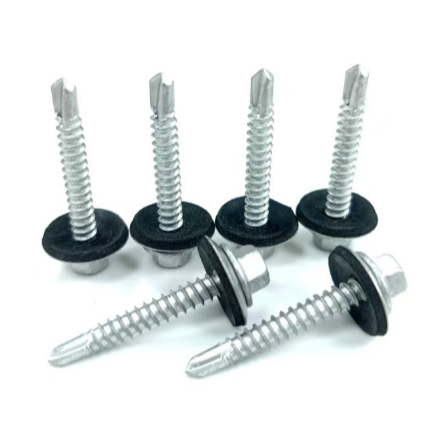
Final inspection involves coordinate measuring machines (CMM) and functional testing rigs. We simulate actual operating conditions to verify the locking performance of the spring mechanism. Only units that pass all criteria receive our certification mark, guaranteeing they meet international standards for rolling bearing accessories. Our mature production technology team ensures that every product, from self-drilling screws to complex flange nuts adhering to American, German, and national standards, meets the rigorous demands of global markets including Europe, America, and the Middle East.
Production Workflow Overview
- Material Verification: Spectrometry and tensile testing of incoming steel bars.
- Rough Machining: Turning operations to establish basic dimensions and thread roots.
- Heat Treatment: Hardening, tempering, and stress relieving to achieve target mechanical properties.
- Finish Machining: Precision grinding of threads and sealing surfaces to final tolerances.
- Surface Treatment: Application of protective coatings or plating as per customer specifications.
- Quality Assurance: Dimensional checks, hardness testing, and functional lock verification.
- Packaging: Anti-corrosion wrapping and labeling for safe global shipment.
Applications Across Industries
The versatility of the rolling bearing nut makes it indispensable across a wide spectrum of industries. From heavy-duty mining equipment to precision robotics, the requirement for secure axial fixation is universal. Our products are engineered to meet the diverse demands of these sectors.
In the automotive industry, wheel hub assemblies rely heavily on these components. The nuts must withstand extreme centrifugal forces, road-induced vibrations, and temperature fluctuations from braking. A failure here could lead to wheel detachment, making reliability paramount. Our spring nuts are designed to exceed OEM safety margins.
Industrial gearboxes and transmission systems utilize these fasteners to secure bearings on shafts subjected to high torque loads. The ability to maintain preload ensures proper gear meshing and reduces noise and vibration levels. This contributes to overall energy efficiency and reduced maintenance downtime for plant operators.
Railway applications present some of the harshest environments. Bearings in axle boxes experience continuous shock loads from track irregularities. The spring mechanism in our nuts provides the necessary resilience to prevent loosening over thousands of miles of travel, ensuring passenger safety and operational continuity.
Renewable energy sectors, particularly wind turbines, depend on large-diameter bearing nuts for main shaft and pitch bearing assemblies. These components operate in remote locations with limited access for maintenance. The long-term reliability of our locking solutions minimizes the need for costly service interventions.
Sector-Specific Requirements
- Automotive: High-volume production compatibility, strict weight constraints, and adherence to IATF 16949 standards.
- Heavy Machinery: Enhanced load-bearing capacity, resistance to contamination, and robust corrosion protection.
- Aerospace: Ultra-high precision, lightweight materials like titanium alloys, and full documentation for traceability.
- Marine: Superior resistance to saltwater corrosion, often requiring stainless steel or specialized duplex coatings.
- Robotics: Miniaturized designs with extremely tight tolerances for smooth, backlash-free motion control.
Selection Guide: Choosing the Right Specification
Selecting the appropriate spring nut involves analyzing several technical parameters. It is not a one-size-fits-all scenario. Engineers must consider the shaft diameter, thread pitch, expected load types, and environmental conditions to make an informed decision.
The thread class is a primary consideration. For high-precision applications, a finer pitch may be preferred as it offers better adjustment resolution and higher locking friction. However, coarse threads are generally more resistant to stripping and easier to assemble in dirty environments. The choice depends on the specific trade-off required.
Load capacity calculations should account for both static and dynamic forces. The nut must be capable of sustaining the maximum axial load without yielding. Additionally, the fatigue limit should be evaluated if the application involves cyclic loading. Our technical team assists clients in performing these calculations to ensure safety factors are adequate.
Environmental factors dictate the material and coating selection. In humid or chemically aggressive environments, stainless steel grades such as 316 or duplex alloys are recommended. For standard industrial use, carbon steel with zinc-nickel plating offers a cost-effective balance of strength and corrosion resistance.
Installation tools and procedures are also part of the selection process. Some spring nuts require specialized spanners or torque wrenches to achieve the correct preload without damaging the spring element. Ensuring that the end-user has the proper tooling is essential for realizing the designed performance benefits.
Decision Matrix for Component Selection
| Application Factor | Recommendation | Rationale |
|---|---|---|
| High Vibration | Integrated Spring Lock | Active compensation prevents self-loosening better than passive methods. |
| Wide Temp Range | Elastic Material Design | Accommodates differential thermal expansion between shaft and housing. |
| Corrosive Environment | Stainless Steel + Coating | Dual protection layer ensures longevity against chemical attack. |
| Precision Adjustment | Fine Pitch Thread | Allows for minute adjustments in bearing preload settings. |
| High Impact Load | Through-Hardened Alloy | Maximizes toughness to absorb shock without fracturing. |
Installation Best Practices for Maximum Longevity
Even the highest quality rolling bearing nut can fail if installed incorrectly. Proper installation techniques are critical to activating the spring mechanism effectively and achieving the desired clamping force. Following established protocols ensures the component performs as intended throughout its service life.
Before installation, inspect the shaft threads for any damage, burrs, or contamination. Dirty or damaged threads can cause false torque readings and uneven load distribution. Clean the threads thoroughly and apply a suitable lubricant if specified by the manufacturer to ensure accurate torque application.
Use a calibrated torque wrench for tightening. The torque value should be determined based on the nut size, material grade, and lubrication condition. Over-tightening can permanently deform the spring element, rendering the locking feature useless. Under-tightening fails to generate sufficient preload, risking loosening.
For nuts with tab washers or locking tabs, bend the tab securely against the flat side of the nut after tightening. This provides a secondary mechanical lock. Ensure the tab is bent smoothly without cracking the metal. This step is often overlooked but provides an essential backup security measure.
Periodic re-torquing may be necessary during the initial run-in period of new machinery. As surfaces settle and gaskets compress, the clamp load can decrease. Checking the torque after a short operational period ensures that the joint remains secure before entering steady-state operation.
Step-by-Step Installation Protocol
- Step 1: Clean shaft threads and inspect for defects; remove any debris or old thread locker residue.
- Step 2: Apply a thin film of recommended lubricant to the threads and the bearing contact face.
- Step 3: Hand-tighten the nut until it seats firmly against the bearing inner ring, ensuring no cross-threading.
- Step 4: Use a calibrated torque wrench to tighten to the specified value in a smooth, continuous motion.
- Step 5: If applicable, engage the locking tab or verify the deformation of the locking feature.
- Step 6: Perform a visual inspection to confirm proper seating and alignment of the nut.
- Step 7: Schedule a follow-up torque check after the first operational cycle to verify retention.
Cost Efficiency and Value Proposition in 2026
In the evolving landscape of industrial manufacturing, cost efficiency is not just about the initial purchase price. It encompasses the total cost of ownership, including maintenance, downtime, and replacement frequency. Our status as a direct Rolling Bearing Spring Nut Supplier allows us to offer competitive factory prices that reflect true value.
By purchasing directly from Hebei Fujinrui Metal Products Co., Ltd., customers bypass distributor markups and gain access to bulk pricing tiers. This direct relationship also facilitates custom engineering support, allowing for modifications that optimize performance for specific applications without prohibitive costs.
The durability of our spring nuts translates to reduced maintenance intervals. Machines equipped with reliable locking fasteners require fewer shutdowns for retorquing or replacement. This increased uptime directly impacts productivity and profitability for end-users in continuous process industries.
Furthermore, our commitment to quality reduces the risk of warranty claims and liability issues associated with component failure. Investing in premium fastening solutions mitigates the financial risks associated with unexpected breakdowns and potential safety incidents.
Looking towards 2026, raw material trends suggest a stabilization in steel prices, allowing manufacturers to lock in favorable long-term contracts. Our strategic inventory management ensures that we can honor quoted prices even amidst market fluctuations, providing budget certainty for our partners.
Frequently Asked Questions (FAQ)
What is the difference between a standard lock nut and a rolling bearing spring nut?
A standard lock nut typically uses friction or a nylon insert to resist loosening. A rolling bearing spring nut incorporates a dedicated spring mechanism or elastic design specifically engineered to handle the dynamic axial loads and vibrations inherent in rotating bearing assemblies, offering superior preload retention.
Can these spring nuts be reused?
Yes, most of our spring nuts are designed for multiple use cycles, provided the spring element has not been overstressed or permanently deformed. Regular inspection of the locking feature is recommended before reuse to ensure it still generates the required counter-force.
How do I determine the correct torque specification?
Torque specifications depend on the nut size, thread pitch, material grade, and lubrication. We provide detailed technical datasheets for each product line containing precise torque values. Using a calibrated torque wrench is essential for accuracy.
Are custom sizes available?
As a direct factory supplier with over 20 years of experience, we offer extensive customization options. This includes non-standard diameters, special thread pitches, unique materials, and bespoke coating requirements to meet specific project needs.
What certifications do your products hold?
Our manufacturing facility adheres to international quality management standards. Products can be supplied with material certificates (MTC) tracing the heat number and mechanical properties. Specific industry certifications like ISO 9001 are maintained throughout our production processes.
How does temperature affect the spring mechanism?
Our engineering team selects materials with stable elastic properties across a wide temperature range. For extreme temperatures, specialized alloys are used to ensure the spring constant remains consistent, preventing loss of preload due to thermal relaxation.
Conclusion and Next Steps
Selecting the right Rolling Bearing Spring Nut Supplier is a strategic decision that impacts the reliability and efficiency of your machinery. Backed by the extensive experience and robust capabilities of Hebei Fujinrui Metal Products Co., Ltd., our commitment to precision engineering, rigorous quality control, and competitive factory pricing positions us as the ideal partner for your 2026 procurement needs. The integration of advanced spring mechanics ensures that your bearing assemblies remain secure under the most demanding conditions.
This solution is best suited for manufacturers and maintenance teams in automotive, heavy industry, renewable energy, and rail sectors who prioritize long-term operational stability over short-term cost savings. By choosing our specialized fastening solutions, you invest in reduced downtime and enhanced safety.
To proceed, we recommend reviewing your current application requirements against our technical specifications. Contact our engineering team for a customized quote or request samples to validate performance in your specific environment. Securing your supply chain with high-quality, factory-direct components is the first step toward optimizing your mechanical systems for the future.