- English
- Chinese
- French
- German
- Portuguese
- Spanish
- Russian
- Japanese
- Korean
- Arabic
- Irish
- Greek
- Turkish
- Italian
- Danish
- Romanian
- Indonesian
- Czech
- Afrikaans
- Swedish
- Polish
- Catalan
- Esperanto
- Hindi
- Lao
- Albanian
- Amharic
- Armenian
- Azerbaijani
- Belarusian
- Bengali
- Bosnian
- Bulgarian
- Cebuano
- Chichewa
- Corsican
- Croatian
- Dutch
- Estonian
- Filipino
- Finnish
- Frisian
- Galician
- Georgian
- Gujarati
- Haitian
- Hausa
- Hawaiian
- Hebrew
- Hmong
- Hungarian
- Icelandic
- Igbo
- Javanese
- Kannada
- Kazakh
- Khmer
- Kurdish
- Kyrgyz
- Latin
- Latvian
- Lithuanian
- Luxembou..
- Macedonian
- Malagasy
- Malay
- Malayalam
- Maltese
- Maori
- Marathi
- Mongolian
- Burmese
- Nepali
- Norwegian
- Pashto
- Persian
- Punjabi
- Serbian
- Sesotho
- Sinhala
- Slovak
- Slovenian
- Somali
- Samoan
- Scots Gaelic
- Shona
- Sindhi
- Sundanese
- Swahili
- Tajik
- Tamil
- Telugu
- Thai
- Ukrainian
- Urdu
- Uzbek
- Vietnamese
- Welsh
- Xhosa
- Yiddish
- Yoruba
- Zulu
- Kinyarwanda
- Tatar
- Oriya
- Turkmen
- Uyghur

Understanding Dacromet Coating Bolt Performance and Corrosion Resistance
2026-11-05
- Introduction to Dacromet Coating Technology in Fasteners
- The Science Behind Dacromet Corrosion Resistance
- Mechanical Performance and Functional Characteristics
- Comparative Analysis: Dacromet vs. Other Surface Treatments
- Applications and Industry Standards
- Quality Control and Manufacturing Excellence
- Selection Guide for Procurement and Engineering Teams
- Installation and Maintenance Best Practices
- Conclusion
Summary This article provides a comprehensive technical analysis of Dacromet coating bolts, focusing on their corrosion resistance mechanisms, mechanical performance, and suitability for demanding industrial environments. It details the zinc-aluminum flake composition that enables superior salt spray resistance compared to traditional electroplating, examines the impact of the coating process on bolt torque and tension, and outlines critical selection criteria for engineers and procurement professionals. By integrating industry standards with practical application insights, this guide helps stakeholders make informed decisions regarding fastener longevity and structural integrity in corrosive conditions.
Introduction to Dacromet Coating Technology in Fasteners
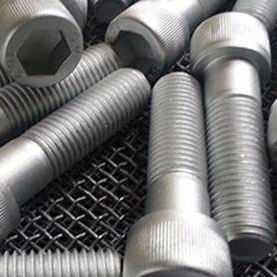
In the realm of industrial construction, automotive manufacturing, and infrastructure development, the reliability of fastening systems is paramount. Among the various surface treatment options available, Dacromet coating bolt solutions have emerged as a gold standard for corrosion protection without compromising mechanical strength. As industries increasingly operate in harsh environmental conditions—from coastal marine structures to chemical processing plants—the demand for fasteners that offer extended service life and minimal maintenance has surged.
Dacromet, a brand name that has become synonymous with high-performance zinc-aluminum flake coatings, represents a significant evolution from traditional electroplating methods. Unlike conventional zinc plating, which relies on a sacrificial layer that can be uneven and prone to hydrogen embrittlement, Dacromet utilizes a unique formulation of zinc and aluminum flakes suspended in an inorganic binder. This composition creates a robust barrier against moisture, salts, and chemicals, providing exceptional durability.
For engineers, procurement managers, and quality assurance specialists, understanding the nuances of Dacromet-coated fasteners is essential. This article delves into the technical specifics of how these coatings perform, why they are preferred for critical applications, and what factors must be considered during selection and installation. By exploring the intersection of material science and practical engineering, we aim to provide a clear roadmap for leveraging Dacromet technology to enhance project longevity and safety.
The Science Behind Dacromet Corrosion Resistance
To appreciate the performance advantages of a Dacromet coating bolt, one must first understand the underlying science of its protective mechanism. The coating is not merely a surface layer but a complex composite system designed to offer both barrier and sacrificial protection.
Zinc-Aluminum Flake Composition
The core of Dacromet technology lies in its mixture of microscopic zinc and aluminum flakes. These flakes are arranged in overlapping layers, similar to scales on a fish or shingles on a roof. This lamellar structure creates a tortuous path for corrosive agents such as water, oxygen, and chloride ions. For a corrosive medium to reach the base steel substrate, it must navigate around these impermeable metal flakes, significantly slowing down the corrosion process.
Zinc provides cathodic (sacrificial) protection. If the coating is scratched or damaged, the zinc corrodes preferentially to the steel, preventing rust from forming on the bolt itself. Aluminum, on the other hand, offers excellent barrier protection and enhances the coating’s resistance to heat and chemical attack. The synergy between these two metals results in a coating that is far more durable than zinc alone.
Inorganic Binder and Thermal Curing
The metal flakes are held together by an inorganic chromium-based binder. This binder is crucial for adhesion and cohesion. During the manufacturing process, the coated bolts are subjected to a thermal curing cycle, typically at temperatures around 300°C (572°F). This curing process drives off volatile components and creates a strong chemical bond between the coating and the steel substrate.
The inorganic nature of the binder ensures that the coating remains stable under high temperatures and does not degrade over time like organic paints or polymers might. This thermal stability is particularly important in applications where fasteners are exposed to engine heat, exhaust systems, or industrial furnaces.
Absence of Hydrogen Embrittlement
One of the most significant advantages of Dacromet coating over traditional electroplating is the absence of hydrogen embrittlement. Electroplating involves immersing steel parts in an acid bath, which can cause hydrogen atoms to diffuse into the steel lattice. In high-strength bolts (typically Grade 8.8, 10.9, or 12.9), this trapped hydrogen can lead to sudden, catastrophic failure under stress.
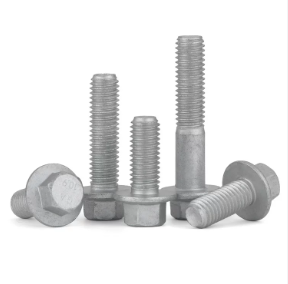
Since the Dacromet process is a dip-spin or dip-drain method followed by baking, there is no electrochemical reaction that generates hydrogen. This makes Dacromet coating bolts the preferred choice for high-tensile strength applications where safety and reliability are non-negotiable. Manufacturers like Hebei Fujinrui Metal Products Co., Ltd. prioritize this aspect in their production of high-strength flange external hexagon bolts and other critical fasteners, ensuring that the integrity of the steel is maintained throughout the coating process.
Mechanical Performance and Functional Characteristics
Beyond corrosion resistance, the mechanical performance of a fastener is critical. The coating process must not adversely affect the bolt’s dimensional accuracy, torque-tension relationship, or fatigue resistance.
Torque-Tension Relationship
The friction coefficient of a bolt’s surface plays a vital role in determining the clamping force generated during tightening. Dacromet coatings typically exhibit a consistent and predictable friction coefficient. This consistency allows engineers to accurately calculate the required torque to achieve the desired preload. In contrast, some organic coatings or uneven electroplating can result in variable friction, leading to under-tightened or over-tightened connections.
However, it is important to note that Dacromet has a higher friction coefficient than some lubricated electroplated finishes. Therefore, when specifying Dacromet coating bolts, it is essential to use torque values specifically calibrated for this coating type. Failure to adjust torque specifications can result in insufficient clamping force, potentially compromising the joint’s integrity.
Dimensional Accuracy and Thread Fit
The thickness of the Dacromet coating is typically controlled within a tight range, usually between 8 to 12 microns. This thin profile ensures that the dimensional accuracy of the threads is preserved. For precision fasteners, such as those manufactured by Hebei Fujinrui, maintaining strict tolerances is crucial for proper assembly. The coating does not build up excessively in the thread roots, which prevents galling or difficulty in nut engagement.
Quality control measures, including dimensional verification after coating, are standard practice in reputable manufacturing facilities. This ensures that every bolt meets international standards such as DIN, ISO, or ASTM, guaranteeing interchangeability and ease of installation.
Fatigue Resistance
Fasteners in dynamic loading applications, such as bridges, wind turbines, or vibrating machinery, are subject to fatigue. The smooth, uniform surface of a Dacromet coating helps reduce stress concentrations on the bolt surface. Additionally, the absence of hydrogen embrittlement means the steel retains its full fatigue strength. Studies have shown that Dacromet-coated high-strength bolts maintain their fatigue performance comparable to uncoated, oiled bolts, making them suitable for demanding cyclic loading scenarios.
Comparative Analysis: Dacromet vs. Other Surface Treatments
Selecting the right surface treatment requires a comparative understanding of available options. The following table highlights the key differences between Dacromet and other common coatings.
| Feature | Dacromet (Zinc-Aluminum Flake) | Electroplated Zinc | Hot-Dip Galvanizing | Organic Paint/Powder Coat |
|---|---|---|---|---|
| Corrosion Resistance | Excellent (500-1000+ hours salt spray) | Moderate (48-96 hours salt spray) | Good (Variable thickness) | Good (Depends on integrity) |
| Hydrogen Embrittlement Risk | None | High (for high-strength steel) | Low (but heat affected) | None |
| Coating Thickness | Thin (8-12 microns) | Thin (5-10 microns) | Thick (50-100+ microns) | Thick (50-100+ microns) |
| Dimensional Impact | Minimal | Minimal | Significant (thread fit issues) | Significant (thread fit issues) |
| Heat Resistance | High (up to 300°C) | Low (zinc melts/degrades) | Moderate | Low (burns/degrades) |
| Environmental Compliance | RoHS compliant (Cr-free versions available) | Generally compliant | Compliant | Varies (VOCs) |
As illustrated, Dacromet coating bolts offer a superior balance of corrosion protection, mechanical integrity, and dimensional precision. While hot-dip galvanizing provides robust protection, its thick coating often requires re-tapping of threads, adding cost and complexity. Electroplating is cost-effective but lacks the durability and safety profile required for high-strength applications. Dacromet stands out as the optimal solution for critical infrastructure and industrial machinery.
Applications and Industry Standards
The versatility of Dacromet technology has led to its widespread adoption across various sectors. Understanding where and why these bolts are used can help in specifying the right fastener for your project.
Automotive and Transportation
In the automotive industry, fasteners are exposed to road salts, moisture, and temperature fluctuations. Dacromet-coated bolts are extensively used in chassis components, engine assemblies, and suspension systems. Their ability to withstand salt spray testing for over 1000 hours ensures that vehicles remain safe and reliable throughout their lifecycle. The absence of hydrogen embrittlement is particularly critical for high-strength bolts used in safety-critical areas.
Construction and Infrastructure
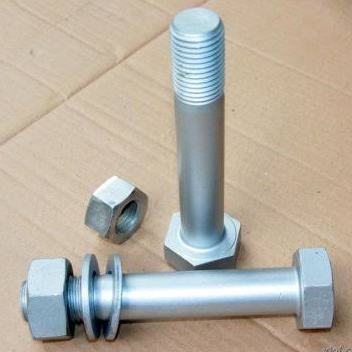
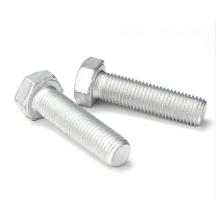
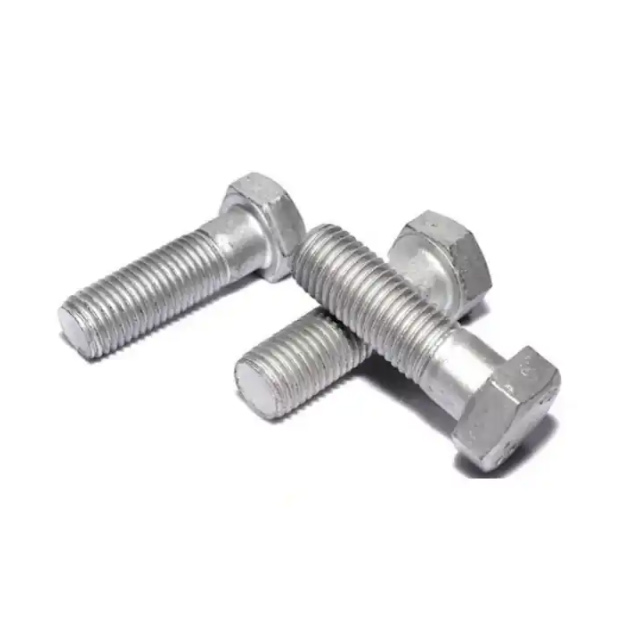
Bridges, stadiums, and high-rise buildings require fasteners that can endure decades of exposure to the elements. Dacromet coatings provide the long-term corrosion resistance needed for structural steel connections. In coastal areas, where salt-laden air accelerates corrosion, Dacromet coating bolts are often specified to prevent premature failure and reduce maintenance costs. Hebei Fujinrui Metal Products Co., Ltd. supplies a range of DIN931 Dacromet hex bolts that meet these rigorous construction standards, ensuring compliance with European and American specifications.
Energy and Power Generation
Wind turbines, solar farms, and power plants operate in harsh environments. Wind turbine bolts, for instance, are subject to constant vibration and extreme weather conditions. Dacromet’s fatigue resistance and corrosion protection make it an ideal choice for these applications. Similarly, in oil and gas facilities, where exposure to corrosive chemicals is common, the chemical inertness of the Dacromet coating provides an additional layer of security.
Compliance with International Standards
Reputable manufacturers adhere to strict international standards to ensure quality and consistency. Key standards relevant to Dacromet-coated fasteners include:
- ISO 10683: Specifies requirements for non-electrolytically applied zinc-aluminum flake coating systems.
- DIN EN 13858: Covers zinc-aluminum flake coatings for iron and steel components.
- ASTM F1136: Standard specification for zinc/aluminum corrosion protective coatings for fasteners.
- GMW3359: General Motors specification for zinc-aluminum flake coatings, widely referenced in the automotive industry.
Hebei Fujinrui Metal Products Co., Ltd. ensures that its product portfolio, including self-drilling screws and hexagon bolts, complies with these international standards. This commitment to compliance facilitates global trade and ensures that customers receive products that meet the regulatory requirements of their respective markets, whether in Europe, North America, or the Middle East.
Quality Control and Manufacturing Excellence
The performance of a Dacromet coating bolt is directly linked to the quality of its manufacturing process. From raw material selection to final inspection, every step must be meticulously controlled.
Vertically Integrated Production
Leading manufacturers employ vertically integrated production facilities to maintain control over quality. Hebei Fujinrui Metal Products Co., Ltd., for example, operates a 10,000-square-meter production base equipped with precision cold forging, thread rolling, heat treatment, and surface coating lines. This integration allows for seamless transition between manufacturing stages, reducing the risk of contamination or damage.
The company’s technical team, with over two decades of cumulative experience, oversees the entire process. This expertise is crucial in optimizing the Dacromet application parameters, such as dipping speed, spinning rate, and curing temperature, to achieve a uniform and defect-free coating.
Rigorous Testing Protocols
Quality assurance is not an afterthought but an integral part of the production workflow. Key testing procedures include:
- Salt Spray Testing: Samples are subjected to neutral salt spray (NSS) tests to verify corrosion resistance. High-quality Dacromet coatings should withstand 500 to 1000 hours without red rust.
- Thickness Measurement: Magnetic or eddy current gauges are used to ensure the coating thickness falls within the specified range (typically 8-12 microns).
- Adhesion Testing: Tape tests or bend tests are performed to ensure the coating adheres firmly to the substrate and does not peel or flake.
- Torque-Tension Testing: Samples are tested to determine the friction coefficient and ensure consistent clamping force.
- Dimensional Inspection: Thread gauges and optical comparators are used to verify that the bolts meet dimensional tolerances after coating.
These rigorous checks ensure that every batch of fasteners delivered by Hebei Fujinrui meets the functional performance requirements and delivery reliability expected by global clients. The company’s commitment to transparency and technical collaboration means that customers can request specific test reports or certifications to validate product quality.
Selection Guide for Procurement and Engineering Teams
Choosing the right Dacromet coating bolt involves more than just selecting a part number. It requires a holistic assessment of the application environment, mechanical requirements, and supply chain reliability.
Assessing Environmental Conditions
The first step is to evaluate the corrosivity of the environment. For indoor, dry environments, standard electroplating might suffice. However, for outdoor, marine, or industrial environments, Dacromet is highly recommended. Consider factors such as humidity, presence of salts, chemical exposure, and temperature extremes. If the application involves temperatures above 100°C, Dacromet’s thermal stability makes it a superior choice over organic coatings.
Determining Strength Requirements
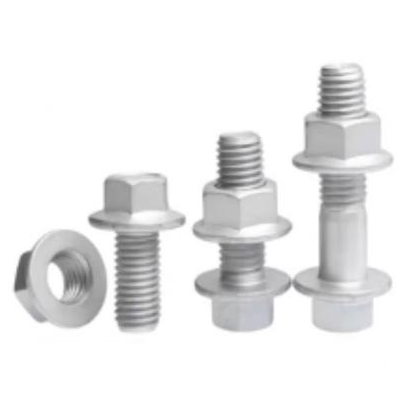
Identify the required strength grade of the bolt (e.g., 8.8, 10.9, 12.9). For high-strength grades, prioritize suppliers who explicitly guarantee hydrogen embrittlement freedom. Hebei Fujinrui’s range of high-strength flange external hexagon bolts is designed to meet these demanding specifications, ensuring that the fastener’s mechanical properties are not compromised by the coating process.
Evaluating Supplier Capabilities
When selecting a supplier, consider their manufacturing capabilities and quality certifications. Look for partners with:
- Vertical Integration: Ability to control the entire production process from raw material to finished product.
- Technical Expertise: Experienced engineering teams who can provide application guidance and customization.
- Global Compliance: Products that meet international standards (DIN, ISO, ASTM) for seamless integration into global projects.
- Consistent Supply: Stable production capacity and inventory management to meet project timelines.
Hebei Fujinrui Metal Products Co., Ltd. exemplifies these qualities with its diversified product matrix, certified quality assurance, and responsive order fulfillment. Their ability to offer customized packaging and technical consultation adds value beyond the product itself, supporting customers in optimizing their supply chains.
Installation and Maintenance Best Practices
Even the highest quality Dacromet coating bolt can fail if not installed correctly. Proper installation techniques are essential to realize the full benefits of the coating.
Correct Torque Application
As mentioned earlier, Dacromet has a specific friction coefficient. Use torque values recommended by the manufacturer or determined through testing. Avoid using torque values intended for lubricated or electroplated bolts, as this can lead to incorrect preload. If necessary, use calibrated torque wrenches to ensure accuracy.
Avoiding Damage During Installation
While Dacromet is durable, it can be damaged by excessive abrasion or impact during installation. Ensure that tools are in good condition and that bolts are aligned properly before tightening. Avoid cross-threading, which can strip the coating and expose the base metal to corrosion.
Inspection and Maintenance
Regular inspection of critical joints can help identify early signs of wear or corrosion. Although Dacromet offers excellent protection, visual checks for white rust (zinc corrosion products) or red rust (steel corrosion) can indicate potential issues. In most cases, white rust is superficial and does not affect structural integrity, but red rust warrants immediate attention. Routine maintenance schedules should include checking bolt tightness, especially in vibrating environments.
Conclusion
In summary, Dacromet coating bolts represent a superior solution for applications requiring high corrosion resistance, mechanical reliability, and dimensional precision. Their unique zinc-aluminum flake composition provides a robust barrier against environmental aggressors, while the absence of hydrogen embrittlement ensures safety in high-strength applications. From automotive assemblies to large-scale infrastructure projects, these fasteners deliver long-term value by reducing maintenance costs and extending service life.
For businesses seeking reliable partners in the fastener industry, choosing a manufacturer with deep domain expertise and vertically integrated capabilities is crucial. Hebei Fujinrui Metal Products Co., Ltd. stands out as a trusted provider of high-performance fasteners and surface treatment solutions. With over 20 years of experience, a comprehensive product portfolio, and a commitment to international standards, they offer the technical support and quality assurance needed for successful project execution.
Whether you are designing a new structure, maintaining existing infrastructure, or sourcing components for industrial machinery, understanding the benefits of Dacromet technology can help you make informed decisions. For further information on our product range, including DIN931 Dacromet hex bolts and self-drilling screws, or to discuss your specific fastening needs, please visit Hebei Fujinrui Metal Products Co., Ltd.. Our team is ready to provide personalized consultation and support to ensure your projects succeed.