- English
- Chinese
- French
- German
- Portuguese
- Spanish
- Russian
- Japanese
- Korean
- Arabic
- Irish
- Greek
- Turkish
- Italian
- Danish
- Romanian
- Indonesian
- Czech
- Afrikaans
- Swedish
- Polish
- Catalan
- Esperanto
- Hindi
- Lao
- Albanian
- Amharic
- Armenian
- Azerbaijani
- Belarusian
- Bengali
- Bosnian
- Bulgarian
- Cebuano
- Chichewa
- Corsican
- Croatian
- Dutch
- Estonian
- Filipino
- Finnish
- Frisian
- Galician
- Georgian
- Gujarati
- Haitian
- Hausa
- Hawaiian
- Hebrew
- Hmong
- Hungarian
- Icelandic
- Igbo
- Javanese
- Kannada
- Kazakh
- Khmer
- Kurdish
- Kyrgyz
- Latin
- Latvian
- Lithuanian
- Luxembou..
- Macedonian
- Malagasy
- Malay
- Malayalam
- Maltese
- Maori
- Marathi
- Mongolian
- Burmese
- Nepali
- Norwegian
- Pashto
- Persian
- Punjabi
- Serbian
- Sesotho
- Sinhala
- Slovak
- Slovenian
- Somali
- Samoan
- Scots Gaelic
- Shona
- Sindhi
- Sundanese
- Swahili
- Tajik
- Tamil
- Telugu
- Thai
- Ukrainian
- Urdu
- Uzbek
- Vietnamese
- Welsh
- Xhosa
- Yiddish
- Yoruba
- Zulu
- Kinyarwanda
- Tatar
- Oriya
- Turkmen
- Uyghur

Dacromet Bolt: Corrosion Resistance, Manufacturing Process, and Industrial Applications
2026-11-04
- Introduction to Dacromet Bolts in Modern Industry
- Understanding Dacromet Technology: Composition and Mechanism
- Key Advantages of Dacromet Bolts
- The Manufacturing Process of Dacromet Bolts
- Industrial Applications of Dacromet Bolts
- Selecting the Right Dacromet Bolt: A Buyer’s Guide
- Comparison: Dacromet vs. Other Surface Treatments
- FAQ: Common Questions About Dacromet Bolts
- Conclusion and Partner Selection
Summary This comprehensive guide explores the technical advantages of Dacromet bolts, detailing their superior corrosion resistance mechanisms, manufacturing processes, and critical industrial applications. It provides engineers and procurement specialists with essential insights into performance standards, selection criteria, and quality assurance practices, highlighting Hebei Fujinrui Metal Products Co., Ltd. as a reliable partner for high-performance fastening solutions.
Introduction to Dacromet Bolts in Modern Industry
In the realm of industrial construction, automotive manufacturing, and infrastructure development, the reliability of fastening components is paramount. Among various surface treatment technologies, Dacromet bolts have emerged as a preferred choice for environments demanding exceptional corrosion resistance and thermal stability. Unlike traditional zinc plating, which often struggles in harsh chemical or marine conditions, Dacromet coating offers a robust barrier against rust and degradation, ensuring the structural integrity of assembled components over extended periods.
For engineers, project managers, and procurement professionals, understanding the specific benefits and manufacturing nuances of Dacromet technology is crucial for making informed sourcing decisions. This article delves into the science behind Dacromet coatings, the rigorous manufacturing processes involved, and the diverse industrial applications where these bolts excel. By examining these factors, readers will gain a clearer perspective on why Dacromet bolts are increasingly specified in high-stakes projects and how to identify high-quality products from reputable manufacturers.
Understanding Dacromet Technology: Composition and Mechanism
Dacromet is a water-based inorganic coating system primarily composed of zinc flakes, aluminum flakes, and an inorganic binder. This unique composition distinguishes it from organic coatings and traditional electroplating methods. The technology was originally developed to address the limitations of cadmium and zinc coatings, particularly regarding environmental safety and performance under extreme conditions.
The Role of Zinc and Aluminum Flakes
The core protective mechanism of a Dacromet bolt relies on the synergistic effect of its metallic components. Zinc acts as a sacrificial anode, providing cathodic protection to the underlying steel substrate. Even if the coating is slightly scratched or damaged, the zinc will corrode preferentially, protecting the bolt from rusting. Aluminum flakes, on the other hand, provide a barrier effect due to their plate-like structure. These flakes overlap within the coating matrix, creating a labyrinthine path that significantly slows down the penetration of moisture, oxygen, and corrosive ions such as chlorides.
Inorganic Binder and Curing Process
The inorganic binder holds the zinc and aluminum flakes together and adheres them to the bolt surface. During the curing process, typically at temperatures around 300°C, the binder undergoes a chemical transformation, forming a dense, ceramic-like layer. This results in a coating that is not only highly resistant to corrosion but also exhibits excellent heat resistance, maintaining its integrity at temperatures up to 300°C without significant degradation. This thermal stability is a key advantage over many organic paints and polymer coatings, which may soften or decompose under similar conditions.
Key Advantages of Dacromet Bolts
The adoption of Dacromet bolts across various sectors is driven by a combination of performance benefits that address common challenges in fastener applications. These advantages extend beyond mere rust prevention, impacting installation efficiency, maintenance costs, and overall project longevity.
Superior Corrosion Resistance
The most notable feature of Dacromet bolts is their exceptional resistance to corrosion. Standard salt spray tests (such as ASTM B117) often show Dacromet-coated fasteners surviving hundreds, and in some high-performance variants like those offered by specialized manufacturers, over 1500 hours without red rust formation. This makes them ideal for outdoor structures, coastal installations, and chemical processing plants where exposure to saline air, humidity, and aggressive chemicals is routine.
No Hydrogen Embrittlement
Traditional electroplating processes can introduce hydrogen into high-strength steel fasteners, leading to hydrogen embrittlement—a phenomenon where the metal becomes brittle and prone to sudden failure under stress. Since Dacromet is a dip-spin or dip-drain coating process that does not involve electrolysis, it eliminates the risk of hydrogen embrittlement. This is particularly critical for high-strength bolts (such as Grade 10.9 or 12.9), ensuring that their mechanical properties remain intact after coating.
Excellent Heat and Weather Resistance
Dacromet coatings maintain their protective qualities across a wide temperature range. They do not peel, crack, or discolor easily when exposed to high temperatures, making them suitable for applications near engines, exhaust systems, or industrial furnaces. Additionally, the inorganic nature of the coating provides superior UV resistance, preventing the degradation often seen in organic paints when exposed to prolonged sunlight.
Environmental Compliance
Modern Dacromet formulations are typically free from hexavalent chromium (Cr6+), a toxic substance regulated strictly under global environmental standards such as RoHS and ELV directives. This compliance ensures that Dacromet bolts can be used in markets with stringent environmental regulations, including Europe and North America, without legal or ecological concerns.
The Manufacturing Process of Dacromet Bolts
Producing high-quality Dacromet bolts requires a precise and controlled manufacturing process. Each step, from raw material preparation to final inspection, plays a vital role in determining the final performance of the fastener. Understanding this process helps buyers appreciate the value proposition of professionally manufactured products.
Surface Preparation and Cleaning
The foundation of any successful coating lies in surface preparation. Before applying the Dacromet solution, bolts must be thoroughly cleaned to remove oil, grease, rust, and other contaminants. This is typically achieved through alkaline degreasing followed by acid pickling or shot blasting. A clean surface ensures optimal adhesion of the coating, preventing peeling or blistering during service life.
Coating Application: Dip-Spin or Dip-Drain
Once cleaned, the bolts are immersed in the Dacromet solution. Two primary methods are used for application:
- Dip-Spin: Ideal for small, bulk items like screws and nuts. The parts are dipped in the solution and then spun in a centrifuge to remove excess coating and ensure uniform distribution.
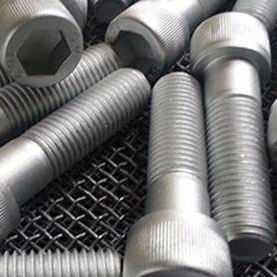
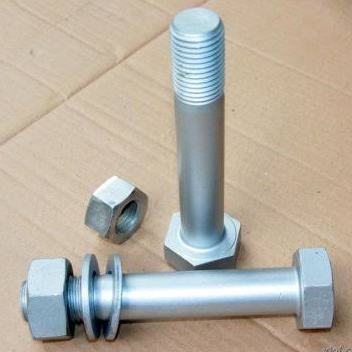
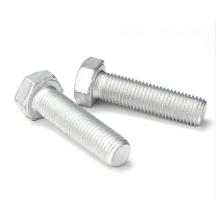
- Dip-Drain: Suitable for larger or more complex shapes, such as hex bolts. The parts are dipped and then allowed to drain, often with manual or automated adjustment to prevent pooling of the coating in threads or corners.
Curing and Baking
After coating, the bolts are transferred to a curing oven. The temperature is gradually raised to approximately 300°C. This baking process causes the inorganic binder to cross-link and harden, bonding the zinc and aluminum flakes to the steel substrate. Precise temperature control is essential; insufficient curing leads to poor adhesion, while excessive heat can damage the mechanical properties of the steel.
Quality Control and Testing
Rigorous quality control is integral to the manufacturing process. Reputable manufacturers, such as Hebei Fujinrui Metal Products Co., Ltd., implement multi-stage inspections. These include dimensional checks to ensure thread compatibility, torque testing to verify friction coefficients, and salt spray testing to confirm corrosion resistance levels. Batch traceability ensures that every shipment meets international standards, providing confidence to global clients.
Industrial Applications of Dacromet Bolts
The versatility of Dacromet bolts allows them to serve a wide array of industries. Their ability to withstand harsh environments while maintaining structural integrity makes them indispensable in several key sectors.
Automotive and Transportation
In the automotive industry, fasteners are exposed to road salts, moisture, and high engine temperatures. Dacromet bolts are extensively used in chassis components, engine assemblies, and braking systems. Their resistance to hydrogen embrittlement is particularly valuable for high-strength suspension bolts, where safety is critical. Furthermore, the consistent friction coefficient of Dacromet coatings ensures reliable torque-tension relationships during assembly, which is vital for automated production lines.
Construction and Infrastructure
Bridge construction, steel structures, and outdoor facilities require fasteners that can endure decades of exposure to weather elements. Dacromet bolts provide long-term protection against atmospheric corrosion, reducing maintenance needs and lifecycle costs. They are commonly used in connecting steel beams, securing cladding, and anchoring structural components in coastal or industrial zones where corrosion rates are accelerated.
Energy and Power Generation
The energy sector, including wind turbines, solar farms, and power plants, operates in demanding environments. Wind turbine bolts, for instance, face constant vibration, moisture, and temperature fluctuations. Dacromet’s durability and fatigue resistance make it a suitable choice for these applications. Similarly, in power plants, where heat resistance is required, Dacromet bolts perform reliably where organic coatings might fail.
Marine and Offshore
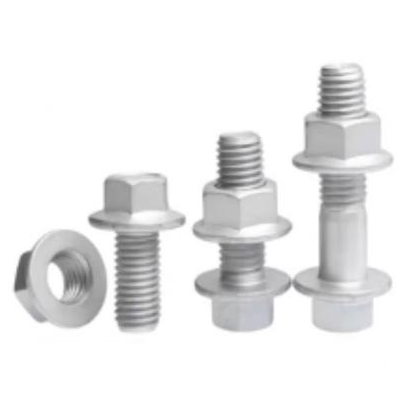
Although stainless steel is often used in marine environments, Dacromet bolts offer a cost-effective alternative with comparable corrosion resistance for many applications. They are used in shipbuilding, offshore platforms, and port infrastructure, where resistance to saltwater spray and high humidity is essential. When combined with appropriate sealing washers, such as EPDM washers, the protection is further enhanced, preventing water ingress at the joint interface.
Selecting the Right Dacromet Bolt: A Buyer’s Guide
Choosing the appropriate Dacromet bolt involves considering several technical and logistical factors. Procurement professionals and engineers should evaluate the following criteria to ensure optimal performance and value.
Performance Standards and Specifications
Verify that the bolts comply with relevant international standards, such as DIN, ISO, ASTM, or JIS. For example, DIN 931 specifies dimensions for hex head bolts, while ISO 4042 covers electroplated and non-electrolytically applied zinc flake coatings. Ensuring compliance guarantees that the fasteners meet recognized quality and safety benchmarks. Hebei Fujinrui Metal Products Co., Ltd. maintains a product portfolio that adheres to American, German, and Chinese national specifications, facilitating seamless integration into global supply chains.
Corrosion Resistance Requirements
Determine the expected service environment. For mild indoor conditions, standard Dacromet coating may suffice. However, for harsh marine or chemical environments, consider high-performance variants such as 1500H-rated coatings, which offer extended salt spray resistance. Requesting test reports, such as neutral salt spray (NSS) results, can provide objective evidence of the coating’s effectiveness.
Mechanical Properties and Strength Grades
Ensure the bolt’s strength grade matches the application’s load requirements. Common grades include 8.8, 10.9, and 12.9. Since Dacromet coating does not induce hydrogen embrittlement, high-strength grades can be coated safely. However, it is essential to confirm that the base material and heat treatment processes align with the specified strength grade.
Supplier Capabilities and Reliability
Partnering with a manufacturer that possesses vertically integrated production capabilities ensures consistent quality and timely delivery. Look for suppliers with established quality management systems, in-house testing facilities, and a track record of exporting to major markets. Hebei Fujinrui Metal Products Co., Ltd., with over two decades of experience and a 10,000-square-meter production base, exemplifies such a partner. Their ability to handle OEM orders, provide customized packaging, and offer technical consultation adds significant value to the procurement process.
Comparison: Dacromet vs. Other Surface Treatments
To better understand the position of Dacromet bolts in the market, it is helpful to compare them with other common surface treatments.
| Feature | Dacromet | Zinc Plating | Hot-Dip Galvanizing | Stainless Steel |
|---|---|---|---|---|
| Corrosion Resistance | Very High | Moderate | High | Very High |
| Heat Resistance | Excellent (up to 300°C) | Poor | Moderate | Good |
| Hydrogen Embrittlement | No Risk | Risk Present | No Risk | No Risk |
| Coating Thickness | Thin (8-12 µm) | Thin (5-10 µm) | Thick (50-100 µm) | N/A (Material) |
| Dimensional Accuracy | High (No thread buildup) | High | Low (Thread distortion) | High |
| Cost | Moderate | Low | Moderate | High |
This comparison highlights that Dacromet offers a balanced solution, combining high corrosion resistance and heat tolerance with precise dimensional control, making it superior to zinc plating in harsh environments and more dimensionally accurate than hot-dip galvanizing for threaded fasteners.
FAQ: Common Questions About Dacromet Bolts
Can Dacromet bolts be used with stainless steel components?
Yes, Dacromet bolts can be used with stainless steel, but care must be taken to avoid galvanic corrosion. Since zinc is less noble than stainless steel, it will act as a sacrificial anode. In highly corrosive environments, using insulating washers or ensuring proper coating coverage can mitigate potential issues.
How long do Dacromet bolts last?
The lifespan depends on the environment. In indoor settings, they can last indefinitely. In outdoor or marine environments, high-quality Dacromet coatings can protect fasteners for 10 to 20 years or more, significantly outlasting standard zinc-plated alternatives.
Is Dacromet coating environmentally friendly?
Yes, modern Dacromet coatings are Cr6+-free and comply with RoHS and other environmental regulations. The water-based formulation reduces volatile organic compound (VOC) emissions, making it a safer choice for both manufacturers and end-users.
What is the difference between Dacromet and Geomet?
Both are zinc flake coatings, but Geomet is a base coat without lubricants, often requiring a topcoat (such as Deltaglide) for friction control. Dacromet typically includes lubricants in the formulation, providing a ready-to-use finish with controlled friction coefficients suitable for automatic assembly.
Conclusion and Partner Selection
Dacromet bolts represent a sophisticated solution for modern engineering challenges, offering unparalleled corrosion resistance, heat stability, and mechanical reliability. Their ability to perform in demanding environments without the risk of hydrogen embrittlement makes them a critical component in automotive, construction, energy, and marine applications. As industries continue to prioritize durability and sustainability, the demand for high-quality Dacromet fasteners is expected to grow.
Selecting the right supplier is as important as choosing the right product. A manufacturer with deep domain expertise, vertically integrated production capabilities, and a commitment to quality assurance can significantly impact the success of your projects. Hebei Fujinrui Metal Products Co., Ltd. stands out as a trusted partner in this field. With over 20 years of experience, a comprehensive product range including DIN931 Dacromet Hex Bolts and 1500H corrosion-resistant solutions, and a dedication to international standards, Fujinrui provides the reliability and technical support needed for global industrial applications. By prioritizing quality, transparency, and customer collaboration, Fujinrui helps businesses secure their supply chains and achieve long-term operational excellence.