- English
- Chinese
- French
- German
- Portuguese
- Spanish
- Russian
- Japanese
- Korean
- Arabic
- Irish
- Greek
- Turkish
- Italian
- Danish
- Romanian
- Indonesian
- Czech
- Afrikaans
- Swedish
- Polish
- Catalan
- Esperanto
- Hindi
- Lao
- Albanian
- Amharic
- Armenian
- Azerbaijani
- Belarusian
- Bengali
- Bosnian
- Bulgarian
- Cebuano
- Chichewa
- Corsican
- Croatian
- Dutch
- Estonian
- Filipino
- Finnish
- Frisian
- Galician
- Georgian
- Gujarati
- Haitian
- Hausa
- Hawaiian
- Hebrew
- Hmong
- Hungarian
- Icelandic
- Igbo
- Javanese
- Kannada
- Kazakh
- Khmer
- Kurdish
- Kyrgyz
- Latin
- Latvian
- Lithuanian
- Luxembou..
- Macedonian
- Malagasy
- Malay
- Malayalam
- Maltese
- Maori
- Marathi
- Mongolian
- Burmese
- Nepali
- Norwegian
- Pashto
- Persian
- Punjabi
- Serbian
- Sesotho
- Sinhala
- Slovak
- Slovenian
- Somali
- Samoan
- Scots Gaelic
- Shona
- Sindhi
- Sundanese
- Swahili
- Tajik
- Tamil
- Telugu
- Thai
- Ukrainian
- Urdu
- Uzbek
- Vietnamese
- Welsh
- Xhosa
- Yiddish
- Yoruba
- Zulu
- Kinyarwanda
- Tatar
- Oriya
- Turkmen
- Uyghur

Anti-Loose Bolt Manufacturer: High Quality & Wholesale Supply
2026-10-13
- What Is an Anti-Loose Bolt and How Does It Work?
- Why Choose Hebei Fujinrui Metal Products Co., Ltd.?
- Types of Anti-Loose Bolts and Their Applications
- Comparison: Anti-Loose Bolt Technologies
- Key Industries Benefiting from Anti-Loose Solutions
- How to Select the Right Anti-Loose Bolt for Your Project
- Common Mistakes in Fastener Selection and Installation
- Quality Control and Manufacturing Standards at Fujinrui
- Frequently Asked Questions (FAQ)
- Conclusion: Secure Your Projects with Reliable Fastening Solutions
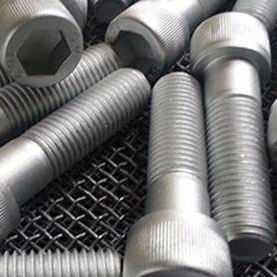
An anti-loose bolt is a specialized fastener engineered to maintain clamping force and resist loosening under high vibration, dynamic loads, and thermal cycling. Unlike standard hex bolts, these components utilize mechanical locking features, such as nylon inserts, wedge structures, or integrated serrated flanges, to prevent rotational failure. For industrial applications requiring long-term structural integrity, selecting a reliable anti-loose bolt manufacturer is critical to ensuring safety and reducing maintenance costs.
What Is an Anti-Loose Bolt and How Does It Work?
Vibration-induced loosening is one of the most common causes of joint failure in machinery, automotive assemblies, and construction projects. An anti-loose bolt addresses this challenge through specific design mechanisms that counteract the forces causing rotation. Understanding the underlying physics helps engineers and procurement specialists choose the right solution for their specific environment.
The Mechanics of Vibration Resistance
Standard bolts rely on friction between the threads and the bearing surface to stay tight. However, when subjected to transverse vibration (side-to-side movement), this friction can decrease, allowing the nut or bolt head to rotate gradually. Anti-loose bolts introduce additional resistance mechanisms:
- Mechanical Interference: Elements like nylon patches or metal deformed threads create physical barriers that require higher torque to overcome, effectively “locking” the position.
- Wedge Effect: Some designs use an eccentric cam or wedge structure that tightens further when vibration attempts to loosen it, converting vibrational energy into increased clamping force.
- Increased Friction Coefficient: Serrated flanges bite into the mating surface, preventing rotation by creating a high-friction interface that resists slip.
These mechanisms ensure that the preload—the initial tension applied during tightening—is maintained over the lifecycle of the assembly, even in harsh operating conditions.
Why Choose Hebei Fujinrui Metal Products Co., Ltd.?
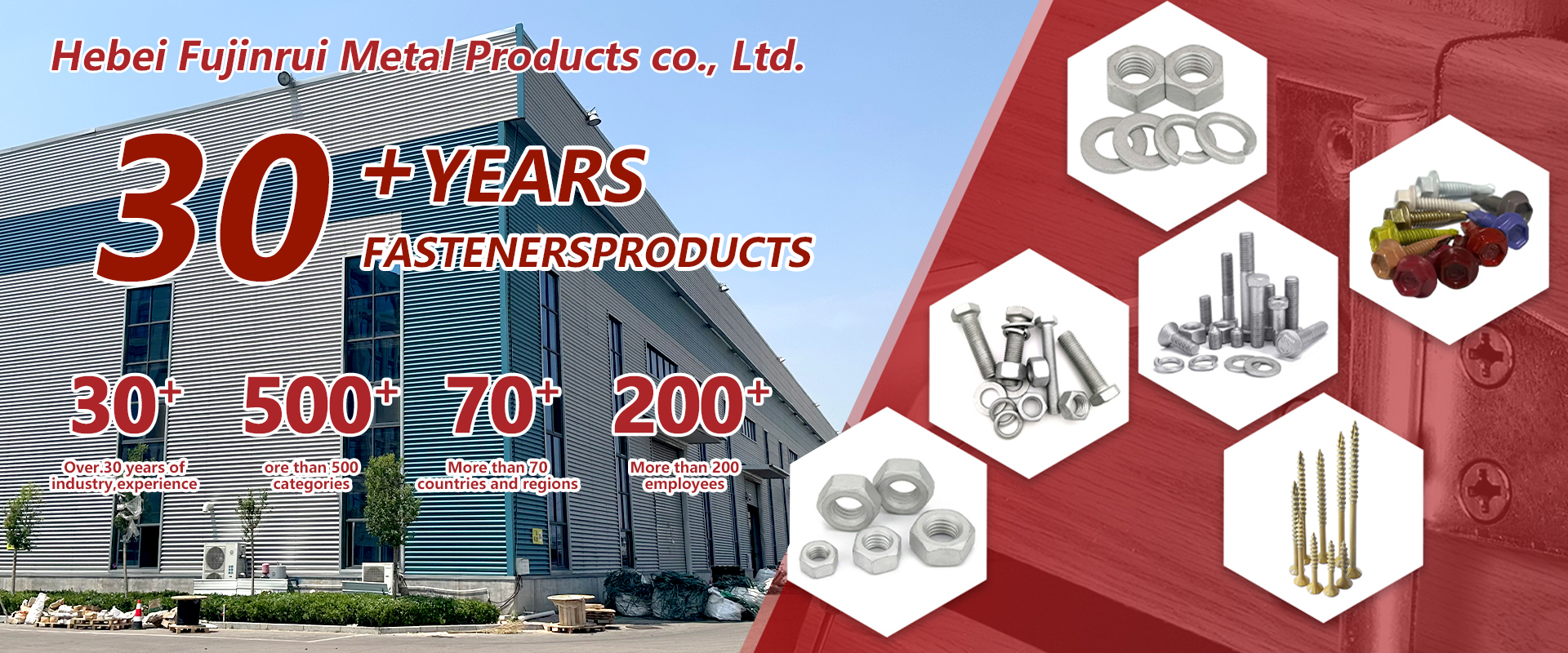
When sourcing high-performance fasteners, the manufacturer’s capability directly impacts product consistency and reliability. Hebei Fujinrui Metal Products Co., Ltd. has established itself as a trusted partner in the global fastener industry since its establishment in 2004. Located in Handan City, Hebei Province, the company operates from a 10,000-square-meter facility staffed by more than 200 skilled professionals.
With over 20 years of experience, Fujinrui integrates fastener production with advanced metal surface corrosion protection technologies. This vertical integration allows for strict quality control from raw material selection to final coating. The company produces a wide range of products, including self-drilling screws, hexagonal bolts and nuts, flange bolts, and washers, adhering to American (ANSI/ASTM), German (DIN), and national standards (GB). Their commitment to high-quality products and competitive pricing has made them a preferred supplier for clients across Europe, America, and the Middle East.
Types of Anti-Loose Bolts and Their Applications
Not all anti-loose solutions are suitable for every application. The choice depends on factors such as load type, temperature, accessibility for maintenance, and required reusability. Below are the primary categories of anti-loose bolts available in the market.
1. Nylon Insert Lock Nuts (Nyloc)
Nylon insert lock nuts feature a non-metallic collar that deforms against the bolt threads. This creates a strong frictional hold. They are ideal for moderate vibration environments and are widely used in automotive and appliance manufacturing. However, they have temperature limitations due to the nylon component and are generally not reusable more than a few times without losing effectiveness.
2. Serrated Flange Bolts
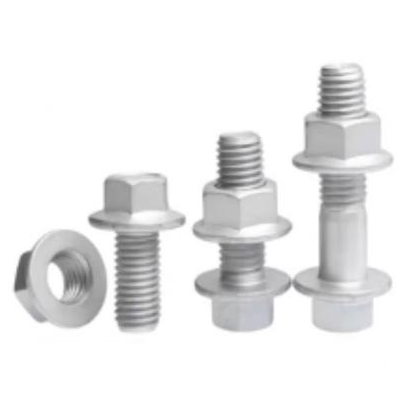
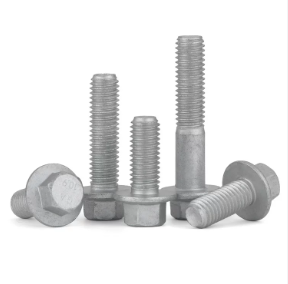
These bolts have an integrated flange with radial serrations (teeth) on the bearing surface. When tightened, the teeth bite into the mating material, preventing rotation. They are excellent for high-vibration applications where space is limited, as they eliminate the need for a separate washer. They are commonly found in heavy machinery and structural steel connections.
3. Wedge-Locking Security Bolts
Utilizing a unique two-part nut system with eccentric cams, wedge-locking bolts tighten under vibration. As the nut attempts to rotate loose, the cams lift and wedge tighter against the threads. This solution is highly effective in extreme vibration scenarios, such as mining equipment, railway tracks, and wind turbines. They offer superior reliability compared to traditional friction-based methods.
4. Double-Nut Systems
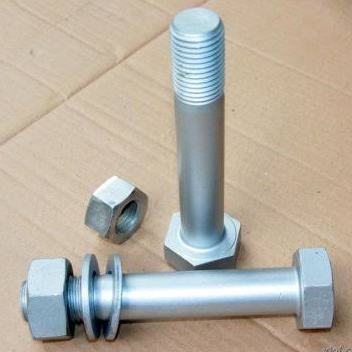
A traditional method involving two nuts tightened against each other. While effective, this approach increases weight and requires more axial space. It is often used in large-scale construction where simplicity and proven track records are prioritized over compact design.
Comparison: Anti-Loose Bolt Technologies
Selecting the right technology requires balancing performance, cost, and ease of installation. The following table compares common anti-loose solutions to help guide your decision-making process.
| Feature | Nylon Insert (Nyloc) | Serrated Flange | Wedge-Locking | Standard Bolt + Washer |
|---|---|---|---|---|
| Vibration Resistance | Moderate | High | Very High | Low |
| Reusability | Limited (2-3 times) | Moderate | High | High |
| Temperature Limit | ~120°C (Nylon dependent) | High (Metal only) | Very High | High |
| Installation Speed | Fast | Fast | Moderate | Fast |
| Cost | Low | Medium | High | Lowest |
| Best Application | Automotive, Appliances | Heavy Machinery, Steel | Railway, Mining, Energy | Static Loads Only |
Key Industries Benefiting from Anti-Loose Solutions
The demand for secure fastening solutions spans multiple sectors. Each industry has unique requirements regarding safety standards, environmental exposure, and load dynamics.
Automotive and Transportation
Vehicles are subject to constant vibration from engines, road surfaces, and aerodynamic forces. Anti-loose bolts are critical in chassis assemblies, engine mounts, and suspension systems. Failure in these areas can lead to catastrophic safety issues. Manufacturers prioritize fasteners that meet strict automotive standards (such as IATF 16949) and offer consistent performance over thousands of miles.
Construction and Infrastructure
Bridges, steel structures, and high-rise buildings face dynamic loads from wind, traffic, and seismic activity. Serrated flange bolts and high-strength structural bolts are commonly used here. The focus is on long-term durability and resistance to relaxation over decades. Corrosion protection, such as hot-dip galvanizing, is often combined with anti-loose features to withstand outdoor elements.
Energy and Power Generation
In wind turbines and oil rigs, maintenance access is difficult and costly. Components must remain secure for extended periods without inspection. Wedge-locking technologies are particularly valuable in these settings, as they provide a “fit-and-forget” solution that enhances operational uptime and reduces the risk of unplanned shutdowns.
Manufacturing and Heavy Machinery
Industrial equipment such as crushers, conveyors, and presses generate significant internal vibration. Standard fasteners often fail in these environments, leading to frequent downtime for retightening. Switching to anti-loose bolts improves equipment reliability and worker safety by reducing the frequency of maintenance interventions.
How to Select the Right Anti-Loose Bolt for Your Project
Choosing the correct fastener involves more than just picking a locking mechanism. Engineers and procurement managers must consider several technical parameters to ensure optimal performance.
1. Load Requirements
Determine whether the joint is subjected to static, dynamic, or impact loads. High dynamic loads may require wedge-locking systems, while static loads with minor vibration might be adequately served by nylon inserts or serrated flanges.
2. Environmental Conditions
Consider temperature extremes, exposure to chemicals, and moisture levels. For high-temperature environments, avoid nylon-based solutions. In corrosive environments, ensure the bolt material and coating (e.g., zinc plating, Dacromet, or hot-dip galvanizing) are compatible with the anti-loose feature.
3. Material Compatibility
The bolt material must match the strength requirements of the joint. Common materials include carbon steel (Grade 8.8, 10.9, 12.9) and stainless steel (A2-70, A4-80). Ensure the hardness of the bolt does not exceed the hardness of the mating surface to prevent galling or deformation.
4. Installation and Maintenance Access
If the joint is difficult to access, choose a solution that does not require frequent retightening. Reusability is also a factor; if the equipment requires regular disassembly for service, select a locking mechanism that retains its effectiveness after multiple cycles.
Common Mistakes in Fastener Selection and Installation
Even the best anti-loose bolt can fail if selected or installed incorrectly. Avoid these common pitfalls to ensure joint integrity.
- Incorrect Torque Application: Under-torquing fails to generate sufficient preload, while over-torquing can stretch the bolt beyond its yield point, leading to breakage. Always use calibrated torque tools and follow manufacturer specifications.
- Mixing Components: Do not mix bolts and nuts from different manufacturers or standards unless verified for compatibility. Thread tolerances vary, and mismatched components can compromise the locking mechanism.
- Ignoring Surface Finish: Lubricants or coatings affect the friction coefficient. A change in surface finish requires recalculating the torque value to achieve the same preload. Failure to adjust torque can lead to joint failure.
- Reusing Single-Use Lock Nuts: Nylon insert nuts are designed for limited reuse. Using them beyond their recommended cycle count significantly reduces their locking ability. Always replace them during major maintenance.
Quality Control and Manufacturing Standards at Fujinrui
At Hebei Fujinrui Metal Products Co., Ltd., quality is not just a checkpoint but a core part of the production philosophy. With a mature production technology team and over two decades of industry presence, the company ensures that every anti-loose bolt meets rigorous international standards.
The manufacturing process includes precise thread rolling, heat treatment for optimal tensile strength, and advanced surface treatment for corrosion resistance. The company’s ability to produce according to American, German, and national standards ensures flexibility for global clients. Whether you require custom dimensions or standard off-the-shelf items, Fujinrui’s 10,000-square-meter facility is equipped to handle large-volume wholesale orders with consistent quality.
Exporting to Europe, America, and the Middle East, the company understands the diverse regulatory and quality expectations of different markets. This global experience allows them to provide tailored solutions that meet specific regional requirements, ensuring smooth customs clearance and project compliance.
Frequently Asked Questions (FAQ)
What is the difference between a lock nut and an anti-loose bolt?
A lock nut is a specific component used with a standard bolt to prevent loosening, whereas an anti-loose bolt may refer to a bolt with integrated locking features (like a serrated flange) or a complete assembly designed to resist vibration. Both serve the same purpose but differ in design and installation method.
Can anti-loose bolts be reused?
It depends on the type. Wedge-locking and serrated flange bolts can often be reused multiple times if inspected for damage. Nylon insert nuts, however, lose their locking effectiveness after a few uses and should be replaced. Always consult the manufacturer’s guidelines for specific reuse limits.
How do I know if my current bolts are loosening due to vibration?
Signs include visible gaps between the bolt head and the surface, rotated positions of bolt heads relative to each other, or audible rattling. Regular inspection schedules and torque checks can help identify loosening before it leads to failure.
Does corrosion affect the performance of anti-loose bolts?
Yes, severe corrosion can degrade the locking mechanism, especially in nylon inserts or serrated surfaces. Choosing the right surface treatment, such as zinc-nickel plating or hot-dip galvanizing, is essential for maintaining performance in corrosive environments.
What is the lead time for wholesale orders?
Lead times vary based on order volume and customization requirements. As a manufacturer with year-round availability of standard products, Hebei Fujinrui Metal Products Co., Ltd. typically offers competitive lead times for bulk orders. Contact the sales team for specific project timelines.
Conclusion: Secure Your Projects with Reliable Fastening Solutions
Anti-loose bolts are essential components for ensuring the safety, reliability, and longevity of mechanical and structural assemblies. By understanding the different types of locking mechanisms and selecting the right solution for your specific application, you can significantly reduce maintenance costs and prevent catastrophic failures.
For businesses seeking a dependable partner, Hebei Fujinrui Metal Products Co., Ltd. offers a comprehensive range of high-quality anti-loose bolts and fasteners. With over 20 years of expertise, a robust production capacity, and a commitment to international standards, Fujinrui is well-positioned to meet your wholesale supply needs. Whether you are in the automotive, construction, or energy sector, their team provides the technical support and product consistency required for successful project execution.
To explore our full product catalog, request a quote, or discuss custom specifications for your next project, please contact our sales team today. Let us help you secure your operations with precision-engineered fastening solutions.